
BuddhistCatholicContemplativeEvangelicalGeneral ChristianHinduJewishLatter-day SaintMuslimNew VisionsProgressive Christian
Beliefs
- Buddhist
- Catholic
- Contemplative
- Evangelical
- General Christian
- Hindu
- Jewish
- Latter-day Saint
- More Voices
- Muslim
- New Visions
- Pagan
- Progressive Christian
Topics
- Religion News
- Food and Religion
- Sports and Religion
- Religious Art
- Religious Music and Entertainment
- Religious Events
- History and Religion
- Style and Religion
- Politics and Religion
- Women in Religion
- Recreation Outdoors and Religion
- Business Finance and Religion
- Careers Workplace and Religion
- Education and Religion
- Family Parenting and Religion
- Health Fitness and Religion
- Home and Religion
- Relationships and Religion
- Technology and Religion
- Travel and Religion
Columnists
- Buddhist Columnists
- Business Finance and Religion Columnists
- Careers Workplace and Religion Columnists
- Catholic Columnists
- Contemplative Columnists
- Education and Religion Columnists
- Evangelists Columnists
- Family Parenting and Religion Columnists
- General Christian Columnists
- Health Fitness and Religion Columnists
- Hindu Columnists
- History and Religion Columnists
- Home and Religion Columnists
- Jewish Columnists
- More Voices Columnists
- Latter Day Columnists
- Muslim Columnists
- New Visions Columnists
- Nonreligious Columnists
- Pagan Columnists
- Politics and Religion Columnists
- Progressive Columnists
- Recreation Outdoors and Religion Columnists
- Relationships and Religion Columnists
- Religion News Columnists
- Religious Art Columnists
- Religious Events Columnists
- Religious Music and Entertainment Columnists
- Sports and Religion Columnists
- Style and Religion Columnists
- Technology and Religion Columnists
- Travel and Religion Columnists
- Women in Religion Columnists
Resource Library
- 2026 Calendar
- Library of World Religions
- The 100 Most Holy Places on Earth
- Patheos Answers
- Podcasts
- Videos
- Faith Leaders Database
- Anglican Episcopalian
- Bahai
- Baptist
- Buddhism
- Christianity
- Confucianism
- Eastern Orthodoxy
- Hinduism
- Holiness and Pentecostal
- ISKCON
- Islam
- Judaism
- Lutheran
- Methodist
- The Church of Jesus Christ of Latter-day Saints
- New Age
- Paganism
- Presbytarian and Reformed
- Protestantism
- Religion Behind the Scenes
- Roman Catholic
- Scientology
- Shia Islam
- Sikhism
- Sufism
- Sunni Islam
- Taoism
- Zen
- See all religions
Research Tools
 Ad-Free & Subscriber Log-In Subscription Support
Ad-Free & Subscriber Log-In Subscription Support
Follow Patheos 

- Trending:
- Forgiveness
- |
- Marriage
- |
- Consciousness
- |
- Death Penalty
- |
- Election
- |
- Halloween

- Home
- Evangelical
- Politics and Religion
- The world has become fragile
The world has become fragile
Last updated on: March 18, 2011 at 5:45 am by Gene Veith
The world has become fragile 2011-03-18T05:45:49-04:00 Gene Veith
Patheos Explore the world's faith through different perspectives on religion and spirituality! Patheos has the views of the prevalent religions and spiritualities of the world.
Steven Pearlstein reflects on our recent disasters, all of which took us by surprise and none of which we were prepared for:
In just the past decade, we’ve had the attacks of Sept. 11, the tsunami in the Indian Ocean, Hurricane Katrina, the global financial crisis, a global flu pandemic, the earthquake in Haiti, the oil spill in the Gulf of Mexico, and devastating floods in Australia and New Zealand. Now, Japan has been hit with a triple whammy of earthquake, tsunami and nuclear crisis.
What all of these have in common is that they are all low-probability, high-impact events — the “long-tail” phenomenon, to use the jargon of risk modelers, referring to the far ends of the traditional bell curve of probabilities, or “black swans,” to use the metaphor popularized by former Wall Street trader Nassim Nicholas Taleb.
Such calamitous events have been a regular part of the human experience since Noah and the flood, some of them natural, others manmade. In spite of that, however, we continue to underestimate their frequency and severity.
To a degree, that is a good thing. If we were to focus too much of our attention on all the really, really bad things that could befall us, we’d never get out of bed in the morning.
But the same psychological trait that allows us to go about our daily business also creates blind spots. Although we observe that calamities happen, we assume that they won’t happen to us, or they won’t happen again. And if it has been a long time since the calamity, we are apt to take false comfort that we have beaten the odds. . . .
Part of the problem is that we don’t know what we don’t know. The other part is that small miscalculations of probabilities can have large effects on outcomes when dealing with long periods of time. Think of the sailor who sets off on a voyage a few degrees off course. A few miles out, the error is small, but by the time he crosses the ocean, he may find himself hundreds of miles from the intended destination.
Our reward structures don’t encourage spending the time or the money to deal with low-probability disasters. The chief executive of Citigroup acknowledged as much when he told a reporter in 2007 that he would lose his job if he gave up profit and market share to shield his bank from the obviously excessive risk-taking that everyone knew was going on. And you can only imagine the outcry from the industry and those Gulf Coast politicians if government regulators back in 2009 had ordered oil companies to spend millions of dollars to have enough boats and booms at the ready to deal with a BP-sized oil spill from deepwater drilling.
Indeed, it seems that when we conclude that the chance of something really bad happening is very small, we wind up taking actions that either increase the probability of the disaster or the damage that it will cause. Once the rocket scientists on Wall Street, for example, concluded that it was virtually impossible for investors in so-called “mezzanine” tranches of mortgage-backed securities to lose money, it set off a chain of events that made the prediction untrue. The heavy demand for the securities led to dramatically lower lending standards and a sharp increase in housing prices, creating a bubble so large that when it burst, it caused heavy losses for those same mezzanine investors. The declaration that a particular investment was riskless became a self-negating prophecy.
Similarly, when the government builds a levee, it may reduce the frequency of damaging floods but may also encourage even more people to build homes and businesses behind the barrier. When the Big One finally arrives, the total damage will be even greater than if no levee had been built.
We’re also discovering that the impact of disasters is magnified by globalization. The troubles in northern Japan, for example, are beginning to ripple through global supply chains, creating bottlenecks and shortages in dozens of industries. The way globalization increases economic efficiency is by leveraging the advantages of scale and specialization. Yet the bigger and more concentrated production becomes, the more vulnerable it becomes to disruption.
Many scholars now think that the very complexity of modern life — including our transportation and communication systems, our economy and our social interactions — is directly implicated in the severity of catastrophes. In more complex systems, even small changes or perturbations can have disproportionate and unpredictable effects. The things that make our systems more efficient also make them more effective in spreading the impact of a catastrophe.
via Lessons from the long tail of improbable disaster – The Washington Post.
Previous Post

March 18, 2011
Disaster and national debt
Next Post
March 18, 2011 The Calvinist case against Lutheranism
Recent Comments
"While she worked for Trump she was a tool's tool!"
"I know wired earbuds are making a comeback (I never stopped using them as I ..."
"VCRs, tape decks, and cassette players are all having a revival among a segment of ..."
"As a (retired) lawyer I see potential liability from sharing things like power or sharp ..."
Browse Our Archives
Select a Category America Apologetics Art baseball Bible Blog Christ Church crime Culture Economics Education Ethics Family Food Football Government History Holidays Holy Week Humor International Islam Language Law Life Issues Literature Media Medicine Movies Music Nature News Personal Philosophy Politics psychology Reformation Religions Sacraments Science sex Social Science Sports technology television terrorism Theology Uncategorized Vocation war
Select a Month October 2026 September 2026 August 2026 July 2026 June 2026 May 2026 April 2026 March 2026 February 2026 January 2026 December 2025 November 2025 October 2025 September 2025 August 2025 July 2025 June 2025 May 2025 April 2025 March 2025 February 2025 January 2025 December 2024 November 2024 October 2024 September 2024 August 2024 July 2024 June 2024 May 2024 April 2024 March 2024 February 2024 January 2024 December 2023 November 2023 October 2023 September 2023 August 2023 July 2023 June 2023 May 2023 April 2023 March 2023 February 2023 January 2023 December 2022 November 2022 October 2022 September 2022 August 2022 July 2022 June 2022 May 2022 April 2022 March 2022 February 2022 January 2022 December 2021 November 2021 October 2021 September 2021 August 2021 July 2021 June 2021 May 2021 April 2021 March 2021 February 2021 January 2021 December 2020 November 2020 October 2020 September 2020 August 2020 July 2020 June 2020 May 2020 April 2020 March 2020 February 2020 January 2020 December 2019 November 2019 October 2019 September 2019 August 2019 July 2019 June 2019 May 2019 April 2019 March 2019 February 2019 January 2019 December 2018 November 2018 October 2018 September 2018 August 2018 July 2018 June 2018 May 2018 April 2018 March 2018 February 2018 January 2018 December 2017 November 2017 October 2017 September 2017 August 2017 July 2017 June 2017 May 2017 April 2017 March 2017 February 2017 January 2017 December 2016 November 2016 October 2016 September 2016 August 2016 July 2016 June 2016 May 2016 April 2016 March 2016 February 2016 January 2016 December 2015 November 2015 October 2015 September 2015 August 2015 July 2015 June 2015 May 2015 April 2015 March 2015 February 2015 January 2015 December 2014 November 2014 October 2014 September 2014 August 2014 July 2014 June 2014 May 2014 April 2014 March 2014 February 2014 January 2014 December 2013 November 2013 October 2013 September 2013 August 2013 July 2013 June 2013 May 2013 April 2013 March 2013 February 2013 January 2013 December 2012 November 2012 October 2012 September 2012 August 2012 July 2012 June 2012 May 2012 April 2012 March 2012 February 2012 January 2012 December 2011 November 2011 October 2011 September 2011 August 2011 July 2011 June 2011 May 2011 April 2011 March 2011 February 2011 January 2011 December 2010 November 2010 October 2010 September 2010 August 2010 July 2010 June 2010 May 2010 April 2010 March 2010 February 2010 January 2010 December 2009 November 2009 October 2009 September 2009 August 2009 July 2009 June 2009 May 2009 April 2009 March 2009 February 2009 January 2009 December 2008 November 2008 October 2008 September 2008 August 2008 July 2008 June 2008 May 2008 April 2008 March 2008 February 2008 January 2008 December 2007 November 2007 October 2007
Follow Us!
TAKE THE
Religious Wisdom Quiz
Who said, 'The Lord gives and the Lord takes away'?
Select your answer to see how you score.
David Solomon Moses Job
Books by This Author Books by Gene Veith
Related posts from Cranach

William Lane Craig's Proof of God's Existence

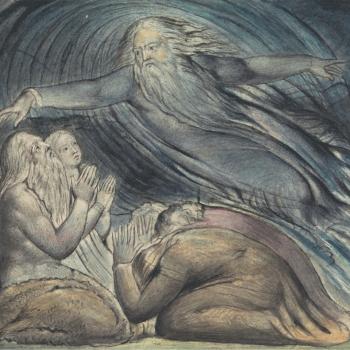
God's Consolation of Job in the Whirlwind

TRENDING AT PATHEOS Evangelical

'Super Scam Me' Exposes AI Jon Bon Jovi...
Leslie Pickett believed she was in a relationship with Jon Bon Jovi....

The Brazilian Remake of Kendricks' 'Flywheel' Opens in...
“Flywheel,” the story that launched the Kendrick Brothers’ filmmaking career is getting...

The Dangers of Gradual Accommodation (Winking at Sin)
Recently, the “law of gradualness” resurfaced during the opening of a weeklong,...

The Iron Gates and the Lion of the...
Yesterday, I didn't finish my report about, well, yesterday. So I'll...

The Image: On the Horror of Capitalism and...
The Image Then went the Pharisees, and took counsel how they might...

We are approaching the date of our new American national holiday: October...
view all Evangelical blogs
What Are Your Thoughts?leave a comment
Ad-Free & Subscriber Log-In Subscription Support
- About Us
- 2026 Calendar
- Videos
- Podcasts
- Library of World Religions
- Faith In Media Tracker
- Advertise With Us
- Write for Us
- Privacy Policy
- Terms of Service
- Do Not Sell My Data
- Contact Us
- Radiant Digital
- Manage Newsletter Subscriptions
- Unsubscribe From Notifications
- Sitemap
Copyright 2008-2026, Patheos. All rights reserved.
Subscription Support Ad-Free & Subscriber Log-In
Follow Patheos