
BuddhistCatholicContemplativeEvangelicalGeneral ChristianHinduJewishLatter-day SaintMuslimNew VisionsProgressive Christian
Beliefs
- Buddhist
- Catholic
- Contemplative
- Evangelical
- General Christian
- Hindu
- Jewish
- Latter-day Saint
- More Voices
- Muslim
- New Visions
- Pagan
- Progressive Christian
Topics
- Religion News
- Food and Religion
- Sports and Religion
- Religious Art
- Religious Music and Entertainment
- Religious Events
- History and Religion
- Style and Religion
- Politics and Religion
- Women in Religion
- Recreation Outdoors and Religion
- Business Finance and Religion
- Careers Workplace and Religion
- Education and Religion
- Family Parenting and Religion
- Health Fitness and Religion
- Home and Religion
- Relationships and Religion
- Technology and Religion
- Travel and Religion
Columnists
- Buddhist Columnists
- Business Finance and Religion Columnists
- Careers Workplace and Religion Columnists
- Catholic Columnists
- Contemplative Columnists
- Education and Religion Columnists
- Evangelists Columnists
- Family Parenting and Religion Columnists
- General Christian Columnists
- Health Fitness and Religion Columnists
- Hindu Columnists
- History and Religion Columnists
- Home and Religion Columnists
- Jewish Columnists
- More Voices Columnists
- Latter Day Columnists
- Muslim Columnists
- New Visions Columnists
- Nonreligious Columnists
- Pagan Columnists
- Politics and Religion Columnists
- Progressive Columnists
- Recreation Outdoors and Religion Columnists
- Relationships and Religion Columnists
- Religion News Columnists
- Religious Art Columnists
- Religious Events Columnists
- Religious Music and Entertainment Columnists
- Sports and Religion Columnists
- Style and Religion Columnists
- Technology and Religion Columnists
- Travel and Religion Columnists
- Women in Religion Columnists
Resource Library
- 2026 Calendar
- Library of World Religions
- The 100 Most Holy Places on Earth
- Patheos Answers
- Podcasts
- Videos
- Faith Leaders Database
- Anglican Episcopalian
- Bahai
- Baptist
- Buddhism
- Christianity
- Confucianism
- Eastern Orthodoxy
- Hinduism
- Holiness and Pentecostal
- ISKCON
- Islam
- Judaism
- Lutheran
- Methodist
- The Church of Jesus Christ of Latter-day Saints
- New Age
- Paganism
- Presbytarian and Reformed
- Protestantism
- Religion Behind the Scenes
- Roman Catholic
- Scientology
- Shia Islam
- Sikhism
- Sufism
- Sunni Islam
- Taoism
- Zen
- See all religions
Research Tools
 Ad-Free & Subscriber Log-In Subscription Support
Ad-Free & Subscriber Log-In Subscription Support
Follow Patheos 

- Trending:
- Forgiveness
- |
- Marriage
- |
- Consciousness
- |
- Death Penalty
- |
- Election
- |
- Halloween

- Home
- Evangelical
- Politics and Religion
- The Liberty Cap
The Liberty Cap
Last updated on: December 31, 2009 at 5:00 am by Gene Veith
The Liberty Cap 2009-12-31T05:00:12-05:00 Gene Veith
Patheos Explore the world's faith through different perspectives on religion and spirituality! Patheos has the views of the prevalent religions and spiritualities of the world.
My son and I went into D.C. yesterday. I can tell you that the brand new Capitol Visitors’ Center makes touring the Capitol much easier. No longer do you need to go through your Congressman or Senator for a good tour, or stand outside by daybreak to get a ticket for a tour much later in the day. You can reserve a time online, or, especially in the off season, just walk up and get a ticket. We also visited what has to be one of my favorite buildings, the Library of Congress. Its beauty inside is breathtaking. One highlight was seeing the Gutenberg Bible. There are only three complete, perfect copies in existence. This is basically the first major printed book. A dealer who bought it from a German monastery offered to sell it to the United States Congress in 1930 for $2 million. In those cash-strapped times, Congress voted to spend the money. Now it is priceless.
But what I learned from both tours, with our guides talking about the art that was everywhere in both buildings, was the symbolism of the Liberty Cap. This is the conical cloth hat, usually red, with the peak pointing forward or to the side. It appears everywhere in early American iconography.
It comes from classical antiquity and was known as the “Phrygian cap,” being commonly worn in that country of Asia Minor. The Greeks considered Troy part of Phrygia, so early illustrations of Homer used it to identify Trojans.

But then it was used in Rome as a formal marker worn by former slaves to signify that they were now free. Classicist James Yates describes the custom:
Among the Romans the cap of felt was the emblem of liberty. When a slave obtained his freedom he had his head shaved, and wore instead of his hair an undyed pileus (πίλεον λευκόν, Diod. Sic. Exc. Leg. 31º p625, ed. Wess.; Plaut. Amphit. I.1.306; Persius, V.82). Hence the phrase servos ad pileum vocare is a summons to liberty, by which slaves were frequently called upon to take up arms with a promise of liberty (Liv. XXIV.32).
The Phrygian cap thus became associated with freedom and became known as the “Liberty Cap.” American revolutionaries wore it, as did the most radical French revolutionaries.
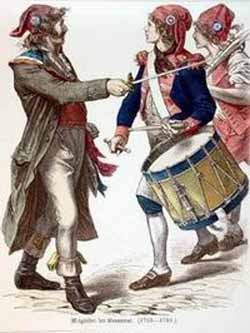
It adorned the head of many allegorical representations of Lady Liberty, both in the French and the American versions:

In the United States, it is upon many of our older coins and national symbols, such as the Seal of the United States Senate:

The personified statue of “Freedom” that is at the top of the Capitol building originally wore a Liberty Cap. But Jefferson Davis, then Secretary of War who had been put in charge of overseeing the construction of the Capitol, objected. We are born free, he insisted. We have never been slaves. Mr. Davis, who would soon defend the institution of slavery as the president of the Confederate States of America, was repelled by the very idea of being a slave himself. So he rejected the Liberty Cap. The headdress was changed (as you can see in the first article linked above).
Still, I am wondering about the difference between being “born free” and having been freed. It seems that liberty would mean something more to someone who knew bondage and then experienced liberation. In Christian terms, we are not born free; rather, we are born into the slavery of sin. In Christ, though, the Son has freed us and we are free indeed.
We can wear the Liberty Cap, and maybe we should. (Note: I repudiate any Jacobin or Masonic associations that this headgear may carry in proposing to give it instead a Christian meaning.) Politically, it would be an appropriate fashion statement, along with the appropriation of other early revolutionary symbols such as the “don’t tread on me” snake, when attending a Tea Party.
Previous Post

December 30, 2009
The top stories of 2009
Next Post
December 31, 2009 New Year's Resolutions
Recent Comments
"While she worked for Trump she was a tool's tool!"
"I know wired earbuds are making a comeback (I never stopped using them as I ..."
"VCRs, tape decks, and cassette players are all having a revival among a segment of ..."
"As a (retired) lawyer I see potential liability from sharing things like power or sharp ..."
Browse Our Archives
Select a Category America Apologetics Art baseball Bible Blog Christ Church crime Culture Economics Education Ethics Family Food Football Government History Holidays Holy Week Humor International Islam Language Law Life Issues Literature Media Medicine Movies Music Nature News Personal Philosophy Politics psychology Reformation Religions Sacraments Science sex Social Science Sports technology television terrorism Theology Uncategorized Vocation war
Select a Month October 2026 September 2026 August 2026 July 2026 June 2026 May 2026 April 2026 March 2026 February 2026 January 2026 December 2025 November 2025 October 2025 September 2025 August 2025 July 2025 June 2025 May 2025 April 2025 March 2025 February 2025 January 2025 December 2024 November 2024 October 2024 September 2024 August 2024 July 2024 June 2024 May 2024 April 2024 March 2024 February 2024 January 2024 December 2023 November 2023 October 2023 September 2023 August 2023 July 2023 June 2023 May 2023 April 2023 March 2023 February 2023 January 2023 December 2022 November 2022 October 2022 September 2022 August 2022 July 2022 June 2022 May 2022 April 2022 March 2022 February 2022 January 2022 December 2021 November 2021 October 2021 September 2021 August 2021 July 2021 June 2021 May 2021 April 2021 March 2021 February 2021 January 2021 December 2020 November 2020 October 2020 September 2020 August 2020 July 2020 June 2020 May 2020 April 2020 March 2020 February 2020 January 2020 December 2019 November 2019 October 2019 September 2019 August 2019 July 2019 June 2019 May 2019 April 2019 March 2019 February 2019 January 2019 December 2018 November 2018 October 2018 September 2018 August 2018 July 2018 June 2018 May 2018 April 2018 March 2018 February 2018 January 2018 December 2017 November 2017 October 2017 September 2017 August 2017 July 2017 June 2017 May 2017 April 2017 March 2017 February 2017 January 2017 December 2016 November 2016 October 2016 September 2016 August 2016 July 2016 June 2016 May 2016 April 2016 March 2016 February 2016 January 2016 December 2015 November 2015 October 2015 September 2015 August 2015 July 2015 June 2015 May 2015 April 2015 March 2015 February 2015 January 2015 December 2014 November 2014 October 2014 September 2014 August 2014 July 2014 June 2014 May 2014 April 2014 March 2014 February 2014 January 2014 December 2013 November 2013 October 2013 September 2013 August 2013 July 2013 June 2013 May 2013 April 2013 March 2013 February 2013 January 2013 December 2012 November 2012 October 2012 September 2012 August 2012 July 2012 June 2012 May 2012 April 2012 March 2012 February 2012 January 2012 December 2011 November 2011 October 2011 September 2011 August 2011 July 2011 June 2011 May 2011 April 2011 March 2011 February 2011 January 2011 December 2010 November 2010 October 2010 September 2010 August 2010 July 2010 June 2010 May 2010 April 2010 March 2010 February 2010 January 2010 December 2009 November 2009 October 2009 September 2009 August 2009 July 2009 June 2009 May 2009 April 2009 March 2009 February 2009 January 2009 December 2008 November 2008 October 2008 September 2008 August 2008 July 2008 June 2008 May 2008 April 2008 March 2008 February 2008 January 2008 December 2007 November 2007 October 2007
Follow Us!
TAKE THE
Religious Wisdom Quiz
A shepherd leads his flock beside still waters and through the valley of death's shadow. What is this shepherd's identity?
Select your answer to see how you score.
David The Prophet The Lord The Apostles
Books by This Author Books by Gene Veith
Related posts from Cranach

Our New Book on Technology & Vocation

Why AI Bots Don't Really Have Emotions


TRENDING AT PATHEOS Evangelical

Emotion in Early Christianity by Andrew Crislip
Andrew Crislip’s Emotion in Early Christianity examines an often overlooked dimension of...

16 Spiritual Touchstones for a More Grounded Life
After decades of spiritual study, here are 16 principles I try...

Catholic Evangelization: Sharing Your Faith Every Day
Welcome back to the Graceful Awakening mini-series called, “From Faith to Mission.” ...

The Pillar of the Boatmen: the Ancient Monument...
The Pillar of the Boatmen is a Romano-Gaulish sculpture that dates from...

In one sense walking into Westminster Abbey is like walking down the...

'Super Scam Me' Exposes AI Jon Bon Jovi...
Leslie Pickett believed she was in a relationship with Jon Bon Jovi....
view all Evangelical blogs
What Are Your Thoughts?leave a comment
Ad-Free & Subscriber Log-In Subscription Support
- About Us
- 2026 Calendar
- Videos
- Podcasts
- Library of World Religions
- Faith In Media Tracker
- Advertise With Us
- Write for Us
- Privacy Policy
- Terms of Service
- Do Not Sell My Data
- Contact Us
- Radiant Digital
- Manage Newsletter Subscriptions
- Unsubscribe From Notifications
- Sitemap
Copyright 2008-2026, Patheos. All rights reserved.
Subscription Support Ad-Free & Subscriber Log-In
Follow Patheos