
BuddhistCatholicContemplativeEvangelicalGeneral ChristianHinduJewishLatter-day SaintMuslimNew VisionsProgressive Christian
Beliefs
- Buddhist
- Catholic
- Contemplative
- Evangelical
- General Christian
- Hindu
- Jewish
- Latter-day Saint
- More Voices
- Muslim
- New Visions
- Pagan
- Progressive Christian
Topics
- Religion News
- Food and Religion
- Sports and Religion
- Religious Art
- Religious Music and Entertainment
- Religious Events
- History and Religion
- Style and Religion
- Politics and Religion
- Women in Religion
- Recreation Outdoors and Religion
- Business Finance and Religion
- Careers Workplace and Religion
- Education and Religion
- Family Parenting and Religion
- Health Fitness and Religion
- Home and Religion
- Relationships and Religion
- Technology and Religion
- Travel and Religion
Columnists
- Buddhist Columnists
- Business Finance and Religion Columnists
- Careers Workplace and Religion Columnists
- Catholic Columnists
- Contemplative Columnists
- Education and Religion Columnists
- Evangelists Columnists
- Family Parenting and Religion Columnists
- General Christian Columnists
- Health Fitness and Religion Columnists
- Hindu Columnists
- History and Religion Columnists
- Home and Religion Columnists
- Jewish Columnists
- More Voices Columnists
- Latter Day Columnists
- Muslim Columnists
- New Visions Columnists
- Nonreligious Columnists
- Pagan Columnists
- Politics and Religion Columnists
- Progressive Columnists
- Recreation Outdoors and Religion Columnists
- Relationships and Religion Columnists
- Religion News Columnists
- Religious Art Columnists
- Religious Events Columnists
- Religious Music and Entertainment Columnists
- Sports and Religion Columnists
- Style and Religion Columnists
- Technology and Religion Columnists
- Travel and Religion Columnists
- Women in Religion Columnists
Resource Library
- 2026 Calendar
- Library of World Religions
- The 100 Most Holy Places on Earth
- Patheos Answers
- Podcasts
- Videos
- Faith Leaders Database
- Anglican Episcopalian
- Bahai
- Baptist
- Buddhism
- Christianity
- Confucianism
- Eastern Orthodoxy
- Hinduism
- Holiness and Pentecostal
- ISKCON
- Islam
- Judaism
- Lutheran
- Methodist
- The Church of Jesus Christ of Latter-day Saints
- New Age
- Paganism
- Presbytarian and Reformed
- Protestantism
- Religion Behind the Scenes
- Roman Catholic
- Scientology
- Shia Islam
- Sikhism
- Sufism
- Sunni Islam
- Taoism
- Zen
- See all religions
Research Tools
 Ad-Free & Subscriber Log-In Subscription Support
Ad-Free & Subscriber Log-In Subscription Support
Follow Patheos 

- Trending:
- Forgiveness
- |
- Marriage
- |
- Consciousness
- |
- Death Penalty
- |
- Election
- |
- Halloween
 The Rogue
- Home
- Religious Music & Entertainment
- Ham on Nye Pre-Debate Coverage: Interview with Dr. Jack Collins.
Ham on Nye Pre-Debate Coverage: Interview with Dr. Jack Collins.
Last updated on: January 22, 2014 at 11:06 pm by Jonathan Ryan
Ham on Nye Pre-Debate Coverage: Interview with Dr. Jack Collins. 2014-01-22T23:06:03-06:00 Jonathan Ryan
Patheos Explore the world's faith through different perspectives on religion and spirituality! Patheos has the views of the prevalent religions and spiritualities of the world.
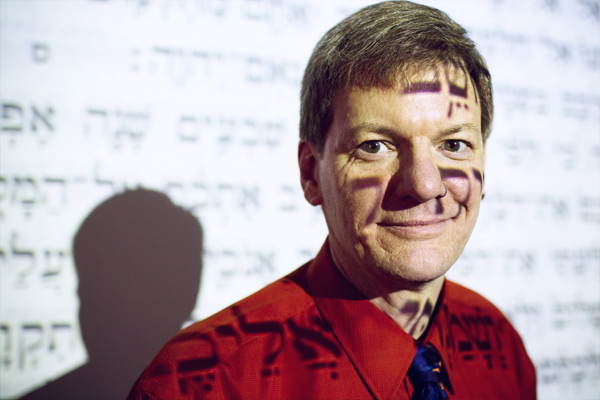
(Once upon a time, I went to seminary. I had awesome professor by the name of Jack Collins, smart, educated, faithful and a theological badass. Jack also wrote a book called Science and Faith; Friend or Foes, an amazing book that I reread on a regular basis. He’s also a bit of smart alec, which is why he was, hands down, my favorite professor in seminary. As scientist and evangelical scholar, he is able to give a good, reasoned and passionate point of view on this whole evolution/creation controversy. This is what he had to say about the upcoming HamOnNye Debate)
1) Why do you think the issue of evolution/Creationism still stirs up so much controversy?
There are several factors at work.
Christians want to be sure that God’s word tells them the true story of where the world came from, and how we got to where we are now. Unfortunately, some folk are insisting that, if the Bible is to be taken as true, we must read it in a “literal” fashion. And of course, read this kind of “literal” way, it comes into conflict with what the scientists think is the best description of the history of the world and of life. In the face of such conflict, you have to choose sides.
Of course, the better thing to do is to ask whether the Bible really should be read in this kind of “literal” way, and what its own authors were trying to do with the story they tell. But neither of the “sides” really considers this alternative, except to dismiss it.
Some science popularizers, building on what I have said above, make it sound like “science” refutes our faith. Some “creationists” — namely the kind who think that young-earth creationism is the only true kind — think that their reading of the Bible is the only bulwark we have against our children falling prey to unbelief.
Third, and related to the second, is the uneasy feeling that many traditional Christians of all stripes have, namely that much in our contemporary world is wandering rapidly away from God and his directions for good living. If a science popularizer tells us that we are just developed apes, and that there is no true and universal morality, we might suspect that it was the scientific theory that drove him mad. That is, sensible people recognize the distinctive features that all humans share with each other, which separate us from the beasts, and they wisely don’t believe anyone who tells us that these distinctions are illusory, or just a product of mindless nature.
A fourth aspect, which shows up especially in evangelicals, is the idea that the Scriptures are intended for everyone, and not just the specialists; and this leads people to think that the most straightforward reading of a text is the right one. (Of course, I would point out that we ought to seek the “straightforward” reading in the ancient context, and that requires the work of specialists. I would also point out that we really ought to be modest in our notion of Scriptural clarity, applying it to the main outline of the Biblical story.)
 2) You’re a scientist with a degree from MIT and also a Hebrew professor. How do you approach the issues of origins?
Let’s make that two degrees from MIT, shall we?
I have some idea of how scientific research works. I know why it is so much fun, and I also know how easy it is to overstate both the level of confidence we have a right to in our results, and the implications our results have for so many other realms of thought. I also know from the inside that those who practice the sciences, and high-level engineering, tend to think of themselves as the truly objective types because of our insistence on numbers and empirical testability.
But I also respect well-established results, and distrust anyone who dismisses them as coming from “a darkened mind.” That isn’t how it works!
As a Hebraist, I have been especially interested in how texts convey meaning, using their literary and grammatical features. I also know that we can overstate the level of confidence that we have a right to in this discipline as well. C. S. Lewis, in particular, has been a wonderful guide for me in learning to read texts on their own terms. He has a marvelous essay on “The language of religion,” which helps us to appreciate how rarely the Bible writers employ “scientific language,” and how rarely they engage in what we might call “scientific theorizing.”
In other words, I have some sense of how both the sciences and the Biblical texts are aiming to talk about the world, and thus can be brought into fruitful interaction. That interaction should respect the way each of these talk.
3) According to Ken Ham, you can’t believe in the Bible and Evolution. Do you agree with him? If not, why?
So much depends on the meaning of the word “evolution,” doesn’t it! Spokesmen for Answers in Genesis have tended to describe everything except their version of young earth creationism as “evolutionary,” and thus would apply the term to people as diverse as Mike Behe, C. S. Lewis, Hugh Ross, and Francis Collins (and Jack Collins too!).
Now, this is not entirely their fault. The two main science teachers’ groups in the USA, the National Association of Biology Teachers (NABT) and the National Science Teachers’ Association (NSTA), have definitions of “evolution” that don’t really agree. Both think of evolution as the idea that changes have taken place in the universe, and in living things, over the vast stretches of time for which they have existed. But the NSTA does not commit itself to any particular notion of where those changes have come from (thus leaving open the possibility that the process is governed by God, with varying degrees of directness), while the NABT insists that only natural processes may be invoked to describe the process. That is, the NABT rules out the visibility of God’s activity from the start (which is actually a philosophically questionable move).
Now some Christian indeed fall in line with the NABT, and simply say it was God’s “natural” process and we have to take that on faith. I think it’s hard to square that with the Bible; but I join C. S. Lewis in observing that it’s inadequate for dealing with human distinctiveness, so it isn’t really the best scientific theory!
When I read the Bible, I don’t see it saying just how the varieties of “kinds” came about. Those who think Genesis gives us ancient science really need to get acquainted with ancient science (such as Aristotle presents), in order to appreciate the difference between that and the Bible! That’s why, if someone wants to explore a notion of evolution along the lines of what the NSTA has described, I’m not bothered, so long as he or she keeps his or her wits about them, and doesn’t go beyond what they’re entitled to conclude.
4) Why do you feel so troubled about the upcoming Nye/Ham debate?
I do not think this “debate” will really do much to help people think more clearly. I think it is more theater than anything else — and that’s fine, so long as everyone knows what it is and approaches it accordingly.
I like critical thinking, and I learned a lot of it from my one-time mentor, Al Drake (who taught probability at MIT). He used to insist that if we want to decide between options, we have to make sure the items in our list are “mutually exclusive” (that is, they don’t overlap at all) and “collectively exhaustive” (you’ve actually got all the possible options). And I don’t see that Ken Ham and Bill Nye offer me the only two options; nor do I think that all forms of “evolution” necessarily contradict human uniqueness.
This “debate” cannot help but be seen as “science versus the Bible,” and I don’t think that does justice to either.
5) How can evangelicals encourage scientific discussion in their own church communities?
Well, we need to recapture the Biblical emphasis on the goodness of creation, and of the worthiness of creation for human study. (That probably means we have to ditch some of our hymns, namely those that devalue the creation; and sing more of the ones that treasure the world, such as “This is my Father’s world,” “All creatures of our God and King,” and “For the beauty of the earth.”)
We need also to ensure that we help people who are intellectually capable really to value the life of the mind, and to know that is honorable of them to pursue it.
And everyone needs to learn a lot more, and better, critical thinking. (I have seen a manual for critical thinking for evangelical home-schoolers that really fails to help people assess critically their own simplistic reading of the Bible. Blecch!)
Beyond that, I would encourage families to talk freely about the things they see in their own gardens: the rocks, with their histories; the plants, with their needs; the animals, with the varied diets and interactions. Foster the children’s natural curiosity. And visit zoos and museums, like what we have in St Louis. Read books and watch films. Take nature walks. Get to know the natural world, and like it!
And finally, in those we allow to teach the sciences to our kids, we should expect both a solid education in science or engineering, and some experience actually doing such work. It would be worth our while to pray for our teachers, and not only for the ones in our own churches!
Check out Dr. Collins’ book, Did Adam and Eve Exist? Who they were and why you should care.
Ham on Nye Coverage (Yeah, we went there)
Previous Post

January 20, 2014
Cottonwood and the Fight Against Racism.
Browse Our Archives
Select a Category Alien Life ASMR Book Reviews Careers in Writing and Filmmaking Catholic Imagination Christmas miracles DC Trinity War Articles Ebola Faith Family Entertainment Fangirl Raves Filmmaking Geek Books Geek Comics Geek Culture Geek Entertainment Geek Gaming Geek Girl Geek Goes Catholic Geek Goes Catholic Geek Literature Geek Movies Geek Music Geek Sports Geek Tech Geek TV Ghost Bear Ramblings God's Not Dead Coverage Grace Unplugged Coverage Ham on Nye Coverage (Yeah, we went there) HWA Stuff Indie Artists Interviews Jonathan Ryan Book News Kardashians Lord of the Rings Mark Driscoll Movie Reviews Parenthood Pixie Perfect Salt Lake City Comic Con 2014 Social Issues Teen Author Boot Camp The Conjuring Coverage The Michigan Dog Man Adventures Uncategorized Writing
Select a Month November 2015 October 2015 September 2015 August 2015 July 2015 June 2015 May 2015 April 2015 March 2015 February 2015 January 2015 December 2014 November 2014 October 2014 September 2014 August 2014 July 2014 June 2014 May 2014 April 2014 March 2014 February 2014 January 2014 December 2013 November 2013 October 2013 September 2013 August 2013 July 2013 June 2013 May 2013 April 2013 March 2013 February 2013 January 2013
Follow Us!
TAKE THE
Religious Wisdom Quiz
Who said, "Before I formed you in the womb I knew you"?
Select your answer to see how you score.
Isaiah Paul God David
Related posts from The Rogue

A TREMOR IN THE FORCE - Episode 5...
One Lantern, Two Lantern, Green Lantern, Blue Lantern

Be Who You Want......Just Don't Expect Everyone to...

TABC 2015 Wrap Up: A Story about Mr....
TRENDING AT PATHEOS Religious Music & Entertainment

"Les Diabolique" and Transgression
Alongside something like Arrival, Vertigo, or Charade, Les Diaboliques is a...

"The Plague Dogs" and Mortality
So, flashback to the late 70s, early 80s. Walt Disney Studios is...

With the recent and highly successful release of Christopher Nolan’s epic film,...

"L'avventura" and Human Weakness
Today's piece is going to be a little different for a few...

I first want to apologize for not posting or writing anything. I'm...

I've engaged in the multi-year project of reading through the Church Fathers,...
view all Religious Music & Entertainment blogs
Ad-Free & Subscriber Log-In Subscription Support
- About Us
- 2026 Calendar
- Videos
- Podcasts
- Library of World Religions
- Faith In Media Tracker
- Advertise With Us
- Write for Us
- Privacy Policy
- Terms of Service
- Do Not Sell My Data
- Contact Us
- Radiant Digital
- Manage Newsletter Subscriptions
- Unsubscribe From Notifications
- Sitemap
Copyright 2008-2026, Patheos. All rights reserved.
Subscription Support Ad-Free & Subscriber Log-In
Follow Patheos