
BuddhistCatholicContemplativeEvangelicalGeneral ChristianHinduJewishLatter-day SaintMuslimNew VisionsProgressive Christian
Beliefs
- Buddhist
- Catholic
- Contemplative
- Evangelical
- General Christian
- Hindu
- Jewish
- Latter-day Saint
- More Voices
- Muslim
- New Visions
- Pagan
- Progressive Christian
Topics
- Religion News
- Food and Religion
- Sports and Religion
- Religious Art
- Religious Music and Entertainment
- Religious Events
- History and Religion
- Style and Religion
- Politics and Religion
- Women in Religion
- Recreation Outdoors and Religion
- Business Finance and Religion
- Careers Workplace and Religion
- Education and Religion
- Family Parenting and Religion
- Health Fitness and Religion
- Home and Religion
- Relationships and Religion
- Technology and Religion
- Travel and Religion
Columnists
- Buddhist Columnists
- Business Finance and Religion Columnists
- Careers Workplace and Religion Columnists
- Catholic Columnists
- Contemplative Columnists
- Education and Religion Columnists
- Evangelists Columnists
- Family Parenting and Religion Columnists
- General Christian Columnists
- Health Fitness and Religion Columnists
- Hindu Columnists
- History and Religion Columnists
- Home and Religion Columnists
- Jewish Columnists
- More Voices Columnists
- Latter Day Columnists
- Muslim Columnists
- New Visions Columnists
- Nonreligious Columnists
- Pagan Columnists
- Politics and Religion Columnists
- Progressive Columnists
- Recreation Outdoors and Religion Columnists
- Relationships and Religion Columnists
- Religion News Columnists
- Religious Art Columnists
- Religious Events Columnists
- Religious Music and Entertainment Columnists
- Sports and Religion Columnists
- Style and Religion Columnists
- Technology and Religion Columnists
- Travel and Religion Columnists
- Women in Religion Columnists
Resource Library
- 2026 Calendar
- Library of World Religions
- The 100 Most Holy Places on Earth
- Patheos Answers
- Podcasts
- Videos
- Faith Leaders Database
- Anglican Episcopalian
- Bahai
- Baptist
- Buddhism
- Christianity
- Confucianism
- Eastern Orthodoxy
- Hinduism
- Holiness and Pentecostal
- ISKCON
- Islam
- Judaism
- Lutheran
- Methodist
- The Church of Jesus Christ of Latter-day Saints
- New Age
- Paganism
- Presbytarian and Reformed
- Protestantism
- Religion Behind the Scenes
- Roman Catholic
- Scientology
- Shia Islam
- Sikhism
- Sufism
- Sunni Islam
- Taoism
- Zen
- See all religions
Research Tools
 Ad-Free & Subscriber Log-In Subscription Support
Ad-Free & Subscriber Log-In Subscription Support
Follow Patheos 

- Trending:
- Forgiveness
- |
- Marriage
- |
- Consciousness
- |
- Death Penalty
- |
- Election
- |
- Halloween
 The Rogue
- Home
- Religious Music & Entertainment
- Slenderman and the need for Sacramental Horror
Slenderman and the need for Sacramental Horror
Last updated on: June 4, 2014 at 5:36 pm by Jonathan Ryan
Slenderman and the need for Sacramental Horror 2014-06-04T17:36:04-05:00 Jonathan Ryan
Patheos Explore the world's faith through different perspectives on religion and spirituality! Patheos has the views of the prevalent religions and spiritualities of the world.
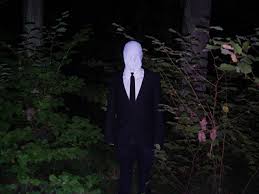
(Yesterday, the nation was horrified at the near murder of a young girl by her twelve year old companions. The girl stumbled out of the woods with fifteen stab wounds. When the police arrested the two culprits, they told the officers that “they wanted to become servants of Slender Man “.
As you might expect, this sent my fellow members of the media scrambling around to find about this mythical creature. Those in the horror world (like me) knew the name in an instant. Slender Man is a ghoulish character with no face made up by the website Creepy Pasta (a website that has some really good stories).
A year ago, my Eldest started playing the game based on this character. He thought I might be interested in it as a horror writer. I sat down to play the game. I wandered through dark forests, investigating abandoned buildings and started to get a creep up my spine.
Not too bad, I thought.
Still, as I played it, something began to bother me. I couldn’t place my finger on it. The more I thought about it, the more I realized that Slender Man as a legend and as a game took on all the characteristics of horror that I despise. Nihlistic. Th legend focused on the fear and terror alone. No light shone in the darkness.
While I’m all for artistic freedom in horror, I can’t stand the nihilism of modern horror. So, I’m re-positing this article for everyone to consider)
Sacramental Horror
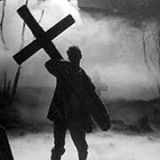 As a kid growing up in Southern Indiana, I couldn’t watch horror movies like Friday the 13th or Halloween. My parents refused to even consider the question. Having kids myself, I completely understand why I wasn’t allowed. The last thing I want to deal with in the middle of the night is a screaming seven year old scared by something he saw on TV. I tried to circumvent the rules about scary stories.
Every summer I spent two weeks at my grandparent’s house. My grandma gave me unrestrained access to her library card. I knew reading Stephen King would be too obvious, so I found other books to scare me out of my mind. I found books on the paranormal; ghosts, Bigfoot, and The Mothman. Each of these stories scared me enough that I couldn’t sleep in the stillness of my grandparent’s old house. I loved it. The love of being scared by possibly real things has followed me into my adulthood.
People always find it odd that I have an interest in scary things. They are completely weirded out when they find out I have written a horror novel. Many religious people can’t understand why I would be interested horror; much less write a horror story. I understand the skepticism. The term horror is pretty loaded as it conjures up images of death, mutilation, guys with chain- saws and sex crazed teenagers in the back seat of a car. There is no doubt much of what we find in modern horror movies and books follow the violent horror playbook.
I start my explanation on why I love horror by defining the term. The way we talk about a term will always guide the discussion. This is why it’s so important to get what we mean by the term horror. I tell them the category of horror story can really be divided into three separate groups; Uncanny/Unsettling horror, gross out horror and torture porn.
I begin by explaining that Uncanny/Un- settling horror is the best kind. Stephen King wrote in Danse Macabre, that “Traditional Horror has a morality that would make a Puritan preacher smile.” King believes that all traditional horror is about punishing the wrong or evil doer. Who always survives in a traditional horror movie? The answer would be the pure of heart or, often, the virgin. Wrongdoers get put to the axe, to the claw, or some other gruesome monster death. Traditional horror recognizes there is a moral order to the universe. Bram Stoker wants us to think about the horror of killing children as the brides of Dracula eat a peas- ant baby. Poe’s Tell Tale Heart invites us to consider that destroying the Image of God will drive us a mad. Mary Shelly invites us to contemplate the thought that just because we can do something doesn’t mean we should. In Oscar Wilde’s masterful uncanny horror story, The Picture of Dorian Gray, Wilde invites us to consider the difference between our private and public life through the rot- ting painting of Dorian Gray’s soul. Traditional horror invites us to consider something other than what we see in front of us. The Nicene Creed, one of the foundational statements of Christianity, states that God is the creator of the seen and the unseen.
Many of us have no problem with the seen part. Human beings long to know everything. Science is based on that very idea. My worldview tells me that God wants us to have that desire. We are called to figure things out, to test, and to understand. The problem comes when that scientific desire becomes spoiled by a narrow-minded skepticism that betrays good critical thought. A Narrow minded skepticism that refuses to accept the possibility there might be something beyond what our five senses can understand. It’s the unseen part statement of the Creed that really rubs us the wrong way in the materialistic West. The statement is terrifying because we may have to start thinking about realities we can’t figure out. We avoid thinking about them by wrapping ourselves in our stuff, our cars, our iPods, and create sterile, challenge free environments.
The Southern writer Flannery O’Connor once wrote, “to reach the deaf, sometimes you have to shout.” Uncanny horror, through it’s scares, its prickles, and bumps in the night, shakes us out of our materialistic slumber and introduce us to the unseen world. Unsettling horror reminds us of a moral order in the universe, an order that might have someone who orders it, a God who is there. Horror reminds us that we constantly violate this order. We constantly violate the moral law that is written in our hearts. Ghosts haunt us with our past misdeeds. The mon- sters that stare us in the face and we recog- nize them as our creations.
As a writer, I love using these ghosts and monsters to shout at a materialistic world that has gone deaf to the unseen tones of our world. You can see the medieval painters shouting important truths to their audience. Medieval paintings are full of symbolism designed to teach their audience. One symbol stands out above the rest, the skull. Paintings done during the Black Death are full of skulls, skeletons and demons. The horrifying images invite us to consider that we are mortals doomed to die. The painters want us to consider that we could die at any moment and so every part of our life is precious. We should live those moments for things that matter. The medieval mind considered loving God and loving their neighbor as the highest good, the good that should be our ultimate aim. Through grossing us out, the medieval painters pointed us to thinking about serious things.
Gross out horror can serve this function in modern horror books and movies. A zombie eating brains, Dracula’s fangs sinking into a tender throat and the horrible death of a beloved character can force people to realize the fragility of our own lives. We live such sterilized lives when it comes to death. Funerals are held in antiseptic funeral homes with unnaturally arranged flowers and bad food. When we go to a funeral, we want to get in, hug the family and get out. Rarely are we given time to reflect on the person’s death and to think about our own death. People react to meditating on death with thoughts of “That’s so morbid” or “why would you even want to think about that? There is too much to live for? You aren’t gonna die anytime soon, so why worry about it?”
Gross out horror, being killed in sudden and gruesome ways, can force us to reconsider those statements. In reality, gross out death’s happen all the time. Unless death happens during sleep, rarely is it pleasant. But, gross out horror doesn’t just invite us to contemplate death, but to make fun of it at the same time. The Irish Christians still celebrated Halloween after their conversion as a way to mock death, and the grave. Many of our Halloween traditions can be traced back to the medieval Irish, who mocked death, knowing it would not have the final say. They believed in the resurrection of Christ and knew death would one day be defeated. Gross out horror can function the same way. It can make us not just talk about death, but mock it, find humor in it, and believe it’s not the end. We can laugh when Shaun takes a cricket bat to Zombies in Shaun of The dead. We can cheer when Dracula gets the stake from Van Helsing. When we do, we mock death and it’s powerful hold on our minds.
However, gross-out horror can lead to the last category, Torture Porn. In the past twenty years, movie theaters have been flooded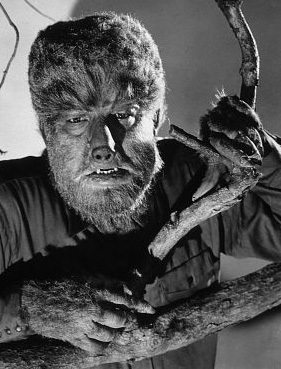 with movies that delight in killing, maiming and torturing. Hostel, Saw and even the movie Hannibal delights in casting out the traditional morality of old school horror. Even the “heros’ in these movies are sadistic, vengeful people who take delight in not just killing someone, but utterly dehumanizing them. In the old school horror movie, The Wolfman, you feel Larry Talbot’s pain about killing people.
Torture porn has little, if any, redeeming value. The stories are about showing and delighting in the fear of the victims. They want you to root for the killers and to cheer each splatter of blood. Torture porn isn’t humanizing. In fact, it dehumanizes in order to justify it’s glorification of torture. This is where torture porn leaves the road of horror and creates it’s own category. The stories don’t invite an invitation to a large world of discussion. It just wants us to delight in pain.
Sacramental Horror does the opposite. By combining uncanny, gross-out horror, we can become participants in the signs and seals of a bigger picture. Sacramental horror invites you to think about realities you can’t see, touch, or taste, but still exist. By horrifying, it humanizes by making us consider the evil that is loose in the world of our own hearts. Stories of Sacramental horror shine light into the darkness of the human heart. This is the sort of story I want to read in the middle of the night.
Previous Post

June 3, 2013
We're back, on a new channel and DC Comics goes to the dark side!
Next Post
June 4, 2013 Comic Book Day Tomorrow-Here is what we're looking forward to....
Browse Our Archives
Select a Category Alien Life ASMR Book Reviews Careers in Writing and Filmmaking Catholic Imagination Christmas miracles DC Trinity War Articles Ebola Faith Family Entertainment Fangirl Raves Filmmaking Geek Books Geek Comics Geek Culture Geek Entertainment Geek Gaming Geek Girl Geek Goes Catholic Geek Goes Catholic Geek Literature Geek Movies Geek Music Geek Sports Geek Tech Geek TV Ghost Bear Ramblings God's Not Dead Coverage Grace Unplugged Coverage Ham on Nye Coverage (Yeah, we went there) HWA Stuff Indie Artists Interviews Jonathan Ryan Book News Kardashians Lord of the Rings Mark Driscoll Movie Reviews Parenthood Pixie Perfect Salt Lake City Comic Con 2014 Social Issues Teen Author Boot Camp The Conjuring Coverage The Michigan Dog Man Adventures Uncategorized Writing
Select a Month November 2015 October 2015 September 2015 August 2015 July 2015 June 2015 May 2015 April 2015 March 2015 February 2015 January 2015 December 2014 November 2014 October 2014 September 2014 August 2014 July 2014 June 2014 May 2014 April 2014 March 2014 February 2014 January 2014 December 2013 November 2013 October 2013 September 2013 August 2013 July 2013 June 2013 May 2013 April 2013 March 2013 February 2013 January 2013
Follow Us!
TAKE THE
Religious Wisdom Quiz
Who was Abraham's wife?
Select your answer to see how you score.
Sarah Leah Rebekah Rachel
Related posts from The Rogue
A TREMOR IN THE FORCE - Episode 5...

TABC 2015 Wrap Up: A Story about Mr....
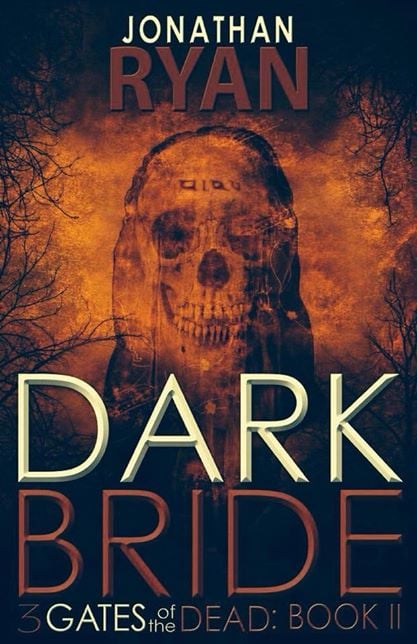
On The Road with the Dark Bride....(on second...
Teen Author Boot Camp 2015 Interview: David Powers...
TRENDING AT PATHEOS Religious Music & Entertainment

"Les Diabolique" and Transgression
Alongside something like Arrival, Vertigo, or Charade, Les Diaboliques is a...

"The Plague Dogs" and Mortality
So, flashback to the late 70s, early 80s. Walt Disney Studios is...

With the recent and highly successful release of Christopher Nolan’s epic film,...

"L'avventura" and Human Weakness
Today's piece is going to be a little different for a few...

I first want to apologize for not posting or writing anything. I'm...

I've engaged in the multi-year project of reading through the Church Fathers,...
view all Religious Music & Entertainment blogs
Ad-Free & Subscriber Log-In Subscription Support
- About Us
- 2026 Calendar
- Videos
- Podcasts
- Library of World Religions
- Faith In Media Tracker
- Advertise With Us
- Write for Us
- Privacy Policy
- Terms of Service
- Do Not Sell My Data
- Contact Us
- Radiant Digital
- Manage Newsletter Subscriptions
- Unsubscribe From Notifications
- Sitemap
Copyright 2008-2026, Patheos. All rights reserved.
Subscription Support Ad-Free & Subscriber Log-In
Follow Patheos