
BuddhistCatholicContemplativeEvangelicalGeneral ChristianHinduJewishLatter-day SaintMuslimNew VisionsProgressive Christian
Beliefs
- Buddhist
- Catholic
- Contemplative
- Evangelical
- General Christian
- Hindu
- Jewish
- Latter-day Saint
- More Voices
- Muslim
- New Visions
- Pagan
- Progressive Christian
Topics
- Religion News
- Food and Religion
- Sports and Religion
- Religious Art
- Religious Music and Entertainment
- Religious Events
- History and Religion
- Style and Religion
- Politics and Religion
- Women in Religion
- Recreation Outdoors and Religion
- Business Finance and Religion
- Careers Workplace and Religion
- Education and Religion
- Family Parenting and Religion
- Health Fitness and Religion
- Home and Religion
- Relationships and Religion
- Technology and Religion
- Travel and Religion
Columnists
- Buddhist Columnists
- Business Finance and Religion Columnists
- Careers Workplace and Religion Columnists
- Catholic Columnists
- Contemplative Columnists
- Education and Religion Columnists
- Evangelists Columnists
- Family Parenting and Religion Columnists
- General Christian Columnists
- Health Fitness and Religion Columnists
- Hindu Columnists
- History and Religion Columnists
- Home and Religion Columnists
- Jewish Columnists
- More Voices Columnists
- Latter Day Columnists
- Muslim Columnists
- New Visions Columnists
- Nonreligious Columnists
- Pagan Columnists
- Politics and Religion Columnists
- Progressive Columnists
- Recreation Outdoors and Religion Columnists
- Relationships and Religion Columnists
- Religion News Columnists
- Religious Art Columnists
- Religious Events Columnists
- Religious Music and Entertainment Columnists
- Sports and Religion Columnists
- Style and Religion Columnists
- Technology and Religion Columnists
- Travel and Religion Columnists
- Women in Religion Columnists
Resource Library
- 2026 Calendar
- Library of World Religions
- The 100 Most Holy Places on Earth
- Patheos Answers
- Podcasts
- Videos
- Faith Leaders Database
- Anglican Episcopalian
- Bahai
- Baptist
- Buddhism
- Christianity
- Confucianism
- Eastern Orthodoxy
- Hinduism
- Holiness and Pentecostal
- ISKCON
- Islam
- Judaism
- Lutheran
- Methodist
- The Church of Jesus Christ of Latter-day Saints
- New Age
- Paganism
- Presbytarian and Reformed
- Protestantism
- Religion Behind the Scenes
- Roman Catholic
- Scientology
- Shia Islam
- Sikhism
- Sufism
- Sunni Islam
- Taoism
- Zen
- See all religions
Research Tools
 Ad-Free & Subscriber Log-In Subscription Support
Ad-Free & Subscriber Log-In Subscription Support
Follow Patheos 

- Trending:
- Forgiveness
- |
- Marriage
- |
- Consciousness
- |
- Death Penalty
- |
- Election
- |
- Halloween
 Gathering, Partaking, and Communion
- Home
- General Christian
- Food and Religion
- Dostoyevsky, Utilitarian Eating, and Divine Interdependence
Dostoyevsky, Utilitarian Eating, and Divine Interdependence
Last updated on: June 15, 2023 at 11:49 am by Joanna Abels
Dostoyevsky, Utilitarian Eating, and Divine Interdependence 2023-06-15T11:49:33-07:00 Joanna Abels
Patheos Explore the world's faith through different perspectives on religion and spirituality! Patheos has the views of the prevalent religions and spiritualities of the world.
Time and time again, I find myself disturbed by the prevalent notion that food is merely “fuel” for our bodies. It seems as though we have reduced ourselves to mere machines, requiring quick, efficient, and cheap servicing, much like motor vehicles. Food, once a source of nourishment and celebration, has been reduced to a mere commodity in our lives. We prioritize brand, price, and convenience, losing sight of the deeper meaning and significance of what we consume.

In Fyodor Dostoevsky’s masterpiece, The Brothers Karamazov, he masterfully exposes the flaws and moral ambiguities of this utilitarian mindset. The characters’ relentless pursuit of personal pleasure and convenience consistently leads to destructive consequences. Dostoevsky sheds light on the potential dangers of prioritizing immediate gratification over ethical considerations, neglecting the well-being of others, and forsaking the beauty of interdependence between all created beings, be they human or non-human.
However, amidst this grim portrayal, there is a glimmer of hope embodied in the character of Father Zosima, a spiritual guide in the town’s monastery. Zosima serves as a counterpoint to the prevailing utilitarian mindset. With profound wisdom and deep empathy, he presents a more holistic and interdependent worldview. Drawing from Christian teachings, Zosima emphasizes the interconnectedness of all creation, urging individuals to embrace their responsibility towards others.
Zosima eloquently reflects, “God took seeds from other worlds and sowed them on this earth and made his garden grow, and everything that could come up came up. But what grows lives and is alive only through the feeling of its contact with other mysterious worlds. If that feeling grows weak or is destroyed in you, then what has grown within you will also die. Then you will become indifferent to life and even grow to hate it. That’s what I think.”
Sadly, the lens of utilitarianism, which we often apply to our eating habits and pursuit of convenience, blinds us to the flourishing of those involved in the food production and distribution chain. We overlook the environmental impact of our consumption habits and disregard the rights and welfare of the animals that provide our sustenance. In stark contrast, Christian teachings implore us to consider the welfare of others, to be mindful of the consequences of our actions, and to make choices that promote justice, sustainability, and the flourishing of all creation.
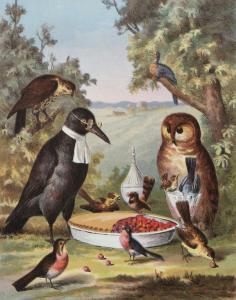
Renowned gardener and author, Fred Bahnson, beautifully articulates this perspective in his book Making Peace with the Land, stating, “Food is not a product; it is not ‘fuel for the machine.’ It is not a commodity or a reflection of our technological ingenuity. It is, before everything else, an unearned gift from God, manna from heaven, a blessing.” Food is so much more than a mere product; it is a gift—an extraordinary one at that. In fact, it is the first gift bestowed upon creation. With a careful reading of Genesis 1, we witness God’s creative work—his hovering, naming, and making. Yet, it is at the culmination of this magnificent account, in reference to food, that God gives.
When we recognize food as a gift, it becomes a tangible expression of God’s boundless love for us. It embodies His grace, provided for the well-being of all creation.
Every time we take a bite, we partake in a profound web of relationships that connect us to soil, lemon thyme, water, sun, farmers, and friends. Thoughtful eating honors and nurtures these relationships, acknowledging the intricate connections that sustain our lives. Conversely, mindless consumption demeans and degrades the sources of nourishment that make our existence a possible feast.
Let us reclaim the delight of eating thoughtfully.
Previous Post

December 29, 2022
Feasting on Mundanity
Recent Comments
Browse Our Archives
Select a Category Uncategorized
Select a Month June 2023 December 2022
TAKE THE
Religious Wisdom Quiz
Which city did the Philistines give David as a base during his exile?
Select your answer to see how you score.
Gibeah Bethlehem Hebron Ziklag
Related posts from Gathering, Partaking, and Communion

Gathering, Partaking, and Communion
TRENDING AT PATHEOS General Christian

A Biblical Vision of Success in Christian Life...
The Concern and Quest Recent trends and tendencies I note around me...

Indigenous Peoples’ Day and the Church
Indigenous' Peoples Day or Columbus Day? Depending on where you live...

When Spiritual Growth Looks Like Losing Ground
Four Passive Spiritual Disciplines: An Introduction When I was a college freshman,...

Faith and Finding Your Current Season
“To everything there is a season,” Ecclesiastes tells us, “and a time...

Did Jesus Fear God's Wrath in Gethsemane?
That Time Jesus Was Terrified Before we begin, let me say at...

A Generation Searching for God in All the...
Revival Begins With God’s People! Holidays Are Upon Us! Welcome to October!...
view all General Christian blogs
Ad-Free & Subscriber Log-In Subscription Support
- About Us
- 2026 Calendar
- Videos
- Podcasts
- Library of World Religions
- Faith In Media Tracker
- Advertise With Us
- Write for Us
- Privacy Policy
- Terms of Service
- Do Not Sell My Data
- Contact Us
- Radiant Digital
- Manage Newsletter Subscriptions
- Unsubscribe From Notifications
- Sitemap
Copyright 2008-2026, Patheos. All rights reserved.
Subscription Support Ad-Free & Subscriber Log-In
Follow Patheos