
BuddhistCatholicContemplativeEvangelicalGeneral ChristianHinduJewishLatter-day SaintMuslimNew VisionsProgressive Christian
Beliefs
- Buddhist
- Catholic
- Contemplative
- Evangelical
- General Christian
- Hindu
- Jewish
- Latter-day Saint
- More Voices
- Muslim
- New Visions
- Pagan
- Progressive Christian
Topics
- Religion News
- Food and Religion
- Sports and Religion
- Religious Art
- Religious Music and Entertainment
- Religious Events
- History and Religion
- Style and Religion
- Politics and Religion
- Women in Religion
- Recreation Outdoors and Religion
- Business Finance and Religion
- Careers Workplace and Religion
- Education and Religion
- Family Parenting and Religion
- Health Fitness and Religion
- Home and Religion
- Relationships and Religion
- Technology and Religion
- Travel and Religion
Columnists
- Buddhist Columnists
- Business Finance and Religion Columnists
- Careers Workplace and Religion Columnists
- Catholic Columnists
- Contemplative Columnists
- Education and Religion Columnists
- Evangelists Columnists
- Family Parenting and Religion Columnists
- General Christian Columnists
- Health Fitness and Religion Columnists
- Hindu Columnists
- History and Religion Columnists
- Home and Religion Columnists
- Jewish Columnists
- More Voices Columnists
- Latter Day Columnists
- Muslim Columnists
- New Visions Columnists
- Nonreligious Columnists
- Pagan Columnists
- Politics and Religion Columnists
- Progressive Columnists
- Recreation Outdoors and Religion Columnists
- Relationships and Religion Columnists
- Religion News Columnists
- Religious Art Columnists
- Religious Events Columnists
- Religious Music and Entertainment Columnists
- Sports and Religion Columnists
- Style and Religion Columnists
- Technology and Religion Columnists
- Travel and Religion Columnists
- Women in Religion Columnists
Resource Library
- 2026 Calendar
- Library of World Religions
- The 100 Most Holy Places on Earth
- Patheos Answers
- Podcasts
- Videos
- Faith Leaders Database
- Anglican Episcopalian
- Bahai
- Baptist
- Buddhism
- Christianity
- Confucianism
- Eastern Orthodoxy
- Hinduism
- Holiness and Pentecostal
- ISKCON
- Islam
- Judaism
- Lutheran
- Methodist
- The Church of Jesus Christ of Latter-day Saints
- New Age
- Paganism
- Presbytarian and Reformed
- Protestantism
- Religion Behind the Scenes
- Roman Catholic
- Scientology
- Shia Islam
- Sikhism
- Sufism
- Sunni Islam
- Taoism
- Zen
- See all religions
Research Tools
 Ad-Free & Subscriber Log-In Subscription Support
Ad-Free & Subscriber Log-In Subscription Support
Follow Patheos 

- Trending:
- Forgiveness
- |
- Marriage
- |
- Consciousness
- |
- Death Penalty
- |
- Election
- |
- Halloween
 Gathering, Partaking, and Communion
- Home
- General Christian
- Food and Religion
- Feasting on Mundanity
Feasting on Mundanity
Last updated on: December 29, 2022 at 10:28 am by Joanna Abels
Feasting on Mundanity 2022-12-29T10:28:22-08:00 Joanna Abels
Patheos Explore the world's faith through different perspectives on religion and spirituality! Patheos has the views of the prevalent religions and spiritualities of the world.
“We beg you, God, make us truly alive.”
It is a profound mystery that the quotidian moments of daily life can simultaneously be the cause of significant despair and the crucible of spiritual formation. Humanity desires a life full of meaning, fulfillment, and ecstasy and the human paradox, however, is that these things are found only by welcoming the mundanity of the present moment as a holy sacrament. The 17th-century Jesuit priest Jean-Pierre de Caussade devoted his life to pursuing what he called the sacrament of the present moment, the commitment to experiencing every fleeting moment as a holy sacrament. According to de Caussade, no moment is trivial, since each one contains a divine Kingdom. Blessings, more often than not, come from mundane and unexpected places: like the dinner table.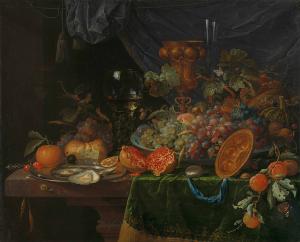
Food, a divine and humbling enigma, can be the source of abundant formation; for eating is intrinsically an invitation to celebration and transformation. Although it is feasible to describe food and eating in several ways, what food is and why eating is transformative is best understood by God’s own Trinitarian life of care and celebration, hospitality and communion, gift and sacrifice. Theologian Norman Wirzba in his book Food and Faith describes the importance of having a theological understanding of food as this:
Trinitarian theology asserts that all reality is communion––the giving and receiving of gifts–– because it has its source and sustenance in the eternal Triune love described by theologians as perichoresis, a making room within oneself for another to be. This means that nothing in creation exists by itself, in terms of itself, or for itself.
In keeping with this view provided by Wirzba, we cannot truly understand food until we perceive, receive, and taste it in terms of its origin and end in God as He who provides for, communes with, and reconciles Creation back to wholeness. Food is a gift of God given to all Creatures for the purposes of nurturing, sharing, and celebrating. When it is done in the name of God and to the glory of God, eating is the earthly realization of God’s eternal communion-building love.
When the early Christians went to the desert, they prayed, “we beg you, God, make us truly alive.” That fourth-century prayer was not the prayer of a people who apathetically awaited their ticket to heaven. Rather, that prayer was the urgent cry of a people who, like Jean-Pierre de Caussade, desired an awareness of God’s presence in the everyday moments of life here on Earth. Those fourth-century monastics fled to the desert because they were being drawn toward life and towards an embracement of the sacrament of the present moment.
Like these early monastics, may we have a desire to live a life of integrity and wholeness, to become more fully alive. And although we may not be able to look for the fulfillment of those desires in the desert, we may find it around the table, where blessings often come from.
Previous Post

June 15, 2023
Dostoyevsky, Utilitarian Eating, and Divine Interdependence
Next Post
June 15, 2023 Dostoyevsky, Utilitarian Eating, and Divine Interdependence
Browse Our Archives
Select a Category Uncategorized
Select a Month June 2023 December 2022
TAKE THE
Religious Wisdom Quiz
What did God write the Ten Commandments with?
Select your answer to see how you score.
A pen A sword A chisel His finger
Related posts from Gathering, Partaking, and Communion

Dostoyevsky, Utilitarian Eating, and Divine Interdependence
Gathering, Partaking, and Communion
TRENDING AT PATHEOS General Christian

A Biblical Vision of Success in Christian Life...
The Concern and Quest Recent trends and tendencies I note around me...

Indigenous Peoples’ Day and the Church
Indigenous' Peoples Day or Columbus Day? Depending on where you live...

When Spiritual Growth Looks Like Losing Ground
Four Passive Spiritual Disciplines: An Introduction When I was a college freshman,...

Faith and Finding Your Current Season
“To everything there is a season,” Ecclesiastes tells us, “and a time...

Did Jesus Fear God's Wrath in Gethsemane?
That Time Jesus Was Terrified Before we begin, let me say at...

A Generation Searching for God in All the...
Revival Begins With God’s People! Holidays Are Upon Us! Welcome to October!...
view all General Christian blogs
Ad-Free & Subscriber Log-In Subscription Support
- About Us
- 2026 Calendar
- Videos
- Podcasts
- Library of World Religions
- Faith In Media Tracker
- Advertise With Us
- Write for Us
- Privacy Policy
- Terms of Service
- Do Not Sell My Data
- Contact Us
- Radiant Digital
- Manage Newsletter Subscriptions
- Unsubscribe From Notifications
- Sitemap
Copyright 2008-2026, Patheos. All rights reserved.
Subscription Support Ad-Free & Subscriber Log-In
Follow Patheos