
BuddhistCatholicContemplativeEvangelicalGeneral ChristianHinduJewishLatter-day SaintMuslimNew VisionsProgressive Christian
Beliefs
- Buddhist
- Catholic
- Contemplative
- Evangelical
- General Christian
- Hindu
- Jewish
- Latter-day Saint
- More Voices
- Muslim
- New Visions
- Pagan
- Progressive Christian
Topics
- Religion News
- Food and Religion
- Sports and Religion
- Religious Art
- Religious Music and Entertainment
- Religious Events
- History and Religion
- Style and Religion
- Politics and Religion
- Women in Religion
- Recreation Outdoors and Religion
- Business Finance and Religion
- Careers Workplace and Religion
- Education and Religion
- Family Parenting and Religion
- Health Fitness and Religion
- Home and Religion
- Relationships and Religion
- Technology and Religion
- Travel and Religion
Columnists
- Buddhist Columnists
- Business Finance and Religion Columnists
- Careers Workplace and Religion Columnists
- Catholic Columnists
- Contemplative Columnists
- Education and Religion Columnists
- Evangelists Columnists
- Family Parenting and Religion Columnists
- General Christian Columnists
- Health Fitness and Religion Columnists
- Hindu Columnists
- History and Religion Columnists
- Home and Religion Columnists
- Jewish Columnists
- More Voices Columnists
- Latter Day Columnists
- Muslim Columnists
- New Visions Columnists
- Nonreligious Columnists
- Pagan Columnists
- Politics and Religion Columnists
- Progressive Columnists
- Recreation Outdoors and Religion Columnists
- Relationships and Religion Columnists
- Religion News Columnists
- Religious Art Columnists
- Religious Events Columnists
- Religious Music and Entertainment Columnists
- Sports and Religion Columnists
- Style and Religion Columnists
- Technology and Religion Columnists
- Travel and Religion Columnists
- Women in Religion Columnists
Resource Library
- 2026 Calendar
- Library of World Religions
- The 100 Most Holy Places on Earth
- Patheos Answers
- Podcasts
- Videos
- Faith Leaders Database
- Anglican Episcopalian
- Bahai
- Baptist
- Buddhism
- Christianity
- Confucianism
- Eastern Orthodoxy
- Hinduism
- Holiness and Pentecostal
- ISKCON
- Islam
- Judaism
- Lutheran
- Methodist
- The Church of Jesus Christ of Latter-day Saints
- New Age
- Paganism
- Presbytarian and Reformed
- Protestantism
- Religion Behind the Scenes
- Roman Catholic
- Scientology
- Shia Islam
- Sikhism
- Sufism
- Sunni Islam
- Taoism
- Zen
- See all religions
Research Tools
 Ad-Free & Subscriber Log-In Subscription Support
Ad-Free & Subscriber Log-In Subscription Support
Follow Patheos 

- Trending:
- Forgiveness
- |
- Marriage
- |
- Consciousness
- |
- Death Penalty
- |
- Election
- |
- Halloween
 Gathering Nectar
- Home
- Hindu
- Types of Karma
Types of Karma
Last updated on: October 8, 2014 at 10:00 am by Deepika Birks
Types of Karma 2014-10-08T10:00:33-04:00 Deepika Birks
Patheos Explore the world's faith through different perspectives on religion and spirituality! Patheos has the views of the prevalent religions and spiritualities of the world.
A lot of people think karma is something like a boomerang — that you throw it at someone and it comes back and hits you in the head. Other people confuse karma with a deity of vengeance.
Karma is more like a garden. You plant seeds, you tend them, you harvest crops, you plant the seeds from your harvest. There are three types of karma with Sanskrit names. At their simplest, they translate as:
- Dormant (Sanchita) Karma
- Active (Prarabdha) Karma
- Potential (Kriyamana) Karma
Active karma is an area in which we have the least choice choice; it constitutes our fate. If you spent the last few decades cultivating an apple orchard, there are now apple trees all around you and apples falling to the ground full of apple seeds. It’s too late to wonder if you would have preferred to plant a different tree.
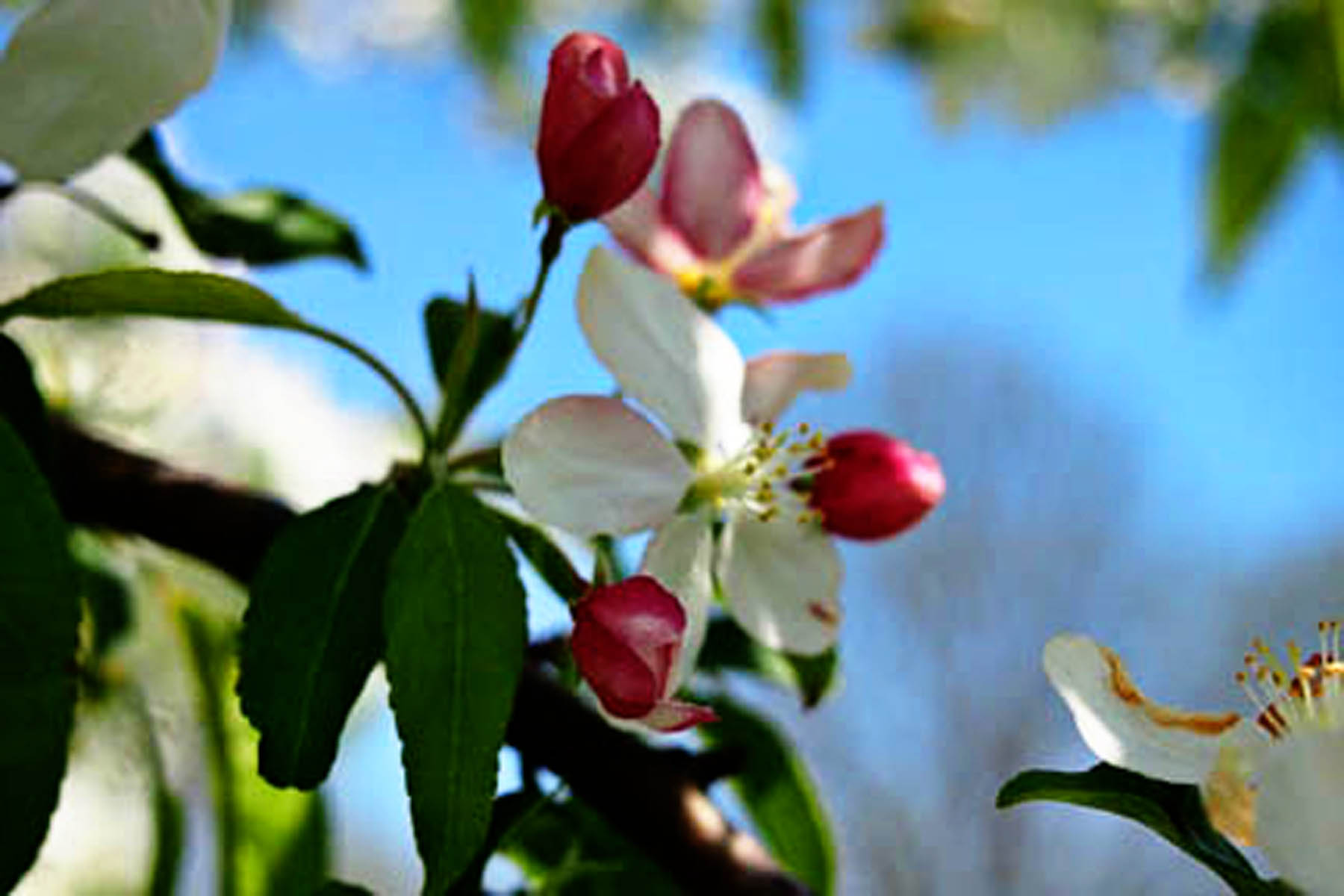
I took this picture of a crabapple blossom in May. Now that it’s October, it’s too late to decide whether to let it become a crabapple.
Dormant karma is the seeds you’ve been harvesting from the apples. You have a choice whether to plant them and nourish them through sapling phase and grow new trees. You could decide not to plant any more apple seeds.
Potential karma is the blossoms. These are already growing and, left unchecked, will turn into apples in a few months. It’s much harder to snip all the blossoms off the tree than it is to not plant the tree in the first place, so potential karma is harder to change than dormant karma.
As Pandit Rajmani Tigunait says in From Death to Birth: Understanding Karma and Reincarnation:
We may not be able to stop the course of events caused by prarabdha karma, but we are free either to accumulate the fruits of our karmas or to renounce them. Hoarding the fruits creates an environment of further involvement — potential karmas — but those who entertain destiny joyfully and wisely, who are free from both attachment and aversion to the experiences that destiny brings, renounce the fruit of their actions and thus do not form potential karmas.
The problem with karma isn’t that it’s “a bitch” or that it’s “going to get you.” The problem is that at some point you decide you don’t want to cultivate gardens anymore and your soul is ready to go home. There’s nothing wrong with an apple orchard, but if you don’t want to continuously grow apples forever, you will at some point need to renounce the fruits rather than continually planting their seeds.
Previous Post

October 7, 2014
How many water are there?
Next Post
October 9, 2014 Careless Karmas
Browse Our Archives
Select a Category Books Cultural Differences Food Holidays Issues in Hinduism Series Karma Movies Names of God News Ramayana Scripture Theology Yoga
Select a Month March 2015 February 2015 January 2015 December 2014 November 2014 October 2014 September 2014
Follow Us!
TAKE THE
Religious Wisdom Quiz
Who was the prophet that confronted King David about his sin with Bathsheba?
Select your answer to see how you score.
Elijah Nathan Samuel Elisha
Related posts from Gathering Nectar




Will the real Divine Mother please stand up?
TRENDING AT PATHEOS Hindu

Indian Hindu pilot’s valor in line of duty...
There is a hoary maritime tradition that the captain of the...

Movie on Neem Karoli Baba’s life is a...
Neem Karoli Baba’s life (1900-1973) is associated with miracles he made in...

20 Questions to Ask Before an Interfaith Marriage,...
Four questions every interfaith couple should discuss before marriage: Conversion. Will either...

Avadhānam: The Art of Concentration and Intellectual Mastery
What is Avadhānam? In the summer of 2015, during a three-day Sanskrit...

Jesus in the Dharma: Where Christ Fits in...
Where Does Jesus Fit in Hinduism? That’s a question I get often...

Hormuz: A Shared Hindu and Zoroastrian Heritage
Every evening, somewhere in the world, a newsreader utters the words: "The...
view all Hindu blogs
Ad-Free & Subscriber Log-In Subscription Support
- About Us
- 2026 Calendar
- Videos
- Podcasts
- Library of World Religions
- Faith In Media Tracker
- Advertise With Us
- Write for Us
- Privacy Policy
- Terms of Service
- Do Not Sell My Data
- Contact Us
- Radiant Digital
- Manage Newsletter Subscriptions
- Unsubscribe From Notifications
- Sitemap
Copyright 2008-2026, Patheos. All rights reserved.
Subscription Support Ad-Free & Subscriber Log-In
Follow Patheos