
BuddhistCatholicContemplativeEvangelicalGeneral ChristianHinduJewishLatter-day SaintMuslimNew VisionsProgressive Christian
Beliefs
- Buddhist
- Catholic
- Contemplative
- Evangelical
- General Christian
- Hindu
- Jewish
- Latter-day Saint
- More Voices
- Muslim
- New Visions
- Pagan
- Progressive Christian
Topics
- Religion News
- Food and Religion
- Sports and Religion
- Religious Art
- Religious Music and Entertainment
- Religious Events
- History and Religion
- Style and Religion
- Politics and Religion
- Women in Religion
- Recreation Outdoors and Religion
- Business Finance and Religion
- Careers Workplace and Religion
- Education and Religion
- Family Parenting and Religion
- Health Fitness and Religion
- Home and Religion
- Relationships and Religion
- Technology and Religion
- Travel and Religion
Columnists
- Buddhist Columnists
- Business Finance and Religion Columnists
- Careers Workplace and Religion Columnists
- Catholic Columnists
- Contemplative Columnists
- Education and Religion Columnists
- Evangelists Columnists
- Family Parenting and Religion Columnists
- General Christian Columnists
- Health Fitness and Religion Columnists
- Hindu Columnists
- History and Religion Columnists
- Home and Religion Columnists
- Jewish Columnists
- More Voices Columnists
- Latter Day Columnists
- Muslim Columnists
- New Visions Columnists
- Nonreligious Columnists
- Pagan Columnists
- Politics and Religion Columnists
- Progressive Columnists
- Recreation Outdoors and Religion Columnists
- Relationships and Religion Columnists
- Religion News Columnists
- Religious Art Columnists
- Religious Events Columnists
- Religious Music and Entertainment Columnists
- Sports and Religion Columnists
- Style and Religion Columnists
- Technology and Religion Columnists
- Travel and Religion Columnists
- Women in Religion Columnists
Resource Library
- 2026 Calendar
- Library of World Religions
- The 100 Most Holy Places on Earth
- Patheos Answers
- Podcasts
- Videos
- Faith Leaders Database
- Anglican Episcopalian
- Bahai
- Baptist
- Buddhism
- Christianity
- Confucianism
- Eastern Orthodoxy
- Hinduism
- Holiness and Pentecostal
- ISKCON
- Islam
- Judaism
- Lutheran
- Methodist
- The Church of Jesus Christ of Latter-day Saints
- New Age
- Paganism
- Presbytarian and Reformed
- Protestantism
- Religion Behind the Scenes
- Roman Catholic
- Scientology
- Shia Islam
- Sikhism
- Sufism
- Sunni Islam
- Taoism
- Zen
- See all religions
Research Tools
 Ad-Free & Subscriber Log-In Subscription Support
Ad-Free & Subscriber Log-In Subscription Support
Follow Patheos 

- Trending:
- Forgiveness
- |
- Marriage
- |
- Consciousness
- |
- Death Penalty
- |
- Election
- |
- Halloween
 Gathering Nectar
- Home
- Hindu
- Upcoming Holiday: Navratri
Upcoming Holiday: Navratri
Last updated on: September 13, 2014 at 11:00 am by Deepika Birks
Upcoming Holiday: Navratri 2014-09-13T11:00:52-04:00 Deepika Birks
Patheos Explore the world's faith through different perspectives on religion and spirituality! Patheos has the views of the prevalent religions and spiritualities of the world.
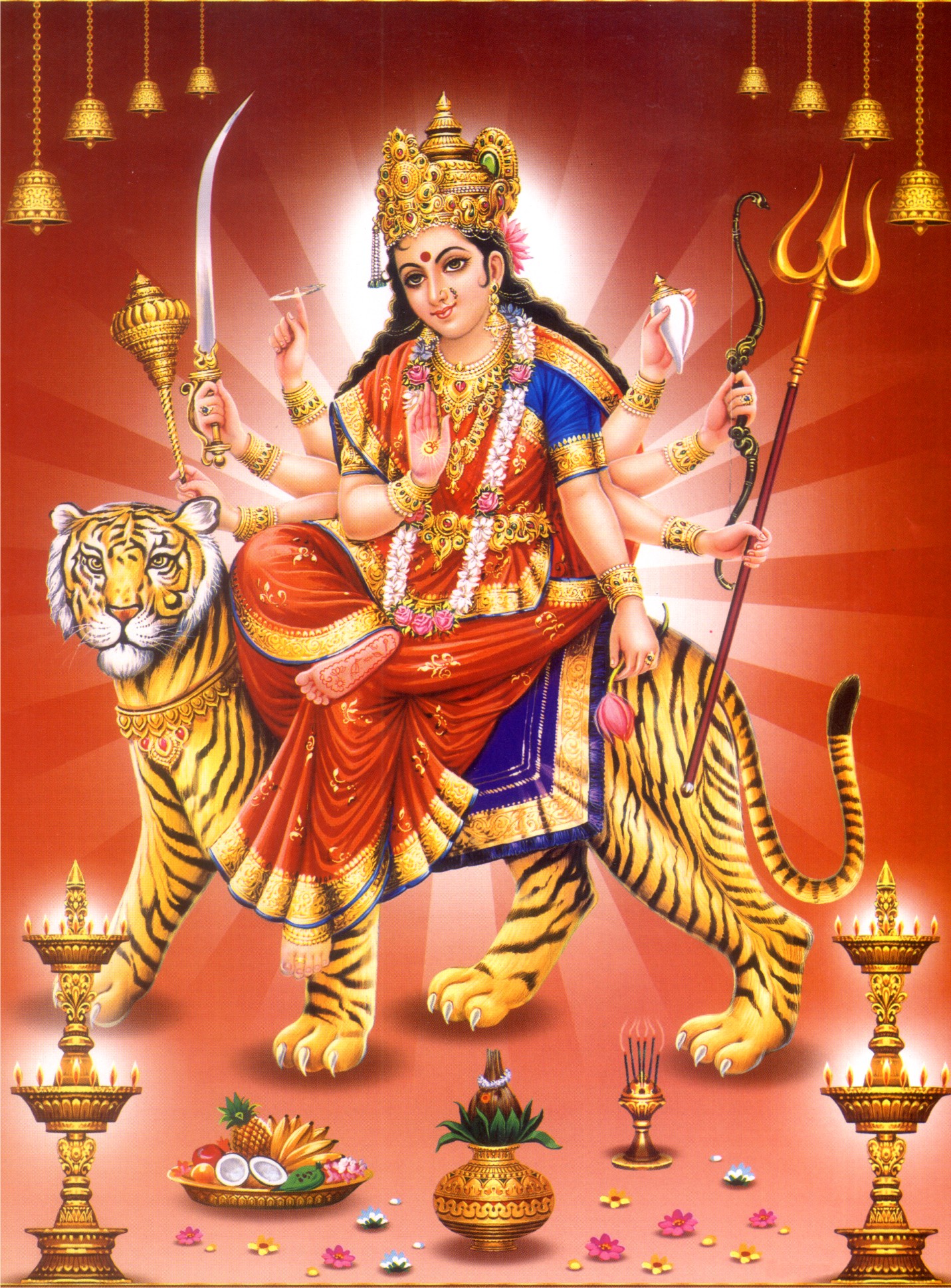 Autumn Navratri starts on September 25 and ends on October 3, 2014. Navratri (“Nine Nights”) is a primary holiday for Goddess worshipers. In the Vedas there is a hymn to the Goddess of Night and a hymn to the Goddess of Dawn. The Shakta scripture Devi Mahatmyam (Chandi) expands on these two Vedic hymns with an entire story of how the Goddess leads us from darkness to light. The first three nights of Navratri, Kali is worshiped. The next three nights are devoted to Lakshmi. The final three nights, Sarasvati is worshiped. This follows the structure of the Devi Mahatmyam, in which the sections are devoted to Maha Kali, Maha Lakshmi, and Maha Sarasvati.
Navratri is celebrated twice in the year, with the smaller Navratri in the spring and the greater Navratri in the autumn. The Devi Bhagavatam (retelling by Ramesh Menon) explains:
Spring and autumn are the months of sickness and death; they are even called Yama’s teeth. They are the thresholds of Uttarayana and Dakshinayana, when the sun turns north and south, and these are the seasons when the world is unstable. It is at these times that men have a special need for grace, and so the Devi’s Navaratri, the first nine nights of the bright halves of the months of Asvina in spring, and Chaitra in autumn, are observed as times for special prayer.
Spring is a cruel time, but autumn is dangerous. It is in autumnal Chaitra mainly that the Devi’s Navaratri puja is undertaken. On the day of the new moon, amavasya, the bhakta collects what he needs for his vrata of nine days, which begins the following morning.
I’ll be doing a series on Navratri, discussing some of the names of the Goddess and ways in which She is worshiped. Jai Maa!
Previous Post

September 12, 2014
Hindus believe in eternal souls -- but Christians don't!
Next Post
September 14, 2014 Navadurga: Nine Forms of the Goddess Durga
Browse Our Archives
Select a Category Books Cultural Differences Food Holidays Issues in Hinduism Series Karma Movies Names of God News Ramayana Scripture Theology Yoga
Select a Month March 2015 February 2015 January 2015 December 2014 November 2014 October 2014 September 2014
Follow Us!
TAKE THE
Religious Wisdom Quiz
Who told Saul, "To obey is better than sacrifice"?
Select your answer to see how you score.
Eli David Nathan Samuel
Related posts from Gathering Nectar




Will the real Divine Mother please stand up?
TRENDING AT PATHEOS Hindu

Indian Hindu pilot’s valor in line of duty...
There is a hoary maritime tradition that the captain of the...

Movie on Neem Karoli Baba’s life is a...
Neem Karoli Baba’s life (1900-1973) is associated with miracles he made in...

20 Questions to Ask Before an Interfaith Marriage,...
Four questions every interfaith couple should discuss before marriage: Conversion. Will either...

Avadhānam: The Art of Concentration and Intellectual Mastery
What is Avadhānam? In the summer of 2015, during a three-day Sanskrit...

Jesus in the Dharma: Where Christ Fits in...
Where Does Jesus Fit in Hinduism? That’s a question I get often...

Hormuz: A Shared Hindu and Zoroastrian Heritage
Every evening, somewhere in the world, a newsreader utters the words: "The...
view all Hindu blogs
Ad-Free & Subscriber Log-In Subscription Support
- About Us
- 2026 Calendar
- Videos
- Podcasts
- Library of World Religions
- Faith In Media Tracker
- Advertise With Us
- Write for Us
- Privacy Policy
- Terms of Service
- Do Not Sell My Data
- Contact Us
- Radiant Digital
- Manage Newsletter Subscriptions
- Unsubscribe From Notifications
- Sitemap
Copyright 2008-2026, Patheos. All rights reserved.
Subscription Support Ad-Free & Subscriber Log-In
Follow Patheos