
BuddhistCatholicContemplativeEvangelicalGeneral ChristianHinduJewishLatter-day SaintMuslimNew VisionsProgressive Christian
Beliefs
- Buddhist
- Catholic
- Contemplative
- Evangelical
- General Christian
- Hindu
- Jewish
- Latter-day Saint
- More Voices
- Muslim
- New Visions
- Pagan
- Progressive Christian
Topics
- Religion News
- Food and Religion
- Sports and Religion
- Religious Art
- Religious Music and Entertainment
- Religious Events
- History and Religion
- Style and Religion
- Politics and Religion
- Women in Religion
- Recreation Outdoors and Religion
- Business Finance and Religion
- Careers Workplace and Religion
- Education and Religion
- Family Parenting and Religion
- Health Fitness and Religion
- Home and Religion
- Relationships and Religion
- Technology and Religion
- Travel and Religion
Columnists
- Buddhist Columnists
- Business Finance and Religion Columnists
- Careers Workplace and Religion Columnists
- Catholic Columnists
- Contemplative Columnists
- Education and Religion Columnists
- Evangelists Columnists
- Family Parenting and Religion Columnists
- General Christian Columnists
- Health Fitness and Religion Columnists
- Hindu Columnists
- History and Religion Columnists
- Home and Religion Columnists
- Jewish Columnists
- More Voices Columnists
- Latter Day Columnists
- Muslim Columnists
- New Visions Columnists
- Nonreligious Columnists
- Pagan Columnists
- Politics and Religion Columnists
- Progressive Columnists
- Recreation Outdoors and Religion Columnists
- Relationships and Religion Columnists
- Religion News Columnists
- Religious Art Columnists
- Religious Events Columnists
- Religious Music and Entertainment Columnists
- Sports and Religion Columnists
- Style and Religion Columnists
- Technology and Religion Columnists
- Travel and Religion Columnists
- Women in Religion Columnists
Resource Library
- 2026 Calendar
- Library of World Religions
- The 100 Most Holy Places on Earth
- Patheos Answers
- Podcasts
- Videos
- Faith Leaders Database
- Anglican Episcopalian
- Bahai
- Baptist
- Buddhism
- Christianity
- Confucianism
- Eastern Orthodoxy
- Hinduism
- Holiness and Pentecostal
- ISKCON
- Islam
- Judaism
- Lutheran
- Methodist
- The Church of Jesus Christ of Latter-day Saints
- New Age
- Paganism
- Presbytarian and Reformed
- Protestantism
- Religion Behind the Scenes
- Roman Catholic
- Scientology
- Shia Islam
- Sikhism
- Sufism
- Sunni Islam
- Taoism
- Zen
- See all religions
Research Tools
 Ad-Free & Subscriber Log-In Subscription Support
Ad-Free & Subscriber Log-In Subscription Support
Follow Patheos 

- Trending:
- Forgiveness
- |
- Marriage
- |
- Consciousness
- |
- Death Penalty
- |
- Election
- |
- Halloween
 Gathering Nectar
- Home
- Hindu
- True Lessons from False Religion
True Lessons from False Religion
Last updated on: September 15, 2014 at 9:00 am by Deepika Birks
True Lessons from False Religion 2014-09-15T09:00:52-04:00 Deepika Birks
Patheos Explore the world's faith through different perspectives on religion and spirituality! Patheos has the views of the prevalent religions and spiritualities of the world.
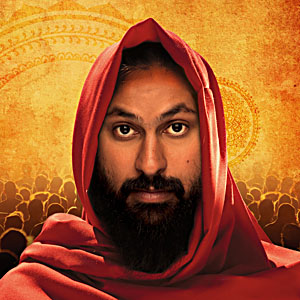 Last night I watched Kumaré: The True Story of a False Prophet. It had been on my Netflix list for ages, but I wasn’t sure I wanted to watch. I thought it would be a film deriding Seekers. To some extent, it started that way. In truth, Vikram Gandhi could have made just that film — people said enought cringeworthy stuff to him that he could easily have played this like a Sacha Baron Cohen film. I’m glad he didn’t.
The premise of the film is that the director wonders why we need gurus at all and decides to go “undercover” as the made-up guru Kumaré to see whether people believe him. [Note: Kumaré is very close to a real word in Sanskrit. Kumara means a young man — or even a prince — and is a title of Skanda, son of Shiva and Parvati. The Four Kumaras are four eternal youths from Puranic literature. The female form of the name, Kumari, is the Goddess in her form as a young girl.]
What could have been simple ridicule turned thought-provoking. These are my takeaways:
- It helped that he was young and vibrant. People were drawn to him because he is attractive. You can say it’s a shame people are so superficial, but it’s called attractiveness because it literally attracts people.
- It’s easy to see how so many gurus (and spiritual leaders from all religions) end up in sex scandals. People were very much hitting on him. It was awkward to watch. The scene that made me the most uncomfortable: a married couple had invited him into their home and were talking to him on their bed.
- People are lonely. There is probably no one in your life who has unlimited time to sit close, maintain eye contact, and listen to all of your thoughts, fears, insecurities, dreams, and goals for hours on end while asking nothing in return. Not only did Kumaré not have anyplace else to be (since his job was literally to sit there and let this unfold) but he wasn’t checking his Facebook or texting. He also didn’t do the exchange that most friendships are based on: listen for a time and then take his turn to talk about his own life. He just listened. I think listening to people and making them feel heard is the most powerful thing you can do.
- Faith communities are important. There is such an attack on faith in our postmodern world that people are throwing away their communities along with their faiths. What is arising in its place are fandoms, cosplay, LARPing, or — for one married couple I know who practice different religions — extreme devotion to a sports team. There’s nothing wrong with sports or gaming or fiction, but those communities are not set up to be there for you when bankruptcy or foreclosure are looming or when your child gets a diagnosis. I think that before we tear apart our support systems, we should give thought to what we’re replacing them with.
In the end, no human is perfect. If you’re expecting perfection from humans, you will always be disappointed. You have to find peace within yourself and release your desire for a perfect authority figure to give you all the answers. Which is exactly what Kumaré was teaching. So was he a fake guru or an accidental guru?
Previous Post

September 14, 2014
Navadurga: Nine Forms of the Goddess Durga
Next Post
September 16, 2014 A Hindu in an Alpha Course
Browse Our Archives
Select a Category Books Cultural Differences Food Holidays Issues in Hinduism Series Karma Movies Names of God News Ramayana Scripture Theology Yoga
Select a Month March 2015 February 2015 January 2015 December 2014 November 2014 October 2014 September 2014
Follow Us!
TAKE THE
Religious Wisdom Quiz
Who said, "I am the resurrection and the life"?
Select your answer to see how you score.
Peter Jesus Moses Paul
Related posts from Gathering Nectar




Will the real Divine Mother please stand up?
TRENDING AT PATHEOS Hindu

Indian Hindu pilot’s valor in line of duty...
There is a hoary maritime tradition that the captain of the...

Movie on Neem Karoli Baba’s life is a...
Neem Karoli Baba’s life (1900-1973) is associated with miracles he made in...

20 Questions to Ask Before an Interfaith Marriage,...
Four questions every interfaith couple should discuss before marriage: Conversion. Will either...

Avadhānam: The Art of Concentration and Intellectual Mastery
What is Avadhānam? In the summer of 2015, during a three-day Sanskrit...

Jesus in the Dharma: Where Christ Fits in...
Where Does Jesus Fit in Hinduism? That’s a question I get often...

Hormuz: A Shared Hindu and Zoroastrian Heritage
Every evening, somewhere in the world, a newsreader utters the words: "The...
view all Hindu blogs
Ad-Free & Subscriber Log-In Subscription Support
- About Us
- 2026 Calendar
- Videos
- Podcasts
- Library of World Religions
- Faith In Media Tracker
- Advertise With Us
- Write for Us
- Privacy Policy
- Terms of Service
- Do Not Sell My Data
- Contact Us
- Radiant Digital
- Manage Newsletter Subscriptions
- Unsubscribe From Notifications
- Sitemap
Copyright 2008-2026, Patheos. All rights reserved.
Subscription Support Ad-Free & Subscriber Log-In
Follow Patheos