
BuddhistCatholicContemplativeEvangelicalGeneral ChristianHinduJewishLatter-day SaintMuslimNew VisionsProgressive Christian
Beliefs
- Buddhist
- Catholic
- Contemplative
- Evangelical
- General Christian
- Hindu
- Jewish
- Latter-day Saint
- More Voices
- Muslim
- New Visions
- Pagan
- Progressive Christian
Topics
- Religion News
- Food and Religion
- Sports and Religion
- Religious Art
- Religious Music and Entertainment
- Religious Events
- History and Religion
- Style and Religion
- Politics and Religion
- Women in Religion
- Recreation Outdoors and Religion
- Business Finance and Religion
- Careers Workplace and Religion
- Education and Religion
- Family Parenting and Religion
- Health Fitness and Religion
- Home and Religion
- Relationships and Religion
- Technology and Religion
- Travel and Religion
Columnists
- Buddhist Columnists
- Business Finance and Religion Columnists
- Careers Workplace and Religion Columnists
- Catholic Columnists
- Contemplative Columnists
- Education and Religion Columnists
- Evangelists Columnists
- Family Parenting and Religion Columnists
- General Christian Columnists
- Health Fitness and Religion Columnists
- Hindu Columnists
- History and Religion Columnists
- Home and Religion Columnists
- Jewish Columnists
- More Voices Columnists
- Latter Day Columnists
- Muslim Columnists
- New Visions Columnists
- Nonreligious Columnists
- Pagan Columnists
- Politics and Religion Columnists
- Progressive Columnists
- Recreation Outdoors and Religion Columnists
- Relationships and Religion Columnists
- Religion News Columnists
- Religious Art Columnists
- Religious Events Columnists
- Religious Music and Entertainment Columnists
- Sports and Religion Columnists
- Style and Religion Columnists
- Technology and Religion Columnists
- Travel and Religion Columnists
- Women in Religion Columnists
Resource Library
- 2026 Calendar
- Library of World Religions
- The 100 Most Holy Places on Earth
- Patheos Answers
- Podcasts
- Videos
- Faith Leaders Database
- Anglican Episcopalian
- Bahai
- Baptist
- Buddhism
- Christianity
- Confucianism
- Eastern Orthodoxy
- Hinduism
- Holiness and Pentecostal
- ISKCON
- Islam
- Judaism
- Lutheran
- Methodist
- The Church of Jesus Christ of Latter-day Saints
- New Age
- Paganism
- Presbytarian and Reformed
- Protestantism
- Religion Behind the Scenes
- Roman Catholic
- Scientology
- Shia Islam
- Sikhism
- Sufism
- Sunni Islam
- Taoism
- Zen
- See all religions
Research Tools
 Ad-Free & Subscriber Log-In Subscription Support
Ad-Free & Subscriber Log-In Subscription Support
Follow Patheos 

- Trending:
- Forgiveness
- |
- Marriage
- |
- Consciousness
- |
- Death Penalty
- |
- Election
- |
- Halloween
 Fumbling Toward Grace
- Home
- Catholic
- How I Learned to Stop Worrying and Love the Bottle
How I Learned to Stop Worrying and Love the Bottle
Last updated on: January 28, 2013 at 7:00 am by Sarah Babbs
How I Learned to Stop Worrying and Love the Bottle 2013-01-28T07:00:44-04:00 Sarah Babbs
Patheos Explore the world's faith through different perspectives on religion and spirituality! Patheos has the views of the prevalent religions and spiritualities of the world.
It’s taken me a while (almost 2 years) to finally feel ready to really talk about my breastfeeding experience on the blog. I wrote a bit about it here when I was in the trenches. Recently I’ve read a few people’s reflections on the tremendous amount of pressure that is put on mothers to have all natural births, breastfeed exclusively for a year or more, co-sleep, use cloth diapers, never put the baby down, make all the baby food from scratch using only organic ingredients, etc. etc. etc. Those posts, and their experiences, made me finally feel ready to talk about mine.
I was blindsided. While pregnant with my now 2 year old daughter, I asked my high risk OB about breastfeeding. I have PCOS (polycystic ovarian syndrome), and had heard that it might make breastfeeding a challenge. When I asked her, she said, “Most likely it won’t be a problem for you, especially since you are on metformin and have had a healthy pregnancy”. I didn’t think too much about it after that.
I had read enough to know that formula was basically evil and that if I gave it to my baby she would become a fat, sick, moron in short order. I had the number for La Leche League on hand, as well as The Nursing Mother’s Companion, which I had flipped through in order to be ready. In addition I had a store-bought hand pump, in case I needed to pump a little “in an emergency”. I knew I would exclusively breastfeed for at least six months, but probably more like a year. Obviously I knew it all.
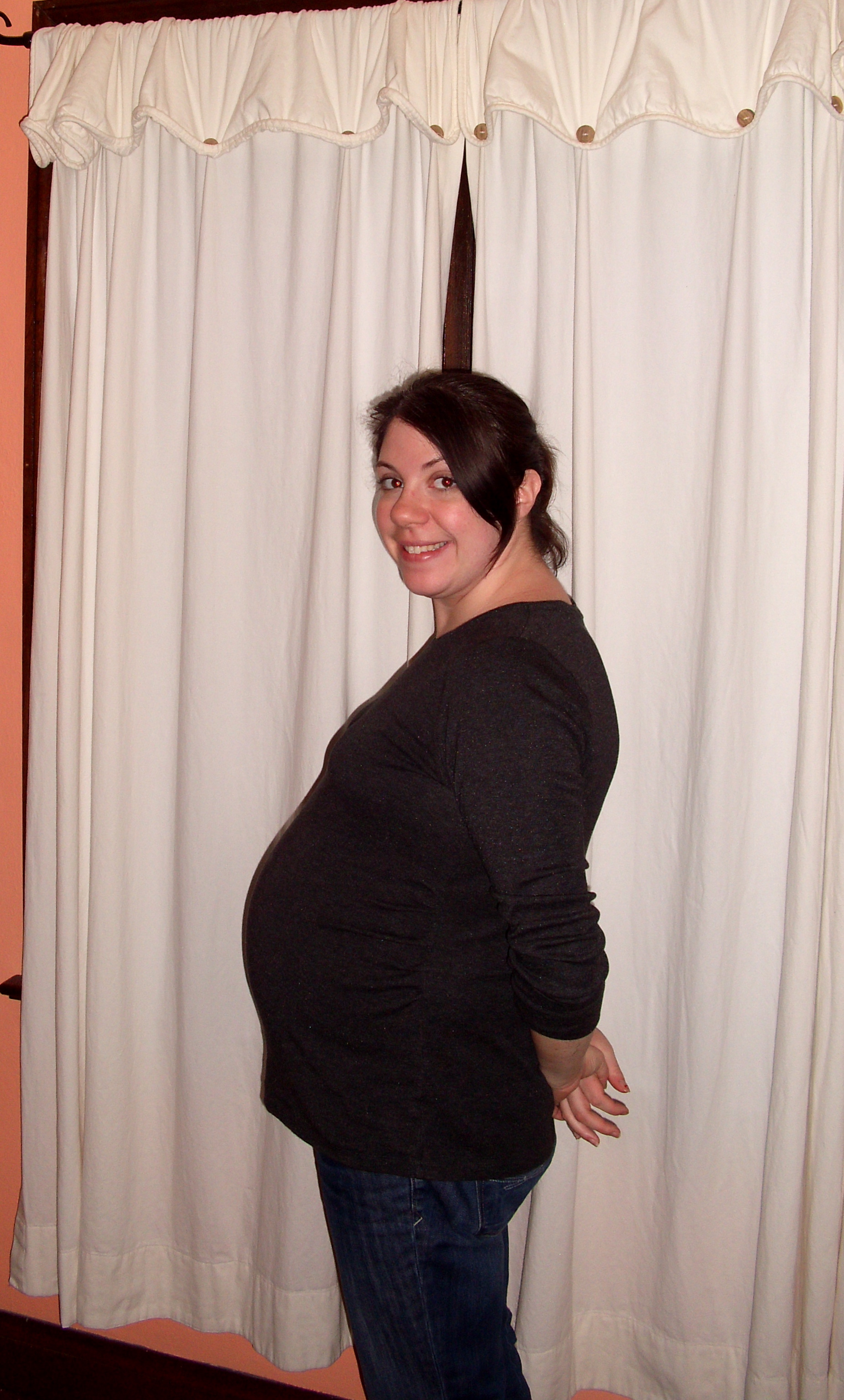
38 weeks pregnant and completely clueless
Then I had a baby. A real, live crying baby. One that took 30 hours to be born. One who required three hours of pushing and forceps in order to make it out. She was perfect. Until she tried to nurse.
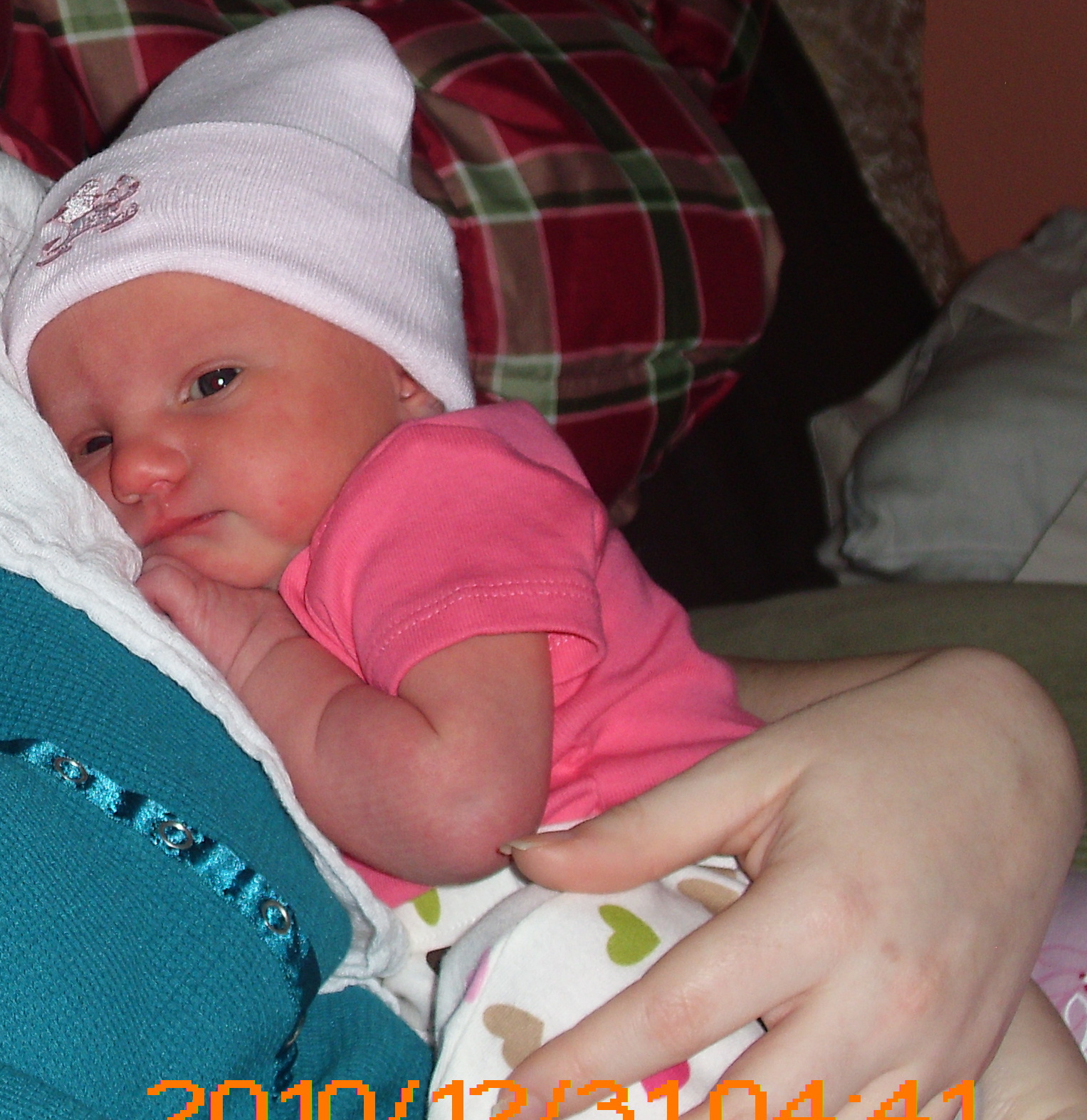
3 days old
Having been born at 5:30 in the evening, the hospital lactation consultant had gone home for the night. She only nursed once that night, tired from the ordeal of being born. It hurt, but I figured that was just the discomfort of getting used to a person attached.
The next day an LC came in, took at look at our latch, and said it looked fine. No problems. I wondered, but didn’t say anything. Fast forward to the next morning, one in which I got no rest at all, had a baby attached painfully all night, and cracked, raw, bloody nipples to show for it. A second, more experienced LC walked in, took one look at my nipples, opened Maggie’s mouth, and said,
“Yep. She’s tongue tied.” She gave me a nipple shield, saying, “it’s the only way you’ll make it until your nipples heal and you get her frenulum clipped.”
It helped a little, but not very much. Then I asked about nursing in bed, and we tried. She frowned at me and said, “Well, the shape of your breasts plus the tongue tie make it very hard to nurse while lying down. The football hold or another sitting up position will be best.”
By the time we left the hospital that night, our “no pacifiers for at least a month” rule was long forgotten, and our baby, who had been crying all afternoon for my non-existent breastmilk was sleeping peacefully in the car on our way home.
I was worried because I noticed that nothing was coming out. I had read enough to know that the “liquid gold” colostrum was supposed to come in by about 2 days. So by day three, when I didn’t see anything at all after a nursing, combined with the fact that she was wanting to nurse every 45 minutes around the clock, I began to panic. I suspected that she was getting very, very hungry. My mother in law ran out to the store and got some formula in the middle of the night in case we got desperate. We did. Cut to our 4 day old baby, who had actually stopped crying, and was just lying in my arms. She hadn’t had a wet diaper in 8 hours, and wasn’t very responsive. On day 5 I finally saw some of that “liquid gold”. In the meantime she had formula, which she sucked down quickly, immediately pooped and peed, and then slept for 4 hours. The poor, exhausted, hungry girl.
By the time Maggie was a week old, I suspected that I might have some post-partum depression. I cried at 6 pm every night. I cried because another day had passed, getting closer to the time I’d be alone with this crying pink thing, when all my help would be gone. I cried because breastfeeding hadn’t gotten easier, but was just as painful, stressful, and irritating as it had been the day before. I cried because another night would be going by with maybe 3 hours of sleep if I was lucky. I cried because my 4th degree tear hurt but I didn’t have time to do the healing I needed, because I had a tongue-tied baby who wanted to nurse every hour, for half an hour, and I had to sit upright. I cried because then I had to pump, giving me about 10 minutes to pee, eat, or shower. I cried because I missed my husband and thought my life was over. I cried because I couldn’t stop crying.
Far from being this lovely bonding experience between me and my baby, breastfeeding was a source of stress, and eventually resentment. I resented having to sit half-naked in my house with a baby attached to my sore, battered body, always wanting something I could not give her. By this point any illusion of “exclusively breastfeeding” was out the window. I would nurse her for 20 minutes on each side (because tongue-tied babies with PCOS mothers nurse slow as hell), then finish the feeding with a bottle of formula. After that, I pumped. I pumped for 30 minutes and was lucky if I got 2 or 3 ounces. Some days I didn’t get anything at all.
I woke up one day when she was about 8 weeks old, took a look in the mirror, inhaled deeply and said, “I’m done.”
And that was it.
Instead of nursing her that morning, I held her close and gave her a bottle of formula. And the most amazing thing happened; We were both happy. She drank the formula, wrapped in a pink flannel blanket and snuggled up close to my heart, and when she finished, no crying for the more I couldn’t give her, just contentment and sleep. I smiled for the first time in weeks, and ironically, felt that loving bonded feeling with my baby more strongly than I had before.
I fell in love with motherhood at the end of a bottle.
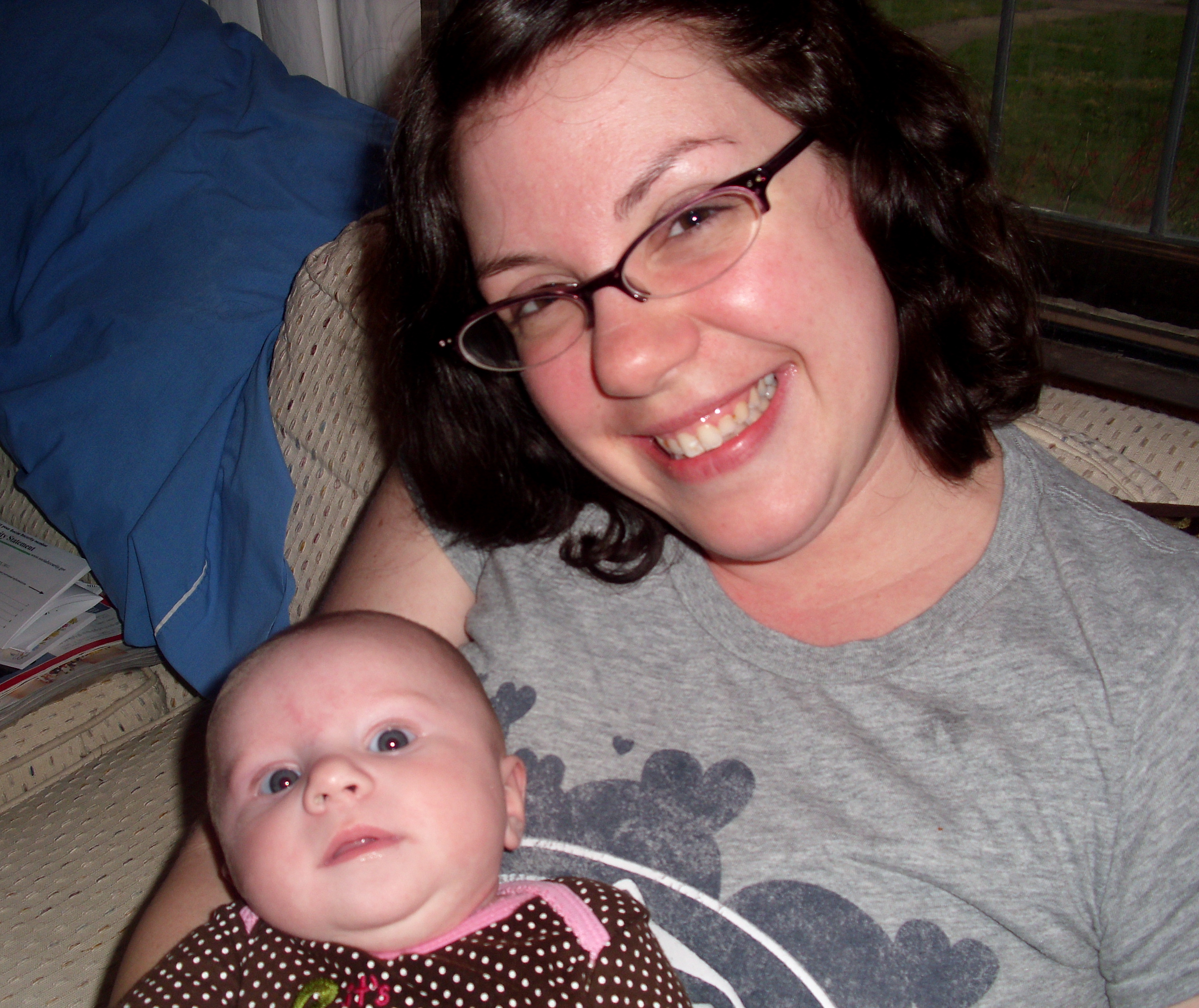
coming out of the fog
I still struggled with depression, though it did significantly lessen when my fertility returned at 10 weeks post-partum. I woke up one morning, 2 weeks after stopping breastfeeding, had started cycling again, and felt like myself for the first time since she was born.
In other words, stopping breastfeeding when I did was the best thing I could have done for my family.
And that’s when I learned one of the fundamental truths of parenting: my experience is not normative, and neither is yours.
I had a medically nessecary induction, two epidurals, a vaginal birth, and I exclusively formula-fed my baby from 8 weeks on, but we did not follow a strict schedule. We used a combination of cloth and disposable diapers. I wore her in a sling or carrier sometimes, and sometimes she sat in a bouncy seat or swing, both of which she loved. We did not co-sleep, other than a handful of times when she was a newborn. We followed the vaccination schedule of our trusted pediatrician, and she ate pureed baby food, some which I made, some which I bought.
And after that February day when I embraced the bottle, I didn’t feel one minute of guilt about any of it. Because I shouldn’t. You shouldn’t. There isn’t any one right way to be a mother, not when these are the decisions you are wrestling with. Now, I may not have felt any guilt, but I did feel judgement, whether perceived or actual it’s hard to tell this far removed. The judgement I felt particularly because in this Catholic mommy blogosphere, it’s all “crunchy”, all the time. In fact, of the Catholic women I knew at the time who had biological children, I only knew one other woman who had used formula.
What I learned is that it’s not a sin to use formula, a stroller, or decide not to make all your baby food from scratch. The fact that my breasts didn’t work they way they should, and I wasn’t willing to move heaven and earth to try and make them do so, is not a commentary on my ability or love as a mother. It doesn’t make me any less or more of a mother because I made different choices than you did. And it doesn’t make you any less or more of a mother than I am because you made different choices.
Every family, every mother and new baby are a unique constellation of personalities, circumstances, and bodies. That’s why I won’t say that I’ll never breastfeed again. If we’re blessed with another baby, of course I will try again. That baby might not be tongue-tied. I might have better results with a different combination of factors. But if it doesn’t work out, and I choose to use formula again, I won’t make the mistake of tying my identity as a mother up in these choices, which at the end of the day, pale in the shadow of our choice to love our babies, even from the end of a bottle.
If you are reading this today and carrying the heavy burden of judgement (perceived or actual) about your parenting choices, I’m inviting you to lay them down. Be gentle with yourself. Take a look in the mirror, breathe in deeply, and remind yourself, “I am a good mother.”

She still knows and loves us even though she drank formula…imagine that
Previous Post

January 25, 2013
Ninjas for Life and My Story
Next Post
January 29, 2013 It's An Honor....
Browse Our Archives
Select a Category 7 QT Beauty and Style Blogging Books Catholic Culture Family Funny Making House Poetry Social Justice The Children Uncategorized Various Women
Select a Month December 2018 October 2018 August 2018 July 2018 June 2018 April 2018 December 2017 November 2017 July 2017 June 2017 May 2017 April 2017 February 2017 January 2017 December 2016 November 2016 October 2016 February 2016 January 2016 November 2015 September 2015 August 2015 July 2015 May 2015 April 2015 March 2015 February 2015 January 2015 December 2014 November 2014 October 2014 September 2014 August 2014 July 2014 June 2014 May 2014 April 2014 February 2014 January 2014 December 2013 November 2013 October 2013 September 2013 August 2013 July 2013 May 2013 April 2013 March 2013 February 2013 January 2013 December 2012 November 2012 October 2012 September 2012 August 2012 July 2012 June 2012 May 2012 April 2012 March 2012 February 2012 January 2012 December 2011 November 2011 October 2011 September 2011 August 2011 July 2011 June 2011 May 2011 April 2011 March 2011 February 2011 January 2011 December 2010 November 2010 October 2010 September 2010 August 2010 July 2010 June 2010 May 2010 April 2010 March 2010 February 2010 January 2010 December 2009 November 2009 October 2009 September 2009 August 2009 July 2009 June 2009 May 2009 April 2009 March 2009 February 2009 January 2009 December 2008 November 2008
Follow Us!
TAKE THE
Religious Wisdom Quiz
Which Psalm contains the phrase, "Be still, and know that I am God"?
Select your answer to see how you score.
Psalm 91 Psalm 100 Psalm 46 Psalm 8
Related posts from Fumbling Toward Grace


Mother's Day Thoughts From a Motherless Daughter
TRENDING AT PATHEOS Catholic

Rejecting Doom: Christian Hope And Human Action
Christianity is a religion of hope. We are to have hope and...

It’s What Comes From Within Which Matters
One of the most difficult things for us to understand is why...

Why I Choose the Eucharist Over the Sermon
Choose the Eucharist, Not the Sermon What are we supposed to get...

5 Design Elements Found in Spiritually Rooted Homes
Putting Spirituality Into Home Decor Our homes are more than our living...

Credo: A Story of God Told with the...
About 10 years ago, I began to imagine a personal "Credo" that...

The Anatomy of Divine Revelation in Catholic Thought
The claim that God has made Himself known to human beings is...
view all Catholic blogs
Ad-Free & Subscriber Log-In Subscription Support
- About Us
- 2026 Calendar
- Videos
- Podcasts
- Library of World Religions
- Faith In Media Tracker
- Advertise With Us
- Write for Us
- Privacy Policy
- Terms of Service
- Do Not Sell My Data
- Contact Us
- Radiant Digital
- Manage Newsletter Subscriptions
- Unsubscribe From Notifications
- Sitemap
Copyright 2008-2026, Patheos. All rights reserved.
Subscription Support Ad-Free & Subscriber Log-In
Follow Patheos