
BuddhistCatholicContemplativeEvangelicalGeneral ChristianHinduJewishLatter-day SaintMuslimNew VisionsProgressive Christian
Beliefs
- Buddhist
- Catholic
- Contemplative
- Evangelical
- General Christian
- Hindu
- Jewish
- Latter-day Saint
- More Voices
- Muslim
- New Visions
- Pagan
- Progressive Christian
Topics
- Religion News
- Food and Religion
- Sports and Religion
- Religious Art
- Religious Music and Entertainment
- Religious Events
- History and Religion
- Style and Religion
- Politics and Religion
- Women in Religion
- Recreation Outdoors and Religion
- Business Finance and Religion
- Careers Workplace and Religion
- Education and Religion
- Family Parenting and Religion
- Health Fitness and Religion
- Home and Religion
- Relationships and Religion
- Technology and Religion
- Travel and Religion
Columnists
- Buddhist Columnists
- Business Finance and Religion Columnists
- Careers Workplace and Religion Columnists
- Catholic Columnists
- Contemplative Columnists
- Education and Religion Columnists
- Evangelists Columnists
- Family Parenting and Religion Columnists
- General Christian Columnists
- Health Fitness and Religion Columnists
- Hindu Columnists
- History and Religion Columnists
- Home and Religion Columnists
- Jewish Columnists
- More Voices Columnists
- Latter Day Columnists
- Muslim Columnists
- New Visions Columnists
- Nonreligious Columnists
- Pagan Columnists
- Politics and Religion Columnists
- Progressive Columnists
- Recreation Outdoors and Religion Columnists
- Relationships and Religion Columnists
- Religion News Columnists
- Religious Art Columnists
- Religious Events Columnists
- Religious Music and Entertainment Columnists
- Sports and Religion Columnists
- Style and Religion Columnists
- Technology and Religion Columnists
- Travel and Religion Columnists
- Women in Religion Columnists
Resource Library
- 2026 Calendar
- Library of World Religions
- The 100 Most Holy Places on Earth
- Patheos Answers
- Podcasts
- Videos
- Faith Leaders Database
- Anglican Episcopalian
- Bahai
- Baptist
- Buddhism
- Christianity
- Confucianism
- Eastern Orthodoxy
- Hinduism
- Holiness and Pentecostal
- ISKCON
- Islam
- Judaism
- Lutheran
- Methodist
- The Church of Jesus Christ of Latter-day Saints
- New Age
- Paganism
- Presbytarian and Reformed
- Protestantism
- Religion Behind the Scenes
- Roman Catholic
- Scientology
- Shia Islam
- Sikhism
- Sufism
- Sunni Islam
- Taoism
- Zen
- See all religions
Research Tools
 Ad-Free & Subscriber Log-In Subscription Support
Ad-Free & Subscriber Log-In Subscription Support
Follow Patheos 

- Trending:
- Forgiveness
- |
- Marriage
- |
- Consciousness
- |
- Death Penalty
- |
- Election
- |
- Halloween
 Fumbling Toward Grace
- Home
- Catholic
- The First and Vital Cell
The First and Vital Cell
Last updated on: September 5, 2012 at 8:00 am by Sarah Babbs
The First and Vital Cell 2012-09-05T08:00:36-04:00 Sarah Babbs
Patheos Explore the world's faith through different perspectives on religion and spirituality! Patheos has the views of the prevalent religions and spiritualities of the world.
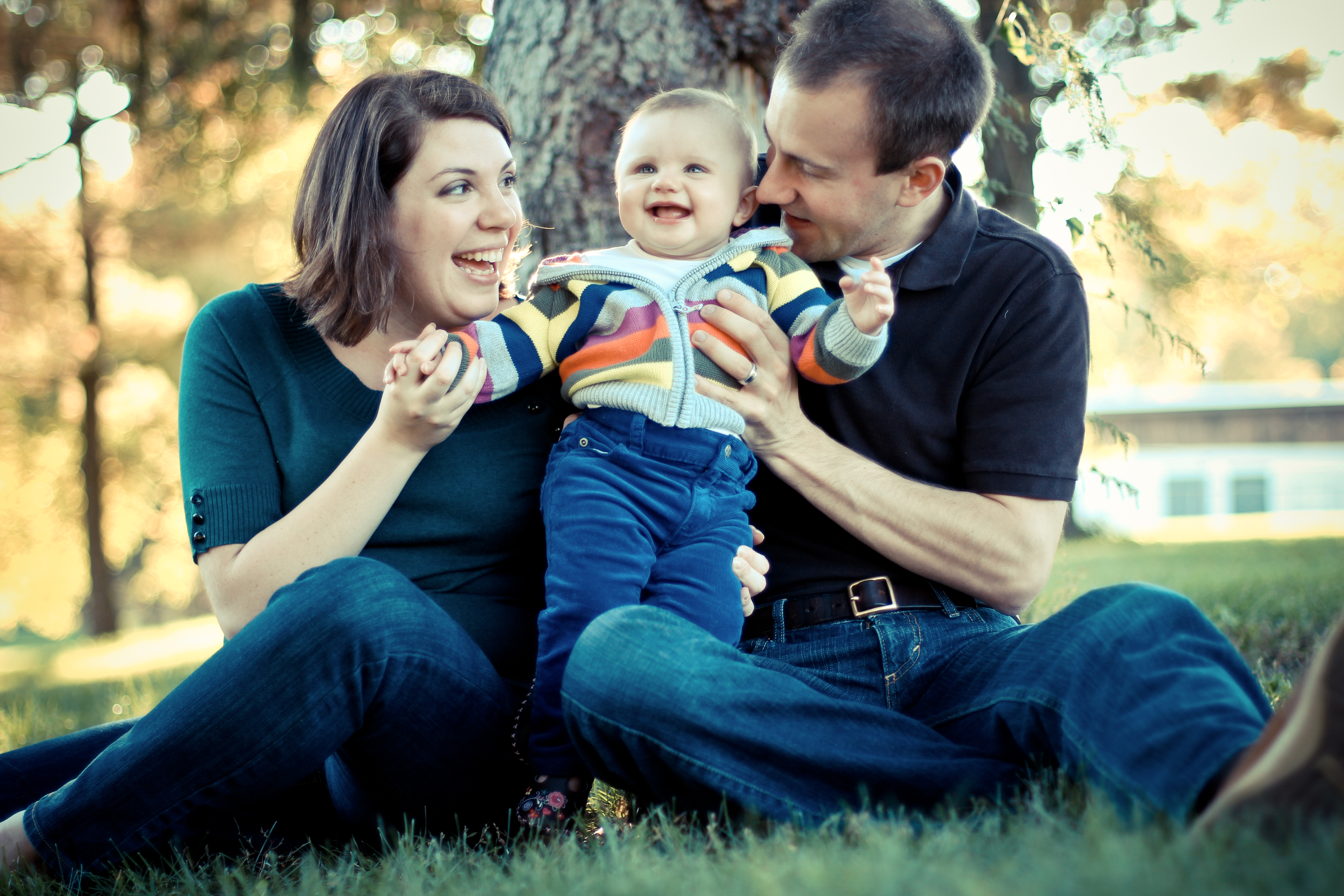
Human beings are essentially social in nature. The second theme of Catholic social teaching is the importance of social relationships and participation in society for human flourishing. Because of the importance of the family, community, and participation, I will break this principle into two parts: the family first, and community and participation second.
The Family
“May Nazareth remind us what the family is, what the communion of love is, its stark and simple beauty, its sacred and inviolable character; may it help us to see how sweet and irreplaceable education in the family is; may it teach us its natural function in the social order. May we finally learn the lesson of work.” – Pope Paul VI, Address at Nazareth (January 5, 1964)
As Pope Paul VI said so eloquently above, the family has a sacred and inviolable character. In fact, the Church says that the family is the “primary place of humanization” for persons and society. The family is the “cradle of life and love”, and the place where one learns of the love and faithfulness of God.
The family is where children learn their first and most important lessons about wisdom and the virtues.
The family, founded on the sacrament of marriage, is the first natural society and the center of all social life. Blessed John Paul II wrote in Centesimus Annus:
In the climate of natural affection which unites the members of the family unit, persons are recognized and learn responsibility in the wholeness of their personhood. The first and fundamental structure for ‘human ecology’ is the family, in which man receives his first formative ideas about truth and goodness, and learns what it means to love and be loved, and thus what it actually means to be a person…The obligations of its members, in fact, are not limited by the terms of a contract but derive from the very essence of the family, founded on the irrevocable marriage covenant and given structure in the relationships that arise within it following the generation or adoption of children. — Compendium of the Social Doctrine of the Church, 96
The family is a community of persons existing as a sign in an increasingly individualistic world. In the wonderful encyclical Familiaris Consortio, Blessed John Paul II writes of the family:
From love arises relationships lived in gratiuitousness, which ‘by respecting and fostering personal dignity in each and every one as the only basis for value…takes the form of heartfelt acceptance, encounter and dialogue, disinterested availability, generous service, and deep solidarity.’ The existance of families living this way exposes the failings and contradictions of a society that is…based on efficency and functionality. By constructing daily a network of interpersonal relationships, the family is instead, ‘the first and irreplaceable school of social life, an example and stimulus for the broader community relationships marked by respect, justice, dialogue, and love. – FS, 43
The family holds central importance in reference to the person. Each of us is born into a family, whether biological or adopted, and we exist in a complex web of relationships. This is another way of saying that we are made in the image of God, who is a communion of trinitarian love.
The family is the cradle of life and love, as it is where people are conceived, born, and grow into their full flourishing. “The family, the natural community in which human social nature is experienced, makes a unique and irreplaceable contribution to the good of society.” The family is the first human society, and as such, is the bedrock of every stable society. “A society built on a family scale is the best guarantee against drifting off course into individualism or collectivism…it is patently clear that the good of persons and the proper functioning of society are closely connected with the healthy state of conjugal and family life. Without families that are strong in their communion and stable in their commitment peoples grow weak.” -Compendium, 97.
In fact, the family is so important, that it must always take priority over the state. The Church affirms this strongly when she says, “The family possesses inviolable rights and finds its legitimization in human nature and not in being recognized by the State. The family, then, does not exist for society or the State, but society and the State exist for the family.“ -Compendium, 97.
Bam. Public authority must observe the principle of subsidiarity (which will have a post all its own in coming weeks), that is to say, “public authorities may not take away from the familiy tasks which it can accomplish well by itself or in free association with other families; on the other hand, these same authorities have the duty to sustain the family, ensuring that it has all the assistance that it needs to fulfil properly its responsibilities.” -97.
Society nor the State may “absorb, substitute or reduce the social dimension of the family.” Society best seves the family when it recognizes, respects, and promotes the rights of the family, in part by bringing about public policies which meet the needs arising from the rights of families.
What are the rights of the family? The three areas of family rights which the Church speaks of are (1) education, (2) participation in social life, and (3) economic life and work.
“The right and duty of parents to educate their children is essential, since it is connected with the transmission of human life…it is irreplaceable and inalienable, and therefore incapable of being entirely delegated to others or usurped by others.” -Compendium, 109.
In other words, parents are the primary and most important educators of their children. The primary end of marriage, along with the unity of the spouses, is the procreation and education of children. Procreation and education cannot be separated. Part and parcel of this is the right and duty that parents have to impart religious education and moral formation to their children. This is a right that must be respected by civil authority.
Parents have the right to found and support educational institutions. Parents must be truly free to exercise the right to educate their children as they see fit, regardless of their income level or zip code. The Church supports, in particular, the role that school vouchers can play in supporting this right of parents. “Whenever the State lays claim to an educational monopoly, it oversteps its rights and offends justice…The State cannot without injustice merely tolerate so-called private schools. Such schools render a public service and therefore have a right to financial assistance.” 109.
The family should be seen as an essential part of economic life, guided not by the market mentality, but by sharing and solidarity among generations. As the Church says regarding the importance of work for the family, “Work is essential insofar as it represents the condition that makes it possible to establish a family, for the means by which the family is maintained are obtained through work. Work also conditions the process of personal development, since a family afflicted by unemployment runs the risk of not fully achieving its end.” -Compendium, 112.
People have the right to work, to seek and find employment which will allow them to support themselves and their families.
The Church promotes, in order to strengthen the family in its mission, a family wage. The family wage is defined as a wage sufficent to maintain a family and allow it to live decently. Such a wage ought to allow for the family to save in order to acquire property and guarantee some measure of freedom.
In respecting the family’s relationship with work and the economy, special attention must be paid to recognizing “housework” and in particular the role that women play in doing such work. Such work, which involves housekeeping, homemaking, and often child-care, must be given the utmost respect by society and to the extent possible, should be valued with economic compensation.
As families share with each other and demonstrate solidarity among themselves and across societal institutions, they build up a culture of love. By participating in social and political life as families, they become active subjects working to ensure that these rights of the family are respected and that social structures and institutions promote the legitimate needs of the family.
To sum up the principle of the family in social life, the compendium says it perfectly:
“The recognition on the part of civil society and the State of the priority of the family over every other community, and even over the reality of the State, means overcoming merely individualistic conceptions and accepting the family dimension as the indispensible cultural and political perspective in the consideration of persons. This is not offered as an alternative, but rather as a support and defence of the very rights that people have as individuals.”
Previous Post

August 31, 2012
7 Quick Takes Friday -- Points to Ponder
Next Post
September 14, 2012 7 Quick Takes Friday
Browse Our Archives
Select a Category 7 QT Beauty and Style Blogging Books Catholic Culture Family Funny Making House Poetry Social Justice The Children Uncategorized Various Women
Select a Month December 2018 October 2018 August 2018 July 2018 June 2018 April 2018 December 2017 November 2017 July 2017 June 2017 May 2017 April 2017 February 2017 January 2017 December 2016 November 2016 October 2016 February 2016 January 2016 November 2015 September 2015 August 2015 July 2015 May 2015 April 2015 March 2015 February 2015 January 2015 December 2014 November 2014 October 2014 September 2014 August 2014 July 2014 June 2014 May 2014 April 2014 February 2014 January 2014 December 2013 November 2013 October 2013 September 2013 August 2013 July 2013 May 2013 April 2013 March 2013 February 2013 January 2013 December 2012 November 2012 October 2012 September 2012 August 2012 July 2012 June 2012 May 2012 April 2012 March 2012 February 2012 January 2012 December 2011 November 2011 October 2011 September 2011 August 2011 July 2011 June 2011 May 2011 April 2011 March 2011 February 2011 January 2011 December 2010 November 2010 October 2010 September 2010 August 2010 July 2010 June 2010 May 2010 April 2010 March 2010 February 2010 January 2010 December 2009 November 2009 October 2009 September 2009 August 2009 July 2009 June 2009 May 2009 April 2009 March 2009 February 2009 January 2009 December 2008 November 2008
Follow Us!
TAKE THE
Religious Wisdom Quiz
What does the Bible teach about giving to the poor?
Select your answer to see how you score.
Insult them Ignore them Be generous Take from them
Related posts from Fumbling Toward Grace



TRENDING AT PATHEOS Catholic

Rejecting Doom: Christian Hope And Human Action
Christianity is a religion of hope. We are to have hope and...

It’s What Comes From Within Which Matters
One of the most difficult things for us to understand is why...

Why I Choose the Eucharist Over the Sermon
Choose the Eucharist, Not the Sermon What are we supposed to get...

5 Design Elements Found in Spiritually Rooted Homes
Putting Spirituality Into Home Decor Our homes are more than our living...

Credo: A Story of God Told with the...
About 10 years ago, I began to imagine a personal "Credo" that...

The Anatomy of Divine Revelation in Catholic Thought
The claim that God has made Himself known to human beings is...
view all Catholic blogs
Ad-Free & Subscriber Log-In Subscription Support
- About Us
- 2026 Calendar
- Videos
- Podcasts
- Library of World Religions
- Faith In Media Tracker
- Advertise With Us
- Write for Us
- Privacy Policy
- Terms of Service
- Do Not Sell My Data
- Contact Us
- Radiant Digital
- Manage Newsletter Subscriptions
- Unsubscribe From Notifications
- Sitemap
Copyright 2008-2026, Patheos. All rights reserved.
Subscription Support Ad-Free & Subscriber Log-In
Follow Patheos