
BuddhistCatholicContemplativeEvangelicalGeneral ChristianHinduJewishLatter-day SaintMuslimNew VisionsProgressive Christian
Beliefs
- Buddhist
- Catholic
- Contemplative
- Evangelical
- General Christian
- Hindu
- Jewish
- Latter-day Saint
- More Voices
- Muslim
- New Visions
- Pagan
- Progressive Christian
Topics
- Religion News
- Food and Religion
- Sports and Religion
- Religious Art
- Religious Music and Entertainment
- Religious Events
- History and Religion
- Style and Religion
- Politics and Religion
- Women in Religion
- Recreation Outdoors and Religion
- Business Finance and Religion
- Careers Workplace and Religion
- Education and Religion
- Family Parenting and Religion
- Health Fitness and Religion
- Home and Religion
- Relationships and Religion
- Technology and Religion
- Travel and Religion
Columnists
- Buddhist Columnists
- Business Finance and Religion Columnists
- Careers Workplace and Religion Columnists
- Catholic Columnists
- Contemplative Columnists
- Education and Religion Columnists
- Evangelists Columnists
- Family Parenting and Religion Columnists
- General Christian Columnists
- Health Fitness and Religion Columnists
- Hindu Columnists
- History and Religion Columnists
- Home and Religion Columnists
- Jewish Columnists
- More Voices Columnists
- Latter Day Columnists
- Muslim Columnists
- New Visions Columnists
- Nonreligious Columnists
- Pagan Columnists
- Politics and Religion Columnists
- Progressive Columnists
- Recreation Outdoors and Religion Columnists
- Relationships and Religion Columnists
- Religion News Columnists
- Religious Art Columnists
- Religious Events Columnists
- Religious Music and Entertainment Columnists
- Sports and Religion Columnists
- Style and Religion Columnists
- Technology and Religion Columnists
- Travel and Religion Columnists
- Women in Religion Columnists
Resource Library
- 2026 Calendar
- Library of World Religions
- The 100 Most Holy Places on Earth
- Patheos Answers
- Podcasts
- Videos
- Faith Leaders Database
- Anglican Episcopalian
- Bahai
- Baptist
- Buddhism
- Christianity
- Confucianism
- Eastern Orthodoxy
- Hinduism
- Holiness and Pentecostal
- ISKCON
- Islam
- Judaism
- Lutheran
- Methodist
- The Church of Jesus Christ of Latter-day Saints
- New Age
- Paganism
- Presbytarian and Reformed
- Protestantism
- Religion Behind the Scenes
- Roman Catholic
- Scientology
- Shia Islam
- Sikhism
- Sufism
- Sunni Islam
- Taoism
- Zen
- See all religions
Research Tools
 Ad-Free & Subscriber Log-In Subscription Support
Ad-Free & Subscriber Log-In Subscription Support
Follow Patheos 

- Trending:
- Forgiveness
- |
- Marriage
- |
- Consciousness
- |
- Death Penalty
- |
- Election
- |
- Halloween
 Fumbling Toward Grace
- Home
- Catholic
- The Not-So-Secret Life of Bees
The Not-So-Secret Life of Bees
Last updated on: July 27, 2011 at 2:53 pm by Sarah Babbs
The Not-So-Secret Life of Bees 2011-07-27T14:53:33-04:00 Sarah Babbs
Patheos Explore the world's faith through different perspectives on religion and spirituality! Patheos has the views of the prevalent religions and spiritualities of the world.
Elizabeth is one of my closest friends and Maggie’s godmother. She’s also the author of a wonderful food blog called Coppertop Kitchen. She educates her readers about food, cooking, and she makes a mean maple walnut cake. Go and check out her blog, you won’t be sorry you did! I asked her to share with us today about honeybees and her post is, as always, fascinating and delicious. Thanks, Elizabeth!
********************************************
Hello there, Fumbling Toward Grace readers! I am so pleased to be posting over here today! Sarah is such an awesome writer, wife, mother, and one of my dearest friends, and I was so excited when she asked me to do a guest post about bees!
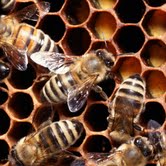
You heard me: bees. Last summer, I found this adorable little book (Plan Bee, by Susan Brackney) about bees on the discount rack at a bookstore, read it, and have since fallen in love with them! Bees (apis mellifera, or honey bees) are seriously fascinating little creatures. In addition to providing us with delicious honey and beeswax for candles and beauty products, they also pollinate 80 percent of the world’s plants, including a third of the food we consume! Farmers often pay beekeepers to ship their bees in to pollinate crops.
Did you know?
Each hive contains a community of 60,000 – 100,000 bees.
Bees gather pollen 1 tiny grain at a time, storing it in their “leg baskets”
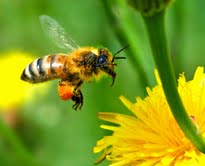
Girl bees do all the work. The boy bees’ (drones) only task is to mate with the queen.
The queen bee’s only job is to lay eggs, and she lays between 1500 – 2000 eggs daily in the spring.
It takes 4 pounds of nectar to make 1 pound of honey, and the type of nectar affects the color and flavor of the honey.

To let other bees know about a particularly rich nectar spot, a honeybee will do a dance, which shows other bees where the bounty can be found in relation to the sun.
Only about 1 of every 1000 people is actually allergic to bee stings; swelling and soreness are just normal bodily reactions to bee venom.
You may have heard in the news recently that honeybees are dying out. While nobody really knows the cause for this, there are several theories, including pesticide poisoning, parasites or viruses, drought, migratory stress, and apiary overcrowding. The most interesting theory I’ve heard blames the low nutritional value of the crops they’re pollinating. Some studies have suggested that the widespread agricultural use of chemical pesticides and fertilizers has oversimplified and damaged the soil to the extent that food crops grown in chemically treated soils are less nutritionally rich than their organically grown counterparts. Soil is a complex, living thing. When we pummel it with chemicals year after year, the plants grown in it lack minerals and micronutrients essential for human beings, and apparently, for bees.
What can you do to help? For starters, look around your yard. Do you have a variety of plants that flower throughout the growing season? By planting different species that blossom in spring, summer, and fall, you can provide constant forage for local honeybees. Reduce the amount of pesticides you use in your yard or garden. Support companies that support bee research and breeding programs. And buy Haagen-Dazs ice cream! That’s right! Since Haagen-Dazs relies on bees for the all-natural fruits that flavor their delicious ice creams, they have decided to ensure their survival by raising money and awareness! You can visit their bee-saving website at www.helpthehoneybees.com.
Remember Pooh, the adorable little honey-loving bear so beloved of generations of children? What I want to know is… how did he manage to get honey from what looked like a wasps’ nest? Here’s what most honeybee hives look like:
In apiaries or backyards:
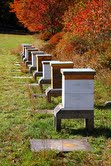
and in the wild:


Pop Quiz: Bee ID
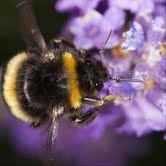
The following pictures are of a honeybee, bumblebee, wasp, and yellowjacket. Can you tell them apart?
 A
A
 B
B
 C
C
 D
D
Answers: A: Yellowjacket. B: Honeybee! C: Wasp. D: Bumblebee.
Yellowjackets and wasps (hornets) look like soldiers, and they are much more aggressive than other bees. Bumblebees are big and round and furry, and lazily float from flower to flower like they’ve got all day. Honeybees busily fly from bloom to bloom, collecting their precious cargo, and they will only sting if they feel threatened. They have much better things to do than to sting you (especially since once they’ve stung… they die).
Honey is an amazingly versatile ingredient for cooking. It can be used in salad dressings, sauces, and marinades, stirred into drinks and used to sweeten and flavor baked goods. My mom used to give me a tablespoon in the morning if I had a big test at school; she claimed it was brain food.
This recipe is perfect for spring and summer, with such a fresh, floral taste from the honey and lavender. It would be great for breakfast, or afternoon tea, or with a dollop of whipped cream for dessert. Enjoy!

Lavender-Honey Tea Cakes
1 1/2 cups flour
1 teaspoons baking powder
1 teaspoon salt
1/2 cup unsalted butter, softened
1/3 cup honey
1/3 cup granulated sugar
2 large eggs
1 teaspoon vanilla extract
1/3 cup yogurt
1/2 cup almond meal (can be found at high-end grocery stores and health food stores)
1 tablespoon dried lavender flowers
Preheat oven to 350⁰F. Spray a non-stick mini bundt muffin pan (or a regular muffin pan, or a standard loaf pan) with cooking spray (if it’s not non-stick, grease and flour). In a medium bowl, sift together flour, baking powder, and salt. Set aside. In the bowl of an electric stand mixer, cream the butter until light and fluffy. Add the honey and sugar and beat well to combine. Add eggs, one at a time, beating after each addition until incorporated. Add vanilla and stir. Add half of the flour mixture, stirring until just combined. Add yogurt, stir, and then remaining flour, and stir again. Stir in almond meal and lavender flowers. Pour batter into prepared pan.
For small cakes, bake 15-17 minutes, until cake springs back to the touch and a cake tester comes out clean. I didn’t try a loaf, but I assume that, like any other quick bread, it would bake about 45-50 minutes. Test for doneness the same way: insert a tester in the center. If it comes out clean, it’s done. Cool in the pan for a few minutes, and then remove from pan and cool completely on wire racks. Serve with honey-sweetened whipped cream, or drizzled with a honey-lemon glaze. Makes 12 mini Bundt cakes or one loaf.
Thank you so much for reading! I hope you learned a little something, and that the next time you spoon a little honey onto a warm biscuit or into a cup of tea, you think about the tiny, fascinating creatures who gave it to you!
Previous Post

July 25, 2011
If you have to be sure...
Next Post
July 28, 2011 Fire Starter
Browse Our Archives
Select a Category 7 QT Beauty and Style Blogging Books Catholic Culture Family Funny Making House Poetry Social Justice The Children Uncategorized Various Women
Select a Month December 2018 October 2018 August 2018 July 2018 June 2018 April 2018 December 2017 November 2017 July 2017 June 2017 May 2017 April 2017 February 2017 January 2017 December 2016 November 2016 October 2016 February 2016 January 2016 November 2015 September 2015 August 2015 July 2015 May 2015 April 2015 March 2015 February 2015 January 2015 December 2014 November 2014 October 2014 September 2014 August 2014 July 2014 June 2014 May 2014 April 2014 February 2014 January 2014 December 2013 November 2013 October 2013 September 2013 August 2013 July 2013 May 2013 April 2013 March 2013 February 2013 January 2013 December 2012 November 2012 October 2012 September 2012 August 2012 July 2012 June 2012 May 2012 April 2012 March 2012 February 2012 January 2012 December 2011 November 2011 October 2011 September 2011 August 2011 July 2011 June 2011 May 2011 April 2011 March 2011 February 2011 January 2011 December 2010 November 2010 October 2010 September 2010 August 2010 July 2010 June 2010 May 2010 April 2010 March 2010 February 2010 January 2010 December 2009 November 2009 October 2009 September 2009 August 2009 July 2009 June 2009 May 2009 April 2009 March 2009 February 2009 January 2009 December 2008 November 2008
Follow Us!
TAKE THE
Religious Wisdom Quiz
I worked with a trowel in one hand and a weapon in the other, ready to build and fight. Who am I?
Select your answer to see how you score.
The builders The Tribe of Judah The servants The Priests
Related posts from Fumbling Toward Grace

Hearing Black Voices: A Challenge



Another Woman For Peace: Thoughts From the March
TRENDING AT PATHEOS Catholic

Creation, Preservation, and Teleology in Catholic Theology
As I write this, it is very early Monday morning. Like millions...

The Parable Of The Sower And The Word...
One of Christ’s most famous parables is that of the sower who...

Rejecting Doom: Christian Hope And Human Action
Christianity is a religion of hope. We are to have hope and...

Why I Choose the Eucharist Over the Sermon
Choose the Eucharist, Not the Sermon What are we supposed to get...

5 Design Elements Found in Spiritually Rooted Homes
Putting Spirituality Into Home Decor Our homes are more than our living...

Credo: A Story of God Told with the...
About 10 years ago, I began to imagine a personal "Credo" that...
view all Catholic blogs
Ad-Free & Subscriber Log-In Subscription Support
- About Us
- 2026 Calendar
- Videos
- Podcasts
- Library of World Religions
- Faith In Media Tracker
- Advertise With Us
- Write for Us
- Privacy Policy
- Terms of Service
- Do Not Sell My Data
- Contact Us
- Radiant Digital
- Manage Newsletter Subscriptions
- Unsubscribe From Notifications
- Sitemap
Copyright 2008-2026, Patheos. All rights reserved.
Subscription Support Ad-Free & Subscriber Log-In
Follow Patheos