
BuddhistCatholicContemplativeEvangelicalGeneral ChristianHinduJewishLatter-day SaintMuslimNew VisionsProgressive Christian
Beliefs
- Buddhist
- Catholic
- Contemplative
- Evangelical
- General Christian
- Hindu
- Jewish
- Latter-day Saint
- More Voices
- Muslim
- New Visions
- Pagan
- Progressive Christian
Topics
- Religion News
- Food and Religion
- Sports and Religion
- Religious Art
- Religious Music and Entertainment
- Religious Events
- History and Religion
- Style and Religion
- Politics and Religion
- Women in Religion
- Recreation Outdoors and Religion
- Business Finance and Religion
- Careers Workplace and Religion
- Education and Religion
- Family Parenting and Religion
- Health Fitness and Religion
- Home and Religion
- Relationships and Religion
- Technology and Religion
- Travel and Religion
Columnists
- Buddhist Columnists
- Business Finance and Religion Columnists
- Careers Workplace and Religion Columnists
- Catholic Columnists
- Contemplative Columnists
- Education and Religion Columnists
- Evangelists Columnists
- Family Parenting and Religion Columnists
- General Christian Columnists
- Health Fitness and Religion Columnists
- Hindu Columnists
- History and Religion Columnists
- Home and Religion Columnists
- Jewish Columnists
- More Voices Columnists
- Latter Day Columnists
- Muslim Columnists
- New Visions Columnists
- Nonreligious Columnists
- Pagan Columnists
- Politics and Religion Columnists
- Progressive Columnists
- Recreation Outdoors and Religion Columnists
- Relationships and Religion Columnists
- Religion News Columnists
- Religious Art Columnists
- Religious Events Columnists
- Religious Music and Entertainment Columnists
- Sports and Religion Columnists
- Style and Religion Columnists
- Technology and Religion Columnists
- Travel and Religion Columnists
- Women in Religion Columnists
Resource Library
- 2026 Calendar
- Library of World Religions
- The 100 Most Holy Places on Earth
- Patheos Answers
- Podcasts
- Videos
- Faith Leaders Database
- Anglican Episcopalian
- Bahai
- Baptist
- Buddhism
- Christianity
- Confucianism
- Eastern Orthodoxy
- Hinduism
- Holiness and Pentecostal
- ISKCON
- Islam
- Judaism
- Lutheran
- Methodist
- The Church of Jesus Christ of Latter-day Saints
- New Age
- Paganism
- Presbytarian and Reformed
- Protestantism
- Religion Behind the Scenes
- Roman Catholic
- Scientology
- Shia Islam
- Sikhism
- Sufism
- Sunni Islam
- Taoism
- Zen
- See all religions
Research Tools
 Ad-Free & Subscriber Log-In Subscription Support
Ad-Free & Subscriber Log-In Subscription Support
Follow Patheos 

- Trending:
- Forgiveness
- |
- Marriage
- |
- Consciousness
- |
- Death Penalty
- |
- Election
- |
- Halloween
 The Fuller Blog
- Home
- Evangelical - Sponsored
- Should We Talk About How We ‘Do Theology?’
Should We Talk About How We ‘Do Theology?’
Last updated on: March 18, 2015 at 7:30 pm by Guest Contributor
Should We Talk About How We ‘Do Theology?’ 2015-03-18T19:30:46-07:00 Guest Contributor
Patheos Explore the world's faith through different perspectives on religion and spirituality! Patheos has the views of the prevalent religions and spiritualities of the world.
By Reed Metcalf
This is the second entry of a series of weekly reflections on the works of Walter Brueggemann on the Fuller Blog.
“Theology” is a term that, in the world we live in, is not part of ordinary vocabulary for most. It might be easy enough to understand other “ology” words and what they refer to—biology, geology, even anthropology—but even those who understand the word to mean “speech of God” often don’t know what that entails.
Fair enough. Even we theologians disagree on “theology.”
This is mainly because talking about God and figuring him out is not easy. We finite humans will never actually figure out the infinite God, but that doesn’t mean we should stop trying. Roughly put, theology is the academic discipline of trying to sort out who God is and how we best interact with him.
All that is a bit of an intro to Walter Brueggemann’s Theology of the Old Testament, a massive tome of 750 pages. It stands in the tradition of looking at what evidence we have of God and trying to form some coherent ideas about that Divine Being; Old Testament theology tries to do this from the starting point of the Hebrew Scriptures. When taken as a whole, what does the Old Testament say about the God of our faith? How should we relate to him? How did our spiritual ancestors relate to him?
Now, this is a very simplified version of the “what” of an Old Testament theology. In fact, most works of this kind have a rather long introduction or preface that lays out the whats, hows, and whos of biblical theology, and where the author of the book agrees and disagrees with all those whats, hows, and whos. Brueggemann’s book is no different; he spends 114 pages telling us how he does his work and why, based on the scholarship of previous attempts at an Old Testament theology.
To be honest, these sections of these books can be a tremendous bore. They are dense, dry, and tend to be a pain to get through. So why read them?
The fact of the matter is that when we don’t consider how we do what we do, we end up with poor results. Being uncritical about our worldviews, what we presuppose about the Bible, or even what we think about truth leaves us with some funny conclusions, and ones that don’t always correspond with the text itself. It is easy to point out that we need some sort of historical understanding to fully grasp a text from 2000 years ago, but do we consider whether or not the way we do history is the right way? Many scholars and theologians now consider how we have done history for a while is deeply flawed; we have treated history like a science when it more closely resembles a type of rhetoric, storytelling, or testimony. Doing history as science gets weird results, whether the text is Plutarch’s or Luke’s. We have to consider these questions to make sure we are not trying to shove the biblical texts into categories they don’t belong in, getting results that are skewed in the end. This means a lot of talk about the whats, hows, and whos that have come before us, to see where things went well and not-so-well.
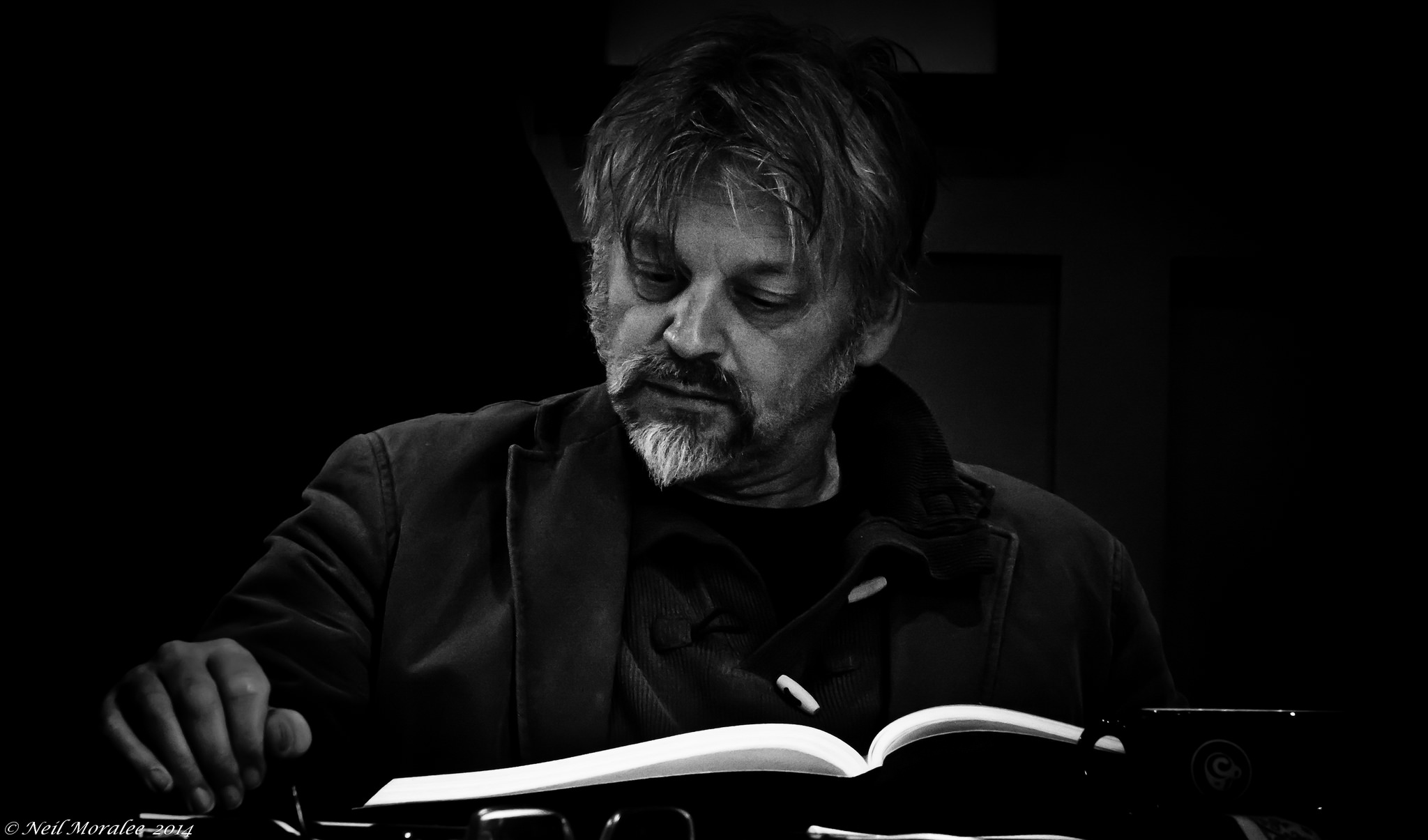
The Scholar, by Neil Moralee. Flickr Commons.
Boring? Sometimes. Easy? Never. Necessary? Absolutely.
This is sort of the set-up that we put in front of theological works nowadays. We say where we land in the scholarly world and why we think that way. We lay our cards on the table so that everyone understands where we are coming from. It’s also a way of admitting that we don’t have all the answers but keep looking for them. This is talking about an infinite God, after all.
This thinking and debating about how to read and interpret also helps us better wrestle with the Bible. Brueggemann is a Christian (as a side note: not all biblical scholars are, especially at state universities) who celebrates that we now see how many ways of reading there are: it helps us resist the temptation to shrink God to fit our own vision. Yes, there is a tension between the different approaches, much in the same way that there is a tension between Proverbs and Job, which seem to suggest different views of God; the same happens with Exodus and Ezekiel, leaving us with two different views of God interacting with Israel. That tension is good, says Bureggemann. Our job is not to let Exodus beat out Ezekiel, or Jeremiah trump Isaiah, but instead to wrestle with the Bible and see that God is always bigger than we think he is. We let the many voices in both the Bible and the community of God contribute to the conversation to see that the diamond has yet another facet.
The result? Hopefully an understanding that the Bible shows us not a god that we control, but the God who stands both against us and for us, whose righteousness is too much for us and yet covers our iniquities for us. Reflecting on the how helps make sure that we end up with a what that reflects the reality the Bible speaks about.
This is where Brueggemann stands and challenges us to stand: in the tension. The Bible has too many voices to reduce it to a single verse or theme, as tempting as that is. Standing between the voices that seem to challenge each other, he says, is biblical theology’s job: “to counter the reductionism and to bear resilient witness to [the difficult passages of Scripture] and their interpretations that do not ‘fit’” (107). We read with our Christian cards on the table, hoping to let the Old Testament address us on its terms instead of ours, not trying to force it to reduce to a single point, person, or theme, but instead listening to the many voices it offers, expecting in the midst of the cacophony to hear the still small voice of an untamable and irreducible God.
Next week we delve into Parts I and II of Brueggemann’s Theology of the Old Testament. Register here for the Fuller Forum featuring Walter Brueggemann.
Reed Metcalf works as a Media Relations and Communications Specialist at Fuller Theological Seminary. He writes for and curates the Fuller Blog and contributes regularly to FULLER magazine. He graduated with his MDiv from Fuller in 2014 and is an ordination candidate in the Free Methodist church. When not neck deep in biblical languages, theology, and writing, Reed is often surfing, skating, or hiking with his wife Monica. Follow him on Twitter at @reedmetcalf.
Follow Fuller Seminary on Twitter at @fullerseminary.
Previous Post

February 27, 2015
On Writing--and Sabbath
Next Post
March 6, 2015 I'm Not Dead Yet!
Browse Our Archives
Select a Category Abuse and Recovery Art and Faith Biblical Interpretation Church History Community Life Cultural Engagement Fuller Forum Interfaith Dialogue Leadership Ministry Missiology Psychology Spirituality Theology Uncategorized
Select a Month June 2018 May 2018 April 2018 March 2018 February 2018 December 2017 November 2017 September 2017 August 2017 July 2017 June 2017 April 2017 March 2017 February 2017 January 2017 November 2016 October 2016 April 2016 March 2016 February 2016 January 2016 December 2015 November 2015 October 2015 September 2015 August 2015 July 2015 June 2015 May 2015 April 2015 March 2015 February 2015 January 2015 December 2014 September 2014
Follow Us!
TAKE THE
Religious Wisdom Quiz
Which prophet's book names the birthplace of the Messiah?
Select your answer to see how you score.
Obadiah Amos Micah Jonah
Related posts from The Fuller Blog
Political Dealing: The Crisis of Evangelicalism

Grateful for Freedom on this Independence Day
Philip Yancey on God and Suffering
“Conversing” for National Women's History Month
TRENDING AT PATHEOS Evangelical - Sponsored

The REST of Your Life: A Creative Wrestles...
This week I had a conversation with a good friend from church....

How the author of the world's best hymn...
I've been working with John Newton for a while now. This makes...

Long before this Lectio Divina, Psalm 130 - the song - started...

What About the Trees? Another Living Parable
After I finished writing the last article about falling leaves as a...

Why Classical Education Is a Conversation, Not a...
Come and Read: Joy in Classical Education When I was a little...

Cornell University has received a great deal of negative publicity and intense...
view all Evangelical - Sponsored blogs
Ad-Free & Subscriber Log-In Subscription Support
- About Us
- 2026 Calendar
- Videos
- Podcasts
- Library of World Religions
- Faith In Media Tracker
- Advertise With Us
- Write for Us
- Privacy Policy
- Terms of Service
- Do Not Sell My Data
- Contact Us
- Radiant Digital
- Manage Newsletter Subscriptions
- Unsubscribe From Notifications
- Sitemap
Copyright 2008-2026, Patheos. All rights reserved.
Subscription Support Ad-Free & Subscriber Log-In
Follow Patheos