
BuddhistCatholicContemplativeEvangelicalGeneral ChristianHinduJewishLatter-day SaintMuslimNew VisionsProgressive Christian
Beliefs
- Buddhist
- Catholic
- Contemplative
- Evangelical
- General Christian
- Hindu
- Jewish
- Latter-day Saint
- More Voices
- Muslim
- New Visions
- Pagan
- Progressive Christian
Topics
- Religion News
- Food and Religion
- Sports and Religion
- Religious Art
- Religious Music and Entertainment
- Religious Events
- History and Religion
- Style and Religion
- Politics and Religion
- Women in Religion
- Recreation Outdoors and Religion
- Business Finance and Religion
- Careers Workplace and Religion
- Education and Religion
- Family Parenting and Religion
- Health Fitness and Religion
- Home and Religion
- Relationships and Religion
- Technology and Religion
- Travel and Religion
Columnists
- Buddhist Columnists
- Business Finance and Religion Columnists
- Careers Workplace and Religion Columnists
- Catholic Columnists
- Contemplative Columnists
- Education and Religion Columnists
- Evangelists Columnists
- Family Parenting and Religion Columnists
- General Christian Columnists
- Health Fitness and Religion Columnists
- Hindu Columnists
- History and Religion Columnists
- Home and Religion Columnists
- Jewish Columnists
- More Voices Columnists
- Latter Day Columnists
- Muslim Columnists
- New Visions Columnists
- Nonreligious Columnists
- Pagan Columnists
- Politics and Religion Columnists
- Progressive Columnists
- Recreation Outdoors and Religion Columnists
- Relationships and Religion Columnists
- Religion News Columnists
- Religious Art Columnists
- Religious Events Columnists
- Religious Music and Entertainment Columnists
- Sports and Religion Columnists
- Style and Religion Columnists
- Technology and Religion Columnists
- Travel and Religion Columnists
- Women in Religion Columnists
Resource Library
- 2026 Calendar
- Library of World Religions
- The 100 Most Holy Places on Earth
- Patheos Answers
- Podcasts
- Videos
- Faith Leaders Database
- Anglican Episcopalian
- Bahai
- Baptist
- Buddhism
- Christianity
- Confucianism
- Eastern Orthodoxy
- Hinduism
- Holiness and Pentecostal
- ISKCON
- Islam
- Judaism
- Lutheran
- Methodist
- The Church of Jesus Christ of Latter-day Saints
- New Age
- Paganism
- Presbytarian and Reformed
- Protestantism
- Religion Behind the Scenes
- Roman Catholic
- Scientology
- Shia Islam
- Sikhism
- Sufism
- Sunni Islam
- Taoism
- Zen
- See all religions
Research Tools
 Ad-Free & Subscriber Log-In Subscription Support
Ad-Free & Subscriber Log-In Subscription Support
Follow Patheos 

- Trending:
- Forgiveness
- |
- Marriage
- |
- Consciousness
- |
- Death Penalty
- |
- Election
- |
- Halloween
 The Fuller Blog
- Home
- Evangelical - Sponsored
- A Fire in My Bones
A Fire in My Bones
Last updated on: December 21, 2014 at 6:41 pm by Guest Contributor
A Fire in My Bones 2014-12-21T18:41:18-07:00 Guest Contributor
Patheos Explore the world's faith through different perspectives on religion and spirituality! Patheos has the views of the prevalent religions and spiritualities of the world.
 I had a conversation three weeks ago with a remarkable man. His name is Antoine Rutayisire, and his words have been haunting me ever since we spoke. I sincerely doubt they will ever leave me alone.
Antoine is an Anglican priest and a survivor of the racially-motivated Rwandan Genocide, and I was tasked to interview him for the new FULLER magazine.[1] I have to admit: I knew of the genocide, but I did not know about the genocide. I literally had five minutes from receiving the assignment before meeting Antoine for the first time, so I did my research before our second talk.
It is difficult to read about a great evil, but I think it was even worse to read the history knowing a man who had lived it. The first-hand accounts of what happened were horrible, and it is unfathomable how people could do this to other people. I am by no means trying to take a righteous moral high ground; I am saying that the genocide defies description or even quantifiers for how bad it was. The numbers can give some sort of picture: between April 7 and July 4 of 1994, 1.174 million people were killed, typically with bullets and traditional hand-weapons. That’s seven people exterminated every minute for those 100 days.
These horrors cannot be put into words.
Meeting Antoine the second time, his country’s history playing through my mind, I had a hard time keeping it together. Antoine has seen horrible, horrible things, but he speaks with and of hope. He does not pretend that evil has not happened, but instead looks to ways of partnering with God to set this world to rights, of healing racial wounds, of rebuilding with love and forgiveness a nation ripped apart by hate and fear. He is hopeful and confident, convinced that God can and will overcome even this dark evil of genocide, a crime that was—I am sorry to say—participated in by churches in Rwanda.
Antoine suggests that the church developed blind spots, blind spots that allowed and helped commit terrible tragedy. But he also insists that all churches develop blind spots. I spoke of how sad it is that so many of us have no idea how bad it is here, there, everywhere.
“Well,” Antoine responded, “It is, I think, a blessing that we are all limited to one place and time. We could not hold all the sorrows and troubles of the world if we knew or saw them all. But you are right: we must open our eyes, we must undo our blind spots, we must see where injustice exists in our communities and work against it. We are responsible for those places where God has planted us. We must be the pastors and evangelists who transform our communities.”
Then he said those words that won’t leave me alone.
“One day, Reed, you will have to stand before God and answer for what has happened in Pasadena. I will stand before God and answer for Rwanda.”
I can’t get those words out of my head. Not because I think I will solely bear the weight of all the evil that has happen in Pasadena, nor do I think I got the bum end of the deal; the idea of answering for Rwanda makes me quake. No, what hits me here is the responsibility, the awe, the dread.
This is the weight of our call.
It is like a master, before going on a long journey, summoning his servants and entrusting his property to them. To one he gave five talents, to another two, to another one, each according to the servant’s ability….
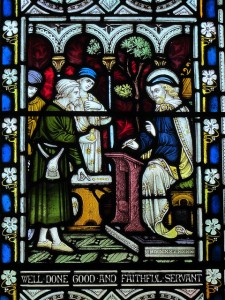
Romano, Flickr C.C.
The Master is coming back at some point, and those of us who have been entrusted with proclaiming the Good News, with working for peace, with standing against injustice—all those who are Christians—will have to answer our Master on how and where we spent our talents.[2] Yes, there is heaviness here, but there is also empowerment. This distribution was done according to each one’s ability, the evangelist tells us. We are given a difficult task, but with the understanding that we can accomplish it with and through the grace of God. The question is, will we? Will we do the difficult and brave thing, like Antoine has chosen to do? To rebuild Rwanda? To heal Pasadena? To fight racism and bind up the broken-hearted, to proclaim release to the captives and stand against the injustices of this world? Will we preach and live the Good News?
This is the challenge that Antoine left me with, the fire that burns in my bones. My prayer is that all of us may open our eyes and remove those blind spots, enacting change and transformation in our communities for the glory of God. May we one day stand before the throne and hear, when all is accounted for, “Well done, good and faithful servant,” not for our own sake, but for those individuals, communities, and nations that have been entrusted to our care.
Reed Metcalf works as a Media Relations and Communications Specialist at Fuller Theological Seminary. He writes for and curates the Fuller Blog and contributes regularly to FULLER magazine. He graduated with his MDiv from Fuller in 2014 and is an ordination candidate in the Free Methodist church. When not neck deep in biblical languages, theology, and writing, Reed is often surfing, skating, or hiking with his wife Monica. Follow him on Twitter and Instagram at @reedmetcalf.
[1] The feature story on Antoine should be out in Issue #3 of FULLER. Keep an eye out for it in Spring 2015.
[2] I understand that the historical and literary context of Matthew 25 suggests that this parable might be aimed at those in the Jewish leadership that were insincere, unfruitful, and or corrupt, warning of their judgment in the First Jewish-Roman War of 66-73 CE and in the resurrection. As I also understand the Bible to be God’s Word to the community of believers (even today’s community of believers despite the chronological and geographical distances to the original context of the Scripture), I see this is be a plausible contemporary reading of the text with the traditional critical concerns incorporated.
Previous Post

December 15, 2014
Possible Joy
Next Post
December 22, 2014 Being a "Friend" of Jesus
Browse Our Archives
Select a Category Abuse and Recovery Art and Faith Biblical Interpretation Church History Community Life Cultural Engagement Fuller Forum Interfaith Dialogue Leadership Ministry Missiology Psychology Spirituality Theology Uncategorized
Select a Month June 2018 May 2018 April 2018 March 2018 February 2018 December 2017 November 2017 September 2017 August 2017 July 2017 June 2017 April 2017 March 2017 February 2017 January 2017 November 2016 October 2016 April 2016 March 2016 February 2016 January 2016 December 2015 November 2015 October 2015 September 2015 August 2015 July 2015 June 2015 May 2015 April 2015 March 2015 February 2015 January 2015 December 2014 September 2014
Follow Us!
TAKE THE
Religious Wisdom Quiz
Which disciple was exiled to the island of Patmos?
Select your answer to see how you score.
John Thomas Peter Paul
Related posts from The Fuller Blog


A Historian’s Hunches: Eight Future Trends in Mission...
Leadership in the Spirit? From Conquest to the...

Jesus' Paradoxes and God's Vastness
TRENDING AT PATHEOS Evangelical - Sponsored

The REST of Your Life: A Creative Wrestles...
This week I had a conversation with a good friend from church....

How the author of the world's best hymn...
I've been working with John Newton for a while now. This makes...

Long before this Lectio Divina, Psalm 130 - the song - started...

What About the Trees? Another Living Parable
After I finished writing the last article about falling leaves as a...

Why Classical Education Is a Conversation, Not a...
Come and Read: Joy in Classical Education When I was a little...

Cornell University has received a great deal of negative publicity and intense...
view all Evangelical - Sponsored blogs
Ad-Free & Subscriber Log-In Subscription Support
- About Us
- 2026 Calendar
- Videos
- Podcasts
- Library of World Religions
- Faith In Media Tracker
- Advertise With Us
- Write for Us
- Privacy Policy
- Terms of Service
- Do Not Sell My Data
- Contact Us
- Radiant Digital
- Manage Newsletter Subscriptions
- Unsubscribe From Notifications
- Sitemap
Copyright 2008-2026, Patheos. All rights reserved.
Subscription Support Ad-Free & Subscriber Log-In
Follow Patheos