
BuddhistCatholicContemplativeEvangelicalGeneral ChristianHinduJewishLatter-day SaintMuslimNew VisionsProgressive Christian
Beliefs
- Buddhist
- Catholic
- Contemplative
- Evangelical
- General Christian
- Hindu
- Jewish
- Latter-day Saint
- More Voices
- Muslim
- New Visions
- Pagan
- Progressive Christian
Topics
- Religion News
- Food and Religion
- Sports and Religion
- Religious Art
- Religious Music and Entertainment
- Religious Events
- History and Religion
- Style and Religion
- Politics and Religion
- Women in Religion
- Recreation Outdoors and Religion
- Business Finance and Religion
- Careers Workplace and Religion
- Education and Religion
- Family Parenting and Religion
- Health Fitness and Religion
- Home and Religion
- Relationships and Religion
- Technology and Religion
- Travel and Religion
Columnists
- Buddhist Columnists
- Business Finance and Religion Columnists
- Careers Workplace and Religion Columnists
- Catholic Columnists
- Contemplative Columnists
- Education and Religion Columnists
- Evangelists Columnists
- Family Parenting and Religion Columnists
- General Christian Columnists
- Health Fitness and Religion Columnists
- Hindu Columnists
- History and Religion Columnists
- Home and Religion Columnists
- Jewish Columnists
- More Voices Columnists
- Latter Day Columnists
- Muslim Columnists
- New Visions Columnists
- Nonreligious Columnists
- Pagan Columnists
- Politics and Religion Columnists
- Progressive Columnists
- Recreation Outdoors and Religion Columnists
- Relationships and Religion Columnists
- Religion News Columnists
- Religious Art Columnists
- Religious Events Columnists
- Religious Music and Entertainment Columnists
- Sports and Religion Columnists
- Style and Religion Columnists
- Technology and Religion Columnists
- Travel and Religion Columnists
- Women in Religion Columnists
Resource Library
- 2026 Calendar
- Library of World Religions
- The 100 Most Holy Places on Earth
- Patheos Answers
- Podcasts
- Videos
- Faith Leaders Database
- Anglican Episcopalian
- Bahai
- Baptist
- Buddhism
- Christianity
- Confucianism
- Eastern Orthodoxy
- Hinduism
- Holiness and Pentecostal
- ISKCON
- Islam
- Judaism
- Lutheran
- Methodist
- The Church of Jesus Christ of Latter-day Saints
- New Age
- Paganism
- Presbytarian and Reformed
- Protestantism
- Religion Behind the Scenes
- Roman Catholic
- Scientology
- Shia Islam
- Sikhism
- Sufism
- Sunni Islam
- Taoism
- Zen
- See all religions
Research Tools
 Ad-Free & Subscriber Log-In Subscription Support
Ad-Free & Subscriber Log-In Subscription Support
Follow Patheos 

- Trending:
- Forgiveness
- |
- Marriage
- |
- Consciousness
- |
- Death Penalty
- |
- Election
- |
- Halloween

- Home
- Pagan
- The Core Order of Ritual – Part 1
The Core Order of Ritual – Part 1
Last updated on: September 7, 2019 at 6:58 pm by Rev. Jean (Drum) Pagano
The Core Order of Ritual – Part 1 2019-09-07T18:58:37-04:00 Rev. Jean (Drum) Pagano
Patheos Explore the world's faith through different perspectives on religion and spirituality! Patheos has the views of the prevalent religions and spiritualities of the world.
The Core Order of Ritual – Part 1
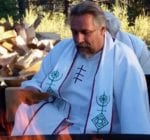
The Core Order of Ritual was established by the ADF Clergy Council in 2006 as a replacement for the Standard Liturgical Order. The Standard Liturgical Order dated from earlier in the history of ADF. The Core Order is a standard which applies everywhere that ADF rite is observed for High Days.
I have been fortunate in my travels to attend ADF rites on four continents and in those situations where a different language was spoken, I was still able to understand what was going on by its location within the Core Order. The beauty of the Core Order is that it suggests an order, but other steps may be added into the structure. The workings section is left open for many possibilities. This is the structure that is used for High Days – for groups and individuals. While some steps, like Purification may float in the Order, as long as it comes before opening the Gates, others are pretty well set in the structure. These placements are not a sign of rigidity or inflexibility, but instead are one of order.
I am going to go through each of the steps and explain them so that people can get a better comprehension of the reason behind the step in the Core Order.
The Eighteen Steps
Core Order of ADF Ritual for High Days
1. Initiating the Rite – May include:
Musical Signal
Opening Prayer
Processional
Establishing the Group Mind
2. Purification – This must take place prior to Opening the Gates
3. Honoring the Earth Mother
4. Statement of Purpose
5. (Re)Creating the Cosmos
Sacred Center must be established in a triadic Cosmos
The Three Worlds or Realms must be acknowledged
The Fire must be included
Sacred Center is most commonly represented as Fire, Well and Tree
6. Opening the Gate(s) – Must include a Gatekeeper
7. Inviting the Three Kindreds
8. Key Offerings – This will commonly include:
Invitation of Beings of the Occasion
Seasonal customs as appropriate
Praise Offerings
9. Prayer of Sacrifice
10. Omen
11. Calling (asking) for the Blessings
12. Hallowing the Blessing
13. Affirmation of the Blessing
14. Workings (if any)
15. Thanking the Beings
16. Closing the Gate(s)
17. Thanking the Earth Mother
18. Closing the Rite
(ADF.org)
From the top
Let’s start at the beginning.
Initiating the Rite
Initiating the Rite – May include:
Musical Signal
Opening Prayer
Processional
Establishing the Group Mind
Isaac Bonewits stated that “Every ritual, whether religious or not, should have a clearly designated beginning.” (Bonewits) This can be done in several ways, such as ringing a bell, clapping one’s hands, or simply by saying “Let us begin”.
In a group setting, a tone or some auditory queue is helpful in drawing attention. For those with hearing challenges, the clapping of hands can be a visual cue.
An opening prayer is a nice way to begin the work. The prayer can be as simple as a summary of why one/we are gathered here today and what the occasion is.
A processional, which can be as simple as walking from point A to point B or as elaborate as singing a song along the way, is a nice way to symbolize the movement from mundane space to sacred space. We begin in the mundane world and process to the sacred space or sacred place.
Establishing the Group Mind is important for small or large ritual practice and of course does not apply to solitary practice. The Two Powers meditation or the Great Tree visualization can be used to accomplish this task. As we center and ground ourselves, we find ourselves in the company of others who have done the same. Holding hands, if this is acceptable to those assembled, may help to accomplish this end. Please make sure to ask permission before grabbing the hand of a neighbour.
Purification
This must take place prior to Opening the Gates
Purification is the process of cleansing those who are about to enter sacred space. This is mostly a symbolic undertaking but being clean before ritual is generally a good principle to follow, in my opinion. On a personal level, washing one’s hands and drinking a glass of water before hand is a good way of purifying the exterior of one’s body while water symbolically purifies the interior.
Often, in ritual spaces, purification is done by censing and asperging the individuals entering the ritual area. Censing is “to perfume especially with a censer” (Merriam-Webster, cense) whereas asperging is “to sprinkle especially with holy water” (Merriam-Webster).
This is typically accomplished by sprinkling with water, although not necessarily “holy water” and by smudging with incense or some smudging smoke.
One might sprinkle the person with water by saying “I purify you with water” or “I purify you with sea”. One may cleanse the person with incense or smudge saying “I purify you with air” or “I purify you with sky”.
Shining Lakes Grove ADF in Michigan uses red ochre on the forehead to purify with earth/land. It this instance, a drop of water is placed on the forehead when asperging and then the red ochre is placed on to spot of water so that the red ochre adheres to the forehead.
The ritual area itself may be censed and asperged before the attendees arrive, although this is less commonly done.
Honoring the Earth Mother
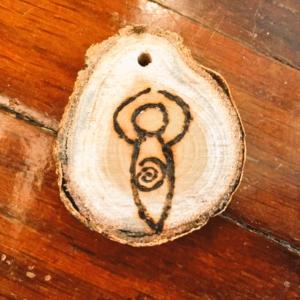
The Earth Mother is the first entity honoured in ADF rites. This comes from our affiliation with RDNA (the Reformed Druids of North America) (RDNA) Many people, if they are able, reach down and touch the Earth during the honouring of the Earth Mother.
The Earth Mother is the foundation on which we stand, both physically and symbolically. The Earth Mother is found in a number of Indo-European cultures. It is also a reference to the planet Earth and the need to be mindful of our obligations to care for the planet on which we live.
Here is an example of an invocation:
“We call to you,
Earth Mother,
You are the firm foundation
On which we stand.
We come from you,
You nourish us,
And one day,
We will return to you.
Earth Mother accept our offering!”
Feel the Earth Mother in your fingertips as you touch the ground or, if you are unable or unwilling to touch the ground, envision your Earth Mother as these words are said. At this point, make an offering onto the ground. Water or grain of some sort is a good offering to use, although there are other offerings that can be made.
Offerings that will extinguish the fire should not be placed into the fire but next to it.
“Accept our offerings.”
“Offerings” are the gifts we give the Earth Mother, the Spirits of Inspiration, the Gate Keeper, and the Kindreds as we make offerings. “Sacrifices” are what is given during the Gift of Final Sacrifice, later in the Core Order of Ritual.

One exception to honouring the Earth Mother first is practiced by the Hellenes. They honour Hestia, firstborn child of Kronos and Rhea. She was also the last of Kronos’ children to be yielded up again. The she was firstborn and also lastborn. Some will honour Hestia first and then the Earth Mother directly thereafter.
Statement of Purpose
The statement of purpose is the reason for the rite. This is typically an explanation of the High Day and the reason for the celebration. It may also include a description of the deities of the occasion.
Here is an example:
“We gather together today to celebrate the Spring Equinox. This is the time when the Earth emerges from a time of little light to a time of equal light, where day and night are equal. The deity of the occasion for this rite is Belenos.”
(Re)Creating the Cosmos

We establish the Sacred Center in a triadic Cosmos
One acknowledges the Three Worlds or Realms
We include the Fire
One represents the Sacred Center (typically) as Fire, Well and Tree
Recreating the Cosmos is one of the main purposes of an ADF rite. The cosmos came into being through the act of sacrifice. We see this in the stories of Ymir, from the Norse pantheon, and Purusha, from the Vedic tradition. To honour this primordial sacrifice, we recreate the cosmos in our rites.
There are three parts to the triadic cosmos. As we describe this Sacred Center, we must acknowledge the three realms which are Land, Sea, and Sky. We acknowledge them by describing them and speaking to their importance.
Fire exists at center of the triadic cosmos. It is central to any rite. The Sacred Center is often the Fire, Well, and Tree. For instance, the Tree, or land component, may be represented by another object in some hearth cultures. For the Hellenes, the representation of the land is the umbilicus. The Vedics employ three fires instead of well, tree, and fire.
We bless the Sacred symbols, or the Hallows, the representations of the triadic Cosmos, at this time. Many groups use Portal Song in group rites for this purpose.(https://www.adf.org/rituals/chants/well-fire-tree/portal-song.html) In this song, one makes offerings to the Hallows, such as silver to the well, olive oil to the fire, and water from the well for the tree. Variations of the Hallows will require a variation of the offerings given.


In a Solitary rite, the same method applies. Offerings to the fire may include incense. If no flame is possible, place a red stone next to the fire symbol to signify fire itself. Use water from the well to anoint the tree. A small piece of silver or even a flower can be an offering to the well. There are no set rules – one ay be creative!
In part two,
Opening the Gate(s) – Must include a Gatekeeper Offering
Previous Post

August 12, 2019
Building a Devotional Practice with the Ancestors
Next Post

September 11, 2019 Domestic Cult in Gaelic Polytheism Part II: House Gods and Fairies
Browse Our Archives
Select a Category ADF at Festivals Autumn Equinox CMA Devotional Polytheism Druid Druid Magic Druid Mysticism Festival Folklore Groups and Organizing Ideology Imbolc Indo-European Interfaith Magic Midsummer Pagan Pagan Practice Pagan Worldview Parapsychology Prayer PriestCraft Ritual Samhain Uncategorized Wicca Winter Solstice Witchcraft Yule
Select a Month June 2026 February 2026 January 2026 October 2025 September 2025 August 2025 July 2025 May 2025 February 2025 January 2025 December 2024 November 2024 September 2024 August 2024 June 2024 May 2024 April 2024 February 2024 January 2024 December 2023 October 2023 August 2023 July 2023 January 2023 June 2022 May 2022 January 2022 August 2021 June 2021 January 2021 October 2020 July 2020 June 2020 April 2020 March 2020 February 2020 January 2020 November 2019 October 2019 September 2019 August 2019 July 2019 April 2019 March 2019 February 2019 January 2019 December 2018 November 2018 October 2018 September 2018 August 2018 July 2018 June 2018 May 2018 April 2018 March 2018 February 2018 January 2018 December 2017 November 2017 October 2017
Follow Us!
TAKE THE
Religious Wisdom Quiz
In Revelation, what is written on the thigh of the rider on the white horse?
Select your answer to see how you score.
King of Kings and Lord of Lords Faithful and True Alpha and Omega The Word of God
Related posts from From a Common Well
Listening and really listening
TRENDING AT PATHEOS Pagan

I was recently chatting with someone on Instagram. She asked me what...

While there are many people who share their results, the end of...

On July 23, I saw Christopher Nolan's The Odyssey which is Homer’s...

As I write this two big events have just finished up. One...

Restoring the Watershed of Divine Love
Perhaps cooperation is not something we manufacture through legislation, ideology, or moral...

Many UUs don’t pray because of bad experiences in a previous religion,...
view all Pagan blogs
Ad-Free & Subscriber Log-In Subscription Support
- About Us
- 2026 Calendar
- Videos
- Podcasts
- Library of World Religions
- Faith In Media Tracker
- Advertise With Us
- Write for Us
- Privacy Policy
- Terms of Service
- Do Not Sell My Data
- Contact Us
- Radiant Digital
- Manage Newsletter Subscriptions
- Unsubscribe From Notifications
- Sitemap
Copyright 2008-2026, Patheos. All rights reserved.
Subscription Support Ad-Free & Subscriber Log-In
Follow Patheos