
BuddhistCatholicContemplativeEvangelicalGeneral ChristianHinduJewishLatter-day SaintMuslimNew VisionsProgressive Christian
Beliefs
- Buddhist
- Catholic
- Contemplative
- Evangelical
- General Christian
- Hindu
- Jewish
- Latter-day Saint
- More Voices
- Muslim
- New Visions
- Pagan
- Progressive Christian
Topics
- Religion News
- Food and Religion
- Sports and Religion
- Religious Art
- Religious Music and Entertainment
- Religious Events
- History and Religion
- Style and Religion
- Politics and Religion
- Women in Religion
- Recreation Outdoors and Religion
- Business Finance and Religion
- Careers Workplace and Religion
- Education and Religion
- Family Parenting and Religion
- Health Fitness and Religion
- Home and Religion
- Relationships and Religion
- Technology and Religion
- Travel and Religion
Columnists
- Buddhist Columnists
- Business Finance and Religion Columnists
- Careers Workplace and Religion Columnists
- Catholic Columnists
- Contemplative Columnists
- Education and Religion Columnists
- Evangelists Columnists
- Family Parenting and Religion Columnists
- General Christian Columnists
- Health Fitness and Religion Columnists
- Hindu Columnists
- History and Religion Columnists
- Home and Religion Columnists
- Jewish Columnists
- More Voices Columnists
- Latter Day Columnists
- Muslim Columnists
- New Visions Columnists
- Nonreligious Columnists
- Pagan Columnists
- Politics and Religion Columnists
- Progressive Columnists
- Recreation Outdoors and Religion Columnists
- Relationships and Religion Columnists
- Religion News Columnists
- Religious Art Columnists
- Religious Events Columnists
- Religious Music and Entertainment Columnists
- Sports and Religion Columnists
- Style and Religion Columnists
- Technology and Religion Columnists
- Travel and Religion Columnists
- Women in Religion Columnists
Resource Library
- 2026 Calendar
- Library of World Religions
- The 100 Most Holy Places on Earth
- Patheos Answers
- Podcasts
- Videos
- Faith Leaders Database
- Anglican Episcopalian
- Bahai
- Baptist
- Buddhism
- Christianity
- Confucianism
- Eastern Orthodoxy
- Hinduism
- Holiness and Pentecostal
- ISKCON
- Islam
- Judaism
- Lutheran
- Methodist
- The Church of Jesus Christ of Latter-day Saints
- New Age
- Paganism
- Presbytarian and Reformed
- Protestantism
- Religion Behind the Scenes
- Roman Catholic
- Scientology
- Shia Islam
- Sikhism
- Sufism
- Sunni Islam
- Taoism
- Zen
- See all religions
Research Tools
 Ad-Free & Subscriber Log-In Subscription Support
Ad-Free & Subscriber Log-In Subscription Support
Follow Patheos 

- Trending:
- Forgiveness
- |
- Marriage
- |
- Consciousness
- |
- Death Penalty
- |
- Election
- |
- Halloween

- Home
- Pagan
- Building a Devotional Practice with the Ancestors
Building a Devotional Practice with the Ancestors
Last updated on: October 28, 2019 at 7:05 am by Rev. Jean (Drum) Pagano
Building a Devotional Practice with the Ancestors 2019-10-28T07:05:11-04:00 Rev. Jean (Drum) Pagano
Patheos Explore the world's faith through different perspectives on religion and spirituality! Patheos has the views of the prevalent religions and spiritualities of the world.
Building a Devotional Practice with the Ancestors
N.B. In presenting this workshop at Summerlands Gathering in August, one of the attendees, Deana, mentioned to me about how she had done some working with the Ancestors of her child and that she preferred the term “Ancestors of the Family” to “Ancestors of the Blood”. I see the wisdom in her words and do correct mine forthwith.
As Pagans, we can merely observe the eight High Days and then move on with our lives. As Devoted Pagans, we can develop a daily practice that helps us to build better relationships with the entities, spirits, and allies in our lives.
This is the fourth in a series of “Building a Devotional Practice with” presentations. The first three dealt with the Land, the Sea, and the Sky. In this offering, we begin our discussion of building devotional practices with the Kindreds. The first of our Kindreds are the Ancestors.
Ancestors
I divide the category of Ancestors into three groups. The first are Ancestors of the Family. These are the people that are responsible for us being here in this world. They have provided the DNA for our bodies and/or provided a lineage, the accumulation of which is who we are today. Regardless of whether we know who our parents are, it is our family relations which make us who we are today.
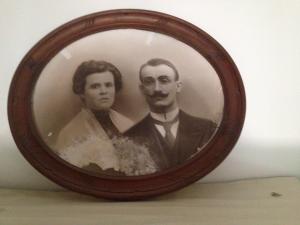
If we were fortunate enough to know and grow up with our direct ancestors, then we are all the richer, because they then not only offered their genetics to ourselves, but also their presence in our lives. While we can make many choices in our lives, the determination of our ancestry is beyond our immediate control.
The second group of Ancestors are Ancestors of the Heart or Hearth. In ADF, we have Hearth Cultures, such as Irish, or Hittite, Nordic, Baltic, etc. Ancestors of the Hearth are those people or entities that come from those hearth cultures and we feel an affinity towards them.
For example, Cuchulain, the hero of the Táin Bó Cúailnge, may be an Ancestor for some people. Vercingetorix is an Ancestor for some. He was the king and chieftain of the Averni tribe, who led the Gauls against Julius Caesar in the Gallic Wars.
Ancestors of the Heart are Ancestors that we admire, like Boudica, Queen of the Iceni, who led a failed revolt against the Roman occupation of England. Albert Einstein is another potential Ancestor of the Heart, as someone we admire. Ancestors of the Heart are typically not related to us by blood and/or by family but are those whose spirits resonate with us.
The third group of Ancestors are Ancestors of the Bone. These individuals are buried beneath our feet, here under the ground on which we stand. These are those who have gone before and are related to us only by location. They may have been buried beneath our feet a hundred years ago or a thousand years ago. They are Ancestors of Place. The Ancestors of of Place understand this land because they lived on this land before we did.
Our Practice
What can the Ancestors bring to our lives and our practice? I believe that the one thing that the Ancestors can help us with is to give us guidance. They have experienced many of the same things that we do: pain, loss, sadness, uncertainty, depression, job loss, economic concerns, droughts, famine, and other challenges. They also have experienced the opposite side of those emotion: joy, satisfaction, pleasure, fulfillment, bounty, and good harvests.
How do we build a relationship with the Ancestors? In addition, where do we build a relationship with them? I think the best place for any kind of devotional is at an altar or shrine. Where would you usually interact with your Ancestors? This would probably be a good place to start. For myself and my family, the kitchen or dining room was where people gathered to meet and share time together.
The kitchen table was the center of the family life. It is the center of the hearth, and the heart of family life. The living room was basically unused; the family room was for passive interacting, such as watching television or reading a book. The kitchen table, however, is where matters of the heart and hearth were discussed. Life percolated around the table and there was always another chair available for those who came later.
Altar
Now that some of my family has passed onto being Ancestors, I have placed my Ancestor Shrine/Altar in the kitchen. It is the first thing one sees when they walk in the door. The Ancestors are the last ones that see you as you walk out the door. I take comfort in the fact that they are watching my back.
Are pets Ancestors? I think so. They are more than passing entities in our lives: they are family members that inhabit the home with us. I think that pets really participate in two Kindreds: Ancestors (once they pass on) and Nature Spirits. Can pets bring us the same guidance that our human Ancestors do? I do feel that they lend their presence to our environs, regardless of where we may be.

What does one put on their Ancestor altar? I think images of our Ancestors are a good thing: photographs, drawings, articles, any thing that invokes their memories for those that visit this altar. Dog tags, cat toys, stone resemblances, even a dog treat or a small bit of catnip. I also like to place my offerings amongst the items on the altar.
What can one use as offerings? I like to offer things that the Ancestors can consume, like water, or alcohol spirits, ideally 100 proof or above. Spirits for spirits, I like to call these kinds of offerings. The beauty of water and distilled spirits is that they will evaporated, according to the laws of nature. The magic of water and spirits as offerings is that they will diminish as the Ancestors consume them. When they are gone, one need only to fill them up again, and the cycle of giving and receiving begins again. In the case of alcohol spirits, one may find it necessary to clean the glass or vessel once the spirits have disappeared.
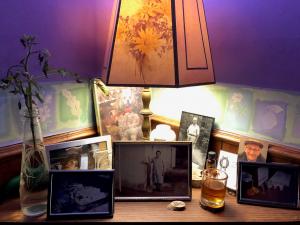
I try to make sure that the offerings do not run dry. I like to feel that the continuity of offerings and the continuity of building a relationship with the Ancestors and myself can continue unabated if the offerings are there for them. In all reality, if the offerings run dry for a day or two, the nature of the relationship with the Ancestors will not suffer. Other acceptable offerings are flowers, either fresh or dried. Fresh flowers bring life to the altar; dried flowers or plants brings a longer offering, which are Ancestor-like in their own plant way.
Outdoor Altars
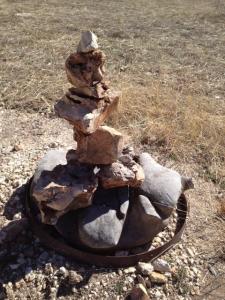
Outdoor altars and shrines are also a wonderful way to commemorate the Ancestors in a natural setting. I have seen stone cairns erected at memorial services and I believe that such cairns can also be constructed in places that are meaningful for ourselves and perhaps for the Ancestors. One such example would be to add a stone for each person or being that passes away. One may write their name on the stone, or one may just keep a silent and invisible recollection of those who have passed. An offering of beautiful stones or a bowl of water will act as a ongoing offering for those commemorated in this setting.
One thing I do during my daily devotionals is to say the names of my Ancestors, human and non-human alike, aloud. I say their names: I let them know that they are not only remembered, but that I call out to them daily, to keep the link going between myself and them. This lets them know that I remember them and by committing it to memory, it keeps them vital and active every day. I also write them down, if one day my memory fails me, and I need to remember their names, or maybe those that come after me will do the same. Maybe they will add my name to the list.
There are those, however, that have troubled relationships with their Ancestors. I know that some people take issue with their Ancestors being slave owners, criminals, or generally bad people; for these people, perhaps it is best if we can find it within ourselves to forgive them. They cannot change the past and neither can we, but at least we can leave the past with a semblance of peace as opposed to the stain of turmoil. Hopefully, we can find someone in our ancestral line that we can reach out to for guidance, inspiration, and whatever interaction with this world we envision they can do.
Another nice touch for an altar is light. I always have a lamp that I keep lit for the Ancestors. I use a low-watt LED light bulb that uses very little power and does not heat up the area. A candle is also a nice touch, but since I have cats, unsupervised open flame is not a good idea. A good source of light are LED candles or anything that generates or reflects light.
One interesting thing that a mirror brings to an Ancestor altar is that it allows one to see change over time. The Ancestors looking back at them from the Ancestor altar never age at all. The altar we build today will perhaps welcome us someday.
Building a Devotional Practice with the Ancestors helps us to remember and cherish those who have gone before. We do this in our lives, in our hearts and hearths, and on the land on which we live and worship. The placement of a vessel and liquid is a beautiful way to commemorate and connect our worship and our practice since it reminds us of a well. . Our offerings go to the Ancestors through this vessel and their blessings return to us in the same way.
Previous Post
July 11, 2019
Mythic Symbols in Indo-European Paganism
Next Post
September 7, 2019 The Core Order of Ritual - Part 1
Browse Our Archives
Select a Category ADF at Festivals Autumn Equinox CMA Devotional Polytheism Druid Druid Magic Druid Mysticism Festival Folklore Groups and Organizing Ideology Imbolc Indo-European Interfaith Magic Midsummer Pagan Pagan Practice Pagan Worldview Parapsychology Prayer PriestCraft Ritual Samhain Uncategorized Wicca Winter Solstice Witchcraft Yule
Select a Month June 2026 February 2026 January 2026 October 2025 September 2025 August 2025 July 2025 May 2025 February 2025 January 2025 December 2024 November 2024 September 2024 August 2024 June 2024 May 2024 April 2024 February 2024 January 2024 December 2023 October 2023 August 2023 July 2023 January 2023 June 2022 May 2022 January 2022 August 2021 June 2021 January 2021 October 2020 July 2020 June 2020 April 2020 March 2020 February 2020 January 2020 November 2019 October 2019 September 2019 August 2019 July 2019 April 2019 March 2019 February 2019 January 2019 December 2018 November 2018 October 2018 September 2018 August 2018 July 2018 June 2018 May 2018 April 2018 March 2018 February 2018 January 2018 December 2017 November 2017 October 2017
Follow Us!
TAKE THE
Religious Wisdom Quiz
Which king asked Elijah for help against the armies of Moab and Edom?
Select your answer to see how you score.
Jehoshaphat Jehoram Joash Joram
Related posts from From a Common Well
Listening and really listening
TRENDING AT PATHEOS Pagan

I was recently chatting with someone on Instagram. She asked me what...

While there are many people who share their results, the end of...

On July 23, I saw Christopher Nolan's The Odyssey which is Homer’s...

As I write this two big events have just finished up. One...

Restoring the Watershed of Divine Love
Perhaps cooperation is not something we manufacture through legislation, ideology, or moral...

Many UUs don’t pray because of bad experiences in a previous religion,...
view all Pagan blogs
Ad-Free & Subscriber Log-In Subscription Support
- About Us
- 2026 Calendar
- Videos
- Podcasts
- Library of World Religions
- Faith In Media Tracker
- Advertise With Us
- Write for Us
- Privacy Policy
- Terms of Service
- Do Not Sell My Data
- Contact Us
- Radiant Digital
- Manage Newsletter Subscriptions
- Unsubscribe From Notifications
- Sitemap
Copyright 2008-2026, Patheos. All rights reserved.
Subscription Support Ad-Free & Subscriber Log-In
Follow Patheos