
BuddhistCatholicContemplativeEvangelicalGeneral ChristianHinduJewishLatter-day SaintMuslimNew VisionsProgressive Christian
Beliefs
- Buddhist
- Catholic
- Contemplative
- Evangelical
- General Christian
- Hindu
- Jewish
- Latter-day Saint
- More Voices
- Muslim
- New Visions
- Pagan
- Progressive Christian
Topics
- Religion News
- Food and Religion
- Sports and Religion
- Religious Art
- Religious Music and Entertainment
- Religious Events
- History and Religion
- Style and Religion
- Politics and Religion
- Women in Religion
- Recreation Outdoors and Religion
- Business Finance and Religion
- Careers Workplace and Religion
- Education and Religion
- Family Parenting and Religion
- Health Fitness and Religion
- Home and Religion
- Relationships and Religion
- Technology and Religion
- Travel and Religion
Columnists
- Buddhist Columnists
- Business Finance and Religion Columnists
- Careers Workplace and Religion Columnists
- Catholic Columnists
- Contemplative Columnists
- Education and Religion Columnists
- Evangelists Columnists
- Family Parenting and Religion Columnists
- General Christian Columnists
- Health Fitness and Religion Columnists
- Hindu Columnists
- History and Religion Columnists
- Home and Religion Columnists
- Jewish Columnists
- More Voices Columnists
- Latter Day Columnists
- Muslim Columnists
- New Visions Columnists
- Nonreligious Columnists
- Pagan Columnists
- Politics and Religion Columnists
- Progressive Columnists
- Recreation Outdoors and Religion Columnists
- Relationships and Religion Columnists
- Religion News Columnists
- Religious Art Columnists
- Religious Events Columnists
- Religious Music and Entertainment Columnists
- Sports and Religion Columnists
- Style and Religion Columnists
- Technology and Religion Columnists
- Travel and Religion Columnists
- Women in Religion Columnists
Resource Library
- 2026 Calendar
- Library of World Religions
- The 100 Most Holy Places on Earth
- Patheos Answers
- Podcasts
- Videos
- Faith Leaders Database
- Anglican Episcopalian
- Bahai
- Baptist
- Buddhism
- Christianity
- Confucianism
- Eastern Orthodoxy
- Hinduism
- Holiness and Pentecostal
- ISKCON
- Islam
- Judaism
- Lutheran
- Methodist
- The Church of Jesus Christ of Latter-day Saints
- New Age
- Paganism
- Presbytarian and Reformed
- Protestantism
- Religion Behind the Scenes
- Roman Catholic
- Scientology
- Shia Islam
- Sikhism
- Sufism
- Sunni Islam
- Taoism
- Zen
- See all religions
Research Tools
 Ad-Free & Subscriber Log-In Subscription Support
Ad-Free & Subscriber Log-In Subscription Support
Follow Patheos 

- Trending:
- Forgiveness
- |
- Marriage
- |
- Consciousness
- |
- Death Penalty
- |
- Election
- |
- Halloween

- Home
- Pagan
- Problems with PriestCraft 1 of 3: What is Clergy For?
Problems with PriestCraft 1 of 3: What is Clergy For?
Last updated on: April 3, 2018 at 5:57 am by Chris Godwin
Problems with PriestCraft 1 of 3: What is Clergy For? 2018-04-03T05:57:07-04:00 Chris Godwin
Patheos Explore the world's faith through different perspectives on religion and spirituality! Patheos has the views of the prevalent religions and spiritualities of the world.
Everyone who practices the old ways does so in a modern context.
Not all contexts are the same.
While I have easy access to farm animals and cows which are a big part of my religion, others may only relate to cows through their appearance in myth.

Photo by Swodesh Shakya on Unsplash
There is also solitary only versus the group/personal practice spectrum as different contexts.
So between all the contexts, they land on an x,y graph between group and personal on one axis, and rural to urban on the other axis.
For the most part we will focus on the group side of the context map.
Lets examine the “Everyone is a priest” mantra prevalent in neopaganism, setting aside that it’s a relic of born again protestant Christianity. A priest in the ancient pagan world was a professional sacrificer who worked on behalf of the people. They resided in groves, temples and offices and performed stately affairs.
If “everyone is a priest” then the natural topography for talent of the sacrificial and poetic arts seems flattened. Some people have innate performance and magical skills and can provide you with a better experience of sacrifice.
A priest in modern group contexts, should not act as intercessor on behalf of the people, but as a person who opens the ways to the gods. Just like a friend inviting his allies to a shared meal, the priest uses their strong relationships to draw near, the ears of the gods. Then the people make offering together… as a people.
It is harder to become a priest if you’re a solitary practitioner, you can’t practice serving a people. And so as a solitary practitioner, you can only become proto-priest. This of course is only true when assuming an ancient view of the priesthood. I strongly believe everyone is their own intercessor to the gods, divine in their own right, and is a priest to themselves in action. But in title, Priests are those who serve others. “Everyone is only a priest” because we have ancient examples of servitors of sacrifice to then metaphorically and analogously apply to doing for ourselves. If priests were not servitors of sacrifice for many people, the phrase “Everyone is a priest” wouldn’t make sense. Everyone cooks, but chefs are trained. Thus it is so with clergy.
Priests do not serve gods, they serve the people who worship those gods. A priest of the Morrigan is actually a priest to her muigh, her servants. As modern Pagans, we reject gods as false who don’t consider reciprocal good experience with those who worship them.
In Indo-European paganism, a professional who devotes their life to their faith must serve their greater community.
This is why Celtic reconstructionism has no to few, peer recognized, solitary druids. And most of them are authors and contribute to the community nonetheless.
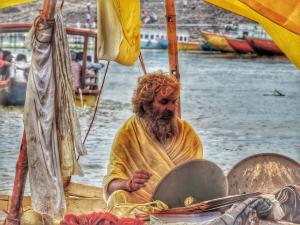
Photo by Mohit Gupta on Unsplash
You can be clergy to no tribe, like the Finian warriors were tribeless, but you’d still be serving a diaspora.
Druids are keepers of tribal culture. That’s more than half their job. It takes a lifetime to attain that as Irish-American descended. I have to wipe my cultural operating system, and work my whole life toward attaining what Irish speakers achieve by age 10.
Sean Nos singing, Irish poetic metre, performance of tale telling, placelore knowledge, Saints day customs… it’s hard to learn these in isolation. But if you don’t know any of it, you’re not only not Druid clergy, you’ve got no claim to being Irish. I say this because Irish is a place, culture, and language. Irish paganism is but one spoke of many on the wheel of culture that clergy upholds.
Most people are simply laity, devoting their time to family or fortune over faith. Their personal practice doesnt need clergy. But when it does, local druids and witches who specialize are there.
There is clergy, and there are witches, and both can and do serve the people who identify as regular pagans, the free folk.
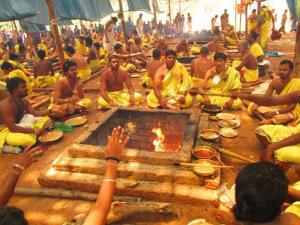
In Wicca there is no laity, at least not originally. Covens, were designed to turn each member into a teacher in their own coven. Thats how the lineage works.
However, in all the paganisms of Europe, the closest thing to solitary people we have are henotheistic recluses or family practice.
In all cases though to be clergy, you must be able to serve someone better than they can themselves. Everyone can draw, but artists primarily breath their skill first and exist as a human second. Some people are mothers first, and self serving second. That’s what being clergy is like.
You’re their guide, compass, sacrificer, counselor, lore keeper, seer, magician, and priest. That’s what clergy is for.
Previous Post

March 23, 2018
Do the Gods Need Our Devotion?
Next Post
May 15, 2018 7 Problem Priests You Don't Want to Meet: Problems with PriestCraft 2 of 3
Browse Our Archives
Select a Category ADF at Festivals Autumn Equinox CMA Devotional Polytheism Druid Druid Magic Druid Mysticism Festival Folklore Groups and Organizing Ideology Imbolc Indo-European Interfaith Magic Midsummer Pagan Pagan Practice Pagan Worldview Parapsychology Prayer PriestCraft Ritual Samhain Uncategorized Wicca Winter Solstice Witchcraft Yule
Select a Month June 2026 February 2026 January 2026 October 2025 September 2025 August 2025 July 2025 May 2025 February 2025 January 2025 December 2024 November 2024 September 2024 August 2024 June 2024 May 2024 April 2024 February 2024 January 2024 December 2023 October 2023 August 2023 July 2023 January 2023 June 2022 May 2022 January 2022 August 2021 June 2021 January 2021 October 2020 July 2020 June 2020 April 2020 March 2020 February 2020 January 2020 November 2019 October 2019 September 2019 August 2019 July 2019 April 2019 March 2019 February 2019 January 2019 December 2018 November 2018 October 2018 September 2018 August 2018 July 2018 June 2018 May 2018 April 2018 March 2018 February 2018 January 2018 December 2017 November 2017 October 2017
Follow Us!
TAKE THE
Religious Wisdom Quiz
In the beginning was the Word, and the Word was with God, and the Word was what?
Select your answer to see how you score.
The Spirit Good God Logos
Related posts from From a Common Well
Listening and really listening
TRENDING AT PATHEOS Pagan

When we talk about Greek religion, we often begin with the dodekatheion—the...

I was recently chatting with someone on Instagram. She asked me what...

While there are many people who share their results, the end of...

On July 23, I saw Christopher Nolan's The Odyssey which is Homer’s...

As I write this two big events have just finished up. One...

Restoring the Watershed of Divine Love
Perhaps cooperation is not something we manufacture through legislation, ideology, or moral...
view all Pagan blogs
Ad-Free & Subscriber Log-In Subscription Support
- About Us
- 2026 Calendar
- Videos
- Podcasts
- Library of World Religions
- Faith In Media Tracker
- Advertise With Us
- Write for Us
- Privacy Policy
- Terms of Service
- Do Not Sell My Data
- Contact Us
- Radiant Digital
- Manage Newsletter Subscriptions
- Unsubscribe From Notifications
- Sitemap
Copyright 2008-2026, Patheos. All rights reserved.
Subscription Support Ad-Free & Subscriber Log-In
Follow Patheos