
BuddhistCatholicContemplativeEvangelicalGeneral ChristianHinduJewishLatter-day SaintMuslimNew VisionsProgressive Christian
Beliefs
- Buddhist
- Catholic
- Contemplative
- Evangelical
- General Christian
- Hindu
- Jewish
- Latter-day Saint
- More Voices
- Muslim
- New Visions
- Pagan
- Progressive Christian
Topics
- Religion News
- Food and Religion
- Sports and Religion
- Religious Art
- Religious Music and Entertainment
- Religious Events
- History and Religion
- Style and Religion
- Politics and Religion
- Women in Religion
- Recreation Outdoors and Religion
- Business Finance and Religion
- Careers Workplace and Religion
- Education and Religion
- Family Parenting and Religion
- Health Fitness and Religion
- Home and Religion
- Relationships and Religion
- Technology and Religion
- Travel and Religion
Columnists
- Buddhist Columnists
- Business Finance and Religion Columnists
- Careers Workplace and Religion Columnists
- Catholic Columnists
- Contemplative Columnists
- Education and Religion Columnists
- Evangelists Columnists
- Family Parenting and Religion Columnists
- General Christian Columnists
- Health Fitness and Religion Columnists
- Hindu Columnists
- History and Religion Columnists
- Home and Religion Columnists
- Jewish Columnists
- More Voices Columnists
- Latter Day Columnists
- Muslim Columnists
- New Visions Columnists
- Nonreligious Columnists
- Pagan Columnists
- Politics and Religion Columnists
- Progressive Columnists
- Recreation Outdoors and Religion Columnists
- Relationships and Religion Columnists
- Religion News Columnists
- Religious Art Columnists
- Religious Events Columnists
- Religious Music and Entertainment Columnists
- Sports and Religion Columnists
- Style and Religion Columnists
- Technology and Religion Columnists
- Travel and Religion Columnists
- Women in Religion Columnists
Resource Library
- 2026 Calendar
- Library of World Religions
- The 100 Most Holy Places on Earth
- Patheos Answers
- Podcasts
- Videos
- Faith Leaders Database
- Anglican Episcopalian
- Bahai
- Baptist
- Buddhism
- Christianity
- Confucianism
- Eastern Orthodoxy
- Hinduism
- Holiness and Pentecostal
- ISKCON
- Islam
- Judaism
- Lutheran
- Methodist
- The Church of Jesus Christ of Latter-day Saints
- New Age
- Paganism
- Presbytarian and Reformed
- Protestantism
- Religion Behind the Scenes
- Roman Catholic
- Scientology
- Shia Islam
- Sikhism
- Sufism
- Sunni Islam
- Taoism
- Zen
- See all religions
Research Tools
 Ad-Free & Subscriber Log-In Subscription Support
Ad-Free & Subscriber Log-In Subscription Support
Follow Patheos 

- Trending:
- Forgiveness
- |
- Marriage
- |
- Consciousness
- |
- Death Penalty
- |
- Election
- |
- Halloween

- Home
- Pagan
- First Gods, Last Gods & Gatekeepers
First Gods, Last Gods & Gatekeepers
Last updated on: February 22, 2018 at 8:32 am by Chris Godwin
First Gods, Last Gods & Gatekeepers 2018-02-22T08:32:59-04:00 Chris Godwin
Patheos Explore the world's faith through different perspectives on religion and spirituality! Patheos has the views of the prevalent religions and spiritualities of the world.
First Gods
Which gods to call and in what order to call them is often a question we face when reconstructing our rites.
The best way to reconstruct the structure of rites around invoking the highest gods, is to use the Tripartition Hypothesis.
If we don’t have the knowledge of how the gods were invoked and in what order, we look to survivals in cultures in the same language family as ours.
For us this information is contained within Vedism, as the third of the four vedas were about the pagan Liturgy of that branch of Indo-Europeans. We have sufficiently demonstrated in previous articles how interconnected the Indo-European paganism are, and so what we create needs to look like or similar to this. If we had more than just this one example, we could triangulate for ourselves more wiggle room. However, we only have this one example.
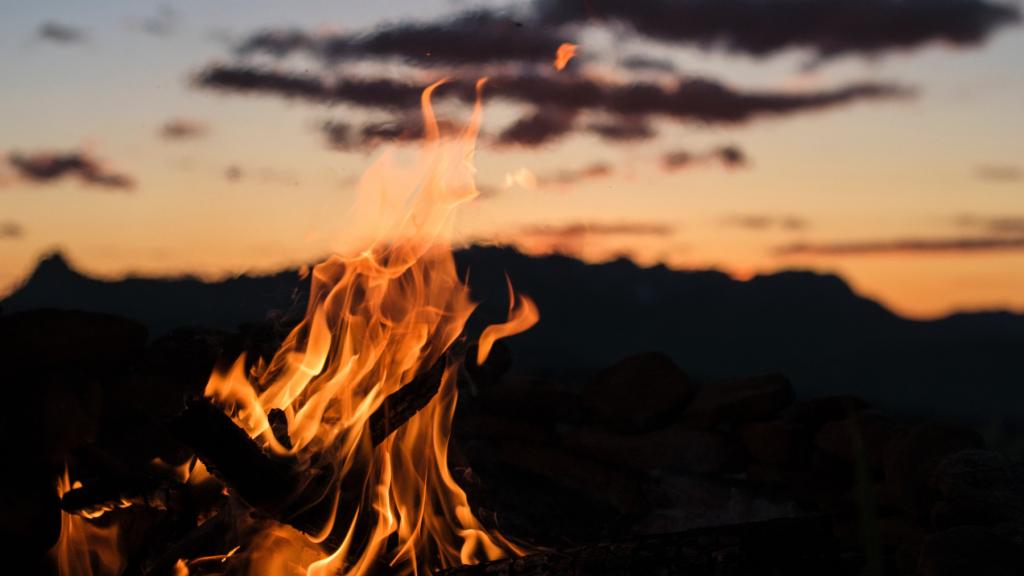
Photo by Colter Olmstead
Dumezil points out that that in Vedic rites, Vāyu was usually invoked at the beginning of a ritual, prior to the invocation of Mitra and Varuna, and that Agni was invoked subsequent to the invocations of the Asvins. These then are what the terms dieux premiers and dieux derniers, or beings who are mentioned prior to and or subsequent to the gods of the three functions.
These are also gods of beginnings and endings. Agni and Vāyu serve as these gods in Indic faiths. Reconstructionists use Morrigan(Kondratiev) while others might use Bríd, like I do. Dumezil called these “dieux derniers” and “dieux premiers” or First Gods and Last Gods. They introduce the trifunctional gods and terminate them. If we were to look at one of the earliest and most preserved Indo-European religions, the summoning list looks like this:
- Vāyu – First God
- Mitra – Judicio-sovereign
- Varuna – Magico-sovereign
- Indra – Champion & Hero
- Asvins/Sarasvati – Horsemen Earth Gods
- Agni – God to deliver the sacrifice.
While Agni is often said to call the other gods forth, he is still called last. We can only speculate as to why this is, but good speculation might lead you to the conclusion to decipher the function of the ritual. For instance, it may be that energetically and spiritually, Agni doesn’t deliver any of the Invocations until you’re done and you’ve done them correctly. Vedic, Greek, and Roman rituals are all strict and done over if done wrong. It’s no hard matter to use that thinking to your benefit in this. We’re not aiming to be exact, we’re aiming to be as exact today as today’s scholarship allows us to be, and in whatever unknowns are remaining, we find our freedom to create seasonal and regional variance and difference.
But the order in the myth is often reversed where the third function is first, and such a list would look like this in a more archaic form (Littleton 219):
- Vāyu – Champion of the Gods
- Asvins/Sarasvati – Horsemen Gods/Earth Gods
- Indra – Champion & Hero
- Mitra – Judicio-sovereign
- Varuna – Magico-sovereign
- Agni – God to deliver the sacrifice.
I prefer this order much more simply because where ritual is concerned, I like to create climax and buildup.
The invocation lists are the order in which things are called or invited. Honoring occurs later when the songs are sung as offerings. So the last god is a sacrifice modulator-demodulator. The gatekeeper an otherworld modem.
So what is the Dieux Premer’s Purpose? Vāyu is a god of wind in Vedic lore, while Vāyu Vata is a god of wind and atmosphere in Avestan lore of the Indo-Iranians. Is it simply that the champion of the Gods enters a space first? I think so.
In my case, we use Oghma as our First God, while not a god of wind particularly, he’s a champion of the gods like Vāyu is and he is a master of the wind via an association with poetry and trees. And his intellect is greater than his strength, which is that of a champion.
So a celtic invocation list for the highest of community ritual might look something like:
- Ogma – Champion of the Tuatha Dé
- Airmed & Miach/Fír and Fial(Macha Fairywoman’s Children)/Boannd/River Goddess
- Lugh – Champion & Hero
- Nuada – Judicio-Sovereign
- Dagda – Magico-sovereign
- Brid/Manannan – Last God, God to deliver the Sacrifice
Another example for the Morrigan Devotees:
- Ogma – Champion of the Tuatha Dé
- Airmed & Miach/Fír and Fial(Macha Fairywoman’s Children)/Boannd/River Goddess
- Macha – Champion & Hero
- Anand/Anu – Judicio-Sovereign
- Badb – Magico-sovereign
- Brid/Manannan – Last God, God to deliver the Sacrifice
See you really can use this as a template which you can test and see if it feels right, if it has enough entropic difference to not feel bland or contrived.
With regard to Oghma, Heimdallr, Janus, and Vayu, they’re first functional champions who do third functional work. Vayu as a the wind, Janus as concerned with Quirinius, and Heimdallr is described the “whitest of gods” linking him to Vayu’s white banner and the first function. But Heimdallr pan functionality comes from his establishment of the classes, his sons being Thrall, Karl, and Jarl. He is called hvítastr ása meaning ‘the whitest of gods’.
This means we need to look for a non-functional or pan-functional god who is a champion of the gods as our first god called, that is, to match the patterns emerging from this data from Indo-European myth.
Last Gods, Gatekeepers and Psychopomps
In Indo-European fire lore, there are remnants that speak to a deeper fire religion that is lost to us. One of Dagda’s names is Aed meaning ‘Fire‘, and dagda(दग्ध) in sanskrit means ‘burnt’ or ‘to burn’ or ‘consumed by fire’. These terms are unrelated but stem from a similar set of roots. We call Bríghid as the Fire Tender to dwell within the fire as we in our mysticism, do her work of tending our fire to get close to her divinity. This Fire -> Fire Tender relationship isn’t simply a reconstruction based on names and Brighid’s relation to both fire and Dagda. In Vesta, Hestia, and Agni’s priests in Homa (होम) rites. In Celtic and specifically Irish Paganism the tender role remained in Brighid’s mystic nuns but was buried. In Iron Age life under wet conditions, keeping and tending a fire was of the utmost importance. Perkun(as) or Perun was the Polish Thunderer or Striker. Perkun had a vestal fire which was maintained by maidens who died if the fire went out(Puhvel 224).
You can use any psychopomp, however, I recommend a fire god for general ‘Fire’ festival rites. If you live on an Isle or are Manx, Mananann will be an obvious choice. If you are working with ancestors, the Lord of the Dead such as Donn will work. If you are working with beings from Inis na mban, the Isle of Women, use the prominent psychopomp from that Imram.
I hope this helps to give you an idea beyond any henotheistic framework you’re now caught in. I know I was caught in a patron trap with my rites. It felt wrong just to cycle through your patron gods and be done with it. Here I can start my invocations with this order, then open the gates or ways or mists to the Otherworld with the Last God as my gatekeeper. I can then call upon my ancestors, patron and make my personal offerings to them. In this way I can honor the kingdom of the gods which has brought order to cosmos and arranged the middle world, saving for last the closest gods to me.
A Hellenistic Example
- Apollo – Champion of the Tuatha Dé
- Demeter – Earth Goddess
- Ares – Champion & Hero (Ares is less of an IE hero… influenced by regional factors he became an asshole like late Indra.)
- Zeus – Judicio-Magico-sovereign with 2nd functional tendencies (Combined Judicio-Magical / Mtra-Varuna/ Nuada-Dagda)
- Hermes – Last God, God to deliver the Sacrifice, God of Roads
Some folks shoot toward invoking out to all of the olympians in the inscriptions from Mycenae: Di-we(Zues) era(Hera) Posedaone, Emaa(Hermes), Arei(Ares), Da-mater(Demeter/Earth Mother) so on and so forth(Puhvel 129), however the list I provide above is a basic tripartion list, and would likely be closer to the earlier proto-Hellenistic rites of Anatolia. So it isn’t going to work for everyone, but it is a starting point and a conversation starter.
A Germanic Example
- Bragi Bodasson – Guards the Hall of the Gods
- Freyr/Freya/Árvakr and Alsviðr – Earth Gods/Horsemen Gods
- Thor/Thunar – Champion & Hero
- Tyr/Tiw– Judicio-sovereign
- Odin/Wodan – Magico-sovereign
- Heimdall – God to deliver the sacrifice.
In this example, I use Bragi a poet, side stepping off of my Oghma association. Thor is the real champion of the Germanic gods and I’ll update my list if I find a prior to Thor old-man champion. While Heimdallr can easily be used as a First God with his associations with white and his fathering mankind, however, as the final guardian of the rainbow bridge, seen in the misty firelight when the ice turns into celestial waters and rains down upon our rites. I’ve seen it first hand.
The use of Freyr was the third part of the triad mentioned above from Uppsala with Thor in the center and Oðinn and Freyr on either side. This is the triad that was replaced by Father, Son, Holy Ghost(Puhvel 205). Because of this triad, Freyr is recommended although my list above allows for the more prominence of the female and horse deities.
This is a subject I continually mull over and try to put into practice. I’ve tested it out in group rites a few times and finally feel like I have a precedence and basis for what I’m doing.
Sources
Littleton, Covington Scott. The New Comparative Mythology: An Anthropological Assessment of the Theories of Georges Dumezil. Berkeley: U of California, 1982. Print.
Mallory, J. P. In Search of the Indo-Europeans: Language, Archaeology and Myth. London: Thames & Hudson, 2003. Print.
Ó hÓgáin, Dáithí. The Lore of Ireland: An Encyclopaedia of Myth, Legend and Romance. Cork: Collins, 2006. Print.
Puhvel, Jaan. Comparative Mythology. Baltimore: Johns Hopkins UP, 1993. Print.
Wilde, Lady. “The Coming of Lugh.” Celtic Wonder Tales: The Coming of Lugh. N.p., n.d. Web. 22 Nov. 2017.
Witzel, Michael. “Early Sanskritization. Origins and Development of the Kuru State.” Diss. N.d. Electronic Journal of Vedic Studies 1.4 (1995): 2-26. Print.
Russell, James C. The Germanization of Early Medieval Christianity: A Sociohistorical Approach to Religious Transformation. New York: Oxford UP, 1996. Print.
Previous Post

February 19, 2018
The Ongoings of Immortals and Men: The Nature of the Gods
Next Post

March 2, 2018 Gatekeepers, Porters, and Sacrificers
Browse Our Archives
Select a Category ADF at Festivals Autumn Equinox CMA Devotional Polytheism Druid Druid Magic Druid Mysticism Festival Folklore Groups and Organizing Ideology Imbolc Indo-European Interfaith Magic Midsummer Pagan Pagan Practice Pagan Worldview Parapsychology Prayer PriestCraft Ritual Samhain Uncategorized Wicca Winter Solstice Witchcraft Yule
Select a Month June 2026 February 2026 January 2026 October 2025 September 2025 August 2025 July 2025 May 2025 February 2025 January 2025 December 2024 November 2024 September 2024 August 2024 June 2024 May 2024 April 2024 February 2024 January 2024 December 2023 October 2023 August 2023 July 2023 January 2023 June 2022 May 2022 January 2022 August 2021 June 2021 January 2021 October 2020 July 2020 June 2020 April 2020 March 2020 February 2020 January 2020 November 2019 October 2019 September 2019 August 2019 July 2019 April 2019 March 2019 February 2019 January 2019 December 2018 November 2018 October 2018 September 2018 August 2018 July 2018 June 2018 May 2018 April 2018 March 2018 February 2018 January 2018 December 2017 November 2017 October 2017
Follow Us!
TAKE THE
Religious Wisdom Quiz
What does "Abraham" mean?
Select your answer to see how you score.
Chosen One King of Peace Father of Many Man of Wisdom
Related posts from From a Common Well
Hospitality in Unexpected Places
TRENDING AT PATHEOS Pagan

I was recently chatting with someone on Instagram. She asked me what...

While there are many people who share their results, the end of...

On July 23, I saw Christopher Nolan's The Odyssey which is Homer’s...

As I write this two big events have just finished up. One...

Restoring the Watershed of Divine Love
Perhaps cooperation is not something we manufacture through legislation, ideology, or moral...

Many UUs don’t pray because of bad experiences in a previous religion,...
view all Pagan blogs
Ad-Free & Subscriber Log-In Subscription Support
- About Us
- 2026 Calendar
- Videos
- Podcasts
- Library of World Religions
- Faith In Media Tracker
- Advertise With Us
- Write for Us
- Privacy Policy
- Terms of Service
- Do Not Sell My Data
- Contact Us
- Radiant Digital
- Manage Newsletter Subscriptions
- Unsubscribe From Notifications
- Sitemap
Copyright 2008-2026, Patheos. All rights reserved.
Subscription Support Ad-Free & Subscriber Log-In
Follow Patheos