
BuddhistCatholicContemplativeEvangelicalGeneral ChristianHinduJewishLatter-day SaintMuslimNew VisionsProgressive Christian
Beliefs
- Buddhist
- Catholic
- Contemplative
- Evangelical
- General Christian
- Hindu
- Jewish
- Latter-day Saint
- More Voices
- Muslim
- New Visions
- Pagan
- Progressive Christian
Topics
- Religion News
- Food and Religion
- Sports and Religion
- Religious Art
- Religious Music and Entertainment
- Religious Events
- History and Religion
- Style and Religion
- Politics and Religion
- Women in Religion
- Recreation Outdoors and Religion
- Business Finance and Religion
- Careers Workplace and Religion
- Education and Religion
- Family Parenting and Religion
- Health Fitness and Religion
- Home and Religion
- Relationships and Religion
- Technology and Religion
- Travel and Religion
Columnists
- Buddhist Columnists
- Business Finance and Religion Columnists
- Careers Workplace and Religion Columnists
- Catholic Columnists
- Contemplative Columnists
- Education and Religion Columnists
- Evangelists Columnists
- Family Parenting and Religion Columnists
- General Christian Columnists
- Health Fitness and Religion Columnists
- Hindu Columnists
- History and Religion Columnists
- Home and Religion Columnists
- Jewish Columnists
- More Voices Columnists
- Latter Day Columnists
- Muslim Columnists
- New Visions Columnists
- Nonreligious Columnists
- Pagan Columnists
- Politics and Religion Columnists
- Progressive Columnists
- Recreation Outdoors and Religion Columnists
- Relationships and Religion Columnists
- Religion News Columnists
- Religious Art Columnists
- Religious Events Columnists
- Religious Music and Entertainment Columnists
- Sports and Religion Columnists
- Style and Religion Columnists
- Technology and Religion Columnists
- Travel and Religion Columnists
- Women in Religion Columnists
Resource Library
- 2026 Calendar
- Library of World Religions
- The 100 Most Holy Places on Earth
- Patheos Answers
- Podcasts
- Videos
- Faith Leaders Database
- Anglican Episcopalian
- Bahai
- Baptist
- Buddhism
- Christianity
- Confucianism
- Eastern Orthodoxy
- Hinduism
- Holiness and Pentecostal
- ISKCON
- Islam
- Judaism
- Lutheran
- Methodist
- The Church of Jesus Christ of Latter-day Saints
- New Age
- Paganism
- Presbytarian and Reformed
- Protestantism
- Religion Behind the Scenes
- Roman Catholic
- Scientology
- Shia Islam
- Sikhism
- Sufism
- Sunni Islam
- Taoism
- Zen
- See all religions
Research Tools
 Ad-Free & Subscriber Log-In Subscription Support
Ad-Free & Subscriber Log-In Subscription Support
Follow Patheos 

- Trending:
- Forgiveness
- |
- Marriage
- |
- Consciousness
- |
- Death Penalty
- |
- Election
- |
- Halloween
 Frequently Faithful
- Home
- Catholic
- Relationships and Religion
- Gospel Reflection: Where is Jesus After the Ascension?
Gospel Reflection: Where is Jesus After the Ascension?
Last updated on: May 22, 2023 at 6:16 pm by Mary Ann Steutermann
Gospel Reflection: Where is Jesus After the Ascension? 2023-05-22T18:16:03-04:00 Mary Ann Steutermann
Patheos Explore the world's faith through different perspectives on religion and spirituality! Patheos has the views of the prevalent religions and spiritualities of the world.
Yesterday’s gospel reading begs the question: if Jesus ascended into heaven over 2,000 years ago, where is he now?

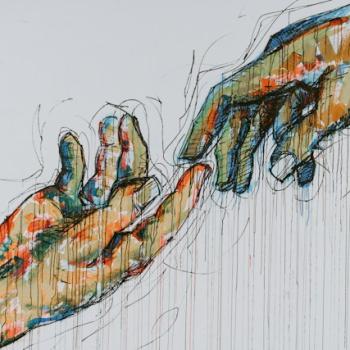
Billy Huynh/Unsplash
I’m currently reading the latest edition of a fantastic book, Forming Intentional Disciples, by Sherry A. Weddell. The author talks about hearing three different homilies three weeks in a row by three excellent priests in three different parishes. In each one, the priest used the phrase, “when Jesus was on earth.” The author found that perplexing because such language assumes that wherever Jesus is, it’s not here with us today. She makes a point of noting that all three said these words while standing within a few feet of the Tabernacle.
What on earth do we mean when we talk about Jesus being present with us? On Earth, in our hearts, in the Eucharist? These are perfect questions for us as we celebrate the Feast of the Ascension.
What’s Up with Ascension Anyway?
Ascension doesn’t always fall on the Seventh Sunday of Easter. Historically, it’s been celebrated on the Thursday of that week. But many churches have moved this observation to the nearest Sunday, usually the Seventh Sunday of Easter. When celebrated separately, the gospel readings for the Seventh Sunday in all liturgical cycles feature Jesus praying for and with his disciples in preparation for “leaving them.” And of course, Ascension celebrates that very leave-taking. So, discussing them together just makes sense.
I’ve always envied my evangelical Protestant friends’ deep, personal, relationship-based spirituality. Once they “accepted Jesus as their personal Lord and Savior,” he became the object of their worship, their guarantee of eternal life after death, their confidant and confessor, their constant companion and faithful friend. I will admit to being jealous of the up-close-and-personal nature of their faith.
But as appealing as it is in some ways, it’s downright mind-boggling to me in others. When I hear the word “Jesus,” my mind’s eye conjures up an image of the real human who walked upon the Earth, one who I picture as male with a medium-to-dark complexion. He has mid-length hair and a beard, and he wears the typical robes of his time and geography.
A Real Human Person
Did he really look like that? No idea. But bottom line . . . when I hear the word “Jesus,” I envision a real, human person. And if I had the technology to search every last millimeter of on, over, under, and around this planet, I would not see this person alive today.
The author of Forming Intentional Disciples recoiled at the three priests’ words on those three separate Sundays because Church teaching is clear. Catholics believe that even after Jesus “ascended into heaven,” which we celebrate on or around the Seventh Sunday of Easter, Jesus is still with us.
My response to that tenant of our faith is . . . “well, yes, but….”
I have repeatedly written that Catholic Christianity’s biggest problem is one of language. Case in point – we often use the words Jesus, Christ, and God to refer to the same thing. But aren’t they the same when it comes to religious faith? Well, yes, but….
The Limitations of Language
Our language is limited by our experiences, and any interpretation of our experiences is limited by, well, us. In other words, we are people – individual, human creatures – so the only way we can grapple with and share our perspectives about our life experiences is through people-centered language. All we can be is who we are. All we can speak of is what we know.
As a result, we have no other alternative than to use human words to explain way-beyond-human realities. It’s like me trying to dress modestly wearing only a ribbon. While it’s sort of the right idea and is headed in the right direction, it misses the mark, and lots of stuff is left hanging.
A lot is also left hanging when we try to talk about God. If I say that I have a “relationship with Jesus,” I’m not being literal. That’s just me. The “Jesus” I know is a person of history. Despite what anyone believes – or doesn’t – about the Resurrection and the Ascension, I simply cannot believe that you or I or anyone else will ever encounter that historical person ordering a latte at Starbucks one day. That specific, unique individual is no longer walking the Earth. Given this, I don’t think I can honestly say that I have a “personal relationship with Jesus.”
But that doesn’t mean I can’t have a personal relationship with God, one that is shaped indelibly by the life, death, and ministry of the historical Jesus.
What Does It Mean To Be Present?
It all comes down to what we mean by the word “present.” In Forming Intentional Disciples, Ms. Waddell struggled with the three priests who referred to a time “when Jesus was on Earth” mere feet from the Tabernacle. Of course, Catholics believe that Jesus is present in the Eucharist. My response to that? Well, yes, but….
I prefer to say that “Christ is present in the Eucharist.” For me, just changing that one word moves this belief statement from the confusing arena of mystical cannibalism to the real-life realm of meaningful communion.
The director of worship in my archdiocese explained it this way to high school students. We can look at the hosts used at Mass under a microscope both before and after the consecration, and we will see the same cells. The physical matter does not change. But something is different.
Real Presence
She equated this to the difference that a person experiences before and after they walk across the stage and receive their diploma at graduation. Or before and after a couple gets married. Sure, the people are the same, but they are different too. They show up differently in the world after the graduation or wedding. New possibilities become open to them that were not available before. Same individuals, different reality.
I believe in the “real presence of Christ” in the Eucharist. After receiving the sacrament, if we are truly paying attention, we are able to show up differently in the world. New possibilities become open to us that were not available before.
Father Richard Rohr has written a great deal about inadequacy of using the word “Christ” as Jesus’ last name. The root word in both Hebrew and Greek means “anointed.” I think the word “Christ” is the best – perhaps only – word we have to describe this same individual Jesus of history in whom we now experience a different reality.
Back to the Ascension
For me, the Feast of the Ascension is metaphorical, not literal. I don’t think the historical person named Jesus levitated into the clouds and out of sight. I simply can’t believe something that doesn’t align with established science and my own experience of the world. The gospel writers had a job to do. They needed to bring the narrative to a logical conclusion while preserving Jesus as “Christ.” Dying again after rising from the dead would seem . . . anti-climactic. Not very God-like.
In Jesus’ time, the “heavens” were thought to be way above the clouds. Since that time, we have discovered ways to see into the far reaches of the universe. There are no Pearly Gates at 100,000 feet. But it made sense that the gospel writers of the time used the only language and concepts they had to describe a reality that was beyond their comprehension.
Words Matter
Language is a bridge to freedom, shared understanding, and creative expression. And it’s also a cruel prison warden, all at the same time. The very thing that enlarges our experience of the world also limits it.
Sure, if you have a personal relationship with Jesus, that’s fantastic. While that language doesn’t completely work for me, I do recognize the benefit of metaphor and shorthand. After all, it’s easier to understand a human relationship with another human than with . . . something else we don’t even have words to define.
What we mean when we talk about Jesus being “present” says a lot about our understanding of what it means to “believe.” For me, many Church teachings leave me saying, “Well, yes, but….” I’m okay with that. No matter how you slice it, the heart of my response is “yes.”
Relationships and Religion
Previous Post

May 17, 2023
Saying Goodbye
Next Post

May 27, 2023 Gospel Reflection: The Holy Spirit is Closer Than Our Own Breath
Recent Comments
"Not at all. Let me introduce to you St. Therese of Lisieux:https://www.amazon.com/Ligh..."
"Authentic listening requires a strong commitment to empathy. It seems likely that, for those willing ..."
"Thank you for an excellent and inspired vision of the ideal Church.The main obstacle to ..."
What Would a “Re-Churched” Church Look ..."
"well Christ said not to delay him leaving, the quicker He left the sooner the ..."
Gospel Reflection: Where is Jesus After ..."
Browse Our Archives
Select a Category Catholic Beliefs Church Faith and Doubt Gospel Jesus Justice Metaphor Pope Francis Relationships Science Society Suffering Uncategorized
Select a Month February 2024 December 2023 November 2023 October 2023 September 2023 August 2023 June 2023 May 2023 April 2023 March 2023 February 2023 November 2021 October 2021 September 2021 August 2021 July 2021 June 2021 May 2021 April 2021 March 2021 February 2021 January 2021
Follow Us!
TAKE THE
Religious Wisdom Quiz
Who was the Roman emperor during Jesus’ birth?
Select your answer to see how you score.
Herod Caesar Augustus Nero Tiberius
Related posts from Frequently Faithful

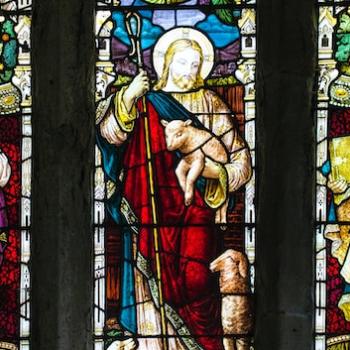
Confessions of an Avowed Stick-in-the-Mud

Gospel Reflection: Cornerstone Calculus
TRENDING AT PATHEOS Catholic

Looking at the Largest Orthodox Cathedral on Earth
There is often a considerable amount of anger and, shall we...

The Problem with False Prophets
Miller’s Station UMC| 10/18/26| Anchor Verse: Jeremiah 23: 1, 9-23 I...

Emotion in Early Christianity by Andrew Crislip
Andrew Crislip’s Emotion in Early Christianity examines an often overlooked dimension of...

16 Spiritual Touchstones for a More Grounded Life
After decades of spiritual study, here are 16 principles I try...

Catholic Evangelization: Sharing Your Faith Every Day
Welcome back to the Graceful Awakening mini-series called, “From Faith to Mission.” ...

The Pillar of the Boatmen: the Ancient Monument...
The Pillar of the Boatmen is a Romano-Gaulish sculpture that dates from...
view all Catholic blogs
Ad-Free & Subscriber Log-In Subscription Support
- About Us
- 2026 Calendar
- Videos
- Podcasts
- Library of World Religions
- Faith In Media Tracker
- Advertise With Us
- Write for Us
- Privacy Policy
- Terms of Service
- Do Not Sell My Data
- Contact Us
- Radiant Digital
- Manage Newsletter Subscriptions
- Unsubscribe From Notifications
- Sitemap
Copyright 2008-2026, Patheos. All rights reserved.
Subscription Support Ad-Free & Subscriber Log-In
Follow Patheos