
BuddhistCatholicContemplativeEvangelicalGeneral ChristianHinduJewishLatter-day SaintMuslimNew VisionsProgressive Christian
Beliefs
- Buddhist
- Catholic
- Contemplative
- Evangelical
- General Christian
- Hindu
- Jewish
- Latter-day Saint
- More Voices
- Muslim
- New Visions
- Pagan
- Progressive Christian
Topics
- Religion News
- Food and Religion
- Sports and Religion
- Religious Art
- Religious Music and Entertainment
- Religious Events
- History and Religion
- Style and Religion
- Politics and Religion
- Women in Religion
- Recreation Outdoors and Religion
- Business Finance and Religion
- Careers Workplace and Religion
- Education and Religion
- Family Parenting and Religion
- Health Fitness and Religion
- Home and Religion
- Relationships and Religion
- Technology and Religion
- Travel and Religion
Columnists
- Buddhist Columnists
- Business Finance and Religion Columnists
- Careers Workplace and Religion Columnists
- Catholic Columnists
- Contemplative Columnists
- Education and Religion Columnists
- Evangelists Columnists
- Family Parenting and Religion Columnists
- General Christian Columnists
- Health Fitness and Religion Columnists
- Hindu Columnists
- History and Religion Columnists
- Home and Religion Columnists
- Jewish Columnists
- More Voices Columnists
- Latter Day Columnists
- Muslim Columnists
- New Visions Columnists
- Nonreligious Columnists
- Pagan Columnists
- Politics and Religion Columnists
- Progressive Columnists
- Recreation Outdoors and Religion Columnists
- Relationships and Religion Columnists
- Religion News Columnists
- Religious Art Columnists
- Religious Events Columnists
- Religious Music and Entertainment Columnists
- Sports and Religion Columnists
- Style and Religion Columnists
- Technology and Religion Columnists
- Travel and Religion Columnists
- Women in Religion Columnists
Resource Library
- 2026 Calendar
- Library of World Religions
- The 100 Most Holy Places on Earth
- Patheos Answers
- Podcasts
- Videos
- Faith Leaders Database
- Anglican Episcopalian
- Bahai
- Baptist
- Buddhism
- Christianity
- Confucianism
- Eastern Orthodoxy
- Hinduism
- Holiness and Pentecostal
- ISKCON
- Islam
- Judaism
- Lutheran
- Methodist
- The Church of Jesus Christ of Latter-day Saints
- New Age
- Paganism
- Presbytarian and Reformed
- Protestantism
- Religion Behind the Scenes
- Roman Catholic
- Scientology
- Shia Islam
- Sikhism
- Sufism
- Sunni Islam
- Taoism
- Zen
- See all religions
Research Tools
 Ad-Free & Subscriber Log-In Subscription Support
Ad-Free & Subscriber Log-In Subscription Support
Follow Patheos 

- Trending:
- Forgiveness
- |
- Marriage
- |
- Consciousness
- |
- Death Penalty
- |
- Election
- |
- Halloween
 Frequently Faithful
- Home
- Catholic
- Gospel Reflection: Fourth Sunday of Lent on Seeing
Gospel Reflection: Fourth Sunday of Lent on Seeing
Last updated on: March 19, 2023 at 6:54 pm by Mary Ann Steutermann
Gospel Reflection: Fourth Sunday of Lent on Seeing 2023-03-19T18:54:33-04:00 Mary Ann Steutermann
Patheos Explore the world's faith through different perspectives on religion and spirituality! Patheos has the views of the prevalent religions and spiritualities of the world.
The gospel reading on the Fourth Sunday of Lent is all about what it means to see . . . and how what we see makes us who we are.
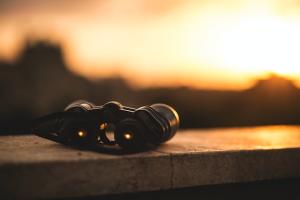
Vision At Sunset – Ran Berkovich/Unsplash
In this week’s lengthy passage from John, Jesus heals a man blind from birth. He spits on the ground and rubs the resulting paste on the man’s eyes. He then instructs him to go wash in the Pool of Siloam. Three defining features in this story provide three guideposts that point us to the heart of the Christian worldview itself.
What Causes Suffering?
When Jesus sees the blind man, his disciples don’t say, “Teacher, can you help him?” or “Rabbi, is there something we do?” Instead, they ask, “Rabbi, who sinned, this man or his parents,
that he was born blind” (John 9:2). It’s almost like he’s not an actual person, just a specimen to be examined in order to test a hypothesis.
But can we really blame them? Isn’t it our own instinct to ask, “Why did this horrible thing happen?” whenever we suffer? Of course, it is – we are hard-wired to do that. The human brain throughout evolutionary history has needed to assign a cause for every effect, a source of every outcome.
Jesus’ Answer
The Hebrew and Christian Scriptures illustrate part of the evolution of our understanding of suffering. During the time the Old Testament was written, suffering was thought to be caused by sin. But whose? The person in pain? Or someone in his ancestral line?
We aren’t all that different today, are we? Since its publication in 1982, several million people have purchased Harold Kushner’s book, Why Bad Things Happen to Good People. We too seem to have a visceral sense that a good person should have good outcomes. But anyone who has lived past the age of diapers and teething rings know it’s doesn’t always work like this.
Jesus’ answer is crystal clear: “Neither he nor his parents sinned” (3).
“Well, then why?” we still ask. And it’s a valid question. Some say that it’s part of God’s “plan,” or that God wants to “teach us a lesson” or “make us stronger.” Personally, I think all of those explanations are were less than the dirt Jesus spit into in this story. I think Life just is. Suffering is a part of Life. Suffering just is. I have much more to say on that elsewhere!
Earthen Vessels
The other glaring fact from this tale that sticks out like a sore thumb is the way Jesus heals the blind man. No loud proclamation of “Open your eyes and see!” No triumphant, theatrical announcement of, “Be opened!” Instead, Jesus spat on the ground, made a paste in the mud, and applied it to the man’s eye. He then told him to wash the muddy substance from his face, and when he did, he was able to see.
So, if we have no fireworks or stunning visual production, no opening performance by The Rolling Stones or Elton John, then what do we have going on here? We have spit and dirt. We have Earth and water. I believe the message is clear. Miracles aren’t divine interruptions into human life. Miracles are the moments when we realize that life in all its muddy earthiness is already divine. No interruptions needed.
Sacred vs. Secular?
Put another way, the central truth of the Incarnation is that everything is sacred if only we have the eyes to see it that way. Absolutely everything, like spit, mud, and water. As Elizabeth Barret Browning wrote, “Earth’s crammed with heaven.” I think this is the message of the story of the man born blind.
Through a Glass Darkly
The third extraordinary element in this story is that no one believes that this miracle has happened. How can he see so suddenly upon his encounter with Jesus when has never seen before?
The Pharisees think there are some hijinks afoot, so they ask the guy’s neighbors who very helpfully say gee, I don’t know, maybe it’s just someone who looks like the blind guy.
Then they question the man’s parents who are afraid of getting in trouble, so they buy time by saying Well, he’s a grown-up guy now, so why don’t you ask him yourself?”
The Truth Shall Set You Free
After all the clumsy Perry Mason interrogations, Jesus makes it clear that he came for the express purpose of helping the blind see. Those who think they have keen sight, like the Pharisees who felt sure they always knew who was on the naughty list, turn out to be blind as bats.
But the fact remains . . . seeing – really, truly seeing with the eyes of Christ and allowing ourselves to be transformed by that vision – is not for wimps. You might encounter people who question your reasoning abilities. You could have people think you’re weird. You may even lose friends. Seeing leads to doing. And doing has consequences.
A Triad of Truth
The gospel reading this fourth Sunday of Lent is all about seeing, and it provides some telling if not quirky clues into how to improve our vision. First, forget trying to figure out the source of suffering. It isn’t you, your parents, or your ancestors. It just is. The vision for people of faith is one in which suffering simply is.
Second, there is no celestial realm separate from our daily experience. The spit and mud, the morning commute and overdue bills, the family vacations and the first day of school photos ARE the celestial realm. It’s just a matter of seeing them the right way.
And finally, we will always question what we see. We will always try to pass the buck. We will say, “Maybe it’s someone who looks like me” or “I don’t know – go ask my parents.” Being an authentic human who truly sees is freakishly scary. And we do scared well.
But there is spit and dirt and water to wash it all off, then we’ll be okay. Maybe that’s all we really need.

Next Post

March 25, 2023 Gospel Reflection: Fifth Sunday in Lent
Recent Comments
"Not at all. Let me introduce to you St. Therese of Lisieux:https://www.amazon.com/Ligh..."
"Authentic listening requires a strong commitment to empathy. It seems likely that, for those willing ..."
"Thank you for an excellent and inspired vision of the ideal Church.The main obstacle to ..."
What Would a “Re-Churched” Church Look ..."
"well Christ said not to delay him leaving, the quicker He left the sooner the ..."
Gospel Reflection: Where is Jesus After ..."
Browse Our Archives
Select a Category Catholic Beliefs Church Faith and Doubt Gospel Jesus Justice Metaphor Pope Francis Relationships Science Society Suffering Uncategorized
Select a Month February 2024 December 2023 November 2023 October 2023 September 2023 August 2023 June 2023 May 2023 April 2023 March 2023 February 2023 November 2021 October 2021 September 2021 August 2021 July 2021 June 2021 May 2021 April 2021 March 2021 February 2021 January 2021
Follow Us!
TAKE THE
Religious Wisdom Quiz
I saw the Promised Land from a mountain but was not allowed to enter it. Who am I?
Select your answer to see how you score.
Caleb Joshua Moses Aaron
Related posts from Frequently Faithful

Confessions of an Avowed Stick-in-the-Mud
Gospel Reflection: Cornerstone Calculus
TRENDING AT PATHEOS Catholic

Emotion in Early Christianity by Andrew Crislip
Andrew Crislip’s Emotion in Early Christianity examines an often overlooked dimension of...

16 Spiritual Touchstones for a More Grounded Life
After decades of spiritual study, here are 16 principles I try...

Catholic Evangelization: Sharing Your Faith Every Day
Welcome back to the Graceful Awakening mini-series called, “From Faith to Mission.” ...

The Pillar of the Boatmen: the Ancient Monument...
The Pillar of the Boatmen is a Romano-Gaulish sculpture that dates from...

In one sense walking into Westminster Abbey is like walking down the...

'Super Scam Me' Exposes AI Jon Bon Jovi...
Leslie Pickett believed she was in a relationship with Jon Bon Jovi....
view all Catholic blogs
Ad-Free & Subscriber Log-In Subscription Support
- About Us
- 2026 Calendar
- Videos
- Podcasts
- Library of World Religions
- Faith In Media Tracker
- Advertise With Us
- Write for Us
- Privacy Policy
- Terms of Service
- Do Not Sell My Data
- Contact Us
- Radiant Digital
- Manage Newsletter Subscriptions
- Unsubscribe From Notifications
- Sitemap
Copyright 2008-2026, Patheos. All rights reserved.
Subscription Support Ad-Free & Subscriber Log-In
Follow Patheos