
BuddhistCatholicContemplativeEvangelicalGeneral ChristianHinduJewishLatter-day SaintMuslimNew VisionsProgressive Christian
Beliefs
- Buddhist
- Catholic
- Contemplative
- Evangelical
- General Christian
- Hindu
- Jewish
- Latter-day Saint
- More Voices
- Muslim
- New Visions
- Pagan
- Progressive Christian
Topics
- Religion News
- Food and Religion
- Sports and Religion
- Religious Art
- Religious Music and Entertainment
- Religious Events
- History and Religion
- Style and Religion
- Politics and Religion
- Women in Religion
- Recreation Outdoors and Religion
- Business Finance and Religion
- Careers Workplace and Religion
- Education and Religion
- Family Parenting and Religion
- Health Fitness and Religion
- Home and Religion
- Relationships and Religion
- Technology and Religion
- Travel and Religion
Columnists
- Buddhist Columnists
- Business Finance and Religion Columnists
- Careers Workplace and Religion Columnists
- Catholic Columnists
- Contemplative Columnists
- Education and Religion Columnists
- Evangelists Columnists
- Family Parenting and Religion Columnists
- General Christian Columnists
- Health Fitness and Religion Columnists
- Hindu Columnists
- History and Religion Columnists
- Home and Religion Columnists
- Jewish Columnists
- More Voices Columnists
- Latter Day Columnists
- Muslim Columnists
- New Visions Columnists
- Nonreligious Columnists
- Pagan Columnists
- Politics and Religion Columnists
- Progressive Columnists
- Recreation Outdoors and Religion Columnists
- Relationships and Religion Columnists
- Religion News Columnists
- Religious Art Columnists
- Religious Events Columnists
- Religious Music and Entertainment Columnists
- Sports and Religion Columnists
- Style and Religion Columnists
- Technology and Religion Columnists
- Travel and Religion Columnists
- Women in Religion Columnists
Resource Library
- 2026 Calendar
- Library of World Religions
- The 100 Most Holy Places on Earth
- Patheos Answers
- Podcasts
- Videos
- Faith Leaders Database
- Anglican Episcopalian
- Bahai
- Baptist
- Buddhism
- Christianity
- Confucianism
- Eastern Orthodoxy
- Hinduism
- Holiness and Pentecostal
- ISKCON
- Islam
- Judaism
- Lutheran
- Methodist
- The Church of Jesus Christ of Latter-day Saints
- New Age
- Paganism
- Presbytarian and Reformed
- Protestantism
- Religion Behind the Scenes
- Roman Catholic
- Scientology
- Shia Islam
- Sikhism
- Sufism
- Sunni Islam
- Taoism
- Zen
- See all religions
Research Tools
 Ad-Free & Subscriber Log-In Subscription Support
Ad-Free & Subscriber Log-In Subscription Support
Follow Patheos 

- Trending:
- Forgiveness
- |
- Marriage
- |
- Consciousness
- |
- Death Penalty
- |
- Election
- |
- Halloween
 Frequently Faithful
- Home
- Catholic
- Four Kidneys and a Sequel
Four Kidneys and a Sequel
Last updated on: February 16, 2023 at 1:21 pm by Mary Ann Steutermann
Four Kidneys and a Sequel 2023-02-16T13:21:26-05:00 Mary Ann Steutermann
Patheos Explore the world's faith through different perspectives on religion and spirituality! Patheos has the views of the prevalent religions and spiritualities of the world.

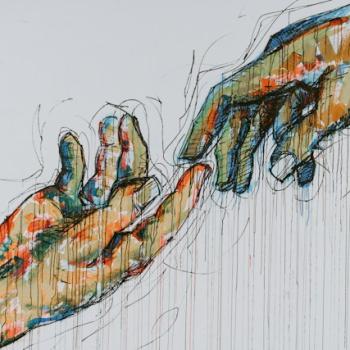
Photo by Brands&People on Unsplash
What would you say if I told you that I have four kidneys? That’s right, mine are smaller than yours, but I have twice as many. It’s a rare condition known as Renses Geminae. (In Latin “ren” means “kidney” and “geninae” means “twin.”) The best way to understand it is to think of my two sets of kidneys as two pairs of “identical twins.” They each began as one, regular-sized organ, but during gestation for reasons medical science has yet to fully comprehend, the combination of some of my parents’ unique genetic markers resulted in some wonky cell division. Ta-da! I have four.
Nowhere else in my body do I have double the usual equipment, but I’ve read that some people with my condition also have Vesicae Geminaea. (“Vesicae” is Latin for “bladder.”) Fortunately, I have no physical impairments because of this since each set of “twins” works together as a single unit. That’s one reason I don’t share this information very often. It doesn’t affect my daily life in any way, so why bring it up? My body’s process for turning waste into urine is the same as yours, and medical research has found no correlation between my condition and negative medical outcomes. I do go to the bathroom a lot, but evidently, that has nothing to do with the “twins.”
Another reason I keep a lid on it is that it’s just so . . . odd. I learned at a young age that strange anatomical anecdotes are not great conversation-starters. When my third-grade teacher said, “Turn to your partner and tell her something about yourself,” I really wish I had said that my favorite color is green.
A Hard Saying
There’s another reason I don’t bring it up much. It’s because it’s not true.
That’s right, I made it up. All of it. Well, most of it. The Latin is correct, and my favorite color is green.
Admit it. As you read this, you knew it didn’t seem like such a condition could be possible. But as you kept going, you started to suspend your disbelief a tiny bit. If identical twins come from an unconventional process of cell division, then maybe internal organs can do the same? Then you went back to, “C’mon, no way” before finally landing on “WTF?”
I image that’s how Jesus disciples felt during this Sunday’s gospel reading, a sequel to the Bread of Life discourse that came just before it and that we’ve heard in pieces in recent weeks. It begins with, “Many of Jesus’ disciples who were listening said, ‘This saying is hard; who can accept it’” (John 6: 60)?
Just what is it that’s so difficult to accept? It’s what we would have heard last week if the Feast of the Assumption hadn’t fallen on a Sunday this year. “Jesus said to them, ‘Amen, amen, I say to you, unless you eat the flesh of the Son of Man and drink his blood, you do not have life within you. Whoever eats my flesh and drinks my blood has eternal life, and I will raise him on the last day. For my flesh is true food, and my blood is true drink. Whoever eats my flesh and drinks my blood remains in me and I in him’” (53-56).
Yikes. His disciples responding, “This saying is hard,” seems like a very understated reaction to me. “WTF?” might get closer to how I’d react if someone I looked up to suggested cannibalism.
Sharing a Meal
Many believe that by speaking these words, Jesus was intentionally instituting the Eucharist. A major difference between Catholics and Protestants is the “real presence” of Jesus in the bread and wine at Holy Communion. I’m going to leave the doctrinal arguments debating whether Jesus’ words were literal or symbolic to others since I’m more interested in what all this means on a practical level for real people in a real – and really complicated – world.
The Jewish people celebrate important events and spiritual truths with food. When Abraham first enters Jerusalem, he breaks bread and drinks wine. He and Sarah announce the birth of Isaiah at a meal. God feeds the Israelites wandering in the desert with mana from heaven. And of course, Passover is the Seder meal that celebrates the Israelites safe movement from slavery into freedom. Jesus’ own Last Supper was a Passover meal. Numerous purity codes and regulations govern the use of food because of its central role in the Jewish faith. Sharing a meal is a holy, intimate endeavor.
This is the religious and cultural backdrop against which Jesus tells his disciples to eat his body and drink his blood. Reduced to its lowest common denominator, food and drink are all about nourishment. What we eat gives us the nutrition required for life. I read Jesus’ “hard saying” very simply: “Let me and my message nourish you.” When you are hungry for God, love your neighbor. When you are thirsty for courage, forgive those who hurt you. When you crave meaning and purpose, give to those in need and welcome God into the free spaces left behind. When you long for peace, work for justice even when it seems to be an impossible battle. Do these things and you will be filled. Do these things and you will “have life and have it to the full” (10:10).
Call it heresy, a cop-out, or watered down catechesis. I can live with that. This interpretation makes sense to me, and faith, for me, has to align with my lived experience. Jesus’ sequel to the earlier Bread of Life discourse in John’s gospel may sound even stranger to us than me having four kidneys. The disciples sure thought so, and many of Jesus’ followers unfriended him because of it. I still subscribe to his channel though because nourishment for my hungry soul is something the good news provides.
Previous Post

August 13, 2021
What's in a name? You'd be surprised!
Next Post
August 28, 2021 Bumper Guards and Legal Scars
Browse Our Archives
Select a Category Catholic Beliefs Church Faith and Doubt Gospel Jesus Justice Metaphor Pope Francis Relationships Science Society Suffering Uncategorized
Select a Month February 2024 December 2023 November 2023 October 2023 September 2023 August 2023 June 2023 May 2023 April 2023 March 2023 February 2023 November 2021 October 2021 September 2021 August 2021 July 2021 June 2021 May 2021 April 2021 March 2021 February 2021 January 2021
Follow Us!
TAKE THE
Religious Wisdom Quiz
What does the name "Samuel" mean?
Select your answer to see how you score.
Heard by God Saved by God Sent by God Gifted by God
Related posts from Frequently Faithful

Confessions of an Avowed Stick-in-the-Mud

Gospel Reflection: Cornerstone Calculus
TRENDING AT PATHEOS Catholic

Emotion in Early Christianity by Andrew Crislip
Andrew Crislip’s Emotion in Early Christianity examines an often overlooked dimension of...

16 Spiritual Touchstones for a More Grounded Life
After decades of spiritual study, here are 16 principles I try...

Catholic Evangelization: Sharing Your Faith Every Day
Welcome back to the Graceful Awakening mini-series called, “From Faith to Mission.” ...

The Pillar of the Boatmen: the Ancient Monument...
The Pillar of the Boatmen is a Romano-Gaulish sculpture that dates from...

In one sense walking into Westminster Abbey is like walking down the...

'Super Scam Me' Exposes AI Jon Bon Jovi...
Leslie Pickett believed she was in a relationship with Jon Bon Jovi....
view all Catholic blogs
Ad-Free & Subscriber Log-In Subscription Support
- About Us
- 2026 Calendar
- Videos
- Podcasts
- Library of World Religions
- Faith In Media Tracker
- Advertise With Us
- Write for Us
- Privacy Policy
- Terms of Service
- Do Not Sell My Data
- Contact Us
- Radiant Digital
- Manage Newsletter Subscriptions
- Unsubscribe From Notifications
- Sitemap
Copyright 2008-2026, Patheos. All rights reserved.
Subscription Support Ad-Free & Subscriber Log-In
Follow Patheos