
BuddhistCatholicContemplativeEvangelicalGeneral ChristianHinduJewishLatter-day SaintMuslimNew VisionsProgressive Christian
Beliefs
- Buddhist
- Catholic
- Contemplative
- Evangelical
- General Christian
- Hindu
- Jewish
- Latter-day Saint
- More Voices
- Muslim
- New Visions
- Pagan
- Progressive Christian
Topics
- Religion News
- Food and Religion
- Sports and Religion
- Religious Art
- Religious Music and Entertainment
- Religious Events
- History and Religion
- Style and Religion
- Politics and Religion
- Women in Religion
- Recreation Outdoors and Religion
- Business Finance and Religion
- Careers Workplace and Religion
- Education and Religion
- Family Parenting and Religion
- Health Fitness and Religion
- Home and Religion
- Relationships and Religion
- Technology and Religion
- Travel and Religion
Columnists
- Buddhist Columnists
- Business Finance and Religion Columnists
- Careers Workplace and Religion Columnists
- Catholic Columnists
- Contemplative Columnists
- Education and Religion Columnists
- Evangelists Columnists
- Family Parenting and Religion Columnists
- General Christian Columnists
- Health Fitness and Religion Columnists
- Hindu Columnists
- History and Religion Columnists
- Home and Religion Columnists
- Jewish Columnists
- More Voices Columnists
- Latter Day Columnists
- Muslim Columnists
- New Visions Columnists
- Nonreligious Columnists
- Pagan Columnists
- Politics and Religion Columnists
- Progressive Columnists
- Recreation Outdoors and Religion Columnists
- Relationships and Religion Columnists
- Religion News Columnists
- Religious Art Columnists
- Religious Events Columnists
- Religious Music and Entertainment Columnists
- Sports and Religion Columnists
- Style and Religion Columnists
- Technology and Religion Columnists
- Travel and Religion Columnists
- Women in Religion Columnists
Resource Library
- 2026 Calendar
- Library of World Religions
- The 100 Most Holy Places on Earth
- Patheos Answers
- Podcasts
- Videos
- Faith Leaders Database
- Anglican Episcopalian
- Bahai
- Baptist
- Buddhism
- Christianity
- Confucianism
- Eastern Orthodoxy
- Hinduism
- Holiness and Pentecostal
- ISKCON
- Islam
- Judaism
- Lutheran
- Methodist
- The Church of Jesus Christ of Latter-day Saints
- New Age
- Paganism
- Presbytarian and Reformed
- Protestantism
- Religion Behind the Scenes
- Roman Catholic
- Scientology
- Shia Islam
- Sikhism
- Sufism
- Sunni Islam
- Taoism
- Zen
- See all religions
Research Tools
 Ad-Free & Subscriber Log-In Subscription Support
Ad-Free & Subscriber Log-In Subscription Support
Follow Patheos 

- Trending:
- Forgiveness
- |
- Marriage
- |
- Consciousness
- |
- Death Penalty
- |
- Election
- |
- Halloween
 The French Revolution
- Home
- Politics and Religion
- Should We Shun Football Because of its Effects on the Body?
Should We Shun Football Because of its Effects on the Body?
Last updated on: September 19, 2014 at 6:33 am by David French
Should We Shun Football Because of its Effects on the Body? 2014-09-19T06:33:06-05:00 David French
Patheos Explore the world's faith through different perspectives on religion and spirituality! Patheos has the views of the prevalent religions and spiritualities of the world.
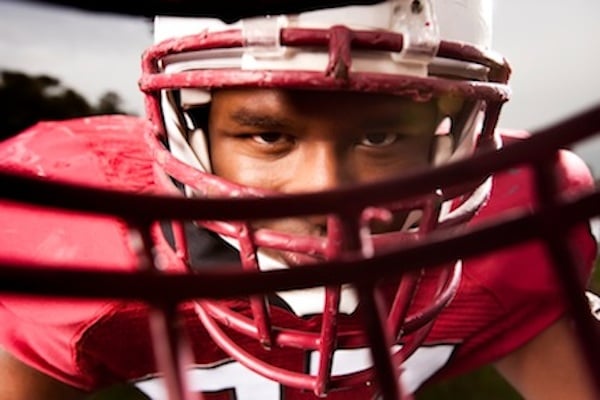
The NFL will survive the media feeding frenzy that Rich properly decries in his Politico column. The news cycle will move on, the storylines on the field will overtake the storylines in courts and the commissioner’s office, and all will once again be well in pro football.
At least for now.
But there’s a much larger issue looming in the background — the toll on players’ bodies and minds from prolonged, violent collisions. Malcolm Gladwell started the conversation with his 2009 New Yorker article, “Offensive Play: How Different are Dogfighting and Football,” and the conversation hasn’t really stopped. Even football reporters — those people who owe their livelihood to football’s dominant popularity — are starting to express ambivalence about what happens to players over the long term. After steady growth, youth football participation is down almost 10 percent, with the “concussion crisis” seen as the prime cause. The concern over concussions isn’t just limited to college and pro sports, with one (NFL-funded) study indicating that high-school football players are almost twice as likely to suffer concussions as college football players. And high-school football players were almost twice as likely to suffer concussions as the athletes in the second-most-dangerous sport, lacrosse. (By the way, high-school lacrosse players suffer more concussions than college football players).
While the studies are interesting, they simply reinforce common sense. A sport built around violent, high-speed contact is going to result in more injuries than other sports. Parents should have known this well before Gladwell’s article and well before the “concussion crisis.” Moreover, many of those injuries have long-term consequences. How many middle-aged men are hobbled by “old football injuries?” Growing up in the South, lingering effects of football were simply a fact of life. From bank managers to car salesmen to accountants, the landscape was littered with guys who could trace scars on their knees or suffered enduring neck or back pain and stiffness from their playing days. My first cousin started at defensive end for Mississippi State University (I loved going to games in SEC stadiums and hearing “tackle by French” echo across the landscape,) and he still feels the effects of his college playing days.
So, yes, football breaks down the body. Not every player’s body. And maybe not even most players’ bodies. But, yes, it does break down the body more than other sports.
But does that mean we should shun it?
At the same time that I’ve known many, many men who suffer from football injuries, few (if any) have expressed regret for playing. In fact, many of them credit football for shaping their lives and character in profound and positive ways and look forward to seeing their own sons take the field. Of course, football does not build everyone’s character (as the NFL’s current troubles demonstrate), and it’s thus not a foolproof rite of passage into manhood, but football does offer something that young men need: an opportunity to show courage.
That’s not to say that one can’t show courage on the basketball court or the lacrosse field or in other, non-athletic ways, but football creates one of the more primal conflicts between your desire to win, to contribute to the team, and the instincts of self-preservation and pain-avoidance. I’ve found for young men, courage is habit-forming, but so is cowardice — to the point where many grown men now sneer at courage or treat its display with a kind of shrugging indifference, perfectly content to let others take the risks necessary to preserve our culture, protect our communities, and pass down enduring values to the next generation.
Last week I was reading The Atlantic’s Ta-Nehisi Coates, who was discussing his own growing distaste for football, and he said something that struck me as profoundly important not just to understanding the debate about football but to understanding how we make choices about our bodies and lives:
Part of this is my own mix of spirituality and atheism. I generally think of the ghost not in the machine, but as the machine. My body is me, and while my brain is particularly important, when I dislocate an ankle I have injured part of myself.
This materialist view, that counts what happens to our bodies as the most important of life’s considerations drives much of the modern discourse about parenting. We can’t agree about morals any longer, so we move to the lowest common denominator — the protection of our physical selves. The body isn’t a temple, it’s god himself. And we live to serve it.
As a Christian, my view is completely different. My body is not me, but the temporary vessel my soul inhabits. And while I should obviously care for my body, the care and feeding of my soul — the building of my character — is by far the most important consideration. Does the sheer joy of athletic competition, combined with the necessity of overcoming fear in the face of real risk, build character? It can and does. Is it worth risks to the body to build character? Absolutely.
I’ll repeat, football is not the only sport that can teach character and courage. Waterloo was reputedly won “on the playing fields of Eton,” and they certainly weren’t playing American football, but if you slice football from the ranks of acceptable sports, then there will only be a new “most dangerous sport in school,” and parents will be made to feel irresponsible for risking little Johnny’s head and legs on the lacrosse field, the soccer pitch, or the basketball court. The problem with football isn’t the sport itself, but our changing perception of acceptable risk.
Every parent must make their own decisions (indeed, forcing children into sports they don’t enjoy can cause an avalanche of family bitterness), but if we train our children to believe that pain and risk-avoidance are among the highest of values, then we cannot expect them to grow out of that belief. And there will be fewer and fewer young men willing to risk anything — much less risk everything — to preserve a nation and culture that was built at such great and enduring cost.
Play football or don’t play football, but please don’t make that choice because you’re afraid.
This article first appeared on National Review Online
Read more on the Patheos Faith and Family Channel and follow David on Twitter.

Browse Our Archives
Select a Category Christmas faith family ministry music Television Uncategorized
Select a Month June 2017 May 2017 April 2017 March 2017 February 2017 January 2017 December 2016 November 2016 October 2016 September 2016 August 2016 July 2016 June 2016 May 2016 April 2016 March 2016 February 2016 January 2016 December 2015 November 2015 October 2015 September 2015 August 2015 July 2015 June 2015 May 2015 April 2015 March 2015 February 2015 January 2015 December 2014 November 2014 October 2014 September 2014 August 2014 July 2014 June 2014 May 2014 April 2014 March 2014 February 2014 January 2014 December 2013 November 2013 October 2013 September 2013 August 2013 July 2013 June 2013 May 2013 April 2013 March 2013 February 2013 January 2013 December 2012 November 2012 October 2012 September 2012 August 2012 July 2012 June 2012 May 2012 April 2012 March 2012 February 2012 January 2012 December 2011 November 2011 October 2011 September 2011 August 2011 July 2011 March 2010
Follow Us!
TAKE THE
Religious Wisdom Quiz
What is the main Christian group in Ethiopia called?
Select your answer to see how you score.
Assemblies of God Pentecostal Ethiopian Orthodox Tewahedo Church Baptist
Related posts from The French Revolution

CEO tested job applicants by watching their reaction...

In Condemning Arms Makers, Pope Francis Sends the...

Parents in Distress: Bowe Bergdahl’s Father Does Not...

Why It's Not 'Senseless' When Good Men Die...
TRENDING AT PATHEOS Politics and Religion

Christians should care about politics. Here are 4...
How can Christians best engage with politics in a way that shows...

For Abortion "Rights" Advocates - a Compromise
For pro-life conservatives, it’s like a dream come true. For pro-choice feminazis...

Cornerstone Pastor Issues Apology - GOOD
The apology was warranted. The follow-up is essential. A week ago, the...

From a Conservative to Conservatives on President Trump...
I am a conservative, a Republican, and an evangelical Christian, and I...
view all Politics and Religion blogs
Ad-Free & Subscriber Log-In Subscription Support
- About Us
- 2026 Calendar
- Videos
- Podcasts
- Library of World Religions
- Faith In Media Tracker
- Advertise With Us
- Write for Us
- Privacy Policy
- Terms of Service
- Do Not Sell My Data
- Contact Us
- Radiant Digital
- Manage Newsletter Subscriptions
- Unsubscribe From Notifications
- Sitemap
Copyright 2008-2026, Patheos. All rights reserved.
Subscription Support Ad-Free & Subscriber Log-In
Follow Patheos