
BuddhistCatholicContemplativeEvangelicalGeneral ChristianHinduJewishLatter-day SaintMuslimNew VisionsProgressive Christian
Beliefs
- Buddhist
- Catholic
- Contemplative
- Evangelical
- General Christian
- Hindu
- Jewish
- Latter-day Saint
- More Voices
- Muslim
- New Visions
- Pagan
- Progressive Christian
Topics
- Religion News
- Food and Religion
- Sports and Religion
- Religious Art
- Religious Music and Entertainment
- Religious Events
- History and Religion
- Style and Religion
- Politics and Religion
- Women in Religion
- Recreation Outdoors and Religion
- Business Finance and Religion
- Careers Workplace and Religion
- Education and Religion
- Family Parenting and Religion
- Health Fitness and Religion
- Home and Religion
- Relationships and Religion
- Technology and Religion
- Travel and Religion
Columnists
- Buddhist Columnists
- Business Finance and Religion Columnists
- Careers Workplace and Religion Columnists
- Catholic Columnists
- Contemplative Columnists
- Education and Religion Columnists
- Evangelists Columnists
- Family Parenting and Religion Columnists
- General Christian Columnists
- Health Fitness and Religion Columnists
- Hindu Columnists
- History and Religion Columnists
- Home and Religion Columnists
- Jewish Columnists
- More Voices Columnists
- Latter Day Columnists
- Muslim Columnists
- New Visions Columnists
- Nonreligious Columnists
- Pagan Columnists
- Politics and Religion Columnists
- Progressive Columnists
- Recreation Outdoors and Religion Columnists
- Relationships and Religion Columnists
- Religion News Columnists
- Religious Art Columnists
- Religious Events Columnists
- Religious Music and Entertainment Columnists
- Sports and Religion Columnists
- Style and Religion Columnists
- Technology and Religion Columnists
- Travel and Religion Columnists
- Women in Religion Columnists
Resource Library
- 2026 Calendar
- Library of World Religions
- The 100 Most Holy Places on Earth
- Patheos Answers
- Podcasts
- Videos
- Faith Leaders Database
- Anglican Episcopalian
- Bahai
- Baptist
- Buddhism
- Christianity
- Confucianism
- Eastern Orthodoxy
- Hinduism
- Holiness and Pentecostal
- ISKCON
- Islam
- Judaism
- Lutheran
- Methodist
- The Church of Jesus Christ of Latter-day Saints
- New Age
- Paganism
- Presbytarian and Reformed
- Protestantism
- Religion Behind the Scenes
- Roman Catholic
- Scientology
- Shia Islam
- Sikhism
- Sufism
- Sunni Islam
- Taoism
- Zen
- See all religions
Research Tools
 Ad-Free & Subscriber Log-In Subscription Support
Ad-Free & Subscriber Log-In Subscription Support
Follow Patheos 

- Trending:
- Forgiveness
- |
- Marriage
- |
- Consciousness
- |
- Death Penalty
- |
- Election
- |
- Halloween
 The French Revolution
- Home
- Politics and Religion
- Is Bad Theology Partly Responsible for Hobby Lobby’s Plight?
Is Bad Theology Partly Responsible for Hobby Lobby’s Plight?
Last updated on: February 26, 2014 at 11:33 am by David French
Is Bad Theology Partly Responsible for Hobby Lobby’s Plight? 2014-02-26T11:33:46-05:00 David French
Patheos Explore the world's faith through different perspectives on religion and spirituality! Patheos has the views of the prevalent religions and spiritualities of the world.
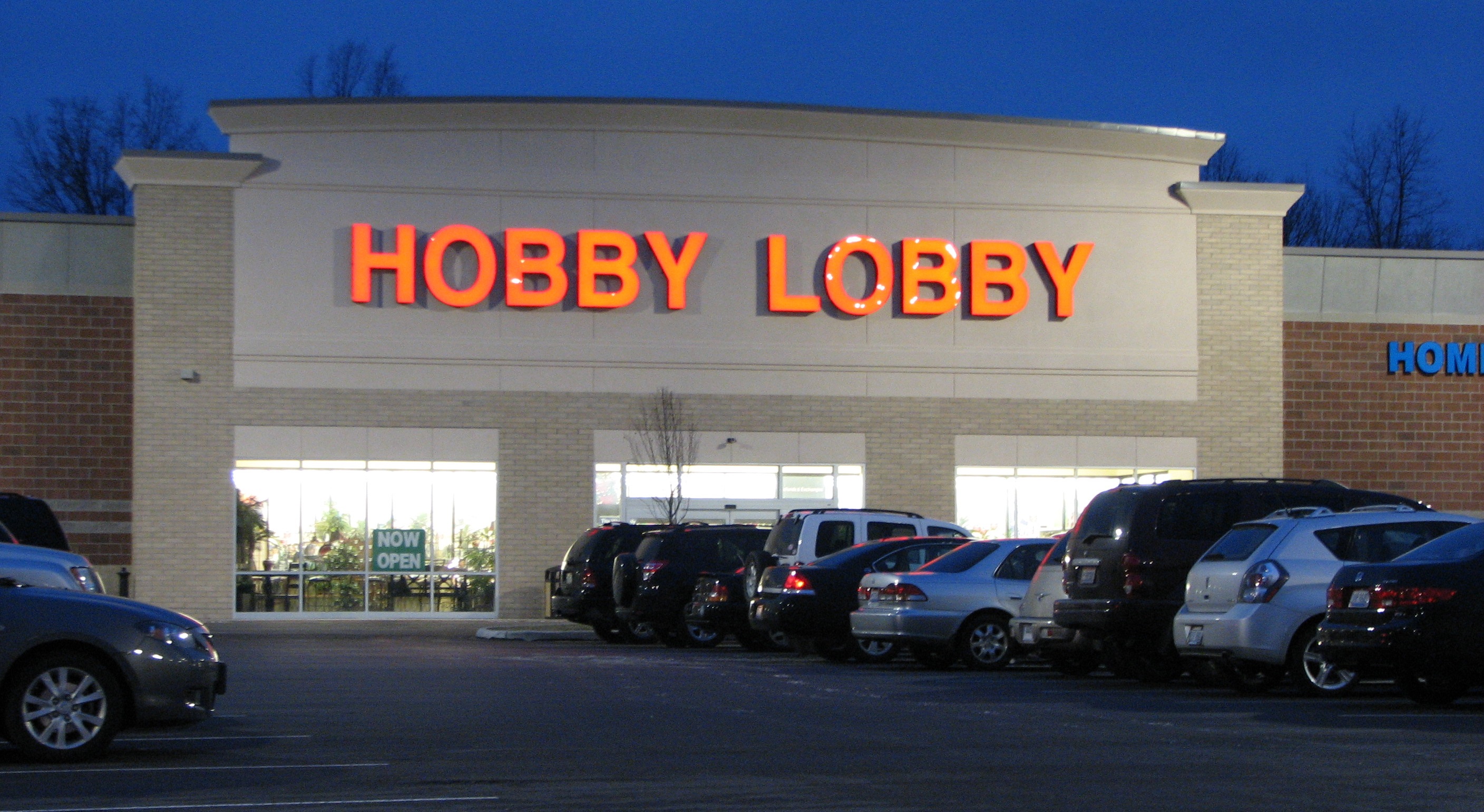
I’m not referring to Hobby Lobby’s theology, but rather to a common Protestant mistake that’s plagued Christian life for generations.
The Internet is aflame with discussions of whether private businesses have sufficient grounds for resisting state efforts to tell them which contraceptives they must provide employees or which customers they must serve. Underlying the entire discussion is the virtually unquestioned notion that for-profit businesses should enjoy less liberty than non-profits. When it came to the abortion-pill mandate, for example, the Obama administration at least went through the motions of providing religious accommodations, but private businesses enjoyed not even this false grace. Regarding same-sex marriage, the law is not (yet) requiring religious participation in homosexual unions. Why the distinction?
I wonder if, oddly enough, the distinction is in part the result of lingering Christian influence in our culture — part of a legacy of an old yet popular theological mistake, the sacred/secular distinction in work and life.
For many generations, Christians have persisted in the belief, for example, that a calling to the pulpit represented a higher call or greater purpose than a calling to the cubicle. In other words, the work of the church (teaching Sunday Schools, serving in soup kitchens, keeping the nursery) has been seen as higher in purpose than the work we do for our living (building a car, keeping a company’s books, repairing plumbing). One kind of work is sacred — the Lord’s work — the other kind is not.
This distinction is so prevalent that amongst certain Evangelicals, you can sense a barely-restrained eagerness to get out of the secular workforce as soon as possible — to move as quickly as possible into the “Lord’s work.” This is a partial explanation for the plethora of tiny ministries, the place where many Evangelicals pour the entirety of their entrepreneurial efforts.
I recall speaking to a group of Christian law students at a top law school. At the outset I asked how many wanted to work for a law firm (the lawyer’s classic for-profit endeavor). Not a hand went up. I then asked how many wanted to work in “public service” for the government or a nonprofit. Every hand was raised.
I found that profoundly sad and misguided. The odds were only a small fraction of those students would land the job they craved, while many of the rest would go on to live lives dominated by years of frustration and anger — with one eye constantly on the door looking for opportunities that will not come, believing their lives and talents are wasted on the secular when they were born for the sacred.
Is it any wonder then, in a nation long-dominated by the Protestant culture (I’m picking on Protestants because I’m most familiar with Protestant theology), that for-profit work would be seen as something less precious, something less worthy of protection from state interference? After all, Hobby Lobby and other businesses find themselves before the Supreme Court only after decades of regulations that have systematically stripped from business owners a plethora of liberty interests that churches and para-church ministries often take for granted. In many ways, the for-profit business owner can barely even be said to control his or her own business. It’s as if the effort to make money is seen as inherently morally suspect, requiring much closer government oversight.
This false sacred/secular distinction is particularly distressing given the real-world effects of free enterprise — with billions lifted out of poverty, life-expectancies extended, and quality of life at a level unrecognizable to individuals who lived even a century ago. Is a soup kitchen a morally superior enterprise to a company that provides its employees with meaningful work and a livelihood?
To be clear, I’m not saying this is a sufficient explanation for the non-profit/for-profit distinctions, but it is perhaps one reason why Americans have acquiesced in the continual encroachments on for-profit liberty.
Bad ideas have consequences.
Read more on the Patheos Faith and Family Channel and follow David on Twitter.
Previous Post

February 25, 2014
The Blaze Interviews David French on the EPA's Supreme Court Case
Next Post
March 7, 2014 The Importance of the Right Stories – for Kids, Adults, and Nations
Browse Our Archives
Select a Category Christmas faith family ministry music Television Uncategorized
Select a Month June 2017 May 2017 April 2017 March 2017 February 2017 January 2017 December 2016 November 2016 October 2016 September 2016 August 2016 July 2016 June 2016 May 2016 April 2016 March 2016 February 2016 January 2016 December 2015 November 2015 October 2015 September 2015 August 2015 July 2015 June 2015 May 2015 April 2015 March 2015 February 2015 January 2015 December 2014 November 2014 October 2014 September 2014 August 2014 July 2014 June 2014 May 2014 April 2014 March 2014 February 2014 January 2014 December 2013 November 2013 October 2013 September 2013 August 2013 July 2013 June 2013 May 2013 April 2013 March 2013 February 2013 January 2013 December 2012 November 2012 October 2012 September 2012 August 2012 July 2012 June 2012 May 2012 April 2012 March 2012 February 2012 January 2012 December 2011 November 2011 October 2011 September 2011 August 2011 July 2011 March 2010
Follow Us!
TAKE THE
Religious Wisdom Quiz
What was the name of the disciple in Damascus who was sent to pray for Saul after his conversion?
Select your answer to see how you score.
Silas Barnabas Philip Ananias
Related posts from The French Revolution

Satanists Drench Women in "Breast Milk" to Protest...

Governor Perry Appropriately Compliments Wendy Davis; Left Goes...
The Essentiality of Religious Argument in the Public...

Every Evangelical/Mormon Argument Goes Something Like This ....
TRENDING AT PATHEOS Politics and Religion

Christians should care about politics. Here are 4...
How can Christians best engage with politics in a way that shows...

For Abortion "Rights" Advocates - a Compromise
For pro-life conservatives, it’s like a dream come true. For pro-choice feminazis...

Cornerstone Pastor Issues Apology - GOOD
The apology was warranted. The follow-up is essential. A week ago, the...

From a Conservative to Conservatives on President Trump...
I am a conservative, a Republican, and an evangelical Christian, and I...
view all Politics and Religion blogs
Ad-Free & Subscriber Log-In Subscription Support
- About Us
- 2026 Calendar
- Videos
- Podcasts
- Library of World Religions
- Faith In Media Tracker
- Advertise With Us
- Write for Us
- Privacy Policy
- Terms of Service
- Do Not Sell My Data
- Contact Us
- Radiant Digital
- Manage Newsletter Subscriptions
- Unsubscribe From Notifications
- Sitemap
Copyright 2008-2026, Patheos. All rights reserved.
Subscription Support Ad-Free & Subscriber Log-In
Follow Patheos