
BuddhistCatholicContemplativeEvangelicalGeneral ChristianHinduJewishLatter-day SaintMuslimNew VisionsProgressive Christian
Beliefs
- Buddhist
- Catholic
- Contemplative
- Evangelical
- General Christian
- Hindu
- Jewish
- Latter-day Saint
- More Voices
- Muslim
- New Visions
- Pagan
- Progressive Christian
Topics
- Religion News
- Food and Religion
- Sports and Religion
- Religious Art
- Religious Music and Entertainment
- Religious Events
- History and Religion
- Style and Religion
- Politics and Religion
- Women in Religion
- Recreation Outdoors and Religion
- Business Finance and Religion
- Careers Workplace and Religion
- Education and Religion
- Family Parenting and Religion
- Health Fitness and Religion
- Home and Religion
- Relationships and Religion
- Technology and Religion
- Travel and Religion
Columnists
- Buddhist Columnists
- Business Finance and Religion Columnists
- Careers Workplace and Religion Columnists
- Catholic Columnists
- Contemplative Columnists
- Education and Religion Columnists
- Evangelists Columnists
- Family Parenting and Religion Columnists
- General Christian Columnists
- Health Fitness and Religion Columnists
- Hindu Columnists
- History and Religion Columnists
- Home and Religion Columnists
- Jewish Columnists
- More Voices Columnists
- Latter Day Columnists
- Muslim Columnists
- New Visions Columnists
- Nonreligious Columnists
- Pagan Columnists
- Politics and Religion Columnists
- Progressive Columnists
- Recreation Outdoors and Religion Columnists
- Relationships and Religion Columnists
- Religion News Columnists
- Religious Art Columnists
- Religious Events Columnists
- Religious Music and Entertainment Columnists
- Sports and Religion Columnists
- Style and Religion Columnists
- Technology and Religion Columnists
- Travel and Religion Columnists
- Women in Religion Columnists
Resource Library
- 2026 Calendar
- Library of World Religions
- The 100 Most Holy Places on Earth
- Patheos Answers
- Podcasts
- Videos
- Faith Leaders Database
- Anglican Episcopalian
- Bahai
- Baptist
- Buddhism
- Christianity
- Confucianism
- Eastern Orthodoxy
- Hinduism
- Holiness and Pentecostal
- ISKCON
- Islam
- Judaism
- Lutheran
- Methodist
- The Church of Jesus Christ of Latter-day Saints
- New Age
- Paganism
- Presbytarian and Reformed
- Protestantism
- Religion Behind the Scenes
- Roman Catholic
- Scientology
- Shia Islam
- Sikhism
- Sufism
- Sunni Islam
- Taoism
- Zen
- See all religions
Research Tools
 Ad-Free & Subscriber Log-In Subscription Support
Ad-Free & Subscriber Log-In Subscription Support
Follow Patheos 

- Trending:
- Forgiveness
- |
- Marriage
- |
- Consciousness
- |
- Death Penalty
- |
- Election
- |
- Halloween
 The French Revolution
- Home
- Politics and Religion
- The Attributes of a Christian Warrior
The Attributes of a Christian Warrior
Last updated on: November 20, 2013 at 11:56 am by David French
The Attributes of a Christian Warrior 2013-11-20T11:56:43-05:00 David French
Patheos Explore the world's faith through different perspectives on religion and spirituality! Patheos has the views of the prevalent religions and spiritualities of the world.
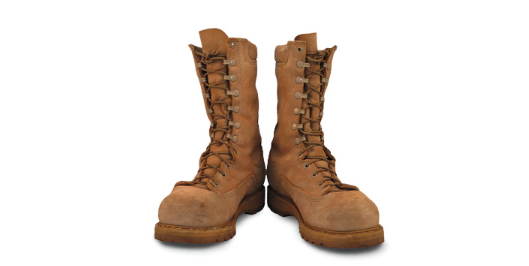
This Saturday I had the honor of delivering the keynote address at First Baptist Church Atlanta’s Veteran’s Day luncheon. (First Baptist Church is Dr. Charles Stanley’s church, and he was an incredibly gracious host). The luncheon honored the church’s many veterans and included vets from World War II (including a 96 year-old vet of remarkable vigor) and every major conflict since. What follows is a condensed version of my remarks:
Eight years ago, in the Fall of 2005, I resolved to join the Army and fight in Iraq. I was home with my wife and kids one evening, reading the newspaper, when I ran across two stories — the first about recruiting shortfalls in the face of escalating Iraq violence and the second relating the story of a firefight in Anbar Province. After reading the first story, I remember exclaiming (without a trace of irony), “We’re too soft to fight a long war. We don’t have the resolve to finish what we started.” I then moved on to the second article and read an account of a young officer wounded in combat who was able to call his wife and two young children from the medevac chopper.
That’s when it hit me: He was doing his duty for our country, and I was merely reaping the rewards. Why shouldn’t I step up? I was still young(ish) and healthy(ish). So, with my wife’s blessing, I shed twenty pounds, got an age waiver, and found myself in the Judge Advocate Officer Basic Course in Fort Lee, Virginia. I distinguished myself mainly in the severity of my poison-ivy outbreak during our field-training exercise and in the height from which I could clumsily fall from the inaptly named “confidence course” without breaking any bones, but I got through.
Eighteen months later, I was in the back of a Chinook Helicopter traveling with my brothers-in-arms from the 2d Squadron, 3d Armored Cavalry Regiment, beginning a year-long deployment in Diyala Province, Iraq. The year that followed was the most difficult of my life, but also the most important, where I served with and learned from heroes, including men of faith who taught me — in word and deed — how their faith infused their actions “downrange.” These “Christian warriors” exhibited attributes that I tried to model, and I try to model to this day.
The first is courage. C.S. Lewis once said courage wasn’t simply “one of the virtues” but the “form of very virtue at the testing point.” In other words, courage — physical courage and moral courage — made all other virtues possible. When God instructed Joshua on the eve of the conquest of Canaan, he admonished him to be “strong and courageous.” The people of Israel took up the call, reminding each other of the necessity of courage. Even with God’s living presence among them, the thought of war was terrifying, and courage was a necessity.
Next comes perseverance — the ability to absorb (and learn from) defeat and press on to victory. During the darkest days of our deployment, when casualty rates soared, and the enemy was elusive, our efforts felt futile. As good men died, we couldn’t see progress and we questioned our purpose. The necessity for perserverance is age old. Judges 20 tells the story of a dreadful civil conflict in Israel, when the tribes united to punish Benjamin but were twice defeated with great loss of life — even when God commanded them to fight. A righteous cause is no guarantor of success, and even ultimate victory carries with it an incredibly high price, a price that many carry to this day in their bodies, minds, and hearts. In our fight, we pressed through dark days to crush al-Qaeda in our area of operations, but pressing through required ultimate commitment.
Third, the best leaders lead from the front. Perhaps the most infamous phase of King David’s life came when — at time when ”kings go off to war” – he stayed home, ultimately betraying one of his own soldiers. Only when you share the sacrifices and risks of the men you lead do you earn their respect, and forsaking those sacrifices and risks can lead to a pernicious rot in one’s own soul. You’re forsaking the first obligation — courage — and that has consequences.
The godly warrior is also merciful to defeated enemies. David — complex fellow that he was — could exhibit the worst and best characteristics. After fighting a long and ultimately victorious campaign to defeat Saul and ascend to the throne of Israel, David literally looked for members of Saul’s household, not to crush or kill, but to show kindness to.
Showing mercy after victory is one of America’s enduring characteristics, and one of the very things that enhanced the legacy of the Greatest Generation. Two of history’s most evil regimes — Nazi Germany and Imperial Japan — lay in ruins, their people at our mercy. Rather than crush them further, we lifted them up, rebuilding their nations, repairing their cultures, and ultimately befriending them as allies in our long struggle against Soviet expansion and tyranny.
In Iraq, I saw similar acts of mercy, as we flooded formerly hostile villages with medical care and aid the instant they were cleared of al-Qaeda. I could tell story after story of our soldiers risking their own lives to aid the innocent and to lift up communities of formerly dubious loyalty. Yes, we had to defeat our enemy, but no, we would not stay and punish.
Fifth, a warrior must take care of his family. In one of scripture’s many interesting passages, God signals the primacy of family obligations even over military necessities — exempting those in the first year of marriage from wartime service. Uncle Sam is not as gracious as Moses, so we have no such exemption, but the message is clear: Protect your family. I was on my first deployment, but I served with men on their second and third trip downrange, and I learned from them as they developed a sense of shared sacrifice, not just with their wives but also their kids. Service was family service, and sacrifice was family sacrifice. Unity of purpose was critical for the health of the family, even when one is a husband and father from a great distance.
Finally, a warrior lives and fights with faith. There’s a flawed reading of scripture that describes the God of the Old Testament and the God of the New Testament as somehow different Gods, one wrathful and the other peaceful. Yet God is the same, and the Testaments tell an unbroken, seamless story of His relationship with creation. The New Testament book of Hebrews contains this statement regarding great accomplishments through faith:
And what more shall I say? I do not have time to tell about Gideon, Barak, Samson and Jephthah, about David and Samuel and the prophets, who through faith conquered kingdoms, administered justice, and gained what was promised; who shut the mouths of lions, quenched the fury of the flames, and escaped the edge of the sword; whose weakness was turned to strength; and who became powerful in battle and routed foreign armies. (Emphasis added.)
When I returned home from Iraq, a religion reporter asked me whether my experience in war made me feel closer to God. No, I did not feel “closer.” Instead I felt more utterly dependent on Him — dependent on Him for my life, my safety, for any virtue I was able by His grace to exhibit, and for the success of our arms.
We live by faith, and since this fallen world means that there is — on occasion — a time for war, we must also fight by faith.
To be clear, these virtues are not exclusively Christian, nor do all of our soldiers share a judeo-Christian faith heritage, but these were the virtues of the faithful men I served with. It’s hardly politically correct to speak these days of the “Christian warrior,” but they do exist, and this is how they live. It’s certainly how my brothers lived — and died — and it’s not enough just to admire them, we should try to learn from them as well.
Thank you, veterans. Your example has changed my life.
This article first appeared on National Review Online.
Previous Post

November 9, 2013
Watch a Homeless Veteran's Time Lapse Transformation
Next Post
November 13, 2013 Glenn Beck Interviews Bob Fu: "I Just Met a Modern Bonhoeffer"
Browse Our Archives
Select a Category Christmas faith family ministry music Television Uncategorized
Select a Month June 2017 May 2017 April 2017 March 2017 February 2017 January 2017 December 2016 November 2016 October 2016 September 2016 August 2016 July 2016 June 2016 May 2016 April 2016 March 2016 February 2016 January 2016 December 2015 November 2015 October 2015 September 2015 August 2015 July 2015 June 2015 May 2015 April 2015 March 2015 February 2015 January 2015 December 2014 November 2014 October 2014 September 2014 August 2014 July 2014 June 2014 May 2014 April 2014 March 2014 February 2014 January 2014 December 2013 November 2013 October 2013 September 2013 August 2013 July 2013 June 2013 May 2013 April 2013 March 2013 February 2013 January 2013 December 2012 November 2012 October 2012 September 2012 August 2012 July 2012 June 2012 May 2012 April 2012 March 2012 February 2012 January 2012 December 2011 November 2011 October 2011 September 2011 August 2011 July 2011 March 2010
Follow Us!
TAKE THE
Religious Wisdom Quiz
What British monarch is also Supreme Governor of the Church of England?
Select your answer to see how you score.
Prime Minister Archbishop of Canterbury The King/Queen of England Pope
Related posts from The French Revolution

What Chick-fil-A quietly did in the aftermath of...
Why Joey Feek's 2 year old hasn't asked...

PHOTOS: Chris Pratt celebrates Easter by putting a...

Jennifer Garner takes her kids to church every...
TRENDING AT PATHEOS Politics and Religion

Christians should care about politics. Here are 4...
How can Christians best engage with politics in a way that shows...

For Abortion "Rights" Advocates - a Compromise
For pro-life conservatives, it’s like a dream come true. For pro-choice feminazis...

Cornerstone Pastor Issues Apology - GOOD
The apology was warranted. The follow-up is essential. A week ago, the...

From a Conservative to Conservatives on President Trump...
I am a conservative, a Republican, and an evangelical Christian, and I...
view all Politics and Religion blogs
Ad-Free & Subscriber Log-In Subscription Support
- About Us
- 2026 Calendar
- Videos
- Podcasts
- Library of World Religions
- Faith In Media Tracker
- Advertise With Us
- Write for Us
- Privacy Policy
- Terms of Service
- Do Not Sell My Data
- Contact Us
- Radiant Digital
- Manage Newsletter Subscriptions
- Unsubscribe From Notifications
- Sitemap
Copyright 2008-2026, Patheos. All rights reserved.
Subscription Support Ad-Free & Subscriber Log-In
Follow Patheos