
BuddhistCatholicContemplativeEvangelicalGeneral ChristianHinduJewishLatter-day SaintMuslimNew VisionsProgressive Christian
Beliefs
- Buddhist
- Catholic
- Contemplative
- Evangelical
- General Christian
- Hindu
- Jewish
- Latter-day Saint
- More Voices
- Muslim
- New Visions
- Pagan
- Progressive Christian
Topics
- Religion News
- Food and Religion
- Sports and Religion
- Religious Art
- Religious Music and Entertainment
- Religious Events
- History and Religion
- Style and Religion
- Politics and Religion
- Women in Religion
- Recreation Outdoors and Religion
- Business Finance and Religion
- Careers Workplace and Religion
- Education and Religion
- Family Parenting and Religion
- Health Fitness and Religion
- Home and Religion
- Relationships and Religion
- Technology and Religion
- Travel and Religion
Columnists
- Buddhist Columnists
- Business Finance and Religion Columnists
- Careers Workplace and Religion Columnists
- Catholic Columnists
- Contemplative Columnists
- Education and Religion Columnists
- Evangelists Columnists
- Family Parenting and Religion Columnists
- General Christian Columnists
- Health Fitness and Religion Columnists
- Hindu Columnists
- History and Religion Columnists
- Home and Religion Columnists
- Jewish Columnists
- More Voices Columnists
- Latter Day Columnists
- Muslim Columnists
- New Visions Columnists
- Nonreligious Columnists
- Pagan Columnists
- Politics and Religion Columnists
- Progressive Columnists
- Recreation Outdoors and Religion Columnists
- Relationships and Religion Columnists
- Religion News Columnists
- Religious Art Columnists
- Religious Events Columnists
- Religious Music and Entertainment Columnists
- Sports and Religion Columnists
- Style and Religion Columnists
- Technology and Religion Columnists
- Travel and Religion Columnists
- Women in Religion Columnists
Resource Library
- 2026 Calendar
- Library of World Religions
- The 100 Most Holy Places on Earth
- Patheos Answers
- Podcasts
- Videos
- Faith Leaders Database
- Anglican Episcopalian
- Bahai
- Baptist
- Buddhism
- Christianity
- Confucianism
- Eastern Orthodoxy
- Hinduism
- Holiness and Pentecostal
- ISKCON
- Islam
- Judaism
- Lutheran
- Methodist
- The Church of Jesus Christ of Latter-day Saints
- New Age
- Paganism
- Presbytarian and Reformed
- Protestantism
- Religion Behind the Scenes
- Roman Catholic
- Scientology
- Shia Islam
- Sikhism
- Sufism
- Sunni Islam
- Taoism
- Zen
- See all religions
Research Tools
 Ad-Free & Subscriber Log-In Subscription Support
Ad-Free & Subscriber Log-In Subscription Support
Follow Patheos 

- Trending:
- Forgiveness
- |
- Marriage
- |
- Consciousness
- |
- Death Penalty
- |
- Election
- |
- Halloween
 The French Revolution
- Home
- Politics and Religion
- The Only “Real Marriage” Review You’ll Ever Need to Read
The Only “Real Marriage” Review You’ll Ever Need to Read
Last updated on: February 20, 2012 at 12:05 pm by David French
The Only “Real Marriage” Review You’ll Ever Need to Read 2012-02-20T12:05:20-05:00 David French
Patheos Explore the world's faith through different perspectives on religion and spirituality! Patheos has the views of the prevalent religions and spiritualities of the world.
I know I’m coming late to the Real Marriage party, but I finally finished the book (don’t blame me for being slow! I also had some sic-fi and apocalyptic fiction to read, and zombies always trump marriage books). Before I deliver my verdict — if you care to read it — let me begin with three disclosures:
First, not only have I never read a marriage book in my life, Nancy and I did not attend pre-marital counseling, we’ve never been to marriage counseling since marriage, and we’ve never even attended a marriage seminar or marriage class. I’m violently allergic to psychobabble — especially the emasculating psychobabble that so often passes for “wisdom” in church circles — and that’s exactly how I perceive the vast majority of evangelical marriage advice. (While I don’t read the books or go to the counseling, I do hear about it incessantly from friends who do read and who do get counseled. Often it seems to do far more harm than good).
Second, my resistance to marriage books and marriage counseling doesn’t mean that I think I’m some sort of model husband. My failings, however, aren’t so much conceptual as practical. In other words, I know what I should do and how I should act, but I just don’t do it. In other words, my failings aren’t “mistakes,” they’re sins.
Third, I like Mark Driscoll. I don’t claim to be a student of his work or even to listen to him that much, but I like his Reformed outlook, and I very much like that he unashamedly fights back against the feminization of the church. When he talks about being alienated from the church because so many of the Christian men he encountered weren’t all that masculine, I completely get what he’s saying. Sometimes he can be crude and imprecise in the way he talks about this problem, but frankly too many men are way too sensitive. Yes, Mark Driscoll has said some crude things about masculinity. Man up and get over it.
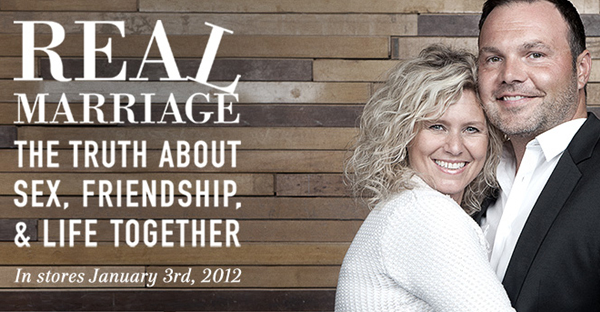
Okay, with that as a background, what about the book — a bestseller that is incredibly real and incredibly raw — was it good? Will it be valuable for married Christians?
Yes. Absolutely. But let’s be clear about one thing: This book has a target audience, and it’s not a middle-aged married couple dealing with a looming empty nest or retirees who — after 40 years of marriage — just can’t stand each other any more, nor is the target audience pastors. This is a book written for the younger evangelical generation, a generation living in the shadow of the sexual revolution. Millions of these kids are children of divorce, eighty percent are sexually active before marriage, their theological training is suspect, at best, and they’ve too often bought entirely secular ideas regarding marriage, family, and fulfillment.
In other words, young evangelicals are often bringing an entire trunk full of baggage into their marriages — just like Mark and Grace Driscoll did. The Driscolls meet this audience exactly where they are.
Real Marriage first gives them hope, but it gives hope in the right way — not by creating unrealistic expectations of incredible supernatural triumph over guilt and shame but instead by letting couples know that it is normal and expected that past sins will cause present problems. Don’t panic. Seek God and work through it day by day. You are not failing in your marriage if it takes literally years to get through and past sin and shame.
The book also points couples to God for fulfillment, not each other. This may seem like an obvious and elementary point, but again young readers are likely infected with the idea their spouse is their main source of happiness. “You complete me” is a common refrain from people who are young and in love. Yet we have a hole in our heart that no human being can fill, and if we think our spouse can or should fill it, then we’re dooming ourselves to a lifetime of disappointment and anger — even if married to the best spouse in town.
I remember talking to a friend of mine who’s wife left him after many years of marriage (and four children). “She just wasn’t happy,” he said. “And nothing I could do would make her happy.”
We don’t live to make our spouses happy. In fact, the very quest rests on not one, but two, faulty assumptions. First, we can’t make people happy. That’s not in our power. Second, one of the key reasons why that’s not in our power is that our spouses often don’t even know what will make them happy. They don’t know what they want. Try and fail, and you earn their contempt. Don’t try at all, and you receive their anger.
Real Marriage respects biblical roles for men and women. The concept of male headship may not appeal to our culture, but it is, after all, God’s model for marriage. We can try to dance around it, soft-pedal it, and even deny it — but there it is. Still in the Bible. Of course Mark and Grace Driscoll provide all the proper caveats that leadership is not license for domination and properly point to Christ as the model, but they don’t shy from the core truth. It’s a truth that people may not think will make them happy, but biblical models are rarely the models we’d fashion for ourselves.
Finally, the book does really get into the very raw details of sexuality — complete with a chapter that lists sex acts and discusses whether they’re permissible for married Christians. It feels a bit gimmicky to me, and I don’t agree with all of it (a couple times I thought, “Did he just say that was okay?”), but if they say they get frequent questions along those lines, I believe them. That’s where the book bogged down for me, but not for everyone (judging from other reviews).
The book places great emphasis on married friendship (rather than marital romance), and I think — on balance — that’s a good thing. I’ve heard more than a few sermons about men continuing to “woo” their wives, and it all sounds rather exhausting and, frankly, sappy. The bottom line message of this book, however, isn’t on trying various techniques to improve your marriage but on understanding that our fallen and broken nature will continue to manifest itself, and this reality demands that we not only show grace but also that we temper expectations and look to Christ for our fulfillment.
Had this book existed 16 years ago, and if I had ears to hear its message (and the courage to apply its lessons), it could have made a real difference in our marriage. Experience is certainly a more harsh taskmaster than Mark Driscoll.
Previous Post

February 14, 2012
Fasting for America
Next Post
February 21, 2012 Santorum the Stingy?
Browse Our Archives
Select a Category Christmas faith family ministry music Television Uncategorized
Select a Month June 2017 May 2017 April 2017 March 2017 February 2017 January 2017 December 2016 November 2016 October 2016 September 2016 August 2016 July 2016 June 2016 May 2016 April 2016 March 2016 February 2016 January 2016 December 2015 November 2015 October 2015 September 2015 August 2015 July 2015 June 2015 May 2015 April 2015 March 2015 February 2015 January 2015 December 2014 November 2014 October 2014 September 2014 August 2014 July 2014 June 2014 May 2014 April 2014 March 2014 February 2014 January 2014 December 2013 November 2013 October 2013 September 2013 August 2013 July 2013 June 2013 May 2013 April 2013 March 2013 February 2013 January 2013 December 2012 November 2012 October 2012 September 2012 August 2012 July 2012 June 2012 May 2012 April 2012 March 2012 February 2012 January 2012 December 2011 November 2011 October 2011 September 2011 August 2011 July 2011 March 2010
Follow Us!
TAKE THE
Religious Wisdom Quiz
What did Nehemiah rebuild in Jerusalem amid much opposition?
Select your answer to see how you score.
The palace The city wall The Temple The tower of Siloam
Related posts from The French Revolution

Why Did Pope Francis Meet with Kim Davis?

Camille Cosby: "I don't believe in unconditional love."
‘Macho Christianity’ Isn’t the Problem, Gimmick Christianity Is

Married to Your Soul Mate? You Might Be...
TRENDING AT PATHEOS Politics and Religion

Christians should care about politics. Here are 4...
How can Christians best engage with politics in a way that shows...

For Abortion "Rights" Advocates - a Compromise
For pro-life conservatives, it’s like a dream come true. For pro-choice feminazis...

Cornerstone Pastor Issues Apology - GOOD
The apology was warranted. The follow-up is essential. A week ago, the...

From a Conservative to Conservatives on President Trump...
I am a conservative, a Republican, and an evangelical Christian, and I...
view all Politics and Religion blogs
Ad-Free & Subscriber Log-In Subscription Support
- About Us
- 2026 Calendar
- Videos
- Podcasts
- Library of World Religions
- Faith In Media Tracker
- Advertise With Us
- Write for Us
- Privacy Policy
- Terms of Service
- Do Not Sell My Data
- Contact Us
- Radiant Digital
- Manage Newsletter Subscriptions
- Unsubscribe From Notifications
- Sitemap
Copyright 2008-2026, Patheos. All rights reserved.
Subscription Support Ad-Free & Subscriber Log-In
Follow Patheos