
BuddhistCatholicContemplativeEvangelicalGeneral ChristianHinduJewishLatter-day SaintMuslimNew VisionsProgressive Christian
Beliefs
- Buddhist
- Catholic
- Contemplative
- Evangelical
- General Christian
- Hindu
- Jewish
- Latter-day Saint
- More Voices
- Muslim
- New Visions
- Pagan
- Progressive Christian
Topics
- Religion News
- Food and Religion
- Sports and Religion
- Religious Art
- Religious Music and Entertainment
- Religious Events
- History and Religion
- Style and Religion
- Politics and Religion
- Women in Religion
- Recreation Outdoors and Religion
- Business Finance and Religion
- Careers Workplace and Religion
- Education and Religion
- Family Parenting and Religion
- Health Fitness and Religion
- Home and Religion
- Relationships and Religion
- Technology and Religion
- Travel and Religion
Columnists
- Buddhist Columnists
- Business Finance and Religion Columnists
- Careers Workplace and Religion Columnists
- Catholic Columnists
- Contemplative Columnists
- Education and Religion Columnists
- Evangelists Columnists
- Family Parenting and Religion Columnists
- General Christian Columnists
- Health Fitness and Religion Columnists
- Hindu Columnists
- History and Religion Columnists
- Home and Religion Columnists
- Jewish Columnists
- More Voices Columnists
- Latter Day Columnists
- Muslim Columnists
- New Visions Columnists
- Nonreligious Columnists
- Pagan Columnists
- Politics and Religion Columnists
- Progressive Columnists
- Recreation Outdoors and Religion Columnists
- Relationships and Religion Columnists
- Religion News Columnists
- Religious Art Columnists
- Religious Events Columnists
- Religious Music and Entertainment Columnists
- Sports and Religion Columnists
- Style and Religion Columnists
- Technology and Religion Columnists
- Travel and Religion Columnists
- Women in Religion Columnists
Resource Library
- 2026 Calendar
- Library of World Religions
- The 100 Most Holy Places on Earth
- Patheos Answers
- Podcasts
- Videos
- Faith Leaders Database
- Anglican Episcopalian
- Bahai
- Baptist
- Buddhism
- Christianity
- Confucianism
- Eastern Orthodoxy
- Hinduism
- Holiness and Pentecostal
- ISKCON
- Islam
- Judaism
- Lutheran
- Methodist
- The Church of Jesus Christ of Latter-day Saints
- New Age
- Paganism
- Presbytarian and Reformed
- Protestantism
- Religion Behind the Scenes
- Roman Catholic
- Scientology
- Shia Islam
- Sikhism
- Sufism
- Sunni Islam
- Taoism
- Zen
- See all religions
Research Tools
 Ad-Free & Subscriber Log-In Subscription Support
Ad-Free & Subscriber Log-In Subscription Support
Follow Patheos 

- Trending:
- Forgiveness
- |
- Marriage
- |
- Consciousness
- |
- Death Penalty
- |
- Election
- |
- Halloween

- Home
- Progressive Christian
- The Wisdom of Mister Carson
The Wisdom of Mister Carson
Last updated on: February 3, 2016 at 7:30 am by Vance Morgan
The Wisdom of Mister Carson 2016-02-03T07:30:56-04:00 Vance Morgan
Patheos Explore the world's faith through different perspectives on religion and spirituality! Patheos has the views of the prevalent religions and spiritualities of the world.
As those who love Masterpiece Theater and great television know, “Downton Abbey” is in the middle of its sixth and final season on Sunday nights here in the U. S. I’ve written frequently about what I’ve learned from this show–here’s a post about my favorite Downton character from a bit over a year ago . . .
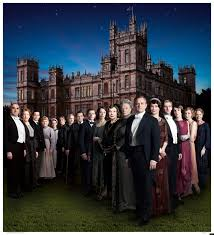 In anticipation of Season Five of “Downton Abbey” making it across the pond to PBS next month, Jeanne and I just finished binge-watching Season Four over the last few evenings to remind us, first, of exactly what is going on in the lives of the two dozen or so characters in the middle of the 1920s and, second, just why this is probably our favorite show on television. That’s saying a lot. We love good television and have several series that we keep up with religiously, including “The Newsroom” which just finished its final season (bummer) and “Homeland” which is close to the end of its fourth season. We are anxiously awaiting the return of “The Americans” next month on FX for a new season. But “Downton Abbey” is a phenomenon in our house, just as it has been for millions of other viewers. No violence, no nudity or sex, no f-bombs—just great character development and brilliant acting from top to bottom. Who knew that people would like something like that?
I learned many months ago that if I was a character on “Downton Abbey,” I would be the stodgy and formal Mr. Carson.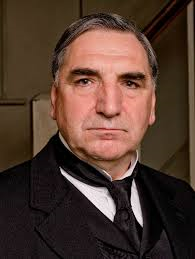
Which Downton Abbey character are you?
And that’s fine with me. Mr. Carson runs the staff similarly to how I run the academic program I direct, with a firm hand and an occasional adjusting of the rules when appropriate. I’m a bit concerned about Mr. Carson’s attachment to tradition and fear of new things, but he’s loosening up a bit as the seasons progress. The main reason I resonate with Mr. Carson is his penchant for pithy and insightful one-liner comments on what is going on around him, a talent rivaled in Downton only by the Dowager Countess of Grantham Violet Crowley upstairs. Here are a few Carsonian observations from the early episodes of Season Four:
I always thought there is something foreign about high spirits at breakfast.
 Here’s a difference between Mr. Carson and me—he’s not a morning person and I am. I’m at the gym every morning at 6:00. I would much rather teach at 8:30 than at 1:30 (which is my nap time). But the kind of morning person I am is not the sort which is inclined to “high spirits.” I love the morning because it is quiet, because if there is any time during the day that I will be able to slip immediately into “centered” mode, it is when I first get up. As I read the appointed Psalm 90 this morning, I read
In the morning, fill us with your love;
We shall exult and rejoice all our days
 and a reading from Lamentations at my friend and colleague’s memorial service a couple of weeks ago reminded me that the mercies of the Lord are renewed every morning. Morning is a good time to reset and, if necessary, commit to a “redo” of previous days that didn’t work out as planned, intended or wished. As Jeanne mentioned the other day, if the Lord renews mercy every morning, then there’s no reason we cannot be merciful to ourselves. High spirits are not required.
The business of life is the acquisition of memories.
One of my last classes with my Honors freshmen this semester was focused on Book Eleven of Augustine’s Confessions, 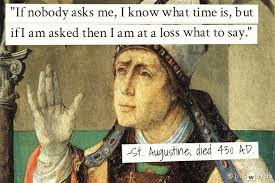 a fascinating and complex analysis of time that no philosopher matched or surpassed for a millennium after Augustine. One of his interesting questions has to do with what it is that we are focusing our attention on when we consider past events in the present. The past event is gone, but everything that we experience leaves some sort of internal impression on us, bits and pieces that we file away, consciously or unconsciously, in our “memory banks.” Each person’s history, indeed each person, is a creative stitching together of these impressions. Because we know that these internal impressions are impermanent and fleeting, we take pictures, write memoirs, and tell stories, all in the attempt to make permanent what is fleeting. Earlier in Psalm 90 this morning, the psalmist describes what we are fighting against.
You sweep us away like a dream,
like grass which springs up in the morning.
In the morning it springs up and flowers;
by evening it withers and fades.
Which brings me to one more piece of wisdom from Mr. Carson.
We shout and scream and wail and cry but in the end we must all die
 As Mrs. Hughes, the chief housekeeper who is the closest thing Mr. Carson has to a best friend replies, “Well, that’s cheered me up. Thank you.” Who knew that Mr. Carson is a philosopher? Mr. Carson is the epitome of English reserve, carrying the most British stiff upper lip imaginable; if he was a philosopher, he would be an early twentieth-century incarnation of the Stoicism of Epictetus or Marcus Aurelius. Stoic reserve is just one of many possible responses to a brutal and inescapable fact—we all are going to die.
Impermanence and loss is a continuing theme throughout the seasons of “Downton Abbey,” through the ravages of World War I in Season Two to the tragic death of the heir to the family fortune in a car crash at the end of Season Three, a loss that is the connecting thread throughout all of the Season Four episodes that Jeanne and I finished watching last evening. By the end of the season some people are moving on, good fortune has smiled on others, but an uncertain future faces them all. This isn’t BBC drama—this is real life. One of the interesting attractions of “Downton Abbey” is that happiness and despair, misfortune and luck, triumph and defeat, are features of everyone’s lives—upstairs and downstairs, privileged and struggling, the family and the help.  An extended study of life as it happens does not require spies, blowing things up, gratuitous torture and dismemberment, or naked boobs and butts every week. All it requires is noticing how life actually happens to us. As Violet, the imperious Dowager Countess of Grantham tells her struggling and star-crossed granddaughter Edith, “Life is a series of problems that we need to solve—first one, then another—until we die.” Ain’t it the truth.
Previous Post

February 1, 2016
Hope in Exile
Next Post
February 3, 2016 The Wisdom of Violet
Browse Our Archives
Select a Category abortion Advent AI Angels Artificial intelligence atheism attention baptism Baptists beauty belief Benedictines Bible bicycling Big Bird books Bovina Camaldoli hermitage Canada Catholicism cats certainty change Christianity Christmas Collegeville Covid-19 creativity Development of Western Civilization dogs doubt Easter Enneagram Epiphany Episcopal ethics Eucharist evil extroverts Facebook faith family fear flowers forgiveness freedom friends God goodness grace happiness heaven hell history Holy Spirit Holy Week hope human nature humility humor idolatry incarnation introverts irreverence Islam Jeanne Jesus Joe Biden joy Judaism justice Kamala Harris knowledge Lent listen literature liturgy love Marsue Memorial Day miracles movies music mystery mythology NPR Old Testament optimism paradox peace Penguins philosophy piano podcast politics power prayer Protestantism Providence College Religion Rhode Island sabbatical sacrament science seeing silence Simone Weil Socrates soul sports St. John's College stories suffering tattoo teaching technology television theology thinking time tolerance transcendence travel trees trust truth Uncategorized Vermont wisdom wonder writing
Select a Month May 2026 April 2026 March 2026 February 2026 January 2026 December 2025 November 2025 October 2025 September 2025 August 2025 July 2025 June 2025 May 2025 April 2025 March 2025 February 2025 January 2025 December 2024 November 2024 October 2024 September 2024 August 2024 July 2024 June 2024 May 2024 April 2024 March 2024 February 2024 January 2024 December 2023 November 2023 October 2023 September 2023 August 2023 July 2023 June 2023 May 2023 April 2023 March 2023 February 2023 January 2023 December 2022 November 2022 October 2022 September 2022 August 2022 July 2022 June 2022 May 2022 April 2022 March 2022 February 2022 January 2022 December 2021 November 2021 October 2021 September 2021 August 2021 July 2021 June 2021 May 2021 April 2021 March 2021 February 2021 January 2021 December 2020 November 2020 October 2020 September 2020 August 2020 July 2020 June 2020 May 2020 April 2020 March 2020 February 2020 January 2020 December 2019 November 2019 October 2019 September 2019 August 2019 July 2019 June 2019 May 2019 April 2019 March 2019 February 2019 January 2019 December 2018 November 2018 October 2018 September 2018 August 2018 July 2018 June 2018 May 2018 April 2018 March 2018 February 2018 January 2018 December 2017 November 2017 October 2017 September 2017 August 2017 July 2017 June 2017 May 2017 April 2017 March 2017 February 2017 January 2017 December 2016 November 2016 October 2016 September 2016 August 2016 July 2016 June 2016 May 2016 April 2016 March 2016 February 2016 January 2016 December 2015 November 2015 October 2015 September 2015 August 2015 July 2015 June 2015 May 2015 April 2015 March 2015 February 2015 January 2015 December 2014 November 2014 October 2014 September 2014 August 2014 July 2014 June 2014 May 2014 April 2014 March 2014 February 2014 January 2014 December 2013 November 2013 October 2013 September 2013 August 2013 July 2013 June 2013 May 2013 April 2013 March 2013 February 2013 January 2013 December 2012 November 2012 October 2012 September 2012
Follow Us!
TAKE THE
Religious Wisdom Quiz
Which Christian group is known for door-to-door evangelism and "Watchtower" magazine?
Select your answer to see how you score.
Jehovah's Witnesses Methodists Mennonites Lutherans
Books by This Author Books by Vance G. Morgan
Related posts from Freelance Christianity

The Lonely Pawn: On Faith, Doubt, and Meaning


AI and Love: When a Chatbot Becomes a...

TRENDING AT PATHEOS Progressive Christian

What Being a Modern-Day Apostle Means to Me
In my last column, I discussed the ins and outs of modern-day...

Did Ancient China Once Worship the God of...
Across human history, a common thread weaves through the origins of the...

Love Your Neighbor – Including Earth-Kin: Lev. 19,...
God’s command to love your neighbor means acting in an ethical and...

Lead a Church Study of “Jesus and Lao...
Guest writer Jack Thomas (The Irreverent Reverend) reflects on leading his church...

Pastoral Wisdom for Responding to Sermon Pushback
Getting sermon pushback on your social justice sermon? Learn practical, Proverbs-based strategies...

Principles for Understanding the Apostolic Ministry Today
Whenever people discover that my formal ministry title is "apostle," as in...
view all Progressive Christian blogs
Ad-Free & Subscriber Log-In Subscription Support
- About Us
- 2026 Calendar
- Videos
- Podcasts
- Library of World Religions
- Faith In Media Tracker
- Advertise With Us
- Write for Us
- Privacy Policy
- Terms of Service
- Do Not Sell My Data
- Contact Us
- Radiant Digital
- Manage Newsletter Subscriptions
- Unsubscribe From Notifications
- Sitemap
Copyright 2008-2026, Patheos. All rights reserved.
Subscription Support Ad-Free & Subscriber Log-In
Follow Patheos