
BuddhistCatholicContemplativeEvangelicalGeneral ChristianHinduJewishLatter-day SaintMuslimNew VisionsProgressive Christian
Beliefs
- Buddhist
- Catholic
- Contemplative
- Evangelical
- General Christian
- Hindu
- Jewish
- Latter-day Saint
- More Voices
- Muslim
- New Visions
- Pagan
- Progressive Christian
Topics
- Religion News
- Food and Religion
- Sports and Religion
- Religious Art
- Religious Music and Entertainment
- Religious Events
- History and Religion
- Style and Religion
- Politics and Religion
- Women in Religion
- Recreation Outdoors and Religion
- Business Finance and Religion
- Careers Workplace and Religion
- Education and Religion
- Family Parenting and Religion
- Health Fitness and Religion
- Home and Religion
- Relationships and Religion
- Technology and Religion
- Travel and Religion
Columnists
- Buddhist Columnists
- Business Finance and Religion Columnists
- Careers Workplace and Religion Columnists
- Catholic Columnists
- Contemplative Columnists
- Education and Religion Columnists
- Evangelists Columnists
- Family Parenting and Religion Columnists
- General Christian Columnists
- Health Fitness and Religion Columnists
- Hindu Columnists
- History and Religion Columnists
- Home and Religion Columnists
- Jewish Columnists
- More Voices Columnists
- Latter Day Columnists
- Muslim Columnists
- New Visions Columnists
- Nonreligious Columnists
- Pagan Columnists
- Politics and Religion Columnists
- Progressive Columnists
- Recreation Outdoors and Religion Columnists
- Relationships and Religion Columnists
- Religion News Columnists
- Religious Art Columnists
- Religious Events Columnists
- Religious Music and Entertainment Columnists
- Sports and Religion Columnists
- Style and Religion Columnists
- Technology and Religion Columnists
- Travel and Religion Columnists
- Women in Religion Columnists
Resource Library
- 2026 Calendar
- Library of World Religions
- The 100 Most Holy Places on Earth
- Patheos Answers
- Podcasts
- Videos
- Faith Leaders Database
- Anglican Episcopalian
- Bahai
- Baptist
- Buddhism
- Christianity
- Confucianism
- Eastern Orthodoxy
- Hinduism
- Holiness and Pentecostal
- ISKCON
- Islam
- Judaism
- Lutheran
- Methodist
- The Church of Jesus Christ of Latter-day Saints
- New Age
- Paganism
- Presbytarian and Reformed
- Protestantism
- Religion Behind the Scenes
- Roman Catholic
- Scientology
- Shia Islam
- Sikhism
- Sufism
- Sunni Islam
- Taoism
- Zen
- See all religions
Research Tools
 Ad-Free & Subscriber Log-In Subscription Support
Ad-Free & Subscriber Log-In Subscription Support
Follow Patheos 

- Trending:
- Forgiveness
- |
- Marriage
- |
- Consciousness
- |
- Death Penalty
- |
- Election
- |
- Halloween

- Home
- Progressive Christian
- Why We Believe Things That Aren’t True
Why We Believe Things That Aren’t True
Last updated on: September 27, 2024 at 6:00 am by Vance Morgan
Why We Believe Things That Aren’t True 2024-09-26T14:01:44-04:00 Vance Morgan
Patheos Explore the world's faith through different perspectives on religion and spirituality! Patheos has the views of the prevalent religions and spiritualities of the world.
Over the years that I have been writing this blog, those who describe themselves as non-believers or atheists have frequently expressed regular confusion and frustration about the same issue. It usually goes something like this: “How can someone who seems to be relatively normal and intelligent believe in something without any evidence?” I don’t get defensive when asked this and similar questions—I don’t want to be that sort of Christian. 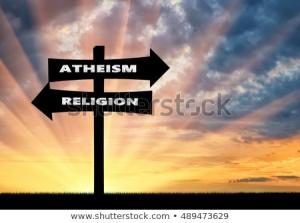 I often reply by suggesting that there is evidence to support my faith, just not a sufficient amount of the sort of “factual” evidence that they are looking for. This often opens the door to a conversation that is both interesting and civil, the sort of conversation that seems to be less and less common these days.
I fully understand being confused about why someone might believe something on the basis of either insufficient or non-existent evidence. We live in a world in which all sides accuse everyone who disagrees with them of doing exactly that. From my corner of the belief spectrum, I regularly accuse MAGA folks, anti-vaxxers, the Q-Anon faithful, and those who believe that the November 2020 presidential election was stolen from Donald Trump as choosing to have their heads up their asses instead of simply accepting the glaring evidence that proves them to be wrong. I admit that it occasionally is disconcerting to realize that the atheist commenters on my blog consider me to be just as blind to glaring evidence (or the glaring fact that there is no evidence to support my faith).
Sometimes it’s helpful to step back from the heightened emotion and energy of the moment and take a larger view of the phenomenon in question. I am currently doing just that in the interdisciplinary course I teach. It turns out that when it comes to the dynamic of human belief and commitment, the more things change the more they stay the same. We soon will be studying John Stuart Mill’s The Subjection of Women. Mill was one of the most important and interesting intellectuals, philosophers, and social advocates of the 19th century; this particular text is a clarion call for full legal equality for women in England that was well ahead of its time.
In the England of Mill’s day, women could not vote, they could not own property, they had few if any legal rights, and their very existences were essentially owned by the men in their lives: father, husband, brother, or closest male relative. A woman’s children were the property of their father. Mill knew that although his argument pressing back against these injustices and inequities was strong, he was swimming against a tide that was far stronger than anything mere logic could overcome.
This caused him to reflect on what entrenches people in positions and beliefs far more deeply than facts and evidence.
So long as an opinion is strongly rooted in the feelings, it gains rather than loses in stability by having a preponderating weight of argument against it . . . The worse it fares in argumentative context, the more persuaded its adherents are that their feeling must have some deeper ground, which the arguments do not reach.
We see this over and over again in contemporary debates and arguments, particularly when the stakes are perceived to be particularly high. There is no rational accounting for worldviews and beliefs that are impervious to logic and immune from argument.
Our seminar text next week is Steven Johnson’s The Ghost Map, a gripping account of a deadly cholera epidemic that broke out in London’s Soho district in 1854. Soho was overcrowded and impoverished; the dominant explanation for the outbreak was the “miasma” theory (the word comes from the Greek word for “pollution”), which proposed that diseases such as cholera are the result of breathing the foul air produced by rotting organic matter. This thoroughly incorrect and debunked theory, held at the time by high-ranking medical officials and much of the general populace, proved to be remarkably resilient even when the dogged research of various individuals living in Soho, including a young physician and an intrepid Anglican minister, provided incontrovertible evidence that traced the source of the epidemic to polluted water sources and pumps.
Among other things, The Ghost Map is an extended exploration of how knowledge grows and progress is made in the face of stubborn and entrenched beliefs that happen to be demonstrably wrong. Johnson writes that intellectual history, more often than not, is
Not the history of breakthroughs and eureka moments, but instead the history of canards and false leads, the history of being wrong. Whenever smart people cling to an outlandishly incorrect idea despite substantial evidence to the contrary, something interesting is at work.
“Interesting,” for sure. I would add that, both in 1854 London and in our country in 2024, “dangerous” is an equally appropriate description.
To use a phrase that is overused by talking heads on 24-7 news channels, let me be perfectly clear. I don’t relish the idea that those who don’t share my commitment to the life of faith very well may judge my beliefs in the same way that I judge those who believe that the 2020 presidential election was stolen. Not favorably, in other words. Learning how to write and talk about my faith with all sorts of people, including those who conclude that I am choosing to believe on the basis of little or no evidence, is an ongoing process, one that I track frequently in this blog.
I came across something not long ago in the latest mystery by Donna Leon that I find helpful in this process. Guido Brunetti, the police captain who is the main character in the series, is in conversation with his mother-in-law. Brunetti is an atheist; he knows that his mother-in-law believes in God. He is afraid he has offended her by saying that he is an unbeliever and atheist.
That could hardly offend me, Guido, since I think it’s an entirely sensible position. I’ve CHOSEN to believe in God. In the face of convincing evidence to the contrary and in the complete absence of proof–well, anything a right-thinking person would consider as proof–of God’s existence. I find that it makes life more acceptable, and it becomes easier to make certain decisions and endure certain losses. But it’s a choice on my part, only that, and so the other choice, the choice not to believe, is entirely sensible to me.
I’m not sure I see it as a choice.
Of course it’s a choice. We’ve both been presented with the same evidence, or lack of evidence, and we each choose to interpret it in a particular way. So of course it’s a choice.
Brunetti’s mother-in-law’s comments are pretty close to where my faith is located on most days.
Previous Post
September 24, 2024
How to Make God Interesting
Next Post

September 29, 2024 How to Delegate Authority
Recent Comments
"Mary did have a choice. And she was able to make it before the Holy ..."
"i cannot read beyond your recommendations for the books since i like to have a ..."
"AI will never be able to utter with honesty, feeling, or humility, the greeting: "Namaste".It ..."
"They do. I'm sure you could find discussions of the same topic from any of ..."
Browse Our Archives
Select a Category abortion Advent AI Angels Artificial intelligence atheism attention baptism Baptists beauty belief Benedictines Bible bicycling Big Bird books Bovina Camaldoli hermitage Canada Catholicism cats certainty change Christianity Christmas Collegeville Covid-19 creativity Development of Western Civilization dogs doubt Easter Enneagram Epiphany Episcopal ethics Eucharist evil extroverts Facebook faith family fear flowers forgiveness freedom friends God goodness grace happiness heaven hell history Holy Spirit Holy Week hope human nature humility humor idolatry incarnation introverts irreverence Islam Jeanne Jesus Joe Biden joy Judaism justice Kamala Harris knowledge Lent listen literature liturgy love Marsue Memorial Day miracles movies music mystery mythology NPR Old Testament optimism paradox peace Penguins philosophy piano podcast politics power prayer Protestantism Providence College Religion Rhode Island sabbatical sacrament science seeing silence Simone Weil Socrates soul sports St. John's College stories suffering tattoo teaching technology television theology thinking time tolerance transcendence travel trees trust truth Uncategorized Vermont wisdom wonder writing
Select a Month May 2026 April 2026 March 2026 February 2026 January 2026 December 2025 November 2025 October 2025 September 2025 August 2025 July 2025 June 2025 May 2025 April 2025 March 2025 February 2025 January 2025 December 2024 November 2024 October 2024 September 2024 August 2024 July 2024 June 2024 May 2024 April 2024 March 2024 February 2024 January 2024 December 2023 November 2023 October 2023 September 2023 August 2023 July 2023 June 2023 May 2023 April 2023 March 2023 February 2023 January 2023 December 2022 November 2022 October 2022 September 2022 August 2022 July 2022 June 2022 May 2022 April 2022 March 2022 February 2022 January 2022 December 2021 November 2021 October 2021 September 2021 August 2021 July 2021 June 2021 May 2021 April 2021 March 2021 February 2021 January 2021 December 2020 November 2020 October 2020 September 2020 August 2020 July 2020 June 2020 May 2020 April 2020 March 2020 February 2020 January 2020 December 2019 November 2019 October 2019 September 2019 August 2019 July 2019 June 2019 May 2019 April 2019 March 2019 February 2019 January 2019 December 2018 November 2018 October 2018 September 2018 August 2018 July 2018 June 2018 May 2018 April 2018 March 2018 February 2018 January 2018 December 2017 November 2017 October 2017 September 2017 August 2017 July 2017 June 2017 May 2017 April 2017 March 2017 February 2017 January 2017 December 2016 November 2016 October 2016 September 2016 August 2016 July 2016 June 2016 May 2016 April 2016 March 2016 February 2016 January 2016 December 2015 November 2015 October 2015 September 2015 August 2015 July 2015 June 2015 May 2015 April 2015 March 2015 February 2015 January 2015 December 2014 November 2014 October 2014 September 2014 August 2014 July 2014 June 2014 May 2014 April 2014 March 2014 February 2014 January 2014 December 2013 November 2013 October 2013 September 2013 August 2013 July 2013 June 2013 May 2013 April 2013 March 2013 February 2013 January 2013 December 2012 November 2012 October 2012 September 2012
Follow Us!
TAKE THE
Religious Wisdom Quiz
What year was the Temple in Jerusalem destroyed by the Romans?
Select your answer to see how you score.
586 BC 70 AD 33 AD 120 AD
Books by This Author Books by Vance G. Morgan
Related posts from Freelance Christianity

The Lonely Pawn: On Faith, Doubt, and Meaning


AI and Love: When a Chatbot Becomes a...

TRENDING AT PATHEOS Progressive Christian

What Being a Modern-Day Apostle Means to Me
In my last column, I discussed the ins and outs of modern-day...

Did Ancient China Once Worship the God of...
Across human history, a common thread weaves through the origins of the...

Love Your Neighbor – Including Earth-Kin: Lev. 19,...
God’s command to love your neighbor means acting in an ethical and...

Lead a Church Study of “Jesus and Lao...
Guest writer Jack Thomas (The Irreverent Reverend) reflects on leading his church...

Pastoral Wisdom for Responding to Sermon Pushback
Getting sermon pushback on your social justice sermon? Learn practical, Proverbs-based strategies...

Principles for Understanding the Apostolic Ministry Today
Whenever people discover that my formal ministry title is "apostle," as in...
view all Progressive Christian blogs
What Are Your Thoughts?leave a comment
Ad-Free & Subscriber Log-In Subscription Support
- About Us
- 2026 Calendar
- Videos
- Podcasts
- Library of World Religions
- Faith In Media Tracker
- Advertise With Us
- Write for Us
- Privacy Policy
- Terms of Service
- Do Not Sell My Data
- Contact Us
- Radiant Digital
- Manage Newsletter Subscriptions
- Unsubscribe From Notifications
- Sitemap
Copyright 2008-2026, Patheos. All rights reserved.
Subscription Support Ad-Free & Subscriber Log-In
Follow Patheos