
BuddhistCatholicContemplativeEvangelicalGeneral ChristianHinduJewishLatter-day SaintMuslimNew VisionsProgressive Christian
Beliefs
- Buddhist
- Catholic
- Contemplative
- Evangelical
- General Christian
- Hindu
- Jewish
- Latter-day Saint
- More Voices
- Muslim
- New Visions
- Pagan
- Progressive Christian
Topics
- Religion News
- Food and Religion
- Sports and Religion
- Religious Art
- Religious Music and Entertainment
- Religious Events
- History and Religion
- Style and Religion
- Politics and Religion
- Women in Religion
- Recreation Outdoors and Religion
- Business Finance and Religion
- Careers Workplace and Religion
- Education and Religion
- Family Parenting and Religion
- Health Fitness and Religion
- Home and Religion
- Relationships and Religion
- Technology and Religion
- Travel and Religion
Columnists
- Buddhist Columnists
- Business Finance and Religion Columnists
- Careers Workplace and Religion Columnists
- Catholic Columnists
- Contemplative Columnists
- Education and Religion Columnists
- Evangelists Columnists
- Family Parenting and Religion Columnists
- General Christian Columnists
- Health Fitness and Religion Columnists
- Hindu Columnists
- History and Religion Columnists
- Home and Religion Columnists
- Jewish Columnists
- More Voices Columnists
- Latter Day Columnists
- Muslim Columnists
- New Visions Columnists
- Nonreligious Columnists
- Pagan Columnists
- Politics and Religion Columnists
- Progressive Columnists
- Recreation Outdoors and Religion Columnists
- Relationships and Religion Columnists
- Religion News Columnists
- Religious Art Columnists
- Religious Events Columnists
- Religious Music and Entertainment Columnists
- Sports and Religion Columnists
- Style and Religion Columnists
- Technology and Religion Columnists
- Travel and Religion Columnists
- Women in Religion Columnists
Resource Library
- 2026 Calendar
- Library of World Religions
- The 100 Most Holy Places on Earth
- Patheos Answers
- Podcasts
- Videos
- Faith Leaders Database
- Anglican Episcopalian
- Bahai
- Baptist
- Buddhism
- Christianity
- Confucianism
- Eastern Orthodoxy
- Hinduism
- Holiness and Pentecostal
- ISKCON
- Islam
- Judaism
- Lutheran
- Methodist
- The Church of Jesus Christ of Latter-day Saints
- New Age
- Paganism
- Presbytarian and Reformed
- Protestantism
- Religion Behind the Scenes
- Roman Catholic
- Scientology
- Shia Islam
- Sikhism
- Sufism
- Sunni Islam
- Taoism
- Zen
- See all religions
Research Tools
 Ad-Free & Subscriber Log-In Subscription Support
Ad-Free & Subscriber Log-In Subscription Support
Follow Patheos 

- Trending:
- Forgiveness
- |
- Marriage
- |
- Consciousness
- |
- Death Penalty
- |
- Election
- |
- Halloween

- Home
- Progressive Christian
- Who Am I? How to Build a Person
Who Am I? How to Build a Person
Last updated on: February 6, 2024 at 7:00 am by Vance Morgan
Who Am I? How to Build a Person 2024-02-03T13:18:30-04:00 Vance Morgan
Patheos Explore the world's faith through different perspectives on religion and spirituality! Patheos has the views of the prevalent religions and spiritualities of the world.
In one of the essays assigned for my honors colloquium on Michel de Montaigne this past week, Montaigne writes in some detail about his faulty memory.
There is no man who has less business talking about memory. For I recognize almost no trace of it in me, and I do not think there is another one in the world so monstrously deficient . . . It is not unreasonably said that anyone who does not feel sufficiently strong in memory should not meddle with lying.
As my students and I compared notes about the strengths and weaknesses of our own memories, it became clear that although very few people trust their memory completely, all of us rely on our memory to help us understand who we are. This prompted me to bring to their attention one of the most interesting important philosophical uses of memory ever proposed–John Locke’s memory theory of personal identity. We all know that although we change significantly over time but, despite these changes, we also believe that we remain the same person throughout our lives. How does that work? How does a person stay the same over time?
To get things going, I asked my students how many have ever said something like “I’m not the same person that I was back then.” Every hand went up–everyone knows that even those parts of ourselves that we consider to be most important—our attitudes, beliefs, commitments, and so on—can radically change over time. Additionally, scientists tell us that there is no cell in our body that will still be in our body a few years from now. So it becomes a challenge to identify exactly what it is about me that stays the same over time so I can still call myself the same person as I was throughout all of the changes that each of us encounters.
Many philosophers and theologians have cheated (in my considered opinion) by saying that it is the “soul” that stays constant in the human person throughout all of the physical and experiential changes that each of us encounters throughout a lifetime. Plato insisted that the human being’s tool to engage with the unchanging and eternal Forms was the unchanging and eternal soul, an idea that traditional Christian theology has been more than happy to adapt and apply to our connection with the divine.
But press someone concerning what the soul actually is, and you will undoubtedly instead find out what it is not—it isn’t physical, it isn’t subject to change, is impervious to time, and so on. In short, the soul is the “whatever it is” that stays constant throughout a human being’s changes, but don’t ask for its positive characteristics. It is just a necessary placeholder. Unfortunately, one of the most important rules of logic is that one cannot define something negatively.  Theological issues aside, the soul hardly works as a standard for personal identity.
As I noted earlier, one of the most interesting and influential explorations of personal identity comes from John Locke, the great 17th century British philosopher. Locke suggests that one’s personal identity extends as far back as one’s memories extend—
As far as [a] consciousness can be extended backwards to any past action or thought, so far reaches the identity of that person; it is the same self now as it was then; and it is by the same self with this present one that now reflects on it, that that action was done.
My identity, in other words, is the collection of all of those experiences stretched over time that can appropriately be owned as “mine.” “I” am the subject of all of these experiences. As my students pointed out in short order, however, there are plenty of problems with this notion.
- Does this mean that a person with no memories, someone with advanced Alzheimer’s or in a comatose state, is not a person (although human)? Locke’s criterion says “yes.”
- Does this mean that an unborn fetus with no memories and without consciousness is not a person (although human)? Locke’s criterion says “yes.”
- Suppose that at (time A) 5 years old I go to Disneyland, at (time B) 45 years old I am promoted to full professor, and at (time C) 90 years old my sons commit me to a nursing home. At 45 I remember going to Disneyland; at 90 I remember getting promoted but no longer remember going to Disneyland. Locke’s analysis requires me to say that Morgan B and Morgan A are identical, as are Morgan C and Morgan B. Morgans C and A, however, are not the same person. That violates the transitive law of mathematics and logic (A=B, B=C, therefore A=C), but who said personal identity is mathematically precise?
- Human memories are notoriously inaccurate. What impact, if any, does this have on Locke’s proposed standard?
These and other puzzles arising from Locke’s analysis produced a great discussion in class—but it is questionable wheter we got any closer to figuring out who we are.
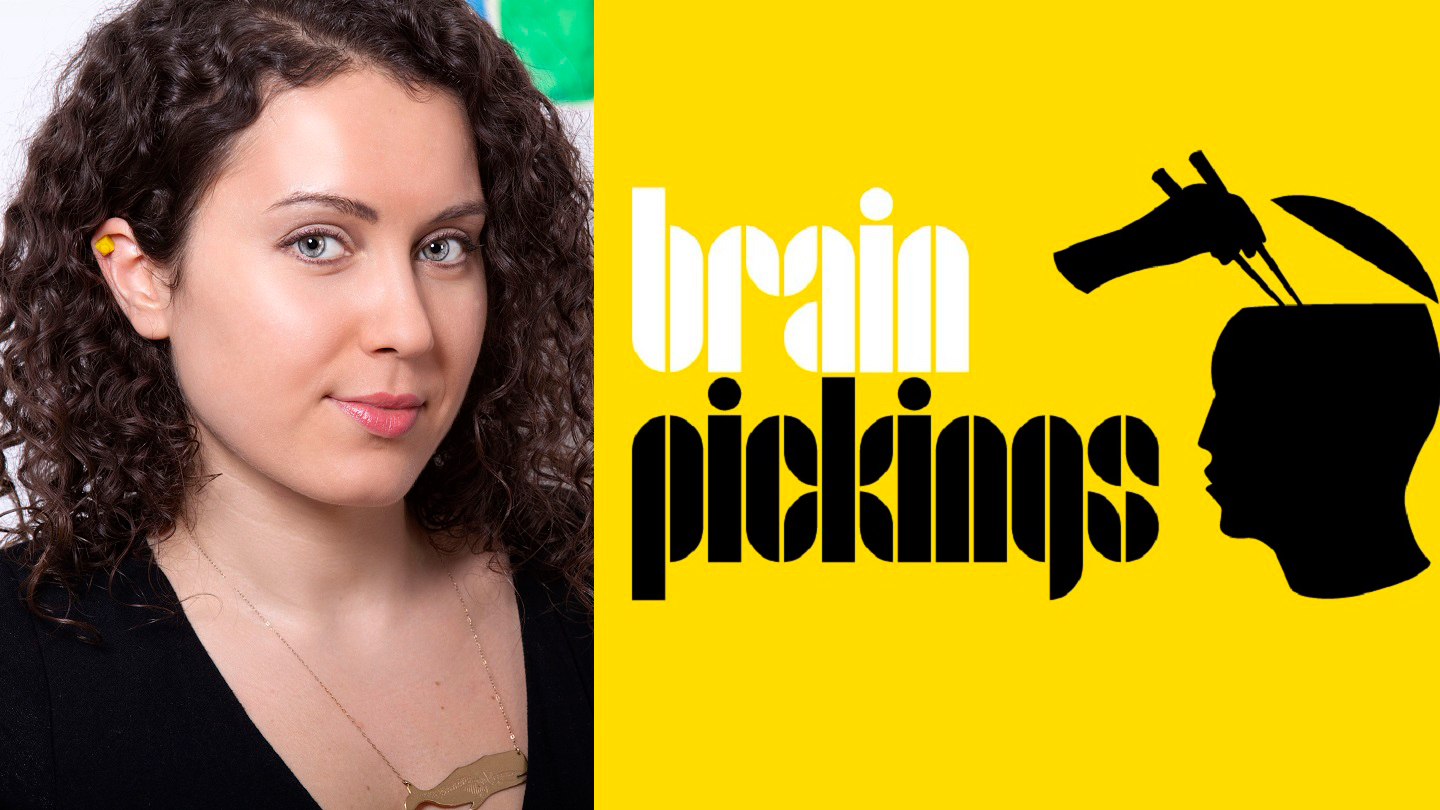 In a recent conversation with Krista Tippett, Maria Popova provided a 21st century version of Locke’s suggestions.
Identity for all of us is this perpetual process. It’s somewhat like constantly clearing out and rearranging an attic. And it’s as much about throwing out all the furniture and trinkets that no longer serve us as bringing in new ones . . . We are a collage of our interests, our influences, our inspirations, all the fragmentary impressions we’ve collected by being alive and awake to the world. Who we are is simply a finely curated catalog of those.
Popova’s reflections highlight a feature of a Lockean analysis that is easily missed—each of us has both the responsibility and the privilege of creating our own identities.  As Flannery O’Connor once wrote, “the human being is always something under construction.” We do not control much of what happens to us, but we do get to choose which features will rise to the level of “definitive,” which memories will serve as the foundation of who we are. Each of us, as Popova might say, is a curator of our identity. The more items there are to curate, whether experiences, texts, or other people, the more dynamic and nuanced each identity has the potential to be.
Popova is also willing to nod favorably toward the notion of the soul. It may not be the best choice as an anchor of personal identity, but Popova suggests that whatever the soul is, we have reason to think that it is real.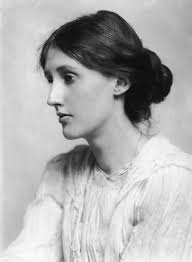
Virginia Woolf wrote that “One can’t write directly about the soul. Looked at, it vanishes.” And she talks about the slipperiness of the soul and the delicacy and complexity of the soul. But I think the fullest people, the people most whole and most alive, are always those unafraid and unashamed of the soul. And the soul is never an assemblage of fragments. And it always is.
Philosophers are likely to complain that there is still no evidence to support believing in the existence of such a thing. But perhaps the best evidence in its favor is that multitudes of human beings seem bound, even hard-wired, to believe in it. Maybe that’s enough.
Previous Post

February 4, 2024
Can We Trust Each Other? A Reflection on Human Nature
Next Post

February 8, 2024 Doing Good for the Sake of Goodness
Recent Comments
"Mary did have a choice. And she was able to make it before the Holy ..."
"i cannot read beyond your recommendations for the books since i like to have a ..."
"AI will never be able to utter with honesty, feeling, or humility, the greeting: "Namaste".It ..."
"They do. I'm sure you could find discussions of the same topic from any of ..."
Browse Our Archives
Select a Category abortion Advent AI Angels Artificial intelligence atheism attention baptism Baptists beauty belief Benedictines Bible bicycling Big Bird books Bovina Camaldoli hermitage Canada Catholicism cats certainty change Christianity Christmas Collegeville Covid-19 creativity Development of Western Civilization dogs doubt Easter Enneagram Epiphany Episcopal ethics Eucharist evil extroverts Facebook faith family fear flowers forgiveness freedom friends God goodness grace happiness heaven hell history Holy Spirit Holy Week hope human nature humility humor idolatry incarnation introverts irreverence Islam Jeanne Jesus Joe Biden joy Judaism justice Kamala Harris knowledge Lent listen literature liturgy love Marsue Memorial Day miracles movies music mystery mythology NPR Old Testament optimism paradox peace Penguins philosophy piano podcast politics power prayer Protestantism Providence College Religion Rhode Island sabbatical sacrament science seeing silence Simone Weil Socrates soul sports St. John's College stories suffering tattoo teaching technology television theology thinking time tolerance transcendence travel trees trust truth Uncategorized Vermont wisdom wonder writing
Select a Month May 2026 April 2026 March 2026 February 2026 January 2026 December 2025 November 2025 October 2025 September 2025 August 2025 July 2025 June 2025 May 2025 April 2025 March 2025 February 2025 January 2025 December 2024 November 2024 October 2024 September 2024 August 2024 July 2024 June 2024 May 2024 April 2024 March 2024 February 2024 January 2024 December 2023 November 2023 October 2023 September 2023 August 2023 July 2023 June 2023 May 2023 April 2023 March 2023 February 2023 January 2023 December 2022 November 2022 October 2022 September 2022 August 2022 July 2022 June 2022 May 2022 April 2022 March 2022 February 2022 January 2022 December 2021 November 2021 October 2021 September 2021 August 2021 July 2021 June 2021 May 2021 April 2021 March 2021 February 2021 January 2021 December 2020 November 2020 October 2020 September 2020 August 2020 July 2020 June 2020 May 2020 April 2020 March 2020 February 2020 January 2020 December 2019 November 2019 October 2019 September 2019 August 2019 July 2019 June 2019 May 2019 April 2019 March 2019 February 2019 January 2019 December 2018 November 2018 October 2018 September 2018 August 2018 July 2018 June 2018 May 2018 April 2018 March 2018 February 2018 January 2018 December 2017 November 2017 October 2017 September 2017 August 2017 July 2017 June 2017 May 2017 April 2017 March 2017 February 2017 January 2017 December 2016 November 2016 October 2016 September 2016 August 2016 July 2016 June 2016 May 2016 April 2016 March 2016 February 2016 January 2016 December 2015 November 2015 October 2015 September 2015 August 2015 July 2015 June 2015 May 2015 April 2015 March 2015 February 2015 January 2015 December 2014 November 2014 October 2014 September 2014 August 2014 July 2014 June 2014 May 2014 April 2014 March 2014 February 2014 January 2014 December 2013 November 2013 October 2013 September 2013 August 2013 July 2013 June 2013 May 2013 April 2013 March 2013 February 2013 January 2013 December 2012 November 2012 October 2012 September 2012
Follow Us!
TAKE THE
Religious Wisdom Quiz
How many days was Jesus in the tomb before His resurrection?
Select your answer to see how you score.
Forty Seven Nine Three
Books by This Author Books by Vance G. Morgan
Related posts from Freelance Christianity

The Lonely Pawn: On Faith, Doubt, and Meaning


AI and Love: When a Chatbot Becomes a...

TRENDING AT PATHEOS Progressive Christian

Why Christians Have a Sacred Duty to Vote:...
The Bible offers strong support for the sacred duty to vote. Here...

What Being a Modern-Day Apostle Means to Me
In my last column, I discussed the ins and outs of modern-day...

Did Ancient China Once Worship the God of...
Across human history, a common thread weaves through the origins of the...

Love Your Neighbor – Including Earth-Kin: Lev. 19,...
God’s command to love your neighbor means acting in an ethical and...

Lead a Church Study of “Jesus and Lao...
Guest writer Jack Thomas (The Irreverent Reverend) reflects on leading his church...

Principles for Understanding the Apostolic Ministry Today
Whenever people discover that my formal ministry title is "apostle," as in...
view all Progressive Christian blogs
What Are Your Thoughts?leave a comment
Ad-Free & Subscriber Log-In Subscription Support
- About Us
- 2026 Calendar
- Videos
- Podcasts
- Library of World Religions
- Faith In Media Tracker
- Advertise With Us
- Write for Us
- Privacy Policy
- Terms of Service
- Do Not Sell My Data
- Contact Us
- Radiant Digital
- Manage Newsletter Subscriptions
- Unsubscribe From Notifications
- Sitemap
Copyright 2008-2026, Patheos. All rights reserved.
Subscription Support Ad-Free & Subscriber Log-In
Follow Patheos