
BuddhistCatholicContemplativeEvangelicalGeneral ChristianHinduJewishLatter-day SaintMuslimNew VisionsProgressive Christian
Beliefs
- Buddhist
- Catholic
- Contemplative
- Evangelical
- General Christian
- Hindu
- Jewish
- Latter-day Saint
- More Voices
- Muslim
- New Visions
- Pagan
- Progressive Christian
Topics
- Religion News
- Food and Religion
- Sports and Religion
- Religious Art
- Religious Music and Entertainment
- Religious Events
- History and Religion
- Style and Religion
- Politics and Religion
- Women in Religion
- Recreation Outdoors and Religion
- Business Finance and Religion
- Careers Workplace and Religion
- Education and Religion
- Family Parenting and Religion
- Health Fitness and Religion
- Home and Religion
- Relationships and Religion
- Technology and Religion
- Travel and Religion
Columnists
- Buddhist Columnists
- Business Finance and Religion Columnists
- Careers Workplace and Religion Columnists
- Catholic Columnists
- Contemplative Columnists
- Education and Religion Columnists
- Evangelists Columnists
- Family Parenting and Religion Columnists
- General Christian Columnists
- Health Fitness and Religion Columnists
- Hindu Columnists
- History and Religion Columnists
- Home and Religion Columnists
- Jewish Columnists
- More Voices Columnists
- Latter Day Columnists
- Muslim Columnists
- New Visions Columnists
- Nonreligious Columnists
- Pagan Columnists
- Politics and Religion Columnists
- Progressive Columnists
- Recreation Outdoors and Religion Columnists
- Relationships and Religion Columnists
- Religion News Columnists
- Religious Art Columnists
- Religious Events Columnists
- Religious Music and Entertainment Columnists
- Sports and Religion Columnists
- Style and Religion Columnists
- Technology and Religion Columnists
- Travel and Religion Columnists
- Women in Religion Columnists
Resource Library
- 2026 Calendar
- Library of World Religions
- The 100 Most Holy Places on Earth
- Patheos Answers
- Podcasts
- Videos
- Faith Leaders Database
- Anglican Episcopalian
- Bahai
- Baptist
- Buddhism
- Christianity
- Confucianism
- Eastern Orthodoxy
- Hinduism
- Holiness and Pentecostal
- ISKCON
- Islam
- Judaism
- Lutheran
- Methodist
- The Church of Jesus Christ of Latter-day Saints
- New Age
- Paganism
- Presbytarian and Reformed
- Protestantism
- Religion Behind the Scenes
- Roman Catholic
- Scientology
- Shia Islam
- Sikhism
- Sufism
- Sunni Islam
- Taoism
- Zen
- See all religions
Research Tools
 Ad-Free & Subscriber Log-In Subscription Support
Ad-Free & Subscriber Log-In Subscription Support
Follow Patheos 

- Trending:
- Forgiveness
- |
- Marriage
- |
- Consciousness
- |
- Death Penalty
- |
- Election
- |
- Halloween

- Home
- Progressive Christian
- When Your Imaginary Friend Is Real
When Your Imaginary Friend Is Real
Last updated on: August 16, 2022 at 7:06 am by Vance Morgan
When Your Imaginary Friend Is Real 2022-08-16T07:06:28-04:00 Vance Morgan
Patheos Explore the world's faith through different perspectives on religion and spirituality! Patheos has the views of the prevalent religions and spiritualities of the world.
From as early as I can remember, I had an invisible butler. My mother enjoyed laying my clothes out for the next day when I went to bed, but every  once in a while it was clear that someone else was stepping in to take care of my sartorial needs. I would wake up with unmatched socks laid out, or two shirts but nothing for the waist down, or no underwear, or shoes but no socks. Not wanting to insult my mother, I asked my father what was going on. “Oh, that’s your invisible butler,” he said. “Fancher Offenhowser Bullsmith.” “Since when have I had an invisible butler?” “Since he just showed up one day.” “How come I’ve never seen him?” “Because he’s invisible.”
It’s kind of cool but very unusual to have an invisible butler. My brother and mother—along with my father, of course—knew about it, but I didn’t tell anyone else. No one in first grade mentioned having an invisible butler, and I had already learned that I was different enough from my colleagues in school to negate the necessity of telling them about Fancher. He didn’t seem to work regular hours; I became suspicious when I put two and two together and realized that evidence of Fancher’s handiwork only showed up when Dad was home.  But then at Christmas when I was five or six, amidst the usual paraphernalia under the Christmas tree was something entirely unexpected. Fancher had become visible. Not only did I now have a visible butler, but my butler was a troll.
Trolls have little cache these days—they are so stupid in the movies that they get turned into stone in “The Hobbit” by the rising sun, they fight on the wrong side of every fantasy epic battle, and they lurk on the Internet in order to mess up as many serious conversations as possible. But it wasn’t always that way. In the early 60s trolls were the thing.  The story of Thomas Dam, the Danish fisherman’s son who started carving trolls out of wood in the 1930s to support his impoverished family can be found on-line:
http://www.damworld.dk/9986264
By the time the early 60s came around, Thomas Dam’s “Good Luck Trolls” were being machine produced to satisfy increasing demand and burst onto the international scene. Everyone wanted one. Soon there were cheap knock-off imitations everywhere, something that the Thomas Dam website warns against.
According to old fairytales trolls have magic powers. They love to make you smile and be happy. Some people say that Trolls also bring good luck. But be careful: only the ORIGINAL Dam Troll has magic powers. Therefore…look for the Dam logo and thereby be certain that you have the ORIGINAL GOOD LUCK TROLL.
Not to worry—Fancher has “Thomas Dam” stamped between his shoulder blades and “Made in Denmark” imprinted on the back of his neck. He’s an original. I apparently could get $200-$700 for Fancher on Ebay, depending on how close to mint condition he is, but that ain’t happening. He is my now retired butler, and he isn’t close to mint condition.
In case you are becoming more and more worried about my family’s and my sanity, let me assure you that I can recall no moment at which I believed that Fancher was alive or could do anything other than stand pleasantly smiling with his arms outstretched wherever I placed him. Invisible friends who suddenly become visible are fun, just as long as you don’t cross to the other side and start thinking that they are real.
This is a point that those proclaiming atheism love to make on a regular basis. Yet there are billions of human beings who shape their whole reality and might even stake their lives on the premise that a certain invisible friend not only exists but plays an exceptionally important role in our understanding of ourselves and the reality we find ourselves in. I happen to be one of those billions of human beings. So have I simply transferred my childhood connection to my invisible butler to a far more interesting and complex imaginary friend who is no more real than Fancher? 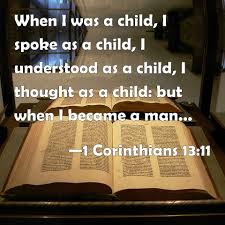 Didn’t a text supposedly inspired by this cosmic imaginary friend suggest that when one becomes an adult, one is supposed to put away childish things?
So how do we gather evidence for the existence of something? When is it appropriate to believe in something whose existence you have not verified in the usual, direct sensory ways? This issue often arises in philosophy classrooms. When it does, I ask my students How many of you believe in the existence of Mongolia? All hands go up. How many of you have ever been to Mongolia? No hands go up. Then how do you know that Mongolia exists? My students generally provide a number of sensible reasons:
- Because I have read about Mongolia in a book or on-line in stories written by people who have been there (although the authors of these sources might be lying).

- Because I have seen pictures of Mongolia (even though we know that pictures can easily be misidentified or photo-shopped).
- Because someone I know has been to Mongolia and told me about it (although this trusted source might be bullshitting me just for the fun of it).
The purpose of the exercise is to demonstrate that we believe in the existence of thousands of things that we have not experienced directly. The testimony of others, although not perfect or entirely reliable, serves as a reasonably solid foundation for much of what we believe. Life is too short and human capabilities are too finite to limit our existential belief commitments to only those items that we have experienced directly ourselves.
For many, belief in the existence of what is greater than us—what some dismiss as an “imaginary friend”—begins in exactly the same way. The sacred texts of the great monotheistic religions are accounts of what people over the centuries have believed concerning the divine. This does not prove that something greater than us exists, any more than Wikipedia entries about Mongolia prove the existence of Mongolia, but they are a good place to start and there is no reason to dismiss them just because they are referring to something that we might lack direct experience of. For instance, I had believed in the existence of Notre Dame Cathedral in Paris for decades before I actually saw and experienced it for the first time a few years ago. But I doubt I would have eventually doubted its existence if I had never seen it myself. The indirect and second-hand evidence for its existence is too overwhelming. So it goes with God—it’s difficult to dismiss theism as a pervasive “imaginary friend” phenomenon when the reports are so ubiquitous.
But there’s nothing better than direct encounter. In my favorite book from the Jewish Scriptures, Job expresses it well. After decades of believing in God because of secondary evidence passed down over the generations, in the midst of intense pain and suffering he encounters the real deal.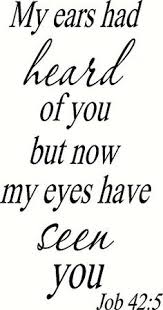 “My ears had heard of you,” Job says, “but now my eyes have seen you.” First person contact trumps any number of secondary sources, but does not negate those sources—it gives them new meaning and energy. How do I know that God is not a figment of my imagination? As I have often written on this blog, the best evidence of divine reality is a changed life. I can organize the story of my life around the “before and after” of that encounter spread over several months a number of years ago. I’m not interested in proselytizing or evangelization—you should believe what your own experience can support. But as the formerly afflicted man in the gospels says, “I was blind, but now I see.” That’s my story, and I’m sticking to it.

Previous Post
August 14, 2022
"Whatever" is No Way to Live
Next Post

August 18, 2022 Die Before You Die
Browse Our Archives
Select a Category abortion Advent AI Angels Artificial intelligence atheism attention baptism Baptists beauty belief Benedictines Bible bicycling Big Bird books Bovina Camaldoli hermitage Canada Catholicism cats certainty change Christianity Christmas Collegeville Covid-19 creativity Development of Western Civilization dogs doubt Easter Enneagram Epiphany Episcopal ethics Eucharist evil extroverts Facebook faith family fear flowers forgiveness freedom friends God goodness grace happiness heaven hell history Holy Spirit Holy Week hope human nature humility humor idolatry incarnation introverts irreverence Islam Jeanne Jesus Joe Biden joy Judaism justice Kamala Harris knowledge Lent listen literature liturgy love Marsue Memorial Day miracles movies music mystery mythology NPR Old Testament optimism paradox peace Penguins philosophy piano podcast politics power prayer Protestantism Providence College Religion Rhode Island sabbatical sacrament science seeing silence Simone Weil Socrates soul sports St. John's College stories suffering tattoo teaching technology television theology thinking time tolerance transcendence travel trees trust truth Uncategorized Vermont wisdom wonder writing
Select a Month May 2026 April 2026 March 2026 February 2026 January 2026 December 2025 November 2025 October 2025 September 2025 August 2025 July 2025 June 2025 May 2025 April 2025 March 2025 February 2025 January 2025 December 2024 November 2024 October 2024 September 2024 August 2024 July 2024 June 2024 May 2024 April 2024 March 2024 February 2024 January 2024 December 2023 November 2023 October 2023 September 2023 August 2023 July 2023 June 2023 May 2023 April 2023 March 2023 February 2023 January 2023 December 2022 November 2022 October 2022 September 2022 August 2022 July 2022 June 2022 May 2022 April 2022 March 2022 February 2022 January 2022 December 2021 November 2021 October 2021 September 2021 August 2021 July 2021 June 2021 May 2021 April 2021 March 2021 February 2021 January 2021 December 2020 November 2020 October 2020 September 2020 August 2020 July 2020 June 2020 May 2020 April 2020 March 2020 February 2020 January 2020 December 2019 November 2019 October 2019 September 2019 August 2019 July 2019 June 2019 May 2019 April 2019 March 2019 February 2019 January 2019 December 2018 November 2018 October 2018 September 2018 August 2018 July 2018 June 2018 May 2018 April 2018 March 2018 February 2018 January 2018 December 2017 November 2017 October 2017 September 2017 August 2017 July 2017 June 2017 May 2017 April 2017 March 2017 February 2017 January 2017 December 2016 November 2016 October 2016 September 2016 August 2016 July 2016 June 2016 May 2016 April 2016 March 2016 February 2016 January 2016 December 2015 November 2015 October 2015 September 2015 August 2015 July 2015 June 2015 May 2015 April 2015 March 2015 February 2015 January 2015 December 2014 November 2014 October 2014 September 2014 August 2014 July 2014 June 2014 May 2014 April 2014 March 2014 February 2014 January 2014 December 2013 November 2013 October 2013 September 2013 August 2013 July 2013 June 2013 May 2013 April 2013 March 2013 February 2013 January 2013 December 2012 November 2012 October 2012 September 2012
Follow Us!
TAKE THE
Religious Wisdom Quiz
I stood on a wooden platform and read the Law from daybreak till noon, and the people wept. Who am I?
Select your answer to see how you score.
Ezra Nehemiah Joshua Moses
Books by This Author Books by Vance G. Morgan
Related posts from Freelance Christianity

The Lonely Pawn: On Faith, Doubt, and Meaning


AI and Love: When a Chatbot Becomes a...

TRENDING AT PATHEOS Progressive Christian

What Being a Modern-Day Apostle Means to Me
In my last column, I discussed the ins and outs of modern-day...

Did Ancient China Once Worship the God of...
Across human history, a common thread weaves through the origins of the...

Love Your Neighbor – Including Earth-Kin: Lev. 19,...
God’s command to love your neighbor means acting in an ethical and...

Lead a Church Study of “Jesus and Lao...
Guest writer Jack Thomas (The Irreverent Reverend) reflects on leading his church...

Pastoral Wisdom for Responding to Sermon Pushback
Getting sermon pushback on your social justice sermon? Learn practical, Proverbs-based strategies...

Principles for Understanding the Apostolic Ministry Today
Whenever people discover that my formal ministry title is "apostle," as in...
view all Progressive Christian blogs
Ad-Free & Subscriber Log-In Subscription Support
- About Us
- 2026 Calendar
- Videos
- Podcasts
- Library of World Religions
- Faith In Media Tracker
- Advertise With Us
- Write for Us
- Privacy Policy
- Terms of Service
- Do Not Sell My Data
- Contact Us
- Radiant Digital
- Manage Newsletter Subscriptions
- Unsubscribe From Notifications
- Sitemap
Copyright 2008-2026, Patheos. All rights reserved.
Subscription Support Ad-Free & Subscriber Log-In
Follow Patheos