
BuddhistCatholicContemplativeEvangelicalGeneral ChristianHinduJewishLatter-day SaintMuslimNew VisionsProgressive Christian
Beliefs
- Buddhist
- Catholic
- Contemplative
- Evangelical
- General Christian
- Hindu
- Jewish
- Latter-day Saint
- More Voices
- Muslim
- New Visions
- Pagan
- Progressive Christian
Topics
- Religion News
- Food and Religion
- Sports and Religion
- Religious Art
- Religious Music and Entertainment
- Religious Events
- History and Religion
- Style and Religion
- Politics and Religion
- Women in Religion
- Recreation Outdoors and Religion
- Business Finance and Religion
- Careers Workplace and Religion
- Education and Religion
- Family Parenting and Religion
- Health Fitness and Religion
- Home and Religion
- Relationships and Religion
- Technology and Religion
- Travel and Religion
Columnists
- Buddhist Columnists
- Business Finance and Religion Columnists
- Careers Workplace and Religion Columnists
- Catholic Columnists
- Contemplative Columnists
- Education and Religion Columnists
- Evangelists Columnists
- Family Parenting and Religion Columnists
- General Christian Columnists
- Health Fitness and Religion Columnists
- Hindu Columnists
- History and Religion Columnists
- Home and Religion Columnists
- Jewish Columnists
- More Voices Columnists
- Latter Day Columnists
- Muslim Columnists
- New Visions Columnists
- Nonreligious Columnists
- Pagan Columnists
- Politics and Religion Columnists
- Progressive Columnists
- Recreation Outdoors and Religion Columnists
- Relationships and Religion Columnists
- Religion News Columnists
- Religious Art Columnists
- Religious Events Columnists
- Religious Music and Entertainment Columnists
- Sports and Religion Columnists
- Style and Religion Columnists
- Technology and Religion Columnists
- Travel and Religion Columnists
- Women in Religion Columnists
Resource Library
- 2026 Calendar
- Library of World Religions
- The 100 Most Holy Places on Earth
- Patheos Answers
- Podcasts
- Videos
- Faith Leaders Database
- Anglican Episcopalian
- Bahai
- Baptist
- Buddhism
- Christianity
- Confucianism
- Eastern Orthodoxy
- Hinduism
- Holiness and Pentecostal
- ISKCON
- Islam
- Judaism
- Lutheran
- Methodist
- The Church of Jesus Christ of Latter-day Saints
- New Age
- Paganism
- Presbytarian and Reformed
- Protestantism
- Religion Behind the Scenes
- Roman Catholic
- Scientology
- Shia Islam
- Sikhism
- Sufism
- Sunni Islam
- Taoism
- Zen
- See all religions
Research Tools
 Ad-Free & Subscriber Log-In Subscription Support
Ad-Free & Subscriber Log-In Subscription Support
Follow Patheos 

- Trending:
- Forgiveness
- |
- Marriage
- |
- Consciousness
- |
- Death Penalty
- |
- Election
- |
- Halloween

- Home
- Progressive Christian
- When Christians Do Un-Christian Things
When Christians Do Un-Christian Things
Last updated on: October 4, 2024 at 6:00 am by Vance Morgan
When Christians Do Un-Christian Things 2024-10-01T14:12:28-04:00 Vance Morgan
Patheos Explore the world's faith through different perspectives on religion and spirituality! Patheos has the views of the prevalent religions and spiritualities of the world.
One of the teaching teammates I have taught with for the last half-dozen years is a Victorian literature scholar. This, of course, includes Charles Dickens. Her choice from Dickens for the syllabus often is the über-familiar A Christmas Carol; she gave two lectures on this text earlier this week. A Christmas Carol in late September/early October might seem anachronistic, but the text is about far more than a particular time of year. Its moral themes are both timeless and remarkably contemporary.
This novella, novella is so iconic and is such a staple of our cultural heritage that I did not expect to find much that was new in the text the first time I heard my colleague lecture on it several years ago. I was wrong. In retrospect, I realize that my “familiarity” with Dickens’ story was largely dependent on the various movie versions, as well as stage productions (one of our local theaters stages A Christmas Carol every December), that I have seen over the years. I probably had not actually read the actual text since my high school years.
Although I am thoroughly familiar with the highlights of the narrative (most of the movie versions are reasonably faithful to the original), there were a number of textual nuances that were new to me—including a two-page exchange between the Ghost of Christmas Present and Ebenezer Scrooge halfway through the text that is directly relevant to the ways in which we tend twist not only the Christmas season, but also the heart of Christianity, to fit our own proclivities and preconceptions.
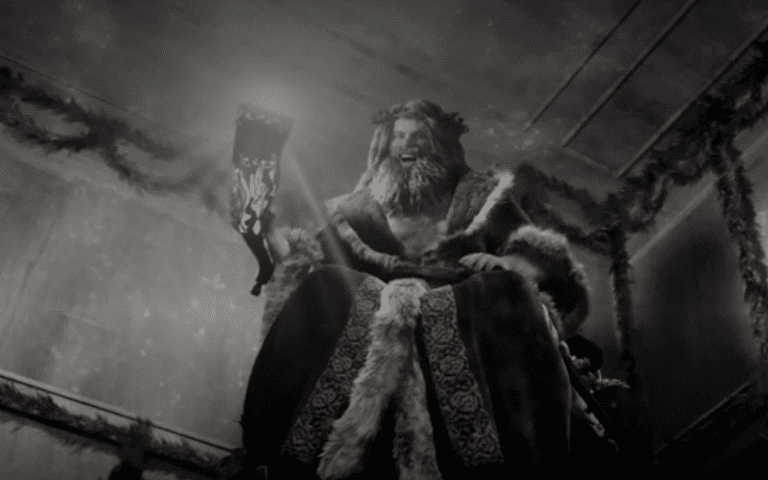
If you know the story, you’ll remember that the Ghost of Christmas Present is literally larger than life. Described as a “jolly Giant, glorious to see,” the Ghost—after confirming that Scrooge has “never seen the like of me before”—tells Scrooge that he has more than eighteen hundred brothers, one (presumably) for each of the Christmases since the birth of Jesus. Although there is certainly a Christian undercurrent to much of Dickens’ tale, this particular ghost also displays a more ancient, pagan theme, a theme that continues throughout the time that Scrooge and the Ghost spend together.
As they invisibly wander the streets of London, Scrooge and the Ghost observe a great deal of Christmas morning commerce taking place. When the ringing of the church bells “called good people all to church and chapel,” the well-to-do in the streets are replaced with poorer people “carrying their dinners to the baker shops.” Domestic ovens were a rarity at the time in the homes of the working poor; most cooking was done over an open fire or on a hob beside or at the back of the fireplace. If there was a joint of meat or a large bird to be cooked for a Sunday or holiday dinner, one would take it to a local bakery, where the meat would be cooked in the ovens after the day’s bread was done.
Sundays, or holidays like Christmas, were often the only days that working folks had off from their labors; what Scrooge and the Ghost are observing was, for many, the only opportunity for people to have a decent meal and perhaps relax a bit. As people pass by, the Ghost “sprinkled incense on their dinners from his torch” in order to add to the good cheer of the day, noting to Scrooge that the poor need this encouragement most of all. Scrooge, who by this time in the tale is beginning to care a little bit about people other than himself, seizes the opportunity to take the Ghost to task.
Scrooge knows that there are “blue law” efforts in his society to, under the guise of being a good “Christian” society, close all commercial shops—including bakeries—on Sundays. Accordingly, Scrooge accuses the Ghost of hypocrisy.
I wonder that you, of all the beings in the many worlds about us, should desire to cramp these people’s opportunities of innocent enjoyment . . . You would deprive them of their means of dining every seventh day, often the only day on which they can be said to dine at all, wouldn’t you?
Scrooge wants to know how the Ghost can claim to be in favor of lifting the burden of a difficult life off the backs of the poor at least occasionally when, in the name of what Christians and Christian charity purportedly stand for, the narrow opportunities for enjoyment and relaxation are being taken away by laws requiring the closing of the very places necessary for such enjoyment and relaxation to take place.
When the Ghost vigorously denies any involvement with or support of any such planned policies, Scrooge replies that “Forgive me if I am wrong. It has been done in your name, or at least in that of your family.” This prompts the Ghost to set things straight with an observation and a piece of advice that could have been written today:
There are some upon this earth of yours who claim to know us, and who do their deeds of passion, pride, ill will, hatred, envy, bigotry, and selfishness in our name, who are as strange to us, and all our kith and kin, as if they had never lived. Remember that, and charge their doings on themselves, not us.
Dickens adds simply that “Scrooge promised that he would.” If the Ghost of Christmas Present had a microphone, this would be a “drop the mic” moment. I am reminded of something Reverend Ames says in Marilynne Robinson’s novel Gilead: “We human beings do real harm. History could make a stone weep.” Especially, I might add, when the harm is done in the name of God.
Those of us who claim the Christian faith are presented daily with opportunities to consider the various ways in which we—all of us, regardless of political persuasion or version of Christianity—regularly distort, twist, and often besmirch the name of the very faith we claim in ways that have nothing to do with the good news of the gospel. We all, either actively or through neglect and passivity, have been party to allowing, in the Ghost of Christmas Present’s words, “deeds of passion, pride, ill will, hatred, envy, bigotry, and selfishness [to be done] in our name.”
There is no doubt that Jesus as represented in the gospels always, without fail, aligned himself with the poor, strangers, widows, orphans, and the disenfranchised. Anyone who claims to be a follower of Jesus who does not similarly place the interests of “the least of these” front and center would not be recognizable to Jesus as a follower. Ebenezer Scrooge learned many things from the ghosts who visited him, but none more important than this: it is possible both to become aware of things one has been blind to and to change. May we all go and do likewise.
Previous Post

October 1, 2024
Living the Social Gospel
Next Post

October 6, 2024 Teach Us to Sit Still
Recent Comments
"Mary did have a choice. And she was able to make it before the Holy ..."
"i cannot read beyond your recommendations for the books since i like to have a ..."
"AI will never be able to utter with honesty, feeling, or humility, the greeting: "Namaste".It ..."
"They do. I'm sure you could find discussions of the same topic from any of ..."
Browse Our Archives
Select a Category abortion Advent AI Angels Artificial intelligence atheism attention baptism Baptists beauty belief Benedictines Bible bicycling Big Bird books Bovina Camaldoli hermitage Canada Catholicism cats certainty change Christianity Christmas Collegeville Covid-19 creativity Development of Western Civilization dogs doubt Easter Enneagram Epiphany Episcopal ethics Eucharist evil extroverts Facebook faith family fear flowers forgiveness freedom friends God goodness grace happiness heaven hell history Holy Spirit Holy Week hope human nature humility humor idolatry incarnation introverts irreverence Islam Jeanne Jesus Joe Biden joy Judaism justice Kamala Harris knowledge Lent listen literature liturgy love Marsue Memorial Day miracles movies music mystery mythology NPR Old Testament optimism paradox peace Penguins philosophy piano podcast politics power prayer Protestantism Providence College Religion Rhode Island sabbatical sacrament science seeing silence Simone Weil Socrates soul sports St. John's College stories suffering tattoo teaching technology television theology thinking time tolerance transcendence travel trees trust truth Uncategorized Vermont wisdom wonder writing
Select a Month May 2026 April 2026 March 2026 February 2026 January 2026 December 2025 November 2025 October 2025 September 2025 August 2025 July 2025 June 2025 May 2025 April 2025 March 2025 February 2025 January 2025 December 2024 November 2024 October 2024 September 2024 August 2024 July 2024 June 2024 May 2024 April 2024 March 2024 February 2024 January 2024 December 2023 November 2023 October 2023 September 2023 August 2023 July 2023 June 2023 May 2023 April 2023 March 2023 February 2023 January 2023 December 2022 November 2022 October 2022 September 2022 August 2022 July 2022 June 2022 May 2022 April 2022 March 2022 February 2022 January 2022 December 2021 November 2021 October 2021 September 2021 August 2021 July 2021 June 2021 May 2021 April 2021 March 2021 February 2021 January 2021 December 2020 November 2020 October 2020 September 2020 August 2020 July 2020 June 2020 May 2020 April 2020 March 2020 February 2020 January 2020 December 2019 November 2019 October 2019 September 2019 August 2019 July 2019 June 2019 May 2019 April 2019 March 2019 February 2019 January 2019 December 2018 November 2018 October 2018 September 2018 August 2018 July 2018 June 2018 May 2018 April 2018 March 2018 February 2018 January 2018 December 2017 November 2017 October 2017 September 2017 August 2017 July 2017 June 2017 May 2017 April 2017 March 2017 February 2017 January 2017 December 2016 November 2016 October 2016 September 2016 August 2016 July 2016 June 2016 May 2016 April 2016 March 2016 February 2016 January 2016 December 2015 November 2015 October 2015 September 2015 August 2015 July 2015 June 2015 May 2015 April 2015 March 2015 February 2015 January 2015 December 2014 November 2014 October 2014 September 2014 August 2014 July 2014 June 2014 May 2014 April 2014 March 2014 February 2014 January 2014 December 2013 November 2013 October 2013 September 2013 August 2013 July 2013 June 2013 May 2013 April 2013 March 2013 February 2013 January 2013 December 2012 November 2012 October 2012 September 2012
Follow Us!
TAKE THE
Religious Wisdom Quiz
Who was the first person murdered?
Select your answer to see how you score.
Jeremiah Abel Elijah Isaiah
Books by This Author Books by Vance G. Morgan
Related posts from Freelance Christianity

The Lonely Pawn: On Faith, Doubt, and Meaning


AI and Love: When a Chatbot Becomes a...

TRENDING AT PATHEOS Progressive Christian

What Being a Modern-Day Apostle Means to Me
In my last column, I discussed the ins and outs of modern-day...

Did Ancient China Once Worship the God of...
Across human history, a common thread weaves through the origins of the...

Love Your Neighbor – Including Earth-Kin: Lev. 19,...
God’s command to love your neighbor means acting in an ethical and...

Lead a Church Study of “Jesus and Lao...
Guest writer Jack Thomas (The Irreverent Reverend) reflects on leading his church...

Pastoral Wisdom for Responding to Sermon Pushback
Getting sermon pushback on your social justice sermon? Learn practical, Proverbs-based strategies...

Principles for Understanding the Apostolic Ministry Today
Whenever people discover that my formal ministry title is "apostle," as in...
view all Progressive Christian blogs
What Are Your Thoughts?leave a comment
Ad-Free & Subscriber Log-In Subscription Support
- About Us
- 2026 Calendar
- Videos
- Podcasts
- Library of World Religions
- Faith In Media Tracker
- Advertise With Us
- Write for Us
- Privacy Policy
- Terms of Service
- Do Not Sell My Data
- Contact Us
- Radiant Digital
- Manage Newsletter Subscriptions
- Unsubscribe From Notifications
- Sitemap
Copyright 2008-2026, Patheos. All rights reserved.
Subscription Support Ad-Free & Subscriber Log-In
Follow Patheos