
BuddhistCatholicContemplativeEvangelicalGeneral ChristianHinduJewishLatter-day SaintMuslimNew VisionsProgressive Christian
Beliefs
- Buddhist
- Catholic
- Contemplative
- Evangelical
- General Christian
- Hindu
- Jewish
- Latter-day Saint
- More Voices
- Muslim
- New Visions
- Pagan
- Progressive Christian
Topics
- Religion News
- Food and Religion
- Sports and Religion
- Religious Art
- Religious Music and Entertainment
- Religious Events
- History and Religion
- Style and Religion
- Politics and Religion
- Women in Religion
- Recreation Outdoors and Religion
- Business Finance and Religion
- Careers Workplace and Religion
- Education and Religion
- Family Parenting and Religion
- Health Fitness and Religion
- Home and Religion
- Relationships and Religion
- Technology and Religion
- Travel and Religion
Columnists
- Buddhist Columnists
- Business Finance and Religion Columnists
- Careers Workplace and Religion Columnists
- Catholic Columnists
- Contemplative Columnists
- Education and Religion Columnists
- Evangelists Columnists
- Family Parenting and Religion Columnists
- General Christian Columnists
- Health Fitness and Religion Columnists
- Hindu Columnists
- History and Religion Columnists
- Home and Religion Columnists
- Jewish Columnists
- More Voices Columnists
- Latter Day Columnists
- Muslim Columnists
- New Visions Columnists
- Nonreligious Columnists
- Pagan Columnists
- Politics and Religion Columnists
- Progressive Columnists
- Recreation Outdoors and Religion Columnists
- Relationships and Religion Columnists
- Religion News Columnists
- Religious Art Columnists
- Religious Events Columnists
- Religious Music and Entertainment Columnists
- Sports and Religion Columnists
- Style and Religion Columnists
- Technology and Religion Columnists
- Travel and Religion Columnists
- Women in Religion Columnists
Resource Library
- 2026 Calendar
- Library of World Religions
- The 100 Most Holy Places on Earth
- Patheos Answers
- Podcasts
- Videos
- Faith Leaders Database
- Anglican Episcopalian
- Bahai
- Baptist
- Buddhism
- Christianity
- Confucianism
- Eastern Orthodoxy
- Hinduism
- Holiness and Pentecostal
- ISKCON
- Islam
- Judaism
- Lutheran
- Methodist
- The Church of Jesus Christ of Latter-day Saints
- New Age
- Paganism
- Presbytarian and Reformed
- Protestantism
- Religion Behind the Scenes
- Roman Catholic
- Scientology
- Shia Islam
- Sikhism
- Sufism
- Sunni Islam
- Taoism
- Zen
- See all religions
Research Tools
 Ad-Free & Subscriber Log-In Subscription Support
Ad-Free & Subscriber Log-In Subscription Support
Follow Patheos 

- Trending:
- Forgiveness
- |
- Marriage
- |
- Consciousness
- |
- Death Penalty
- |
- Election
- |
- Halloween

- Home
- Progressive Christian
- “Whatever” is No Way to Live
“Whatever” is No Way to Live
Last updated on: August 14, 2022 at 6:00 am by Vance Morgan
“Whatever” is No Way to Live 2022-08-07T15:17:31-04:00 Vance Morgan
Patheos Explore the world's faith through different perspectives on religion and spirituality! Patheos has the views of the prevalent religions and spiritualities of the world.
Although I occasionally find myself immersed in things medieval with a bunch of freshmen in the spring semester, I am not a medievalist. I must confess that I often find medieval literature, philosophy, theology, and just about everything else medieval largely boring, inscrutable, or both. Still, it’s hard to go wrong in the classroom studying Dante’s Inferno with eighteen-year-olds. Sin, violence, torture—what could be better? Is suicide worse than lying? Is adultery less problematic than treason? How do gluttony and simony compare? Does sloth trump cowardice? Great discussion material.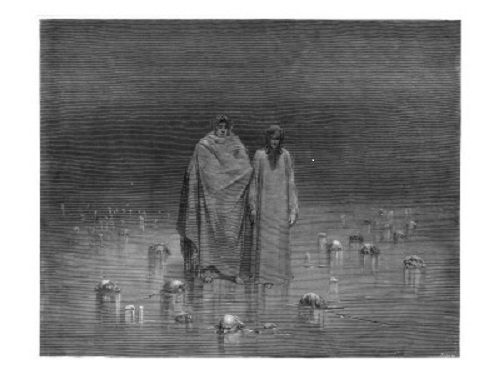
Every time I descend into Hell with the Pilgrim and Virgil, my attention is drawn to something different. Last time I taught Dante, I took special notice of the first bunch of folks Dante encounters. Squeezed into Canto III, between a trio of threatening beasts and the virtuous pagans, we find “those sad souls who lived a life but lived it with no blame and with no praise,” lives so non-descript that neither Paradise nor Hell wants them. These are “wretches who had never truly lived” whose sins or faults don’t even rise to the level of getting a name. Call them the “Whatevers” who never committed themselves to anything. Their actions were neither good enough to earn praise nor bad enough to require mercy or justice. These are “wretches who never truly lived; the world will not record their having been there.” The Whatevers remind me of the Laodicean church in the Book of Revelation, about which God says “I know your deeds, that you are neither cold nor hot. So, because you are lukewarm—neither hot nor cold—I will spit you out of my mouth.”
It was the fear of spending eternity in the land of the Whatevers that motivated Henry David Thoreau to shake things up in his life. He begins Walden with “I went to the woods because I wished to live deliberately, to front only the essential facts of life, and see if I could not learn what it had to teach, and not, when I came to die, discover that I had not lived.” A number of summers ago Jeanne and I stayed at a lovely bed and breakfast—furnished with a wonderful hostess, hundreds of feeding birds and at least a half-dozen Chihuahuas—literally across the road from Walden Pond.
On the other side of the pond, about a half-mile from where we were staying, Jeanne and I got to see the foundation and stone chimney of the tiny hovel Thoreau built for himself when he went to the woods. But Thoreau had the luxury to go to the woods in the first place, hardly a wilderness, since Walden Pond is only three or four miles from Concord, where Henry David could get a free meal at Ralph Waldo Emerson’s house any time he chose. These are luxuries that most of us do not have. Is it possible to learn to live deliberately without removing oneself from real life?
In his very interesting novel Putting Away Childish Things, theologian Marcus Borg frequently drops favorite book titles, excerpts and poems into the lives of his various characters. One of the poems is Mary Gordon’s “When Death Comes,” portions of which resonate with me more strongly than Thoreau’s more famous lines on the same theme.
When death comes
Like the hungry bear in autumn;
When death comes and takes all the bright coins from his purse
To buy me, and snaps the purse shut . . .
I want to step through the door full of curiosity, wondering:
What is it going to be like, that cottage of darkness . . .
When it’s over, I want to say; all my life
I was a bride married to amazement.
I was the bridegroom, taking the world into my arms.
When it’s over, I don’t want to wonder
If I have made of my life something particular, and real.
I don’t want to find myself sighing and frightened,
Or full of argument.
I don’t want to end up simply having visited this world.
I often wonder how I’m doing with this business of “making my life extraordinary,” as Mr. Keating challenges his young students to do in my all-time favorite movie, Dead Poet’s Society. On the first page of Walden, Thoreau writes that he wants to “suck the marrow out of life,” something that never sounded particularly attractive to me. “Suck the marrow out of life” sounds a lot like “Be all that you can be,” or “Go for the gusto”—a call to fill my life with as many various and diverse experiences as possible, never stopping for a breath until I don’t have any breaths left.
I guess I’m not a “marrow-sucking” kind of person. An extraordinary life need not be bursting at the seams with things purchased, places visited, or frequent flyer miles—although there is nothing wrong with any of these. My mantras for an extraordinary life have become “Be where you are” and “Do what you are doing.” Pay attention. Be aware. In the busyness of the day don’t forget that each moment in class might be the moment that transforms someone’s life. Take notice that every “like” clicked on my blog means that someone, somewhere, read what I wrote and liked something in it. Be thankful every day for the gift of spending so many years of my life married to an extraordinary human being. Don’t ignore the multiple signs that my sons have become wonderful men. Reality check: I’m often really bad at all of these.
The older I get the more I find myself drawn, when thinking about my mortality, to Psalm 90. I first consciously encountered this Psalm eleven years ago during noon prayer with a bunch of Benedictine monks. After spending the first several verses reminding us that humans are “like the grass; in the morning it is green and flourishes; in the evening it is dried up hat hand withered,” the Psalmist drops the hammer. “The span of our life is seventy years, perhaps in strength even eighty; yet the sum of them is but labor and sorrow, for they pass away quickly and we are gone.” And have a nice day.
But the suggested response in verse twelve makes all the difference. “So teach us to number our days, that we may apply our hearts to wisdom.” I’ve come to realize that numbering my days is not about trying to guess how many I have left. Rather, it is about treating each day as the unique gift that it is—that opens the door toward wisdom. Be where you are. Do what you are doing.
I’ve been made aware of my mortality more this summer than any time I can remember. This is a good thing, since I am in the last third of my life. I’m not going anywhere anytime soon (I don’t think), but the end is coming sooner than later. When it’s over, I will have been more than a visitor to this world if I have taken attentive ownership of the small piece of it given me during my lifetime. I only ask what the Psalmist asks at the end of Psalm 90: “May the graciousness of the Lord our God be upon us; prosper the work of our hands; prosper our handiwork.” And please deliver me from the land of the “Whatevers.”
Development of Western Civilization
Previous Post
August 11, 2022
Jesus Taught Us How To Be Human
Next Post

August 16, 2022 When Your Imaginary Friend Is Real
Browse Our Archives
Select a Category abortion Advent AI Angels Artificial intelligence atheism attention baptism Baptists beauty belief Benedictines Bible bicycling Big Bird books Bovina Camaldoli hermitage Canada Catholicism cats certainty change Christianity Christmas Collegeville Covid-19 creativity Development of Western Civilization dogs doubt Easter Enneagram Epiphany Episcopal ethics Eucharist evil extroverts Facebook faith family fear flowers forgiveness freedom friends God goodness grace happiness heaven hell history Holy Spirit Holy Week hope human nature humility humor idolatry incarnation introverts irreverence Islam Jeanne Jesus Joe Biden joy Judaism justice Kamala Harris knowledge Lent listen literature liturgy love Marsue Memorial Day miracles movies music mystery mythology NPR Old Testament optimism paradox peace Penguins philosophy piano podcast politics power prayer Protestantism Providence College Religion Rhode Island sabbatical sacrament science seeing silence Simone Weil Socrates soul sports St. John's College stories suffering tattoo teaching technology television theology thinking time tolerance transcendence travel trees trust truth Uncategorized Vermont wisdom wonder writing
Select a Month May 2026 April 2026 March 2026 February 2026 January 2026 December 2025 November 2025 October 2025 September 2025 August 2025 July 2025 June 2025 May 2025 April 2025 March 2025 February 2025 January 2025 December 2024 November 2024 October 2024 September 2024 August 2024 July 2024 June 2024 May 2024 April 2024 March 2024 February 2024 January 2024 December 2023 November 2023 October 2023 September 2023 August 2023 July 2023 June 2023 May 2023 April 2023 March 2023 February 2023 January 2023 December 2022 November 2022 October 2022 September 2022 August 2022 July 2022 June 2022 May 2022 April 2022 March 2022 February 2022 January 2022 December 2021 November 2021 October 2021 September 2021 August 2021 July 2021 June 2021 May 2021 April 2021 March 2021 February 2021 January 2021 December 2020 November 2020 October 2020 September 2020 August 2020 July 2020 June 2020 May 2020 April 2020 March 2020 February 2020 January 2020 December 2019 November 2019 October 2019 September 2019 August 2019 July 2019 June 2019 May 2019 April 2019 March 2019 February 2019 January 2019 December 2018 November 2018 October 2018 September 2018 August 2018 July 2018 June 2018 May 2018 April 2018 March 2018 February 2018 January 2018 December 2017 November 2017 October 2017 September 2017 August 2017 July 2017 June 2017 May 2017 April 2017 March 2017 February 2017 January 2017 December 2016 November 2016 October 2016 September 2016 August 2016 July 2016 June 2016 May 2016 April 2016 March 2016 February 2016 January 2016 December 2015 November 2015 October 2015 September 2015 August 2015 July 2015 June 2015 May 2015 April 2015 March 2015 February 2015 January 2015 December 2014 November 2014 October 2014 September 2014 August 2014 July 2014 June 2014 May 2014 April 2014 March 2014 February 2014 January 2014 December 2013 November 2013 October 2013 September 2013 August 2013 July 2013 June 2013 May 2013 April 2013 March 2013 February 2013 January 2013 December 2012 November 2012 October 2012 September 2012
Follow Us!
TAKE THE
Religious Wisdom Quiz
Who was Jacob's first wife?
Select your answer to see how you score.
Rebekah Dinah Leah Rachel
Books by This Author Books by Vance G. Morgan
Related posts from Freelance Christianity

The Lonely Pawn: On Faith, Doubt, and Meaning


AI and Love: When a Chatbot Becomes a...

TRENDING AT PATHEOS Progressive Christian

What Being a Modern-Day Apostle Means to Me
In my last column, I discussed the ins and outs of modern-day...

Did Ancient China Once Worship the God of...
Across human history, a common thread weaves through the origins of the...

Love Your Neighbor – Including Earth-Kin: Lev. 19,...
God’s command to love your neighbor means acting in an ethical and...

Lead a Church Study of “Jesus and Lao...
Guest writer Jack Thomas (The Irreverent Reverend) reflects on leading his church...

Pastoral Wisdom for Responding to Sermon Pushback
Getting sermon pushback on your social justice sermon? Learn practical, Proverbs-based strategies...

Principles for Understanding the Apostolic Ministry Today
Whenever people discover that my formal ministry title is "apostle," as in...
view all Progressive Christian blogs
Ad-Free & Subscriber Log-In Subscription Support
- About Us
- 2026 Calendar
- Videos
- Podcasts
- Library of World Religions
- Faith In Media Tracker
- Advertise With Us
- Write for Us
- Privacy Policy
- Terms of Service
- Do Not Sell My Data
- Contact Us
- Radiant Digital
- Manage Newsletter Subscriptions
- Unsubscribe From Notifications
- Sitemap
Copyright 2008-2026, Patheos. All rights reserved.
Subscription Support Ad-Free & Subscriber Log-In
Follow Patheos