
BuddhistCatholicContemplativeEvangelicalGeneral ChristianHinduJewishLatter-day SaintMuslimNew VisionsProgressive Christian
Beliefs
- Buddhist
- Catholic
- Contemplative
- Evangelical
- General Christian
- Hindu
- Jewish
- Latter-day Saint
- More Voices
- Muslim
- New Visions
- Pagan
- Progressive Christian
Topics
- Religion News
- Food and Religion
- Sports and Religion
- Religious Art
- Religious Music and Entertainment
- Religious Events
- History and Religion
- Style and Religion
- Politics and Religion
- Women in Religion
- Recreation Outdoors and Religion
- Business Finance and Religion
- Careers Workplace and Religion
- Education and Religion
- Family Parenting and Religion
- Health Fitness and Religion
- Home and Religion
- Relationships and Religion
- Technology and Religion
- Travel and Religion
Columnists
- Buddhist Columnists
- Business Finance and Religion Columnists
- Careers Workplace and Religion Columnists
- Catholic Columnists
- Contemplative Columnists
- Education and Religion Columnists
- Evangelists Columnists
- Family Parenting and Religion Columnists
- General Christian Columnists
- Health Fitness and Religion Columnists
- Hindu Columnists
- History and Religion Columnists
- Home and Religion Columnists
- Jewish Columnists
- More Voices Columnists
- Latter Day Columnists
- Muslim Columnists
- New Visions Columnists
- Nonreligious Columnists
- Pagan Columnists
- Politics and Religion Columnists
- Progressive Columnists
- Recreation Outdoors and Religion Columnists
- Relationships and Religion Columnists
- Religion News Columnists
- Religious Art Columnists
- Religious Events Columnists
- Religious Music and Entertainment Columnists
- Sports and Religion Columnists
- Style and Religion Columnists
- Technology and Religion Columnists
- Travel and Religion Columnists
- Women in Religion Columnists
Resource Library
- 2026 Calendar
- Library of World Religions
- The 100 Most Holy Places on Earth
- Patheos Answers
- Podcasts
- Videos
- Faith Leaders Database
- Anglican Episcopalian
- Bahai
- Baptist
- Buddhism
- Christianity
- Confucianism
- Eastern Orthodoxy
- Hinduism
- Holiness and Pentecostal
- ISKCON
- Islam
- Judaism
- Lutheran
- Methodist
- The Church of Jesus Christ of Latter-day Saints
- New Age
- Paganism
- Presbytarian and Reformed
- Protestantism
- Religion Behind the Scenes
- Roman Catholic
- Scientology
- Shia Islam
- Sikhism
- Sufism
- Sunni Islam
- Taoism
- Zen
- See all religions
Research Tools
 Ad-Free & Subscriber Log-In Subscription Support
Ad-Free & Subscriber Log-In Subscription Support
Follow Patheos 

- Trending:
- Forgiveness
- |
- Marriage
- |
- Consciousness
- |
- Death Penalty
- |
- Election
- |
- Halloween

- Home
- Progressive Christian
- What Would Dorothea Do?
What Would Dorothea Do?
Last updated on: September 28, 2023 at 6:00 am by Vance Morgan
What Would Dorothea Do? 2023-09-27T14:10:02-04:00 Vance Morgan
Patheos Explore the world's faith through different perspectives on religion and spirituality! Patheos has the views of the prevalent religions and spiritualities of the world.
I saw a bumper sticker once that said “So many books, so little time.” I agree. Even though I sometimes feel as if I read for a living, the fear that I might live my allotted fourscore years and never get to read the greatest novel I’ve not yet read or the most profound play that has not yet crossed my path is palpable. At age 67, for instance, I’ve not yet read all of Charles Dickens’ novels. That worries me. I’ve read most of them, but what if Little Dorrit or Martin Chuzzlewitt is better than Bleak House, my favorite? What if one of the handful of Flannery O’Connor short stories I’ve yet to read is more profound than “A View of the Woods”? What if I die without ever having read The Fairie Queen? Very disturbing.
For years I chose to address this fear systematically, by dedicating a central part of my summer reading list to one great author (by reputation) whose work I have never read. One summer it was Zola, another summer it was Trollope;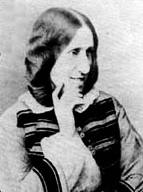 I even slogged through the first half of Swann’s Way and joined the legion of readers who started and never finished Proust. A dozen or so summers ago, it was George Eliot. I had read Silas Marner,but never Middlemarch or Daniel Deronda. I was pushed in the Eliot direction because a colleague of mine in political science told me that his wife, who is also a voracious reader, had proclaimed Middlemarch as the greatest novel ever written. I finished it a few days before a visit to the Coop with my son. My colleague’s wife has a point–I have never read a better novel before or since.
Cambridge, Massachusetts is a book lover’s paradise. There are more bookstores per square inch in Cambridge than any other town I’ve visited, so many that I once even found a copy of my first book from the middle 1990s, a reworking of my dissertation, on an out-of-the-way shelf in a basement corner of an out-of-the-way little shop there. The only other place I’ve ever seen that book, other than collecting dust on my own bookshelf, is collecting dust in various libraries on college campuses I’ve worked at or visited. As David Hume said about his first publication, “it fell stillborn from the press.”
 The central, largest bookstore in Cambridge is the Coop, an impressive establishment with several stories, balconies, nooks and crannies in which to sit and read—the sort of place I could easily spend a week’s vacation. During my visit to the Coop with my youngest son, we walked past a table with a seemingly random collection of books on display. I picked up a copy of Middlemarch. Handing it to my son, I said “read the last paragraph.”
“Holy Shit!” my son exclaimed.
“I’d give my left testicle to be able to write like that,” I replied.
The paragraph he read was Eliot’s closing meditation on the remaining life of the main character, Dorothea Brooke.
Her finely touched spirit had still its fine issues, though they were not widely visible. Her full nature, like that river of which Cyrus broke the strength, spent itself in channels which had no great name on the earth. But the effect of her being on those around her was incalculably diffusive: for the growing good of the world is partly dependent on unhistoric acts; and that things are not so ill with you and me as they might have been, is half owing to the number who lived faithfully a hidden life, and rest in unvisited tombs.
Through Dorothea Brooke, Eliot inspires reverence for the sacredness of ordinary acts and feelings, bringing to mind the prophet Micah’s injunction to “do justice, love mercy, and walk humbly with our God.” Dorothea, to the great consternation of her wealthy uncle and guardian, regularly looks for ways to improve the living conditions of the impoverished tenant farmers working the hundreds of family acres, treats everyone as her equal even though societal norms claim otherwise, and improves the lives of those she touches with her natural generosity and truthfulness.  Her gracious humanness is not religiously motivated; indeed, the only cleric in the novel is Dorothea’s ill-chosen and unfortunate first husband Mr. Casaubon, an academic so cerebral and lacking in affect that he regularly fails to recognize the real existence of anyone other than himself. The wellspring of Dorothea’s goodness is simply her own, expansive heart. Alert: this coming Sunday’s post will focus on Mr. Casaubon.
Human beings are not generally well tuned to the importance of ordinary deeds—all of us want to accomplish something magnificent, to perform historic acts, to live lives that are recognized, and to establish a great name on the earth. What is the value of attempting to live the life of virtue if no one notices? At the time I read Middlemarch I had not yet started this blog. I had written several dozen essays over the previous three years, both the vehicle and record of a spiritual awakening that was transformational. Family and friends had let me know, at various times and in various ways, that they were been touched deeply by them. A trusted friend who is well-published suggested I should start a blog.
But I wanted them to be published, and no publishing house had the good sense or spiritual acumen to take on the project. After the latest “thanks for sharing, but no” from a publisher, I said in exasperation to Jeanne “If these aren’t meant to be in print, what are they for?” As has happened so often over the past thirty-five years, she responded with the truth—“You may never know, and that’s alright.” In my thinking at the time, the value of something is established by its being recognized. But perhaps in a different economy, value is measured in secret, even unknown ways.
In Matthew’s gospel, those who are invited to enter into the joy of their Lord are those who fed the hungry, clothed the naked, gave the homeless shelter, and visited those in prison, all the time unaware that by doing so they were advancing the Kingdom of God. It’s almost as if they are surprised that simply acting out of human kindness and solidarity was enough to satisfy the divine requirements. But in a sacramental and incarnational world, it makes sense. What does the Lord require of us? Justice. Mercy. Humility. Perhaps I simply need to keep WWDD? in mind. What Would Dorothea Do?
Previous Post

September 26, 2023
Consider the Salmon: Like Souls Approaching God
Next Post

October 1, 2023 What A Real Philosopher Looks Like
Recent Comments
"Mary did have a choice. And she was able to make it before the Holy ..."
"i cannot read beyond your recommendations for the books since i like to have a ..."
"AI will never be able to utter with honesty, feeling, or humility, the greeting: "Namaste".It ..."
"They do. I'm sure you could find discussions of the same topic from any of ..."
Browse Our Archives
Select a Category abortion Advent AI Angels Artificial intelligence atheism attention baptism Baptists beauty belief Benedictines Bible bicycling Big Bird books Bovina Camaldoli hermitage Canada Catholicism cats certainty change Christianity Christmas Collegeville Covid-19 creativity Development of Western Civilization dogs doubt Easter Enneagram Epiphany Episcopal ethics Eucharist evil extroverts Facebook faith family fear flowers forgiveness freedom friends God goodness grace happiness heaven hell history Holy Spirit Holy Week hope human nature humility humor idolatry incarnation introverts irreverence Islam Jeanne Jesus Joe Biden joy Judaism justice Kamala Harris knowledge Lent listen literature liturgy love Marsue Memorial Day miracles movies music mystery mythology NPR Old Testament optimism paradox peace Penguins philosophy piano podcast politics power prayer Protestantism Providence College Religion Rhode Island sabbatical sacrament science seeing silence Simone Weil Socrates soul sports St. John's College stories suffering tattoo teaching technology television theology thinking time tolerance transcendence travel trees trust truth Uncategorized Vermont wisdom wonder writing
Select a Month May 2026 April 2026 March 2026 February 2026 January 2026 December 2025 November 2025 October 2025 September 2025 August 2025 July 2025 June 2025 May 2025 April 2025 March 2025 February 2025 January 2025 December 2024 November 2024 October 2024 September 2024 August 2024 July 2024 June 2024 May 2024 April 2024 March 2024 February 2024 January 2024 December 2023 November 2023 October 2023 September 2023 August 2023 July 2023 June 2023 May 2023 April 2023 March 2023 February 2023 January 2023 December 2022 November 2022 October 2022 September 2022 August 2022 July 2022 June 2022 May 2022 April 2022 March 2022 February 2022 January 2022 December 2021 November 2021 October 2021 September 2021 August 2021 July 2021 June 2021 May 2021 April 2021 March 2021 February 2021 January 2021 December 2020 November 2020 October 2020 September 2020 August 2020 July 2020 June 2020 May 2020 April 2020 March 2020 February 2020 January 2020 December 2019 November 2019 October 2019 September 2019 August 2019 July 2019 June 2019 May 2019 April 2019 March 2019 February 2019 January 2019 December 2018 November 2018 October 2018 September 2018 August 2018 July 2018 June 2018 May 2018 April 2018 March 2018 February 2018 January 2018 December 2017 November 2017 October 2017 September 2017 August 2017 July 2017 June 2017 May 2017 April 2017 March 2017 February 2017 January 2017 December 2016 November 2016 October 2016 September 2016 August 2016 July 2016 June 2016 May 2016 April 2016 March 2016 February 2016 January 2016 December 2015 November 2015 October 2015 September 2015 August 2015 July 2015 June 2015 May 2015 April 2015 March 2015 February 2015 January 2015 December 2014 November 2014 October 2014 September 2014 August 2014 July 2014 June 2014 May 2014 April 2014 March 2014 February 2014 January 2014 December 2013 November 2013 October 2013 September 2013 August 2013 July 2013 June 2013 May 2013 April 2013 March 2013 February 2013 January 2013 December 2012 November 2012 October 2012 September 2012
Follow Us!
TAKE THE
Religious Wisdom Quiz
Who had a coat of many colors?
Select your answer to see how you score.
Jacob Esau Benjamin Joseph
Books by This Author Books by Vance G. Morgan
Related posts from Freelance Christianity

The Lonely Pawn: On Faith, Doubt, and Meaning


AI and Love: When a Chatbot Becomes a...

TRENDING AT PATHEOS Progressive Christian

What Being a Modern-Day Apostle Means to Me
In my last column, I discussed the ins and outs of modern-day...

Did Ancient China Once Worship the God of...
Across human history, a common thread weaves through the origins of the...

Love Your Neighbor – Including Earth-Kin: Lev. 19,...
God’s command to love your neighbor means acting in an ethical and...

Lead a Church Study of “Jesus and Lao...
Guest writer Jack Thomas (The Irreverent Reverend) reflects on leading his church...

Pastoral Wisdom for Responding to Sermon Pushback
Getting sermon pushback on your social justice sermon? Learn practical, Proverbs-based strategies...

Principles for Understanding the Apostolic Ministry Today
Whenever people discover that my formal ministry title is "apostle," as in...
view all Progressive Christian blogs
What Are Your Thoughts?leave a comment
Ad-Free & Subscriber Log-In Subscription Support
- About Us
- 2026 Calendar
- Videos
- Podcasts
- Library of World Religions
- Faith In Media Tracker
- Advertise With Us
- Write for Us
- Privacy Policy
- Terms of Service
- Do Not Sell My Data
- Contact Us
- Radiant Digital
- Manage Newsletter Subscriptions
- Unsubscribe From Notifications
- Sitemap
Copyright 2008-2026, Patheos. All rights reserved.
Subscription Support Ad-Free & Subscriber Log-In
Follow Patheos