
BuddhistCatholicContemplativeEvangelicalGeneral ChristianHinduJewishLatter-day SaintMuslimNew VisionsProgressive Christian
Beliefs
- Buddhist
- Catholic
- Contemplative
- Evangelical
- General Christian
- Hindu
- Jewish
- Latter-day Saint
- More Voices
- Muslim
- New Visions
- Pagan
- Progressive Christian
Topics
- Religion News
- Food and Religion
- Sports and Religion
- Religious Art
- Religious Music and Entertainment
- Religious Events
- History and Religion
- Style and Religion
- Politics and Religion
- Women in Religion
- Recreation Outdoors and Religion
- Business Finance and Religion
- Careers Workplace and Religion
- Education and Religion
- Family Parenting and Religion
- Health Fitness and Religion
- Home and Religion
- Relationships and Religion
- Technology and Religion
- Travel and Religion
Columnists
- Buddhist Columnists
- Business Finance and Religion Columnists
- Careers Workplace and Religion Columnists
- Catholic Columnists
- Contemplative Columnists
- Education and Religion Columnists
- Evangelists Columnists
- Family Parenting and Religion Columnists
- General Christian Columnists
- Health Fitness and Religion Columnists
- Hindu Columnists
- History and Religion Columnists
- Home and Religion Columnists
- Jewish Columnists
- More Voices Columnists
- Latter Day Columnists
- Muslim Columnists
- New Visions Columnists
- Nonreligious Columnists
- Pagan Columnists
- Politics and Religion Columnists
- Progressive Columnists
- Recreation Outdoors and Religion Columnists
- Relationships and Religion Columnists
- Religion News Columnists
- Religious Art Columnists
- Religious Events Columnists
- Religious Music and Entertainment Columnists
- Sports and Religion Columnists
- Style and Religion Columnists
- Technology and Religion Columnists
- Travel and Religion Columnists
- Women in Religion Columnists
Resource Library
- 2026 Calendar
- Library of World Religions
- The 100 Most Holy Places on Earth
- Patheos Answers
- Podcasts
- Videos
- Faith Leaders Database
- Anglican Episcopalian
- Bahai
- Baptist
- Buddhism
- Christianity
- Confucianism
- Eastern Orthodoxy
- Hinduism
- Holiness and Pentecostal
- ISKCON
- Islam
- Judaism
- Lutheran
- Methodist
- The Church of Jesus Christ of Latter-day Saints
- New Age
- Paganism
- Presbytarian and Reformed
- Protestantism
- Religion Behind the Scenes
- Roman Catholic
- Scientology
- Shia Islam
- Sikhism
- Sufism
- Sunni Islam
- Taoism
- Zen
- See all religions
Research Tools
 Ad-Free & Subscriber Log-In Subscription Support
Ad-Free & Subscriber Log-In Subscription Support
Follow Patheos 

- Trending:
- Forgiveness
- |
- Marriage
- |
- Consciousness
- |
- Death Penalty
- |
- Election
- |
- Halloween

- Home
- Progressive Christian
- What They Don’t Tell Us About Wisdom–Part Two
What They Don’t Tell Us About Wisdom–Part Two
Last updated on: October 9, 2022 at 4:18 pm by Vance Morgan
What They Don’t Tell Us About Wisdom–Part Two 2022-10-09T16:18:35-04:00 Vance Morgan
Patheos Explore the world's faith through different perspectives on religion and spirituality! Patheos has the views of the prevalent religions and spiritualities of the world.
A couple of weeks ago I posted an essay called “What They Don’t Tell Us About Wisdom,” inspired by a reading from the book of Proverbs that was part of the Sunday lectionary offerings that I had read in church as lector the previous Sunday.
The focus of the reading that Sunday, and the focus of much of Proverbs is Wisdom, presented as a woman who stands at the gates and has a lot to say. Much of what she has to say in Proverbs is an ancient version of what we would call a meme, brief bits of advice or moral guidance of the sort that one might post on social media or print on a bumper sticker. But don’t expect Wisdom to be consistent in her insights—wisdom cannot be logically charted or summarized. It is always contextual. What needs to be done in the moment cannot be scripted beforehand. As I note in my essay,
Whatever wisdom is, whether I have any or not, I at least know that wisdom isn’t found in a rule book in which one looks up one’s problem in the index, turns to the appropriate page, then finds an answer that fits all situations and circumstances. Life isn’t like that. Wisdom isn’t like that.
(P.S.: It’s always fun to quote yourself)
Although much of what Wisdom says in Proverbs seems contradictory on the surface, it is clear that seeking wisdom is better than being foolish. One clear takeaway from Proverbs is that following the path of wisdom, although the path may be difficult, will eventually bring you to a good place. A slightly different take is that if you are looking for Wisdom, don’t expect it to be reducible to a PowerPoint or outline. Perhaps we should not look at the Bible as reducible in that way either.
This possibility becomes even more glaring when one turns the page to the next book in the Jewish scriptures, Ecclesiastes. As Peter Enns writes in The Sin of Certainty,
If faith in God makes zero sense to you and reasons for trusting God have fallen off a cliff of despair, you’ve got a friend in the Bible, the book of Ecclesiastes . . . Not only can God not be counted on, but life plays out as one cruel joke after another, and then you die. And God is to blame.
My goodness. No wonder Ecclesiastes only makes it into the lectionary once per year with the famous “To everything there is a season, and a time for every purpose under heaven,” made famous by the Byrds in their 1963 classic “Turn, Turn, Turn.” This is not good news. What is this book even doing in the Bible? There are important lessons to be learned, none of them compatible with the neat-and-clean faith that many of us desire.
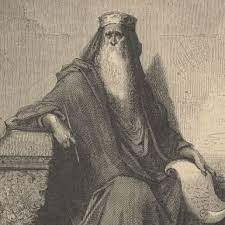 The first thing that Qohelet (the narrator of Ecclesiastes whose name is usually translated the “Preacher” or the “Teacher”) tells us is that wisdom—so honored and praised in Proverbs—is vastly overrated. Qohelet (whom some have suggested might be Solomon) has attained what amounts to wisdom by human standards and concludes that the effort was probably not worth it.
I set my heart to seek and search out by wisdom concerning all that is done under heaven; this grievous task God has given to the sons of man . . . My heart has understood great wisdom and knowledge . . . In much wisdom is much grief, and he who increases knowledge increases sorrow.
Qohelet is not claiming that wisdom does not exist. He’s claiming that it doesn’t mean anything in the ultimate scheme of things. Whether one is wise or not, the world is what it is, human beings are mortal and will not be remembered after they are gone. Being human is a “grievous task,” and God set it up this way. As Quohelet writes frequently, “Vanity of vanities, all is vanity.” Life’s a bitch and then you die.
There is no payoff for pursuing and gaining wisdom. Over and over, Qohelet undermines our natural expectations that the righteous or wise will prosper while the wicked or unwise will not, as well as our conviction that at least we are better than non-living things.
What happens to the sons of men also happens to beasts; one thing befalls them: as one dies, so dies the other. Surely, they all have one breath; man has no advantage over beasts, for all is vanity . . . The living know that they will die; but the dead know nothing. And they have no more reward, for the memory of them is forgotten.
“Au contraire, Qohelet!” you might say. “Everything will work out in the afterlife!” But Qohelet isn’t in the mood for unsubstantiated hope.
All go to one place: all are from the dust and all return to dust. Who knows the spirit of the sons of men, which goes upward, and the spirit of the beast, which goes down to the earth? . . .
Qohelet isn’t even attracted to the watered-down sense of immortality that consists of being remembered after one has died. Even the most famous people are forgotten within a generation or two—“the memory of them is forgotten.”
Qohelet is having what medieval mystics called a “dark night of the soul.” Anyone who seeks to follow the divine and live out faith in real time who also chooses to be honest knows what Qohelet is writing about and experiencing. As Rachel Held Evans used to say, “on the days that I believe” everything seems to be working out sort of well—but then there are the other days. Ecclesiastes is an honest expression of the times when God is silent, seems to be adversarial, and none of the rules, quick fixes, or platitudes in your arsenal or anyone else’s are the least bit effective. What to do? Qohelet suggests there’s nothing available but simply to put one foot in front of the other. “Let us hear the conclusion of the whole matter: Fear God and keep His commandments.”
For those who believe the Bible is intended as a coherent and consistent rulebook for how to live your life, Ecclesiastes is best ignored. But once you realize that the Bible was never intended to be a rulebook, it’s encouraging to know that Ecclesiastes, Job, and many of the Psalms that have a similarly dark message made the final cut into scripture. Someone realized that there’s no sense in lying about the ups and downs of walking with the divine. Sometimes this is exactly what faith is like.
Previous Post

July 7, 2022
Descending and Ascending the Mountain of the Lord
Next Post
July 11, 2022 My Neighbor May Not Be the Person I Think It Is
Browse Our Archives
Select a Category abortion Advent AI Angels Artificial intelligence atheism attention baptism Baptists beauty belief Benedictines Bible bicycling Big Bird books Bovina Camaldoli hermitage Canada Catholicism cats certainty change Christianity Christmas Collegeville Covid-19 creativity Development of Western Civilization dogs doubt Easter Enneagram Epiphany Episcopal ethics Eucharist evil extroverts Facebook faith family fear flowers forgiveness freedom friends God goodness grace happiness heaven hell history Holy Spirit Holy Week hope human nature humility humor idolatry incarnation introverts irreverence Islam Jeanne Jesus Joe Biden joy Judaism justice Kamala Harris knowledge Lent listen literature liturgy love Marsue Memorial Day miracles movies music mystery mythology NPR Old Testament optimism paradox peace Penguins philosophy piano podcast politics power prayer Protestantism Providence College Religion Rhode Island sabbatical sacrament science seeing silence Simone Weil Socrates soul sports St. John's College stories suffering tattoo teaching technology television theology thinking time tolerance transcendence travel trees trust truth Uncategorized Vermont wisdom wonder writing
Select a Month May 2026 April 2026 March 2026 February 2026 January 2026 December 2025 November 2025 October 2025 September 2025 August 2025 July 2025 June 2025 May 2025 April 2025 March 2025 February 2025 January 2025 December 2024 November 2024 October 2024 September 2024 August 2024 July 2024 June 2024 May 2024 April 2024 March 2024 February 2024 January 2024 December 2023 November 2023 October 2023 September 2023 August 2023 July 2023 June 2023 May 2023 April 2023 March 2023 February 2023 January 2023 December 2022 November 2022 October 2022 September 2022 August 2022 July 2022 June 2022 May 2022 April 2022 March 2022 February 2022 January 2022 December 2021 November 2021 October 2021 September 2021 August 2021 July 2021 June 2021 May 2021 April 2021 March 2021 February 2021 January 2021 December 2020 November 2020 October 2020 September 2020 August 2020 July 2020 June 2020 May 2020 April 2020 March 2020 February 2020 January 2020 December 2019 November 2019 October 2019 September 2019 August 2019 July 2019 June 2019 May 2019 April 2019 March 2019 February 2019 January 2019 December 2018 November 2018 October 2018 September 2018 August 2018 July 2018 June 2018 May 2018 April 2018 March 2018 February 2018 January 2018 December 2017 November 2017 October 2017 September 2017 August 2017 July 2017 June 2017 May 2017 April 2017 March 2017 February 2017 January 2017 December 2016 November 2016 October 2016 September 2016 August 2016 July 2016 June 2016 May 2016 April 2016 March 2016 February 2016 January 2016 December 2015 November 2015 October 2015 September 2015 August 2015 July 2015 June 2015 May 2015 April 2015 March 2015 February 2015 January 2015 December 2014 November 2014 October 2014 September 2014 August 2014 July 2014 June 2014 May 2014 April 2014 March 2014 February 2014 January 2014 December 2013 November 2013 October 2013 September 2013 August 2013 July 2013 June 2013 May 2013 April 2013 March 2013 February 2013 January 2013 December 2012 November 2012 October 2012 September 2012
Follow Us!
TAKE THE
Religious Wisdom Quiz
What symbol is most commonly associated with Christianity worldwide?
Select your answer to see how you score.
The cross The dove The fish The lamb
Books by This Author Books by Vance G. Morgan
Related posts from Freelance Christianity

The Lonely Pawn: On Faith, Doubt, and Meaning


AI and Love: When a Chatbot Becomes a...

TRENDING AT PATHEOS Progressive Christian

Why Christians Have a Sacred Duty to Vote:...
The Bible offers strong support for the sacred duty to vote. Here...

What Being a Modern-Day Apostle Means to Me
In my last column, I discussed the ins and outs of modern-day...

Did Ancient China Once Worship the God of...
Across human history, a common thread weaves through the origins of the...

Love Your Neighbor – Including Earth-Kin: Lev. 19,...
God’s command to love your neighbor means acting in an ethical and...

Lead a Church Study of “Jesus and Lao...
Guest writer Jack Thomas (The Irreverent Reverend) reflects on leading his church...

Principles for Understanding the Apostolic Ministry Today
Whenever people discover that my formal ministry title is "apostle," as in...
view all Progressive Christian blogs
Ad-Free & Subscriber Log-In Subscription Support
- About Us
- 2026 Calendar
- Videos
- Podcasts
- Library of World Religions
- Faith In Media Tracker
- Advertise With Us
- Write for Us
- Privacy Policy
- Terms of Service
- Do Not Sell My Data
- Contact Us
- Radiant Digital
- Manage Newsletter Subscriptions
- Unsubscribe From Notifications
- Sitemap
Copyright 2008-2026, Patheos. All rights reserved.
Subscription Support Ad-Free & Subscriber Log-In
Follow Patheos