
BuddhistCatholicContemplativeEvangelicalGeneral ChristianHinduJewishLatter-day SaintMuslimNew VisionsProgressive Christian
Beliefs
- Buddhist
- Catholic
- Contemplative
- Evangelical
- General Christian
- Hindu
- Jewish
- Latter-day Saint
- More Voices
- Muslim
- New Visions
- Pagan
- Progressive Christian
Topics
- Religion News
- Food and Religion
- Sports and Religion
- Religious Art
- Religious Music and Entertainment
- Religious Events
- History and Religion
- Style and Religion
- Politics and Religion
- Women in Religion
- Recreation Outdoors and Religion
- Business Finance and Religion
- Careers Workplace and Religion
- Education and Religion
- Family Parenting and Religion
- Health Fitness and Religion
- Home and Religion
- Relationships and Religion
- Technology and Religion
- Travel and Religion
Columnists
- Buddhist Columnists
- Business Finance and Religion Columnists
- Careers Workplace and Religion Columnists
- Catholic Columnists
- Contemplative Columnists
- Education and Religion Columnists
- Evangelists Columnists
- Family Parenting and Religion Columnists
- General Christian Columnists
- Health Fitness and Religion Columnists
- Hindu Columnists
- History and Religion Columnists
- Home and Religion Columnists
- Jewish Columnists
- More Voices Columnists
- Latter Day Columnists
- Muslim Columnists
- New Visions Columnists
- Nonreligious Columnists
- Pagan Columnists
- Politics and Religion Columnists
- Progressive Columnists
- Recreation Outdoors and Religion Columnists
- Relationships and Religion Columnists
- Religion News Columnists
- Religious Art Columnists
- Religious Events Columnists
- Religious Music and Entertainment Columnists
- Sports and Religion Columnists
- Style and Religion Columnists
- Technology and Religion Columnists
- Travel and Religion Columnists
- Women in Religion Columnists
Resource Library
- 2026 Calendar
- Library of World Religions
- The 100 Most Holy Places on Earth
- Patheos Answers
- Podcasts
- Videos
- Faith Leaders Database
- Anglican Episcopalian
- Bahai
- Baptist
- Buddhism
- Christianity
- Confucianism
- Eastern Orthodoxy
- Hinduism
- Holiness and Pentecostal
- ISKCON
- Islam
- Judaism
- Lutheran
- Methodist
- The Church of Jesus Christ of Latter-day Saints
- New Age
- Paganism
- Presbytarian and Reformed
- Protestantism
- Religion Behind the Scenes
- Roman Catholic
- Scientology
- Shia Islam
- Sikhism
- Sufism
- Sunni Islam
- Taoism
- Zen
- See all religions
Research Tools
 Ad-Free & Subscriber Log-In Subscription Support
Ad-Free & Subscriber Log-In Subscription Support
Follow Patheos 

- Trending:
- Forgiveness
- |
- Marriage
- |
- Consciousness
- |
- Death Penalty
- |
- Election
- |
- Halloween

- Home
- Progressive Christian
- What My Father Taught Me About Reading and Belief
What My Father Taught Me About Reading and Belief
Last updated on: June 13, 2019 at 11:27 am by Vance Morgan
What My Father Taught Me About Reading and Belief 2019-06-13T11:27:37-04:00 Vance Morgan
Patheos Explore the world's faith through different perspectives on religion and spirituality! Patheos has the views of the prevalent religions and spiritualities of the world.
One of the most important tasks that an author has to face when a book is in the late stages of the publication process is the dedication. This usually happens late in the process, when your editor is hard at work making your prose more readable, the marketing people are asking you to fill out forms that include contact information for acquaintances and colleagues who might not be too embarrassed to write a blurb, and you have finally realized that this thing is actually going to be in print in a matter of months.
My current book–“Prayer for People Who Don’t Believe in God”–is in my editor’s hands as I write, so its dedication has been on my mind. I have dedicated previous books to my mother, to my sons, and to Jeanne—this one’s going to be for my father. It makes sense, because in many ways this is my most controversial book, pushing the envelope of traditional thinking, belief, and practice concerning prayer as far as I can. I’ve thought of him often during the writing process; the dedication is going to say something like this:
In memory of my father,
DR. BRUCE L. MORGAN
You taught me to think, to question, to explore, to doubt . . .
and only then to believe.
As Father’s Day approaches, I find myself reminiscing about just how much I owe to this man who, as all human beings are, was a complicated mixture of elements that, considered separately, don’t usually go together. He was a Baptist minister as well as an iconoclast. He was a loving parent who could be scary as hell. He was a loving husband who expected my mother to wait on him hand and foot. He often was hilarious, was a dynamic public speaker, could entertain a crowd effortlessly, yet was equally capable of withdrawing into a shell of silence and introversion like a turtle.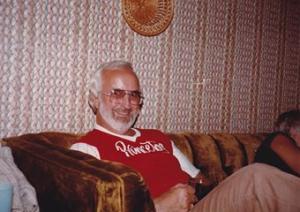 And he had a powerful intellect, an insatiable curiosity, and an surprising ability to challenge even the most core tenets of his faith—all of which he used in direct service to the God he worshiped, who is undoubtedly as interesting and inscrutable as my father was.
My father was an autodidact, a learned man with little formal education beyond high school (the “Dr.” before his name was an honorary Doctor of Divinity given to him by a now-defunct seminary). He was a voracious reader of eclectic materials, usually books with God and spirituality at their center of gravity. He often was reading a half-dozen or more books at once, all stuffed into a briefcase that could barely hold the strain. During the times he was home, a regular part of his schedule would be to take off in the dim light before sunrise in the car on his way to a three or four-hour breakfast at one of the many favorite greasy-spoon breakfast establishments within a fifty-mile radius.
While at breakfast, he would spread his reading materials in a semicircle around the plate containing whatever he was eating, and indulge in the smorgasbord of spiritual delights in front of him. He used colored pencils from a 12-pencil box to mark his books heavily with hieroglyphics and scribblings that were both wondrous and baffling. It was not until I was going through some of his daily notebooks a few weeks after he died several years ago that I came across the Rosetta key to his method.
Dad often would marvel, either to the family or (more often) to his “groupies” listening in rapt attention during a “time of ministry,” at the wonders of watching God take bits and pieces of text, fragments from seemingly unrelated books, and weave them together into an unexpected yet glorious tapestry of brilliance and insight. God, mind you, was doing the weaving—Dad’s role apparently was to spread the books in front of him and simply sit back and see what percolated to the top, in an alchemical or Ouija-board fashion. God, reportedly, did stuff for Dad all the time. God even told Dad where to go for breakfast and what to order. This, for a son who had never heard God say anything to him directly, was both impressive and intimidating.
From my father I have inherited a voracious appetite for books, which is a good thing. Once several years ago, in the middle of an eye exam my new ophthalmologist asked me “do you read very much?” Laughing, I answered “I read for a living!” Actually, it’s worse than that. I recall that in the early years of our marriage Jeanne said that I don’t need human friends, because books are my friends. At the time she meant it as a criticism; now, more than thirty years later, she would probably say the same thing but just as a descriptive observation, not as a challenge to change. Just in case you’re wondering, over time I have become Jeanne’s book procurer and have turned a vivacious, extroverted people person into someone who, with the right book, can disappear into a cocoon for hours or even days. Score one for the introverts.
But Jeanne was right—I take great delight in the written word. I’ve always been shamelessly profligate in what I read. My idea of a good time, extended over several days or weeks, is to read whatever happens to come my way along with what I’m already reading, just for the fun of it. As one of my favorite philosophers wrote, “it’s a matter of reading texts in the light of other texts, people, obsessions, bits of information, or what have you, and then seeing what happens.”
I have no doubt that I inherited the elements of all of this from my father, who both in word and practice taught me that belief should be informed by hard intellectual and spiritual work—it should not be accepted unquestioningly from any authority. My bibliophilic ways sound a lot like what my father was doing at breakfast. I’ll go even further and admit that, despite the spookiness of Dad’s claim that God wove disparate texts together for him into a tapestry of inspiration and insight, I know something about that tapestry.
How else to explain the threads with which I connect Simone Weil, George Eliot, Fyodor Dostoevsky and William James through Anne Lamott, Friedrich Nietzsche, Aristotle, and P. D. James to Ludwig Wittgenstein, Annie Dillard, the second Isaiah, and Daniel Dennett? How to explain that an essay by the dedicated and eloquent atheist Richard Rorty provides me with just the right idea to organize a big project about spiritual hunger and searching for God? How to explain that a novel by an author I never heard of, which Jeanne bought for herself but passed on to me instead (“I think this is your kind of book”), was so full of beautiful characters and passages directly connected to what I’m working on that it brought chills to my spine and tears to my eyes? Is God weaving tapestries for me too?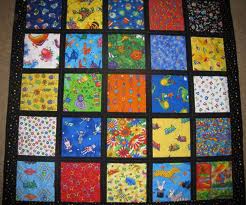
Maybe. But I think a different sort of textile is being made. The process of throwing texts together and seeing what happens is not really like weaving a seamless tapestry at all. It’s more like sewing together a very large, elaborate, polychrome quilt in which the pieces and patches can be attached, separated, contrasted, compared, in the expectation that something unusual and exciting just might emerge.
Why can’t Freud and Anselm have a conversation with each other? Why can’t Aquinas and Richard Dawkins get into a real debate without knowing ahead of time who is supposed to or has to win? In The Waste Land, T. S. Eliot writes “these fragments have I shored against my ruin.” I’ve never liked that, since it sounds as if T. S. can’t think of anything better to do with the pieces of stuff lying around the wasteland than to use them as props shoring up his wobbly whatevers. He should have tried making a quilt.
I suspect that the transcendent makes many demands on us, most of which we have only fuzzy intimations of. This one I’m pretty sure of, though: truth is made, not found. The divine emerges from human creative activities in ways we’ll never recognize if we insist that God must be found as a finished product. As a wise person once wrote, “The world is not given to us ‘on a plate,’ it is given to us as a creative task.” I have my father to thank for giving me the basic tools for that task.


Browse Our Archives
Select a Category abortion Advent AI Angels Artificial intelligence atheism attention baptism Baptists beauty belief Benedictines Bible bicycling Big Bird books Bovina Camaldoli hermitage Canada Catholicism cats certainty change Christianity Christmas Collegeville Covid-19 creativity Development of Western Civilization dogs doubt Easter Enneagram Epiphany Episcopal ethics Eucharist evil extroverts Facebook faith family fear flowers forgiveness freedom friends God goodness grace happiness heaven hell history Holy Spirit Holy Week hope human nature humility humor idolatry incarnation introverts irreverence Islam Jeanne Jesus Joe Biden joy Judaism justice Kamala Harris knowledge Lent listen literature liturgy love Marsue Memorial Day miracles movies music mystery mythology NPR Old Testament optimism paradox peace Penguins philosophy piano podcast politics power prayer Protestantism Providence College Religion Rhode Island sabbatical sacrament science seeing silence Simone Weil Socrates soul sports St. John's College stories suffering tattoo teaching technology television theology thinking time tolerance transcendence travel trees trust truth Uncategorized Vermont wisdom wonder writing
Select a Month May 2026 April 2026 March 2026 February 2026 January 2026 December 2025 November 2025 October 2025 September 2025 August 2025 July 2025 June 2025 May 2025 April 2025 March 2025 February 2025 January 2025 December 2024 November 2024 October 2024 September 2024 August 2024 July 2024 June 2024 May 2024 April 2024 March 2024 February 2024 January 2024 December 2023 November 2023 October 2023 September 2023 August 2023 July 2023 June 2023 May 2023 April 2023 March 2023 February 2023 January 2023 December 2022 November 2022 October 2022 September 2022 August 2022 July 2022 June 2022 May 2022 April 2022 March 2022 February 2022 January 2022 December 2021 November 2021 October 2021 September 2021 August 2021 July 2021 June 2021 May 2021 April 2021 March 2021 February 2021 January 2021 December 2020 November 2020 October 2020 September 2020 August 2020 July 2020 June 2020 May 2020 April 2020 March 2020 February 2020 January 2020 December 2019 November 2019 October 2019 September 2019 August 2019 July 2019 June 2019 May 2019 April 2019 March 2019 February 2019 January 2019 December 2018 November 2018 October 2018 September 2018 August 2018 July 2018 June 2018 May 2018 April 2018 March 2018 February 2018 January 2018 December 2017 November 2017 October 2017 September 2017 August 2017 July 2017 June 2017 May 2017 April 2017 March 2017 February 2017 January 2017 December 2016 November 2016 October 2016 September 2016 August 2016 July 2016 June 2016 May 2016 April 2016 March 2016 February 2016 January 2016 December 2015 November 2015 October 2015 September 2015 August 2015 July 2015 June 2015 May 2015 April 2015 March 2015 February 2015 January 2015 December 2014 November 2014 October 2014 September 2014 August 2014 July 2014 June 2014 May 2014 April 2014 March 2014 February 2014 January 2014 December 2013 November 2013 October 2013 September 2013 August 2013 July 2013 June 2013 May 2013 April 2013 March 2013 February 2013 January 2013 December 2012 November 2012 October 2012 September 2012
Follow Us!
TAKE THE
Religious Wisdom Quiz
What does "Jabez" mean in Hebrew?
Select your answer to see how you score.
The Lord Saves Strength Sorrow Victory
Books by This Author Books by Vance G. Morgan
Related posts from Freelance Christianity

The Lonely Pawn: On Faith, Doubt, and Meaning


AI and Love: When a Chatbot Becomes a...

TRENDING AT PATHEOS Progressive Christian

Why Christians Have a Sacred Duty to Vote:...
The Bible offers strong support for the sacred duty to vote. Here...

What Being a Modern-Day Apostle Means to Me
In my last column, I discussed the ins and outs of modern-day...

Did Ancient China Once Worship the God of...
Across human history, a common thread weaves through the origins of the...

Love Your Neighbor – Including Earth-Kin: Lev. 19,...
God’s command to love your neighbor means acting in an ethical and...

Lead a Church Study of “Jesus and Lao...
Guest writer Jack Thomas (The Irreverent Reverend) reflects on leading his church...

Principles for Understanding the Apostolic Ministry Today
Whenever people discover that my formal ministry title is "apostle," as in...
view all Progressive Christian blogs
Ad-Free & Subscriber Log-In Subscription Support
- About Us
- 2026 Calendar
- Videos
- Podcasts
- Library of World Religions
- Faith In Media Tracker
- Advertise With Us
- Write for Us
- Privacy Policy
- Terms of Service
- Do Not Sell My Data
- Contact Us
- Radiant Digital
- Manage Newsletter Subscriptions
- Unsubscribe From Notifications
- Sitemap
Copyright 2008-2026, Patheos. All rights reserved.
Subscription Support Ad-Free & Subscriber Log-In
Follow Patheos