
BuddhistCatholicContemplativeEvangelicalGeneral ChristianHinduJewishLatter-day SaintMuslimNew VisionsProgressive Christian
Beliefs
- Buddhist
- Catholic
- Contemplative
- Evangelical
- General Christian
- Hindu
- Jewish
- Latter-day Saint
- More Voices
- Muslim
- New Visions
- Pagan
- Progressive Christian
Topics
- Religion News
- Food and Religion
- Sports and Religion
- Religious Art
- Religious Music and Entertainment
- Religious Events
- History and Religion
- Style and Religion
- Politics and Religion
- Women in Religion
- Recreation Outdoors and Religion
- Business Finance and Religion
- Careers Workplace and Religion
- Education and Religion
- Family Parenting and Religion
- Health Fitness and Religion
- Home and Religion
- Relationships and Religion
- Technology and Religion
- Travel and Religion
Columnists
- Buddhist Columnists
- Business Finance and Religion Columnists
- Careers Workplace and Religion Columnists
- Catholic Columnists
- Contemplative Columnists
- Education and Religion Columnists
- Evangelists Columnists
- Family Parenting and Religion Columnists
- General Christian Columnists
- Health Fitness and Religion Columnists
- Hindu Columnists
- History and Religion Columnists
- Home and Religion Columnists
- Jewish Columnists
- More Voices Columnists
- Latter Day Columnists
- Muslim Columnists
- New Visions Columnists
- Nonreligious Columnists
- Pagan Columnists
- Politics and Religion Columnists
- Progressive Columnists
- Recreation Outdoors and Religion Columnists
- Relationships and Religion Columnists
- Religion News Columnists
- Religious Art Columnists
- Religious Events Columnists
- Religious Music and Entertainment Columnists
- Sports and Religion Columnists
- Style and Religion Columnists
- Technology and Religion Columnists
- Travel and Religion Columnists
- Women in Religion Columnists
Resource Library
- 2026 Calendar
- Library of World Religions
- The 100 Most Holy Places on Earth
- Patheos Answers
- Podcasts
- Videos
- Faith Leaders Database
- Anglican Episcopalian
- Bahai
- Baptist
- Buddhism
- Christianity
- Confucianism
- Eastern Orthodoxy
- Hinduism
- Holiness and Pentecostal
- ISKCON
- Islam
- Judaism
- Lutheran
- Methodist
- The Church of Jesus Christ of Latter-day Saints
- New Age
- Paganism
- Presbytarian and Reformed
- Protestantism
- Religion Behind the Scenes
- Roman Catholic
- Scientology
- Shia Islam
- Sikhism
- Sufism
- Sunni Islam
- Taoism
- Zen
- See all religions
Research Tools
 Ad-Free & Subscriber Log-In Subscription Support
Ad-Free & Subscriber Log-In Subscription Support
Follow Patheos 

- Trending:
- Forgiveness
- |
- Marriage
- |
- Consciousness
- |
- Death Penalty
- |
- Election
- |
- Halloween

- Home
- Progressive Christian
- What I Learned When I Visited Cuba
What I Learned When I Visited Cuba
Last updated on: February 27, 2020 at 7:13 am by Vance Morgan
What I Learned When I Visited Cuba 2020-02-27T07:13:59-04:00 Vance Morgan
Patheos Explore the world's faith through different perspectives on religion and spirituality! Patheos has the views of the prevalent religions and spiritualities of the world.
Cuba and Fidel Castro are in the news, as Bernie Sanders seeks to explain why he thinks that it was a good thing that one of the results of the Cuban revolution was that Cuban citizens became among the most literate citizens in the world. Seventeen years ago, I was part of a group of a dozen or so academics who visited Cuba for a week on a fact-finding trip related to their health care system. I returned from this experience with very different attitudes about our neighbor 90 miles to the south than I had before the trip. I reflected on the experience in my article entitled “Shattering the Myths About Cuba,” included in one of my college’s publications in the Spring of 2004 . . .
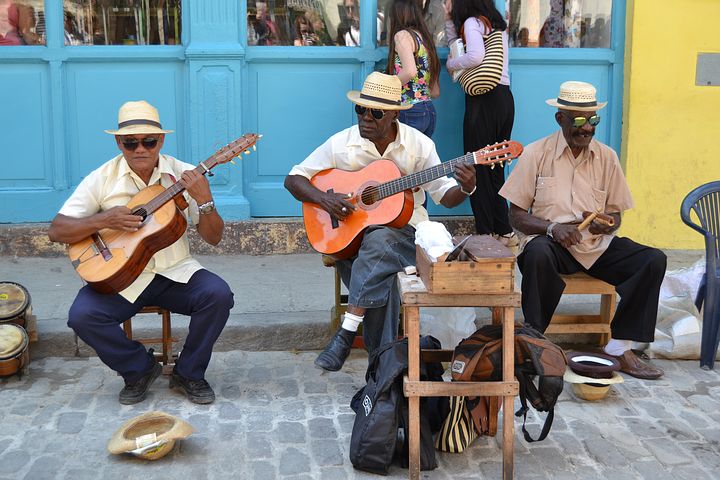
The story is told that Saint Augustine used to get annoyed at his students when, as he pointed toward something that he wished them to consider, they focused their attention on his finger instead. Anyone who is–or ever has been–a teacher will understand Augustine’s frustration. As a philosophy professor, I know that the most crucial, yet most difficult lesson to teach is the lesson of learning to “see beyond seeing,” of discovering what Bertrand Russell called “the strangeness and wonder lying just below the surface even in the commonest things of daily life.” In its most practical applications, this lesson shows us that often what we believe we “know,” what seems most self-evident and obvious, is an opaque barrier that prevents us from being open to the possibility of better knowledge.
I traveled to Cuba last summer for a week-long visit as a member of a 12-person delegation of professionals, nine of them from Rhode Island. There were a number of interrelated goals for our visit, including visiting the Latin American Medical School in Havana (where a number of American students are studying at the invitation of President Fidel Castro, free of charge), learning firsthand about Cuba’s admirable universal health care system, visiting a number of multicultural centers to learn about Cuba’s commitment to education and cultural development, and laying preliminary foundations for educational exchanges between Cuban and Rhode Island institutes of higher education.
The greatest impact of this trip on me, however, was that it shattered everything I “knew” about Cuba. This shattering has made it possible for me to reflect ever since my return on what the undermining of these “truths” might reveal concerning deeper human issues.
I was born in the 1950s, in the middle of the Cold War. One of my earliest memories from the nightly television news was the failed Bay of Pigs invasion; I was 6 years old during the perilous days of the Cuban Missile Crisis. My attitudes concerning Cuba were fashioned during those early years and remained largely the same ever since. I did not claim to know much about Cuba, but there were several things that were clear and beyond question. Cuba is an enemy, aligned with everything our country despises–a likely terrorist state, a repressor of religious and secular freedoms, a violator of human rights, an embarrassing challenge to what is most near and dear to us, a mere 90 miles off our coast.
Not that I, as an educated, independent thinking adult would ever have consciously allowed that I carried these largely unchallenged assumptions around with me; I’m not sure that I knew of my preconceptions until I visited Cuba. I never even thought about Cuba except when some event deemed newsworthy, such as the Elian Gonzalez case, brought the island to my attention. When, before the delegation’s trip to Cuba, I was asked what my expectations of the visit were, I continually said that I had no expectations–I was going with an open mind, the classic case of the tabula rasa, the “blank slate” that John Locke claimed all human beings are born with. Little did I know just how much would have to be erased from my slate before I could truly see.
I, for instance, thought that I “knew” there was very little, if any, religious freedom in Cuba. After all, Cuba is a Communist country whose official stance on religion, in the style of the former Soviet Union, is atheism, right? Imagine our surprise when we discovered that religious faith is not only alive in Cuba, it is flourishing.
On a bright and sunny Father’s Day morning, our delegation’s first full day in Cuba, we attended services at the Ebenezer Baptist Church in Marianao, one of the many economically impoverished neighborhoods in Havana. In a hot and stuffy auditorium packed with persons of all ages and colors, we observed the most active and vibrant church service that I, a lifelong churchgoer, have experienced in years. The worship was filled with contemporary liturgical dance, congregational singing and participation, and testimonials (including a touching tribute to fathers from a young girl around 12 years of age, read in Spanish and English, that brought tears to the eyes of many of the fathers present). After this, the pastor and one of his guest ministers from Colombia delivered brief talks about the need for men to overcome “machismo” and open their minds and hearts to the voices of women.
Uncovering false “truths”
Two days later, more “truths” about Cuba were proven false when our delegation had the opportunity to return to Ebenezer Baptist and its accompanying Martin Luther King, Jr. Center in order to meet with  Rev. Raul Suarez, the pastor of the church. When the Cuban Revolution succeeded in 1959, 90% of the pastors in Cuba fled for other countries, believing that religion and belief in God would no longer be tolerated. Rev. Suarez and a few others stayed, however, He explained, in his own words, “If Communism is the big bad wolf, we need to protect our sheep.” By staying, he realized immediately that the lives of the people in Cuba were being improved by the Castro government’s commitment to 100% literacy, to universal health care and education, to true socialist principles, and to equal access to and excellence in sports and the arts.
Rev. Suarez described for us how the Cuban Revolution caused him to rethink his faith and evolve from a conventional Southern Baptist minister to a proponent of “liberation theology,” from advocacy of spiritual wealth in the next world to a vision of radical social change in this world, and from silence to active leadership in the struggles against racism, poverty, and other societal ills. He described that he had been taught what Christians supposedly could not have (they could not smoke, dance, drink, etc.), but “no one taught us that poverty is a sin. That ignorance is a sin. That racism is a sin. That economic inequality is a sin. The Revolution taught us that.”
His church, once a largely white church in a predominantly black neighborhood, is now a powerful instrument for social change and improvement, dedicated to the betterment of human lives as they are lived in this world as well as to the tending of spiritual needs.
Church and State dialogue
So how do things stand between church and state in Cuba? Very differently than U.S. citizens are led to believe. Over the past 20 years, there has been a continuing dialogue between Cuban ministers of all faiths and the Cuban government. At the first of these meetings, the ministers told Fidel Castro that the official position of atheism was hurting the Cuban people and that Christianity is a religion meant to help the people, not to be enclosed within church walls. Castro said to the ministers: “You work in your churches and help them to understand us better, and I’ll work with my people and help them to understand you better. And my work will be more difficult than yours.”
Incrementally, things changed so that by 1991, atheism was eliminated as a requirement for membership in the Communist party, all reference to Marxism/Leninism as the official philosophy of the Cuban government was eliminated from the constitution, Christians were allowed access to all professions, were granted full access to all means of communication to spread the good news of the Gospel, and were allowed to establish new congregations across the country. The congregations of all denominations in Cuba are continuing to grow rapidly to this day.
This is but one example of how the truth about Cuba turned out to be quite different than what I believed it to be. I could have written a similar article about the political process in Cuba, human rights violations in Cuba compared to such violations in this country, or how our “free” press in the United States regularly distorts the truth about what is occurring in Cuba.
As a philosopher, I find an important lesson beneath these different factual issues. As human beings, our frequent natural tendency is to assume that we know the truth about a given thing, then to selectively interpret the “facts” to fit our preconceived piece of knowledge. Whether in religion, politics, social structures, interpersonal relationships, or simply regular day-to-day existence, this is a tendency that must be actively and consciously resisted.
The truth, for human beings at least, does not come in bumper sticker-sized, “sound bite” form. To believe that it does leads to rigidity, absoluteness, and blindness to the evolving nature of our interaction with what is true. As Dietrich Bonhoeffer, the 20th-century German Protestant theologian murdered by the Nazis in the final days of World War II, wrote, “The responsible man has no principle at his disposal which possesses absolute validity and which ha has to put into effect fanatically, overcoming all the resistance which is offered to it.”
In a world of ideology presented as self-evident certainty, the following warning from Albert Camus is worth taking seriously: “On the whole, men are more good than bad; that, however, isn’t the real point. But they are more or less ignorant, and it is this that we call vice or virtue; the most incorrigible vice being that of an ignorance that fancies it knows everything . . .”
Previous Post
February 24, 2020
A Lenten Reflection: The Difference Between Solitude and Being Alone
Next Post

February 29, 2020 Jesus I Know . . . But Who are You?
Browse Our Archives
Select a Category abortion Advent AI Angels Artificial intelligence atheism attention baptism Baptists beauty belief Benedictines Bible bicycling Big Bird books Bovina Camaldoli hermitage Canada Catholicism cats certainty change Christianity Christmas Collegeville Covid-19 creativity Development of Western Civilization dogs doubt Easter Enneagram Epiphany Episcopal ethics Eucharist evil extroverts Facebook faith family fear flowers forgiveness freedom friends God goodness grace happiness heaven hell history Holy Spirit Holy Week hope human nature humility humor idolatry incarnation introverts irreverence Islam Jeanne Jesus Joe Biden joy Judaism justice Kamala Harris knowledge Lent listen literature liturgy love Marsue Memorial Day miracles movies music mystery mythology NPR Old Testament optimism paradox peace Penguins philosophy piano podcast politics power prayer Protestantism Providence College Religion Rhode Island sabbatical sacrament science seeing silence Simone Weil Socrates soul sports St. John's College stories suffering tattoo teaching technology television theology thinking time tolerance transcendence travel trees trust truth Uncategorized Vermont wisdom wonder writing
Select a Month May 2026 April 2026 March 2026 February 2026 January 2026 December 2025 November 2025 October 2025 September 2025 August 2025 July 2025 June 2025 May 2025 April 2025 March 2025 February 2025 January 2025 December 2024 November 2024 October 2024 September 2024 August 2024 July 2024 June 2024 May 2024 April 2024 March 2024 February 2024 January 2024 December 2023 November 2023 October 2023 September 2023 August 2023 July 2023 June 2023 May 2023 April 2023 March 2023 February 2023 January 2023 December 2022 November 2022 October 2022 September 2022 August 2022 July 2022 June 2022 May 2022 April 2022 March 2022 February 2022 January 2022 December 2021 November 2021 October 2021 September 2021 August 2021 July 2021 June 2021 May 2021 April 2021 March 2021 February 2021 January 2021 December 2020 November 2020 October 2020 September 2020 August 2020 July 2020 June 2020 May 2020 April 2020 March 2020 February 2020 January 2020 December 2019 November 2019 October 2019 September 2019 August 2019 July 2019 June 2019 May 2019 April 2019 March 2019 February 2019 January 2019 December 2018 November 2018 October 2018 September 2018 August 2018 July 2018 June 2018 May 2018 April 2018 March 2018 February 2018 January 2018 December 2017 November 2017 October 2017 September 2017 August 2017 July 2017 June 2017 May 2017 April 2017 March 2017 February 2017 January 2017 December 2016 November 2016 October 2016 September 2016 August 2016 July 2016 June 2016 May 2016 April 2016 March 2016 February 2016 January 2016 December 2015 November 2015 October 2015 September 2015 August 2015 July 2015 June 2015 May 2015 April 2015 March 2015 February 2015 January 2015 December 2014 November 2014 October 2014 September 2014 August 2014 July 2014 June 2014 May 2014 April 2014 March 2014 February 2014 January 2014 December 2013 November 2013 October 2013 September 2013 August 2013 July 2013 June 2013 May 2013 April 2013 March 2013 February 2013 January 2013 December 2012 November 2012 October 2012 September 2012
Follow Us!
TAKE THE
Religious Wisdom Quiz
According to 1 John, what three things testify on earth?
Select your answer to see how you score.
The Spirit, the water, and the blood Prayer, fasting, and almsgiving Faith, hope, and love The Father, the Son, and the Holy Spirit
Books by This Author Books by Vance G. Morgan
Related posts from Freelance Christianity

The Lonely Pawn: On Faith, Doubt, and Meaning


AI and Love: When a Chatbot Becomes a...

TRENDING AT PATHEOS Progressive Christian

What Being a Modern-Day Apostle Means to Me
In my last column, I discussed the ins and outs of modern-day...

Did Ancient China Once Worship the God of...
Across human history, a common thread weaves through the origins of the...

Love Your Neighbor – Including Earth-Kin: Lev. 19,...
God’s command to love your neighbor means acting in an ethical and...

Lead a Church Study of “Jesus and Lao...
Guest writer Jack Thomas (The Irreverent Reverend) reflects on leading his church...

Pastoral Wisdom for Responding to Sermon Pushback
Getting sermon pushback on your social justice sermon? Learn practical, Proverbs-based strategies...

Principles for Understanding the Apostolic Ministry Today
Whenever people discover that my formal ministry title is "apostle," as in...
view all Progressive Christian blogs
Ad-Free & Subscriber Log-In Subscription Support
- About Us
- 2026 Calendar
- Videos
- Podcasts
- Library of World Religions
- Faith In Media Tracker
- Advertise With Us
- Write for Us
- Privacy Policy
- Terms of Service
- Do Not Sell My Data
- Contact Us
- Radiant Digital
- Manage Newsletter Subscriptions
- Unsubscribe From Notifications
- Sitemap
Copyright 2008-2026, Patheos. All rights reserved.
Subscription Support Ad-Free & Subscriber Log-In
Follow Patheos