
BuddhistCatholicContemplativeEvangelicalGeneral ChristianHinduJewishLatter-day SaintMuslimNew VisionsProgressive Christian
Beliefs
- Buddhist
- Catholic
- Contemplative
- Evangelical
- General Christian
- Hindu
- Jewish
- Latter-day Saint
- More Voices
- Muslim
- New Visions
- Pagan
- Progressive Christian
Topics
- Religion News
- Food and Religion
- Sports and Religion
- Religious Art
- Religious Music and Entertainment
- Religious Events
- History and Religion
- Style and Religion
- Politics and Religion
- Women in Religion
- Recreation Outdoors and Religion
- Business Finance and Religion
- Careers Workplace and Religion
- Education and Religion
- Family Parenting and Religion
- Health Fitness and Religion
- Home and Religion
- Relationships and Religion
- Technology and Religion
- Travel and Religion
Columnists
- Buddhist Columnists
- Business Finance and Religion Columnists
- Careers Workplace and Religion Columnists
- Catholic Columnists
- Contemplative Columnists
- Education and Religion Columnists
- Evangelists Columnists
- Family Parenting and Religion Columnists
- General Christian Columnists
- Health Fitness and Religion Columnists
- Hindu Columnists
- History and Religion Columnists
- Home and Religion Columnists
- Jewish Columnists
- More Voices Columnists
- Latter Day Columnists
- Muslim Columnists
- New Visions Columnists
- Nonreligious Columnists
- Pagan Columnists
- Politics and Religion Columnists
- Progressive Columnists
- Recreation Outdoors and Religion Columnists
- Relationships and Religion Columnists
- Religion News Columnists
- Religious Art Columnists
- Religious Events Columnists
- Religious Music and Entertainment Columnists
- Sports and Religion Columnists
- Style and Religion Columnists
- Technology and Religion Columnists
- Travel and Religion Columnists
- Women in Religion Columnists
Resource Library
- 2026 Calendar
- Library of World Religions
- The 100 Most Holy Places on Earth
- Patheos Answers
- Podcasts
- Videos
- Faith Leaders Database
- Anglican Episcopalian
- Bahai
- Baptist
- Buddhism
- Christianity
- Confucianism
- Eastern Orthodoxy
- Hinduism
- Holiness and Pentecostal
- ISKCON
- Islam
- Judaism
- Lutheran
- Methodist
- The Church of Jesus Christ of Latter-day Saints
- New Age
- Paganism
- Presbytarian and Reformed
- Protestantism
- Religion Behind the Scenes
- Roman Catholic
- Scientology
- Shia Islam
- Sikhism
- Sufism
- Sunni Islam
- Taoism
- Zen
- See all religions
Research Tools
 Ad-Free & Subscriber Log-In Subscription Support
Ad-Free & Subscriber Log-In Subscription Support
Follow Patheos 

- Trending:
- Forgiveness
- |
- Marriage
- |
- Consciousness
- |
- Death Penalty
- |
- Election
- |
- Halloween

- Home
- Progressive Christian
- What Freedom Amounts To
What Freedom Amounts To
Last updated on: May 16, 2023 at 6:00 am by Vance Morgan
What Freedom Amounts To 2023-05-15T19:02:56-04:00 Vance Morgan
Patheos Explore the world's faith through different perspectives on religion and spirituality! Patheos has the views of the prevalent religions and spiritualities of the world.
Each of us can point to a time (or several times) in our past when we made a decision that, in retrospect, significantly shaped our lives going forward. Such decisions for me include getting married at one month past twenty, choosing to leave law school for a masters program in philosophy, and deciding to commit for life in my early thirties to a person whom I had known for six weeks. I could have chosen differently in each of these cases, and my life would be much different now than it is. But could I really have chosen otherwise? The answer of many “experts” from psychology, science, philosophy, and more is “no.”
I wrote about how the “experts” have gradually but inexorably come to this conclusion a week ago, describing how evidence from Darwin to neuroscience supports the conclusion that everything about me, including all of my choices, is fully determined by both biological and environmental causes beyond my control.
Undoubtedly, the experts admit, I will continue to believe that some of my choices are free in the sense that I could have chosen otherwise, but that belief is based on an illusion.  My choices may feel free, but they really aren’t. If true, the news that free will—the foundation of what most of us believe concerning morality, reward, punishment, praise, blame, and responsibility—is an illusion cannot be taken lightly. But, I would argue, I neither as a philosopher nor a human being believe that the “experts” are right about this.
Free will is only an illusion if one accepts the starting assumptions that energize the argument against human beings having real free will, assumptions that include the belief that everything that exists is made of physical matter, that physical matter is governed by inexorable physical laws, and that we generally know what those laws are. These assumptions are so entrenched among the “experts” that challenging them is as uphill a battle as trying to argue that the earth is flat. But I’ll give it a shot.
I often tell my students that each person, among her or his beliefs, has a small handful of what Aristotle called “first principles.” Aristotle knew as much about cause and effect as anyone;ō indeed, he arguably invented our familiar system of logic that is built on the belief that we live in a world governed by cause and effect relationships. These relationships shape how our beliefs hang together as well. Consider the following conversation:
Me: I believe A is true.
You: Why?
Me: Because A depends on B, and I believe B is true.
You: Why?
Me: Because B depends on C, and I believe C is true.
You: Why?
There’s a pattern here. We all seek to support our beliefs by referring to connected and deeper beliefs on which they depend. There’s also a problem here, though. The chain of cause and effect has to end somewhere if we are to avoid the dreaded “infinite regress.” So eventually we get this:
Me: I believe that X is true because X depends on Z, and I believe Z is true.
You: Why? (you’re getting really annoying, by the way)
Me: Because I do.
In Aristotle’s terminology, I have just identified “Z” as one of my first principles. In order to avoid an infinite regress, eventually we arrive at a belief for which we seek no further justification than simply that we believe it. Such first principles vary from person to person–some common ones include “Human life is intrinsically valuable,” “Human beings are fundamentally equal,” and “Do unto others as you would have them do unto you,” and “The Red Sox are better than the Yankees.” For many, including myself, “Human beings have the capacity to choose freely, choices that are not entirely determined by matters outside their control” is another first principle which, if true, stands in direct opposition to what the “experts” claim the truth to be. And like it or not, no one wants to hear that a first principle is an illusion.
When I choose freely, I deliberate between available options, weigh the evidence supporting and against each, and choose the option that best satisfies my operational criteria. I cause the choice, in other words, influenced but not determined by any number of factors. This simple idea—that a human being can choose without the choice being fully determined—violates assumptions so prevalent among the “experts” that it is tantamount to heresy. 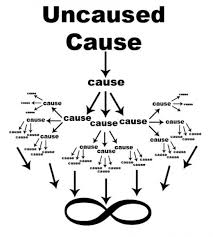
And to be sure, this simple idea is indeed a radical one, for it claims that the freely choosing human being is an exception to the inexorable laws of matter, capable of starting her or his own chain of causation that would not have happened without the choice starting the chain. There are few beings in the annals of philosophy with this power. Aristotle called his creating force—what we might call “God”—the “unmoved mover” or “the first cause uncaused,” the place where the chain of causation begins (or ends if one is going backwards).
In short, human beings act “in loco parentis,” with the causal power of the divine itself, when we make free choices. If one wants to go religious, it is this very creative power of free choice that the sacred texts are referring to when they claim that human beings are “created in the image of God.”
The position that truly free choices step meaningfully outside the laws of nature has been called “metaphysically peculiar” by some philosophers, “bullshit” by others. Free will deniers assume that any human capacity that purportedly steps outside the laws of physical matter must be an illusion, since we all know that everything is made of matter and that matter is governed by deterministic laws. To which I respond, as I often do, in the words of Shakespeare’s Hamlet: There are more things in heaven and earth . . . than are dreamt of in your philosophy.
Presuming that everything in heaven and earth can be reduced to the confines of our current understanding of reality is hubris of breathtaking proportions. When a fundamental and definitive human ability is defined out of existence because of narrow assumptions, I choose to question the assumptions rather than the reality of the fundamental human ability. When answers to a question do not square with our strongest intuitions and beliefs about ourselves, change the question.
None of the above is very philosophical of me, at least not in the contemporary sense. I freely (!) admit that human free choice might be an illusion, but I see no reason to believe so based on an argument with questionable assumptions. I choose rather to embrace the mystery and miracle of being human and believe, until better contrary evidence is provided, in keeping with the intuitions of billions of human beings that at least some human choices make a difference—such a great difference that they make the world a different place than it would have otherwise been. 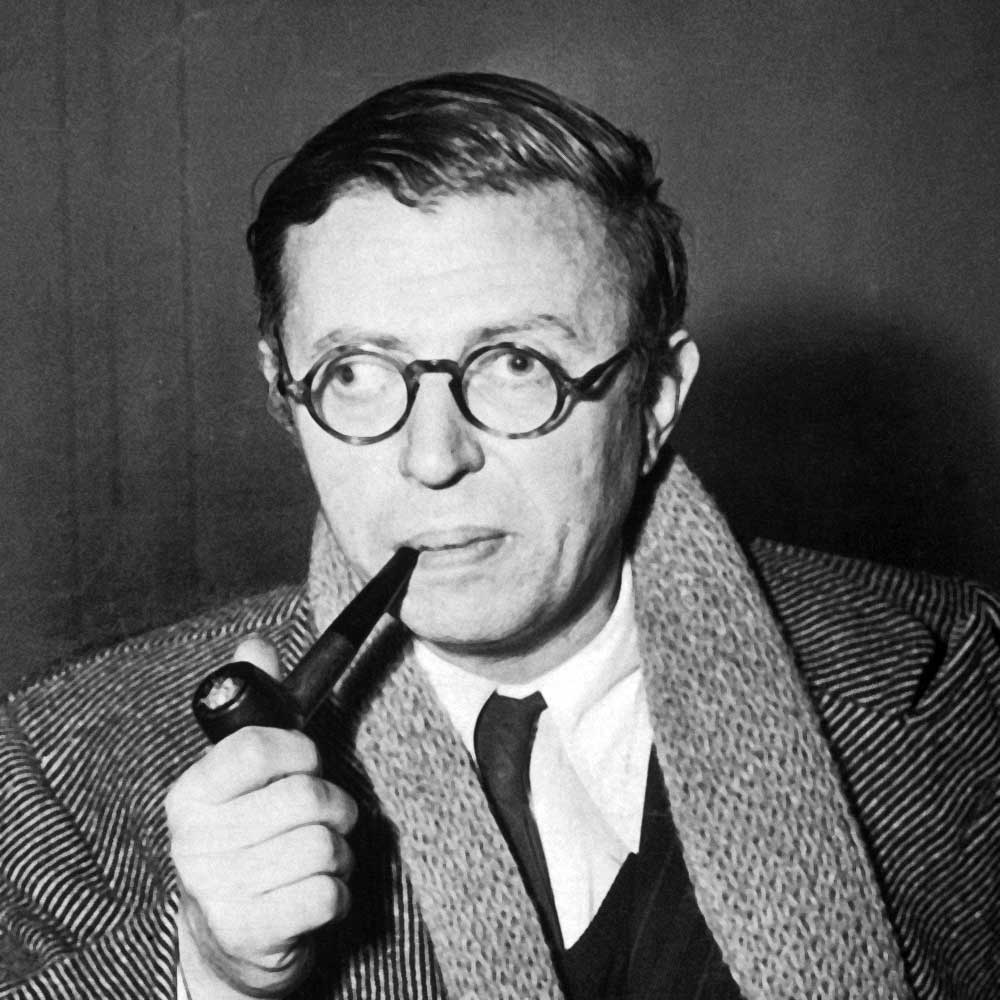
Human beings are not just vehicles of that change—their choices cause that change. Maybe we just don’t know enough about reality to rule out abilities that don’t square with our current understanding of things. Maybe human beings are truly the crowning glory of creation, endowed with a spark of the divine that reveals itself in our most basic capacities. Maybe all of the above. Take your pick. As Jean-Paul Sartre used to say, “You are free, therefore choose.”

Next Post
May 18, 2023 It's Hard to Talk About God
Recent Comments
"Mary did have a choice. And she was able to make it before the Holy ..."
"i cannot read beyond your recommendations for the books since i like to have a ..."
"AI will never be able to utter with honesty, feeling, or humility, the greeting: "Namaste".It ..."
"They do. I'm sure you could find discussions of the same topic from any of ..."
Browse Our Archives
Select a Category abortion Advent AI Angels Artificial intelligence atheism attention baptism Baptists beauty belief Benedictines Bible bicycling Big Bird books Bovina Camaldoli hermitage Canada Catholicism cats certainty change Christianity Christmas Collegeville Covid-19 creativity Development of Western Civilization dogs doubt Easter Enneagram Epiphany Episcopal ethics Eucharist evil extroverts Facebook faith family fear flowers forgiveness freedom friends God goodness grace happiness heaven hell history Holy Spirit Holy Week hope human nature humility humor idolatry incarnation introverts irreverence Islam Jeanne Jesus Joe Biden joy Judaism justice Kamala Harris knowledge Lent listen literature liturgy love Marsue Memorial Day miracles movies music mystery mythology NPR Old Testament optimism paradox peace Penguins philosophy piano podcast politics power prayer Protestantism Providence College Religion Rhode Island sabbatical sacrament science seeing silence Simone Weil Socrates soul sports St. John's College stories suffering tattoo teaching technology television theology thinking time tolerance transcendence travel trees trust truth Uncategorized Vermont wisdom wonder writing
Select a Month May 2026 April 2026 March 2026 February 2026 January 2026 December 2025 November 2025 October 2025 September 2025 August 2025 July 2025 June 2025 May 2025 April 2025 March 2025 February 2025 January 2025 December 2024 November 2024 October 2024 September 2024 August 2024 July 2024 June 2024 May 2024 April 2024 March 2024 February 2024 January 2024 December 2023 November 2023 October 2023 September 2023 August 2023 July 2023 June 2023 May 2023 April 2023 March 2023 February 2023 January 2023 December 2022 November 2022 October 2022 September 2022 August 2022 July 2022 June 2022 May 2022 April 2022 March 2022 February 2022 January 2022 December 2021 November 2021 October 2021 September 2021 August 2021 July 2021 June 2021 May 2021 April 2021 March 2021 February 2021 January 2021 December 2020 November 2020 October 2020 September 2020 August 2020 July 2020 June 2020 May 2020 April 2020 March 2020 February 2020 January 2020 December 2019 November 2019 October 2019 September 2019 August 2019 July 2019 June 2019 May 2019 April 2019 March 2019 February 2019 January 2019 December 2018 November 2018 October 2018 September 2018 August 2018 July 2018 June 2018 May 2018 April 2018 March 2018 February 2018 January 2018 December 2017 November 2017 October 2017 September 2017 August 2017 July 2017 June 2017 May 2017 April 2017 March 2017 February 2017 January 2017 December 2016 November 2016 October 2016 September 2016 August 2016 July 2016 June 2016 May 2016 April 2016 March 2016 February 2016 January 2016 December 2015 November 2015 October 2015 September 2015 August 2015 July 2015 June 2015 May 2015 April 2015 March 2015 February 2015 January 2015 December 2014 November 2014 October 2014 September 2014 August 2014 July 2014 June 2014 May 2014 April 2014 March 2014 February 2014 January 2014 December 2013 November 2013 October 2013 September 2013 August 2013 July 2013 June 2013 May 2013 April 2013 March 2013 February 2013 January 2013 December 2012 November 2012 October 2012 September 2012
Follow Us!
TAKE THE
Religious Wisdom Quiz
They will beat their swords into plowshares and their spears into what farming tool?
Select your answer to see how you score.
Pruning hooks Scythes Sickles Hoes
Books by This Author Books by Vance G. Morgan
Related posts from Freelance Christianity

The Lonely Pawn: On Faith, Doubt, and Meaning


AI and Love: When a Chatbot Becomes a...

TRENDING AT PATHEOS Progressive Christian

What Being a Modern-Day Apostle Means to Me
In my last column, I discussed the ins and outs of modern-day...

Did Ancient China Once Worship the God of...
Across human history, a common thread weaves through the origins of the...

Love Your Neighbor – Including Earth-Kin: Lev. 19,...
God’s command to love your neighbor means acting in an ethical and...

Lead a Church Study of “Jesus and Lao...
Guest writer Jack Thomas (The Irreverent Reverend) reflects on leading his church...

Pastoral Wisdom for Responding to Sermon Pushback
Getting sermon pushback on your social justice sermon? Learn practical, Proverbs-based strategies...

Principles for Understanding the Apostolic Ministry Today
Whenever people discover that my formal ministry title is "apostle," as in...
view all Progressive Christian blogs
What Are Your Thoughts?leave a comment
Ad-Free & Subscriber Log-In Subscription Support
- About Us
- 2026 Calendar
- Videos
- Podcasts
- Library of World Religions
- Faith In Media Tracker
- Advertise With Us
- Write for Us
- Privacy Policy
- Terms of Service
- Do Not Sell My Data
- Contact Us
- Radiant Digital
- Manage Newsletter Subscriptions
- Unsubscribe From Notifications
- Sitemap
Copyright 2008-2026, Patheos. All rights reserved.
Subscription Support Ad-Free & Subscriber Log-In
Follow Patheos