
BuddhistCatholicContemplativeEvangelicalGeneral ChristianHinduJewishLatter-day SaintMuslimNew VisionsProgressive Christian
Beliefs
- Buddhist
- Catholic
- Contemplative
- Evangelical
- General Christian
- Hindu
- Jewish
- Latter-day Saint
- More Voices
- Muslim
- New Visions
- Pagan
- Progressive Christian
Topics
- Religion News
- Food and Religion
- Sports and Religion
- Religious Art
- Religious Music and Entertainment
- Religious Events
- History and Religion
- Style and Religion
- Politics and Religion
- Women in Religion
- Recreation Outdoors and Religion
- Business Finance and Religion
- Careers Workplace and Religion
- Education and Religion
- Family Parenting and Religion
- Health Fitness and Religion
- Home and Religion
- Relationships and Religion
- Technology and Religion
- Travel and Religion
Columnists
- Buddhist Columnists
- Business Finance and Religion Columnists
- Careers Workplace and Religion Columnists
- Catholic Columnists
- Contemplative Columnists
- Education and Religion Columnists
- Evangelists Columnists
- Family Parenting and Religion Columnists
- General Christian Columnists
- Health Fitness and Religion Columnists
- Hindu Columnists
- History and Religion Columnists
- Home and Religion Columnists
- Jewish Columnists
- More Voices Columnists
- Latter Day Columnists
- Muslim Columnists
- New Visions Columnists
- Nonreligious Columnists
- Pagan Columnists
- Politics and Religion Columnists
- Progressive Columnists
- Recreation Outdoors and Religion Columnists
- Relationships and Religion Columnists
- Religion News Columnists
- Religious Art Columnists
- Religious Events Columnists
- Religious Music and Entertainment Columnists
- Sports and Religion Columnists
- Style and Religion Columnists
- Technology and Religion Columnists
- Travel and Religion Columnists
- Women in Religion Columnists
Resource Library
- 2026 Calendar
- Library of World Religions
- The 100 Most Holy Places on Earth
- Patheos Answers
- Podcasts
- Videos
- Faith Leaders Database
- Anglican Episcopalian
- Bahai
- Baptist
- Buddhism
- Christianity
- Confucianism
- Eastern Orthodoxy
- Hinduism
- Holiness and Pentecostal
- ISKCON
- Islam
- Judaism
- Lutheran
- Methodist
- The Church of Jesus Christ of Latter-day Saints
- New Age
- Paganism
- Presbytarian and Reformed
- Protestantism
- Religion Behind the Scenes
- Roman Catholic
- Scientology
- Shia Islam
- Sikhism
- Sufism
- Sunni Islam
- Taoism
- Zen
- See all religions
Research Tools
 Ad-Free & Subscriber Log-In Subscription Support
Ad-Free & Subscriber Log-In Subscription Support
Follow Patheos 

- Trending:
- Forgiveness
- |
- Marriage
- |
- Consciousness
- |
- Death Penalty
- |
- Election
- |
- Halloween

- Home
- Progressive Christian
- What Does Life Expect of Me?
What Does Life Expect of Me?
Last updated on: June 14, 2020 at 8:10 am by Vance Morgan
What Does Life Expect of Me? 2020-06-14T08:10:02-04:00 Vance Morgan
Patheos Explore the world's faith through different perspectives on religion and spirituality! Patheos has the views of the prevalent religions and spiritualities of the world.
Over the years, a typical scenario has unfolded when I meet someone for the first time. “What do you do?” I am asked. “I’m a college professor.” “Oh wow! What do you teach?” “Philosophy.” At that point, one of three things happens:
- “Say something philosophical,” my new acquaintance demands. I generally say something like “When a tree falls in the forest and no one is there, there isn’t any sound (pause), except for the times that there is.” That’s usually an effective conversation stopper.
- “I had a philosophy course once. I hated it.” I confidently reply “that’s because you didn’t have me as a teacher.” I truly believe that I can hook anyone into being interested in philosophy, but it takes time, structure, and almost certainly a setting different than the one in which my new acquaintance and I find ourselves.
- “Cool! I love philosophy! I never took a course, but have studied a lot of philosophy on my own!” Having no idea what might count as “philosophy” for this person, I usually respond by excusing myself in order to get another drink.
Academics run into this sort of thing all the time. In Yes to Life, famed psychoanalyst Viktor Frankl tells the story of a young man who was explaining why he couldn’t attend Frankl’s lecture that evening, a lecture whose announced topic was “the meaning of life.” “Don’t be angry with me; I’ve been invited to my future in-laws tonight,” the young man explained. “I really do have to go, and I can’t stay for your lecture. Please be so kind and tell me quickly, what is the meaning of life?”
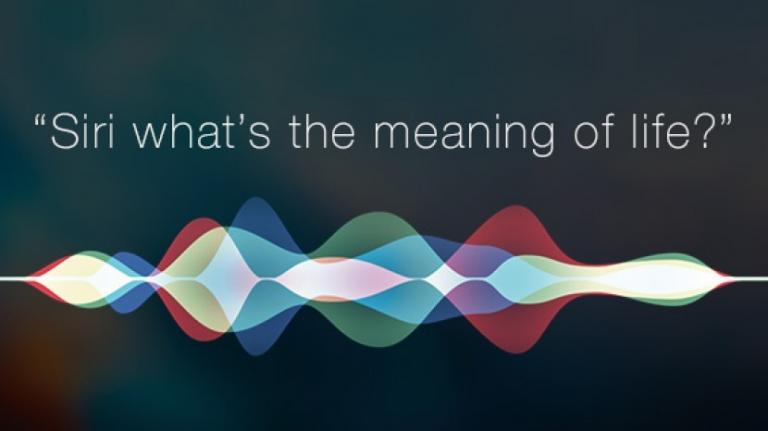
One of the hallmarks of Frankl’s work and insights, developed and honed during years of imprisonment at Buchenwald and Auschwitz during WWII (his pregnant wife and unborn child died in the Holocaust), is that this common question—“What is the meaning of life?”—cannot be answered as stated. Indeed, it is entirely the wrong question to be asking.
Frankl illustrates by comparing the young man’s question to a question that a reporter once asked the world chess champion in an interview: “And now, Master, please tell me which chess move do you think is the best?” Of course, there is no answer to such a question, since the “best move” in chess is always defined by the specifics of the game. As Frankl asks, “Is there a move, a particular move, that could be good, or even the best, beyond a very specific concrete game situation, a specific configuration of the pieces?” The answer, obviously, is “no.”
The question to ask about one’s life is not “what is the meaning of life?” as if this were something that could be looked up, verified, and relied on for the future. Instead, Frankl suggests, the proper question is What does life expect of me? What task in life is waiting for me? Many are fond of saying that life is a “gift,” but Frankl argues that life is a “task.”
Living itself means nothing other than being questioned; our whole act of being is nothing more than responding to—of being responsible toward—life.
When a virus continues to limit our lives and opportunities, when our country is exploding with rage and anger over systemic, long-standing, and unaddressed inequality and racism, Frankl’s perspective, honed in the worst of situations, takes on a pressing relevance. How, in these challenging times, can each of us grapple with what Frankl calls “the great fundamental truth of being human—being human is nothing other than being conscious and being responsible”?
Imagine, Frankl suggests, your “specific life circle,” a circle that is defined by your actual circumstances, not by what you wish or hope for, but by what and whom you uniquely are at this specific moment in time. In response to a question that many of ask—“in the great scheme of things, what can I do? What difference can I make?”—Frankl says that
It is never a question of where someone is in life or which profession he is in. It is only a matter of how he fills his place, his circle. Whether a life is fulfilled doesn’t depend on how great one’s range of action is, but rather only on whether the circle is filled out.
The question is always “What is life requiring of me today, in this unique situation, these specific circumstances?”
It was this perspective and these questions that made it possible for Frankl and other fellow prisoners to live meaningful lives in a Nazi death camp. Their specific life circles were very small, limited in ways unimaginable to those who never experienced such circumstances, but each day Frankl asked what life was asking of him that day, a task that only he could uniquely carry out.
In his specific life circle, every single human being is irreplaceable and inimitable, and that is true for everyone. The tasks that his life imposes are only for him, and only he is required to fulfill them. And a person who has not completely filled his (relatively) larger circle remains more unfulfilled than that of a person whose more closely drawn circle is sufficient.
In both Mark’s and Luke’s gospels, we are told a story that illustrates what Frankl has in mind. Jesus and his disciples are observing various people putting money into the collection box at the temple; “many who were rich put in much.” One can imagine that some of the rich contributors gave their money in such a way as to guarantee that others would be impressed by the amount of the donation. But then a poor widow deposits “two mites” in the box, an amount embarrassingly small compared to what others have contributed. Jesus comments that
This poor widow has put in more than all; for all these out of their abundance have put in offerings for God, but she out of her poverty has put in all the livelihood that she had.
The widow’s life circle is small, but she has filled it out completely by giving all that she had. She has responded fully to life’s question, not by wishing that she had more to give, but rather by giving what she had.
This is why self-knowledge, both of one’s abilities and one’s limitations, is so important—especially during times when the larger world is swirling more and more out of control. Michel de Montaigne lived during such a time, in a world swept up in religious civil wars. He knew that many people felt helpless in the face of a world gone mad; in his essays, he always turns himself and his reader toward the “life circle.”
I have done nothing today,” you say. What, have you not lived? That is not only the fundamental but the most illustrious of your occupations . . . Have you been able to think out and manage your own life? You have done the greatest task of all . . . To compose our character is our duty, not to compose books, and to win, not battles and provinces, but order and tranquility in our conduct. Our great and glorious masterpiece is to live appropriately.
Previous Post
June 12, 2020
God Doesn't Own Us . . . God Loves Us
Next Post
June 16, 2020 Confronting the Sin of Certainty
Browse Our Archives
Select a Category abortion Advent AI Angels Artificial intelligence atheism attention baptism Baptists beauty belief Benedictines Bible bicycling Big Bird books Bovina Camaldoli hermitage Canada Catholicism cats certainty change Christianity Christmas Collegeville Covid-19 creativity Development of Western Civilization dogs doubt Easter Enneagram Epiphany Episcopal ethics Eucharist evil extroverts Facebook faith family fear flowers forgiveness freedom friends God goodness grace happiness heaven hell history Holy Spirit Holy Week hope human nature humility humor idolatry incarnation introverts irreverence Islam Jeanne Jesus Joe Biden joy Judaism justice Kamala Harris knowledge Lent listen literature liturgy love Marsue Memorial Day miracles movies music mystery mythology NPR Old Testament optimism paradox peace Penguins philosophy piano podcast politics power prayer Protestantism Providence College Religion Rhode Island sabbatical sacrament science seeing silence Simone Weil Socrates soul sports St. John's College stories suffering tattoo teaching technology television theology thinking time tolerance transcendence travel trees trust truth Uncategorized Vermont wisdom wonder writing
Select a Month May 2026 April 2026 March 2026 February 2026 January 2026 December 2025 November 2025 October 2025 September 2025 August 2025 July 2025 June 2025 May 2025 April 2025 March 2025 February 2025 January 2025 December 2024 November 2024 October 2024 September 2024 August 2024 July 2024 June 2024 May 2024 April 2024 March 2024 February 2024 January 2024 December 2023 November 2023 October 2023 September 2023 August 2023 July 2023 June 2023 May 2023 April 2023 March 2023 February 2023 January 2023 December 2022 November 2022 October 2022 September 2022 August 2022 July 2022 June 2022 May 2022 April 2022 March 2022 February 2022 January 2022 December 2021 November 2021 October 2021 September 2021 August 2021 July 2021 June 2021 May 2021 April 2021 March 2021 February 2021 January 2021 December 2020 November 2020 October 2020 September 2020 August 2020 July 2020 June 2020 May 2020 April 2020 March 2020 February 2020 January 2020 December 2019 November 2019 October 2019 September 2019 August 2019 July 2019 June 2019 May 2019 April 2019 March 2019 February 2019 January 2019 December 2018 November 2018 October 2018 September 2018 August 2018 July 2018 June 2018 May 2018 April 2018 March 2018 February 2018 January 2018 December 2017 November 2017 October 2017 September 2017 August 2017 July 2017 June 2017 May 2017 April 2017 March 2017 February 2017 January 2017 December 2016 November 2016 October 2016 September 2016 August 2016 July 2016 June 2016 May 2016 April 2016 March 2016 February 2016 January 2016 December 2015 November 2015 October 2015 September 2015 August 2015 July 2015 June 2015 May 2015 April 2015 March 2015 February 2015 January 2015 December 2014 November 2014 October 2014 September 2014 August 2014 July 2014 June 2014 May 2014 April 2014 March 2014 February 2014 January 2014 December 2013 November 2013 October 2013 September 2013 August 2013 July 2013 June 2013 May 2013 April 2013 March 2013 February 2013 January 2013 December 2012 November 2012 October 2012 September 2012
Follow Us!
TAKE THE
Religious Wisdom Quiz
Who was Deborah's military commander?
Select your answer to see how you score.
Barak Gideon Jephthah Samson
Books by This Author Books by Vance G. Morgan
Related posts from Freelance Christianity

The Lonely Pawn: On Faith, Doubt, and Meaning


AI and Love: When a Chatbot Becomes a...

TRENDING AT PATHEOS Progressive Christian

What Being a Modern-Day Apostle Means to Me
In my last column, I discussed the ins and outs of modern-day...

Did Ancient China Once Worship the God of...
Across human history, a common thread weaves through the origins of the...

Love Your Neighbor – Including Earth-Kin: Lev. 19,...
God’s command to love your neighbor means acting in an ethical and...

Lead a Church Study of “Jesus and Lao...
Guest writer Jack Thomas (The Irreverent Reverend) reflects on leading his church...

Pastoral Wisdom for Responding to Sermon Pushback
Getting sermon pushback on your social justice sermon? Learn practical, Proverbs-based strategies...

Principles for Understanding the Apostolic Ministry Today
Whenever people discover that my formal ministry title is "apostle," as in...
view all Progressive Christian blogs
Ad-Free & Subscriber Log-In Subscription Support
- About Us
- 2026 Calendar
- Videos
- Podcasts
- Library of World Religions
- Faith In Media Tracker
- Advertise With Us
- Write for Us
- Privacy Policy
- Terms of Service
- Do Not Sell My Data
- Contact Us
- Radiant Digital
- Manage Newsletter Subscriptions
- Unsubscribe From Notifications
- Sitemap
Copyright 2008-2026, Patheos. All rights reserved.
Subscription Support Ad-Free & Subscriber Log-In
Follow Patheos