
BuddhistCatholicContemplativeEvangelicalGeneral ChristianHinduJewishLatter-day SaintMuslimNew VisionsProgressive Christian
Beliefs
- Buddhist
- Catholic
- Contemplative
- Evangelical
- General Christian
- Hindu
- Jewish
- Latter-day Saint
- More Voices
- Muslim
- New Visions
- Pagan
- Progressive Christian
Topics
- Religion News
- Food and Religion
- Sports and Religion
- Religious Art
- Religious Music and Entertainment
- Religious Events
- History and Religion
- Style and Religion
- Politics and Religion
- Women in Religion
- Recreation Outdoors and Religion
- Business Finance and Religion
- Careers Workplace and Religion
- Education and Religion
- Family Parenting and Religion
- Health Fitness and Religion
- Home and Religion
- Relationships and Religion
- Technology and Religion
- Travel and Religion
Columnists
- Buddhist Columnists
- Business Finance and Religion Columnists
- Careers Workplace and Religion Columnists
- Catholic Columnists
- Contemplative Columnists
- Education and Religion Columnists
- Evangelists Columnists
- Family Parenting and Religion Columnists
- General Christian Columnists
- Health Fitness and Religion Columnists
- Hindu Columnists
- History and Religion Columnists
- Home and Religion Columnists
- Jewish Columnists
- More Voices Columnists
- Latter Day Columnists
- Muslim Columnists
- New Visions Columnists
- Nonreligious Columnists
- Pagan Columnists
- Politics and Religion Columnists
- Progressive Columnists
- Recreation Outdoors and Religion Columnists
- Relationships and Religion Columnists
- Religion News Columnists
- Religious Art Columnists
- Religious Events Columnists
- Religious Music and Entertainment Columnists
- Sports and Religion Columnists
- Style and Religion Columnists
- Technology and Religion Columnists
- Travel and Religion Columnists
- Women in Religion Columnists
Resource Library
- 2026 Calendar
- Library of World Religions
- The 100 Most Holy Places on Earth
- Patheos Answers
- Podcasts
- Videos
- Faith Leaders Database
- Anglican Episcopalian
- Bahai
- Baptist
- Buddhism
- Christianity
- Confucianism
- Eastern Orthodoxy
- Hinduism
- Holiness and Pentecostal
- ISKCON
- Islam
- Judaism
- Lutheran
- Methodist
- The Church of Jesus Christ of Latter-day Saints
- New Age
- Paganism
- Presbytarian and Reformed
- Protestantism
- Religion Behind the Scenes
- Roman Catholic
- Scientology
- Shia Islam
- Sikhism
- Sufism
- Sunni Islam
- Taoism
- Zen
- See all religions
Research Tools
 Ad-Free & Subscriber Log-In Subscription Support
Ad-Free & Subscriber Log-In Subscription Support
Follow Patheos 

- Trending:
- Forgiveness
- |
- Marriage
- |
- Consciousness
- |
- Death Penalty
- |
- Election
- |
- Halloween

- Home
- Progressive Christian
- What Does a Mature Faith Look Like?
What Does a Mature Faith Look Like?
Last updated on: September 8, 2024 at 6:00 am by Vance Morgan
What Does a Mature Faith Look Like? 2024-09-03T14:22:15-04:00 Vance Morgan
Patheos Explore the world's faith through different perspectives on religion and spirituality! Patheos has the views of the prevalent religions and spiritualities of the world.
I detect that a rebellion against all things “religious” is growing on me. Often it amounts to an instinctive horror. Dietrich Bonhoeffer
Not long ago I had the opportunity to use Leo Tolstoy’s Confessions in class for the first time. There are many passages worthy of discussion in Tolstoy’s spiritual memoir, none more important than when, toward the end of his story, he describes his frustration when he discovers that members and clergy of the Orthodox Church that he has recently embraced are far more certain and judgmental concerning their beliefs and doctrines than he believes is warranted.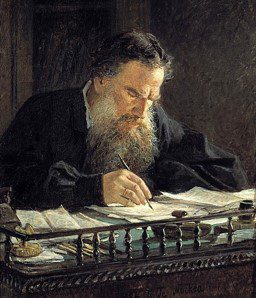
Tolstoy describes that during his journey toward faith, he met many believers of different faith commitments, people “of the highest moral character” to whom he wanted to “be a brother” even though some of their doctrinal positions were different that those of the Orthodox Church. To his great disappointment,
The doctrine that had promised me a union with all through love and a single faith was the very doctrine that, in the mouths of its finest adherents, told me that all these people were living in a lie . . . and that we alone are in possession of the only truth possible.
Reflecting on the often judgmental nature of persons of faith toward all those who believe differently even in the slightest way, Tolstoy observes that the assertion that you live in a lie while I live in the truth is the most cruel thing one person can say to another. I’m going to use that one the next time someone accuses me of being a heretic who is headed to hell for referring to the Holy Spirit as “She” (or some equally egregious perceived doctrinal misstep).
My students and I frequently discuss the dangers of moral certainty in any number of my classes. For many of them, this begins as a counter-intuitive conversation, given that moral principles are commonly thought to be only as good as they can be proved to be universally applicable and unassailable. Why wouldn’t we want certainty in our moral beliefs? one might ask.
At the same time, my students know that many of the worst atrocities in human history have been done in the name of various claims to certainty. The Holocaust. The Crusades. Terrorism of all sorts. Simon Critchley writes that “Human knowledge is personal and responsible, an unending adventure at the edge of uncertainty. Insisting on certainty leads ineluctably to arrogance and dogma based on ignorance.”
Nowhere is certainty more problematic than in the life of faith. Poet Christian Wiman once said in an interview that
Doubt is so woven in with what I think of as faith that it can’t be separated. I am convinced that the same God that might call me to sing of God at one time might call me at another to sing of godlessness. Sometimes when I think of all of this energy that’s going on, all of these different people trying to find some way of naming and sharing their belief, I think it may be the case that God calls some people to unbelief in order that faith can take new forms.
If my own experiences and struggles with faith are at all typical, Wiman is on to something. There are times when I find it very difficult to tell the difference between faith in God and faith in a figment of my imagination. Those are the times when, as Simone Weil provocatively wrote, atheism can serve as a purification.
This is not an unusual idea. For centuries, voices from within the camp of Christianity have called for something sounding very close to atheism. Meister Eckhart wrote that “We pray to God in order to be free of God,” from his prison cell Dietrich Bonhoeffer predicted that the future of faith would be found in what others described as a “religionless Christianity,” and Simone Weil wrote that “the absence of God is the most marvelous testimony of perfect love.”
In each of these instances, the person of faith is asked to move beyond the traditional notion of God as something outside ourselves, a picture of the divine that for many has lost its meaning. I often find myself thinking, as I listen to various descriptions of God being thrown around in different venues, that “if that was what God amounted to, I would be an atheist.” This is where the passage from Christian Wiman quoted earlier comes in. The only way for faith to evolve and take new forms is for old models and paradigms to change. As Wiman writes in My Bright Abyss, “This is why every sirgle expression of faith is provisional—because life carries us always forward to a place where the faith we’d fought so hard to articulate to ourselves must now be reformulated, and because faith in God is, finally, faith in change.”
This can be very disconcerting, because old paradigms change only with great difficulty. When life gets even more challenging than usual, the person of faith is often tempted to fall back on “tried and true” methods of getting the divine’s attention. More prayer, more church attendance—but there comes a time when such methods are regularly met with deafening silence. This silence can lead either to a deepening crisis of faith or an entirely new faith altogether, a new faith that is infused with healthy doubt, and an openness to possibilities from sources that one never even considered as places where truth might reside. Wiman again:
To say that one must live in uncertainty doesn’t begin to get at the tenuous, precarious nature of faith. The minute you begin to speak with certitude about God, he is gone. We praise people for having strong faith, but strength is only one part of that physical metaphor: one also needs flexibility.
A mature faith is one that is both strong enough to look for God in places that have traditionally been off-limits and honest enough to realize that certainty is the greatest threat to faith of all.
One of the traditionally strongest arguments from atheists against belief in God is particularly effective against a supposed God who lives outside the reach of human investigation, effectively immune from supporting evidence and critical argumentation. When non-theists mock disagreements among religious folks as simply being various competitions about whose imaginary friend is better, it is this sort of God whose existence is being questioned.
An evolving faith, however, tends to move from the “out there” model to the “right here” or “in here” model when looking for the divine. If God’s immanence is at least as important as God’s transcendence, then we should expect to find glimmers and traces of the divine in the most mundane features of reality, although it takes a great deal of patience and imagination to perceive these traces. Persons of all faiths, in moments of doubt and uncertainty, can honestly share their faith experiences without the burden and bondage of doctrine and dogma, since in the trenches of faith, pristinely certain articles of faith tend to be irrelevant and meaningless. And atheists can join in the conversation, because trying to live a life of meaning and purpose without a safety net is a challenge for all of us, regardless of whether God is or is not a piece of the puzzle.
Faith steals upon you like dew: some days you wake and it is there. And like dew, it gets burned off in the rising sun of anxieties, ambitions, distractions. Christian Wiman
Previous Post

September 6, 2024
First Day of Class Dreams and Nightmares
Next Post

September 10, 2024 Remembering Frieda--a dog who was a person
Recent Comments
"Mary did have a choice. And she was able to make it before the Holy ..."
"i cannot read beyond your recommendations for the books since i like to have a ..."
"AI will never be able to utter with honesty, feeling, or humility, the greeting: "Namaste".It ..."
"They do. I'm sure you could find discussions of the same topic from any of ..."
Browse Our Archives
Select a Category abortion Advent AI Angels Artificial intelligence atheism attention baptism Baptists beauty belief Benedictines Bible bicycling Big Bird books Bovina Camaldoli hermitage Canada Catholicism cats certainty change Christianity Christmas Collegeville Covid-19 creativity Development of Western Civilization dogs doubt Easter Enneagram Epiphany Episcopal ethics Eucharist evil extroverts Facebook faith family fear flowers forgiveness freedom friends God goodness grace happiness heaven hell history Holy Spirit Holy Week hope human nature humility humor idolatry incarnation introverts irreverence Islam Jeanne Jesus Joe Biden joy Judaism justice Kamala Harris knowledge Lent listen literature liturgy love Marsue Memorial Day miracles movies music mystery mythology NPR Old Testament optimism paradox peace Penguins philosophy piano podcast politics power prayer Protestantism Providence College Religion Rhode Island sabbatical sacrament science seeing silence Simone Weil Socrates soul sports St. John's College stories suffering tattoo teaching technology television theology thinking time tolerance transcendence travel trees trust truth Uncategorized Vermont wisdom wonder writing
Select a Month May 2026 April 2026 March 2026 February 2026 January 2026 December 2025 November 2025 October 2025 September 2025 August 2025 July 2025 June 2025 May 2025 April 2025 March 2025 February 2025 January 2025 December 2024 November 2024 October 2024 September 2024 August 2024 July 2024 June 2024 May 2024 April 2024 March 2024 February 2024 January 2024 December 2023 November 2023 October 2023 September 2023 August 2023 July 2023 June 2023 May 2023 April 2023 March 2023 February 2023 January 2023 December 2022 November 2022 October 2022 September 2022 August 2022 July 2022 June 2022 May 2022 April 2022 March 2022 February 2022 January 2022 December 2021 November 2021 October 2021 September 2021 August 2021 July 2021 June 2021 May 2021 April 2021 March 2021 February 2021 January 2021 December 2020 November 2020 October 2020 September 2020 August 2020 July 2020 June 2020 May 2020 April 2020 March 2020 February 2020 January 2020 December 2019 November 2019 October 2019 September 2019 August 2019 July 2019 June 2019 May 2019 April 2019 March 2019 February 2019 January 2019 December 2018 November 2018 October 2018 September 2018 August 2018 July 2018 June 2018 May 2018 April 2018 March 2018 February 2018 January 2018 December 2017 November 2017 October 2017 September 2017 August 2017 July 2017 June 2017 May 2017 April 2017 March 2017 February 2017 January 2017 December 2016 November 2016 October 2016 September 2016 August 2016 July 2016 June 2016 May 2016 April 2016 March 2016 February 2016 January 2016 December 2015 November 2015 October 2015 September 2015 August 2015 July 2015 June 2015 May 2015 April 2015 March 2015 February 2015 January 2015 December 2014 November 2014 October 2014 September 2014 August 2014 July 2014 June 2014 May 2014 April 2014 March 2014 February 2014 January 2014 December 2013 November 2013 October 2013 September 2013 August 2013 July 2013 June 2013 May 2013 April 2013 March 2013 February 2013 January 2013 December 2012 November 2012 October 2012 September 2012
Follow Us!
TAKE THE
Religious Wisdom Quiz
Which book follows Psalms in the Bible?
Select your answer to see how you score.
Proverbs Song of Solomon Ecclesiastes Job
Books by This Author Books by Vance G. Morgan
Related posts from Freelance Christianity

The Lonely Pawn: On Faith, Doubt, and Meaning


AI and Love: When a Chatbot Becomes a...

TRENDING AT PATHEOS Progressive Christian

What Being a Modern-Day Apostle Means to Me
In my last column, I discussed the ins and outs of modern-day...

Did Ancient China Once Worship the God of...
Across human history, a common thread weaves through the origins of the...

Love Your Neighbor – Including Earth-Kin: Lev. 19,...
God’s command to love your neighbor means acting in an ethical and...

Lead a Church Study of “Jesus and Lao...
Guest writer Jack Thomas (The Irreverent Reverend) reflects on leading his church...

Pastoral Wisdom for Responding to Sermon Pushback
Getting sermon pushback on your social justice sermon? Learn practical, Proverbs-based strategies...

Principles for Understanding the Apostolic Ministry Today
Whenever people discover that my formal ministry title is "apostle," as in...
view all Progressive Christian blogs
What Are Your Thoughts?leave a comment
Ad-Free & Subscriber Log-In Subscription Support
- About Us
- 2026 Calendar
- Videos
- Podcasts
- Library of World Religions
- Faith In Media Tracker
- Advertise With Us
- Write for Us
- Privacy Policy
- Terms of Service
- Do Not Sell My Data
- Contact Us
- Radiant Digital
- Manage Newsletter Subscriptions
- Unsubscribe From Notifications
- Sitemap
Copyright 2008-2026, Patheos. All rights reserved.
Subscription Support Ad-Free & Subscriber Log-In
Follow Patheos