
BuddhistCatholicContemplativeEvangelicalGeneral ChristianHinduJewishLatter-day SaintMuslimNew VisionsProgressive Christian
Beliefs
- Buddhist
- Catholic
- Contemplative
- Evangelical
- General Christian
- Hindu
- Jewish
- Latter-day Saint
- More Voices
- Muslim
- New Visions
- Pagan
- Progressive Christian
Topics
- Religion News
- Food and Religion
- Sports and Religion
- Religious Art
- Religious Music and Entertainment
- Religious Events
- History and Religion
- Style and Religion
- Politics and Religion
- Women in Religion
- Recreation Outdoors and Religion
- Business Finance and Religion
- Careers Workplace and Religion
- Education and Religion
- Family Parenting and Religion
- Health Fitness and Religion
- Home and Religion
- Relationships and Religion
- Technology and Religion
- Travel and Religion
Columnists
- Buddhist Columnists
- Business Finance and Religion Columnists
- Careers Workplace and Religion Columnists
- Catholic Columnists
- Contemplative Columnists
- Education and Religion Columnists
- Evangelists Columnists
- Family Parenting and Religion Columnists
- General Christian Columnists
- Health Fitness and Religion Columnists
- Hindu Columnists
- History and Religion Columnists
- Home and Religion Columnists
- Jewish Columnists
- More Voices Columnists
- Latter Day Columnists
- Muslim Columnists
- New Visions Columnists
- Nonreligious Columnists
- Pagan Columnists
- Politics and Religion Columnists
- Progressive Columnists
- Recreation Outdoors and Religion Columnists
- Relationships and Religion Columnists
- Religion News Columnists
- Religious Art Columnists
- Religious Events Columnists
- Religious Music and Entertainment Columnists
- Sports and Religion Columnists
- Style and Religion Columnists
- Technology and Religion Columnists
- Travel and Religion Columnists
- Women in Religion Columnists
Resource Library
- 2026 Calendar
- Library of World Religions
- The 100 Most Holy Places on Earth
- Patheos Answers
- Podcasts
- Videos
- Faith Leaders Database
- Anglican Episcopalian
- Bahai
- Baptist
- Buddhism
- Christianity
- Confucianism
- Eastern Orthodoxy
- Hinduism
- Holiness and Pentecostal
- ISKCON
- Islam
- Judaism
- Lutheran
- Methodist
- The Church of Jesus Christ of Latter-day Saints
- New Age
- Paganism
- Presbytarian and Reformed
- Protestantism
- Religion Behind the Scenes
- Roman Catholic
- Scientology
- Shia Islam
- Sikhism
- Sufism
- Sunni Islam
- Taoism
- Zen
- See all religions
Research Tools
 Ad-Free & Subscriber Log-In Subscription Support
Ad-Free & Subscriber Log-In Subscription Support
Follow Patheos 

- Trending:
- Forgiveness
- |
- Marriage
- |
- Consciousness
- |
- Death Penalty
- |
- Election
- |
- Halloween

- Home
- Progressive Christian
- What Do You Do When the Well Runs Dry?
What Do You Do When the Well Runs Dry?
Last updated on: June 10, 2021 at 6:00 am by Vance Morgan
What Do You Do When the Well Runs Dry? 2021-06-03T19:11:10-04:00 Vance Morgan
Patheos Explore the world's faith through different perspectives on religion and spirituality! Patheos has the views of the prevalent religions and spiritualities of the world.
Therefore with joy you will draw water from the wells of salvation. Isaiah 12
In his collection of essays Breakfast at the Victory, James Carse writes about the spiritual lessons he learned when the water at his family’s rural New England cabin started tasting funny one summer. It turned out that the wooden cover over the cabin’s well had collapsed under the weight of a deer or a bear, and was polluting the water that fed the well. Carse’s essay explores, with some side forays into Robert Frost’s poetry, the power of water–a power that, as we all are regularly reminded by the latest hurricane, often cannot be predicted or harnessed. Carse’s essay reminded me of another New England well, this one from my youth.
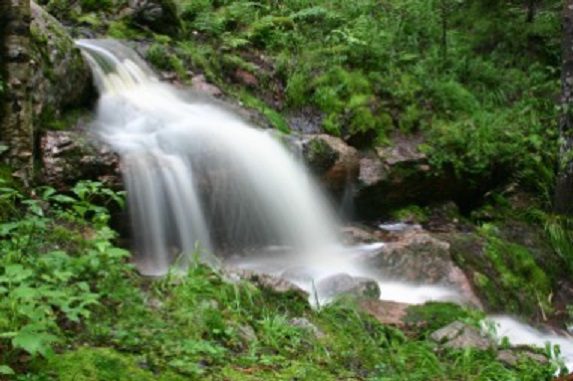
Several years ago, during an infrequent return to rural northern Vermont where I grew up, Jeanne and I took a quick detour from Route 5 South to drive past the old homestead, the house in which I lived until age eleven. It was in poor repair, and seemed far smaller than when I was a kid. Most surprising was that Smith’s pasture, the cow pasture across the road that was the site of many childhood adventures, was gone. A tangle of trees and underbrush grew where the gate to the pasture had been. I’m hoping that if I had pushed through the brush I would have found Smith’s pasture on the other side, sort of like finding Narnia on the other side of the wardrobe. Because the pasture was magic.
Growing up in the sticks has some definite plusses—how many city kids have a cow pasture at their disposal? Smith’s pasture was one of several unofficial playgrounds for my brother and me. Many were the summer mornings when my mother would pack us a lunch and we would climb over the gate into the pasture, limited only by the general directive to be back before dark. The generous Mr. Smith, whom I never met, gave my family free access to his pasture, while the evil Mr. Cole, who owned the adjacent pasture just down the road (and whom I also never met), refused such free access. Hiking, war games, superhero exploits–Smith’s pasture was the natural stage for just about anything two kids reaching double digits in age could come up with.
It was only many years later that I put two and two together and figured out why Mr. Smith was so generous with access to his pasture. He may or may not have had a soft spot in his heart for children needing a place to explore; the real reason we had access to his pasture was the artesian well, located several hundred yards past the fence, which provided water for our house.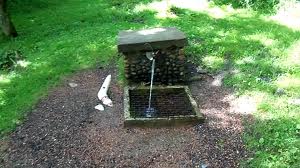
A well-understood task accompanied our frequent treks into Smith’s pasture—don’t forget to check the well. It was my brother’s job to lift the hinged lid as high as he could—I was too small to do it—while I peered into the dim recesses below. “It looks fine!” “It’s a bit low!” or, one fateful afternoon—“It’s empty!!” This was distressing news, producing visions of no baths, no clothes or dish washing, and general aridness. The spring had widened a minor crack in the well wall into an exit route—it was many dollars and dry days later before the water was coaxed back into its proper location. When wells misbehave, life changes significantly.
One does not get very far reading in the Bible without encountering a well. In a largely desert landscape, of course, wells were both the source of life and the center of community activity. Isaac and Rebekah met at a well, as did Jacob and Rachel as well as Moses and Zipporah. Joseph’s older brothers threw him into a dried up well after he offended them one too many times. Jesus’ conversation with the Samaritan woman at the well in John 4 is one of the most fascinating texts in the New Testament. Battles were fought over wells. They are so prevalent and necessary in stories from a nomadic, arid land that it’s easy to imagine that they are natural parts of the landscape. But they aren’t. A well is a human attempt to harness the power of something very necessary but also very powerful—a spring of water.
As James Carse describes in his essay, and as I learned at an early age in Smith’s pasture, springs do not always cooperate with our attempts to control and tame them. In ancient texts, springs and sources of water are sacred. This is not surprising, because water is necessary for life. A spring—an oasis—stands for life, for rest and refreshment. But it is the random power of a spring that most directly brings the divine to mind. Springs are as resistant to our attempts to control them as they are to our expectations. Just when we think that we have the water under control, it decides to go somewhere else. It turns every apparent barrier into a new channel. As Carse writes,
This is the deepest secret to living water: it transforms every obstruction into a new expression of itself . . . Little wonder that springs are sacred. We cannot live without the purity and regularity of springs. But it is not just this that makes them sacred. It is their indifference to us, that they come and go without the least interest in our well-being.
This would be a good thing to remember every time I think I have God figured out, whenever my path to a frequently visited well becomes a bit too frequently traveled. But the divine spring has a mind and will of its own, apparently, and if I don’t pay attention, I will find my well, so carefully built to contain the spring, empty one day. And this is not a good thing—as Peter wrote, “these are wells without water . . . to whom the gloom of darkness is reserved forever.”
It is easy to forget that the divine spring was never intended to be contained permanently in any external well, whether a building, a book, or any specific location. The good news, as Jesus told the woman at the well, is that the divine spring is “a well of water springing up into everlasting life.” And that well is me. And you. It’s a great idea—portable wells containing the most life-giving water ever imagined. I need go no further than where I happen to be to find out what the divine spring is doing.

Next Post

June 12, 2021 God Said It, I Believe It, That Settles It? Not so much.
Browse Our Archives
Select a Category abortion Advent AI Angels Artificial intelligence atheism attention baptism Baptists beauty belief Benedictines Bible bicycling Big Bird books Bovina Camaldoli hermitage Canada Catholicism cats certainty change Christianity Christmas Collegeville Covid-19 creativity Development of Western Civilization dogs doubt Easter Enneagram Epiphany Episcopal ethics Eucharist evil extroverts Facebook faith family fear flowers forgiveness freedom friends God goodness grace happiness heaven hell history Holy Spirit Holy Week hope human nature humility humor idolatry incarnation introverts irreverence Islam Jeanne Jesus Joe Biden joy Judaism justice Kamala Harris knowledge Lent listen literature liturgy love Marsue Memorial Day miracles movies music mystery mythology NPR Old Testament optimism paradox peace Penguins philosophy piano podcast politics power prayer Protestantism Providence College Religion Rhode Island sabbatical sacrament science seeing silence Simone Weil Socrates soul sports St. John's College stories suffering tattoo teaching technology television theology thinking time tolerance transcendence travel trees trust truth Uncategorized Vermont wisdom wonder writing
Select a Month May 2026 April 2026 March 2026 February 2026 January 2026 December 2025 November 2025 October 2025 September 2025 August 2025 July 2025 June 2025 May 2025 April 2025 March 2025 February 2025 January 2025 December 2024 November 2024 October 2024 September 2024 August 2024 July 2024 June 2024 May 2024 April 2024 March 2024 February 2024 January 2024 December 2023 November 2023 October 2023 September 2023 August 2023 July 2023 June 2023 May 2023 April 2023 March 2023 February 2023 January 2023 December 2022 November 2022 October 2022 September 2022 August 2022 July 2022 June 2022 May 2022 April 2022 March 2022 February 2022 January 2022 December 2021 November 2021 October 2021 September 2021 August 2021 July 2021 June 2021 May 2021 April 2021 March 2021 February 2021 January 2021 December 2020 November 2020 October 2020 September 2020 August 2020 July 2020 June 2020 May 2020 April 2020 March 2020 February 2020 January 2020 December 2019 November 2019 October 2019 September 2019 August 2019 July 2019 June 2019 May 2019 April 2019 March 2019 February 2019 January 2019 December 2018 November 2018 October 2018 September 2018 August 2018 July 2018 June 2018 May 2018 April 2018 March 2018 February 2018 January 2018 December 2017 November 2017 October 2017 September 2017 August 2017 July 2017 June 2017 May 2017 April 2017 March 2017 February 2017 January 2017 December 2016 November 2016 October 2016 September 2016 August 2016 July 2016 June 2016 May 2016 April 2016 March 2016 February 2016 January 2016 December 2015 November 2015 October 2015 September 2015 August 2015 July 2015 June 2015 May 2015 April 2015 March 2015 February 2015 January 2015 December 2014 November 2014 October 2014 September 2014 August 2014 July 2014 June 2014 May 2014 April 2014 March 2014 February 2014 January 2014 December 2013 November 2013 October 2013 September 2013 August 2013 July 2013 June 2013 May 2013 April 2013 March 2013 February 2013 January 2013 December 2012 November 2012 October 2012 September 2012
Follow Us!
TAKE THE
Religious Wisdom Quiz
What city did the wise men visit to see King Herod before finding Jesus?
Select your answer to see how you score.
Jerusalem Hebron Nazareth Bethlehem
Books by This Author Books by Vance G. Morgan
Related posts from Freelance Christianity

The Lonely Pawn: On Faith, Doubt, and Meaning


AI and Love: When a Chatbot Becomes a...

TRENDING AT PATHEOS Progressive Christian

What Being a Modern-Day Apostle Means to Me
In my last column, I discussed the ins and outs of modern-day...

Did Ancient China Once Worship the God of...
Across human history, a common thread weaves through the origins of the...

Love Your Neighbor – Including Earth-Kin: Lev. 19,...
God’s command to love your neighbor means acting in an ethical and...

Lead a Church Study of “Jesus and Lao...
Guest writer Jack Thomas (The Irreverent Reverend) reflects on leading his church...

Pastoral Wisdom for Responding to Sermon Pushback
Getting sermon pushback on your social justice sermon? Learn practical, Proverbs-based strategies...

Principles for Understanding the Apostolic Ministry Today
Whenever people discover that my formal ministry title is "apostle," as in...
view all Progressive Christian blogs
Ad-Free & Subscriber Log-In Subscription Support
- About Us
- 2026 Calendar
- Videos
- Podcasts
- Library of World Religions
- Faith In Media Tracker
- Advertise With Us
- Write for Us
- Privacy Policy
- Terms of Service
- Do Not Sell My Data
- Contact Us
- Radiant Digital
- Manage Newsletter Subscriptions
- Unsubscribe From Notifications
- Sitemap
Copyright 2008-2026, Patheos. All rights reserved.
Subscription Support Ad-Free & Subscriber Log-In
Follow Patheos