
BuddhistCatholicContemplativeEvangelicalGeneral ChristianHinduJewishLatter-day SaintMuslimNew VisionsProgressive Christian
Beliefs
- Buddhist
- Catholic
- Contemplative
- Evangelical
- General Christian
- Hindu
- Jewish
- Latter-day Saint
- More Voices
- Muslim
- New Visions
- Pagan
- Progressive Christian
Topics
- Religion News
- Food and Religion
- Sports and Religion
- Religious Art
- Religious Music and Entertainment
- Religious Events
- History and Religion
- Style and Religion
- Politics and Religion
- Women in Religion
- Recreation Outdoors and Religion
- Business Finance and Religion
- Careers Workplace and Religion
- Education and Religion
- Family Parenting and Religion
- Health Fitness and Religion
- Home and Religion
- Relationships and Religion
- Technology and Religion
- Travel and Religion
Columnists
- Buddhist Columnists
- Business Finance and Religion Columnists
- Careers Workplace and Religion Columnists
- Catholic Columnists
- Contemplative Columnists
- Education and Religion Columnists
- Evangelists Columnists
- Family Parenting and Religion Columnists
- General Christian Columnists
- Health Fitness and Religion Columnists
- Hindu Columnists
- History and Religion Columnists
- Home and Religion Columnists
- Jewish Columnists
- More Voices Columnists
- Latter Day Columnists
- Muslim Columnists
- New Visions Columnists
- Nonreligious Columnists
- Pagan Columnists
- Politics and Religion Columnists
- Progressive Columnists
- Recreation Outdoors and Religion Columnists
- Relationships and Religion Columnists
- Religion News Columnists
- Religious Art Columnists
- Religious Events Columnists
- Religious Music and Entertainment Columnists
- Sports and Religion Columnists
- Style and Religion Columnists
- Technology and Religion Columnists
- Travel and Religion Columnists
- Women in Religion Columnists
Resource Library
- 2026 Calendar
- Library of World Religions
- The 100 Most Holy Places on Earth
- Patheos Answers
- Podcasts
- Videos
- Faith Leaders Database
- Anglican Episcopalian
- Bahai
- Baptist
- Buddhism
- Christianity
- Confucianism
- Eastern Orthodoxy
- Hinduism
- Holiness and Pentecostal
- ISKCON
- Islam
- Judaism
- Lutheran
- Methodist
- The Church of Jesus Christ of Latter-day Saints
- New Age
- Paganism
- Presbytarian and Reformed
- Protestantism
- Religion Behind the Scenes
- Roman Catholic
- Scientology
- Shia Islam
- Sikhism
- Sufism
- Sunni Islam
- Taoism
- Zen
- See all religions
Research Tools
 Ad-Free & Subscriber Log-In Subscription Support
Ad-Free & Subscriber Log-In Subscription Support
Follow Patheos 

- Trending:
- Forgiveness
- |
- Marriage
- |
- Consciousness
- |
- Death Penalty
- |
- Election
- |
- Halloween

- Home
- Progressive Christian
- West of What?
West of What?
Last updated on: June 26, 2017 at 3:03 pm by Vance Morgan
West of What? 2017-06-26T15:03:50-04:00 Vance Morgan
Patheos Explore the world's faith through different perspectives on religion and spirituality! Patheos has the views of the prevalent religions and spiritualities of the world.
 The heart of Providence College’s core curriculum is the Development of Western Civilization (DWC) program, a sixteen-credit, four-semester, interdisciplinary and team-taught series of courses required of all freshmen and sophomores regardless of major. From its origin in the 1970s, DWC (or “Civ,” as many call it) has been both a regular source of pride and occasionally of controversy, both of which have been the case recently. I have taught in the program for sixteen of the twenty-one years I have taught at the college and directed the program for the four academic years before my 2015-16 sabbatical. At the end of August on the first day of the current semester (my first day back in the classroom in fifteen months), my colleagues and I chose to spend our first ninety minutes with our new freshman students by raising the question that many of them were probably thinking but were too afraid to ask: Why study Western civilization at all?
The very existence of a program such as ours is controversial in many quarters where many wonder, in an increasingly diverse and globally connected world, whether the study of  “dead white guys” is anything more than a lame and outdated exercise in cheerleading for white folks. But others seek to defend the primacy of Western civilization over all others. One of my colleagues began the class with a clip from the Republican National Convention a couple of months earlier. A talking head panel was filling up air space waiting for the first speaker of the evening. After one person mentioned that the hall was filled with lots of angry white people, Iowa Congressman Steve King took offense.
King: This “old, white people’ business does get a little tired. I’d ask you to go back through history and figure out, where are these contributions that have been made by these other categories of people that you’re talking about — where did any other subgroup of people contribute more to civilization?”
Panel moderator: Than white people?
King: Than Western civilization itself. It’s rooted in Western Europe, Eastern Europe and the Unites States of America and every place where the footprint of Christianity settled the world. That’s all of Western civilization.
King’s comments astounded a couple of people on the panel and outraged a third—as the table exploded into shouting, the moderator wisely broke for a commercial.
http://www.youtube.com/watch?v=AXhvwFK16bo
The congressman’s comments reminded me of something brought to my attention a few weeks earlier. A person who gave a talk at my college over fifteen years ago remembered it in a recent column on a conservative website, recalling that some of the people present were not happy with the content of his talk.
I am sure I noted the fact that some cultures are better than others and I might well have quoted (with enthusiastic approval if I did) William Henry’s observation, in his book In Defense of Elitism, that “It is scarcely the same thing to put a man on the moon as to put a bone in your nose.” I am very fond of Henry’s native pro boscis image, not least because, like Saul Bellow’s question: “Who is the Tolstoy of the Zulus?”, it is so reliably productive of rage among pampered left-wing academics.
These comments could have been written or said by some of my colleagues on campus who often defend the existence of our DWC program by asking “Why wouldn’t we want to focus close-to-exclusive attention on Western Civilization? It’s the best civilization ever!”
After Congressman King’s clip from the RNC, my teaching colleagues began a conversation with our students by asking basic questions such as “What is Western Civilization?” The students seemed unsure how to answer other than to say “we are!” After a few minutes I made my first contribution. “This is going to sound like a stupid question,” I said, “but I’m sitting over here listening to all of you talk about ‘Western Civilization’ and I’m wondering: West of what? Are we talking geography here? What is Western Civilization west of?” None of us had thought to load a map onto PowerPoint, so I just asked the students to picture Europe, Asia, and Africa in their imaginations. “If we draw a dotted line from north to south to divide the East from the West, where would we draw it?”
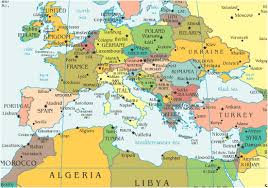
The first suggestion was that it would go through the Middle East, in a way that would perhaps include Israel in the West but perhaps the rest of the Middle East in the East. “What about Turkey?” one of us asked. They weren’t sure. Of course if the dotted line continues straight south from Israel, another question arises. “What about Africa? Is it in the West?” I asked.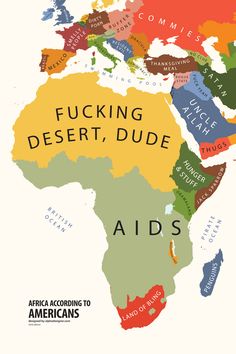 “No,” just about all of the students answered, meaning that our dotted line needs to take a sharp turn left from Israel, bisecting the Mediterranean Sea so that Europe to the north stays in the West (as everyone knows it should) and Africa to the south stays non-West (as everyone knows it should). Remembering Congressman King’s inclusion of the United States in Western civilization (even though it does not make an appearance in DWC until the beginning of sophomore year), the dotted line should cross the Atlantic so that the U.S. and Canada lie on the Europe (northern) side of the line. Mexico and Central America? Iffy. South America? Not sure. It was pretty clear that the line was intended to include those most like us in the West and exclude everyone else.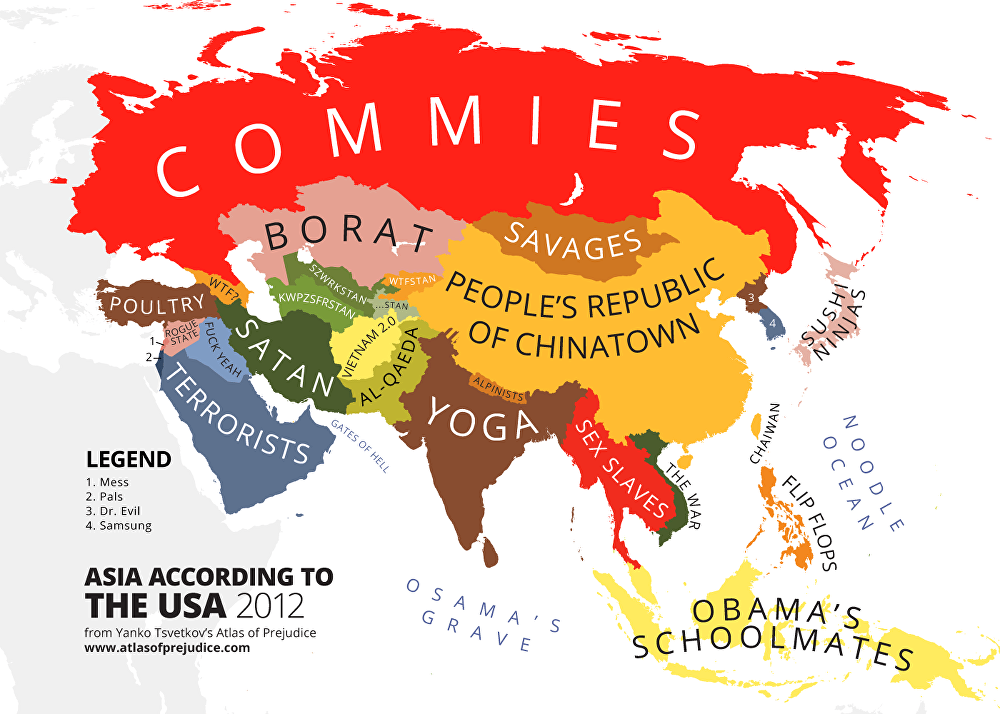
This exercise established pretty quickly that the answer to West of What? cannot be geographical. One student then helpfully suggested that “I think ‘Western’ refers to various ideas rather than geographical areas.” Asked for examples, students suggested things like democracy, human rights, capitalism, and monotheism. One of my colleagues, a theologian, jumped on that one. “Is Christianity a Western religion?’ he asked—“Of course!” was the answer (Congressman King would have been proud). “What about Judaism?” The students weren’t as sure there, even when my colleague pointed out that both Christianity and Judaism started in the same place and that Jesus was a Jew. “What about Islam?” Most of the students thought not (Donald Trump would have been proud), prompting my colleague to point out that for a number of centuries during the Middle Ages the westernmost area of Europe—Spain—was Muslim. Trying to define “Western” by religion doesn’t work much better than geographically.
Finally, one brave student said “I think that ‘Western’ for most people means pretty much the same thing as ‘White’.” And I suspect there’s a great deal of truth in that suggestion. When we study Western Civilization, we will undoubtedly end up studying predominantly dead white guys unless a concerted effort is made to engage with non-Western influences. I mentioned to the students, for instance, th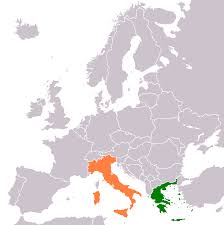 at most people don’t know that one of the greatest—perhaps the greatest—philosopher in the Western tradition, Plato, was heavily influenced by thought from Persia and India. The dotted line is porous, in other words. Furthermore, one of my colleagues who is of Italian ancestry pointed out that one hundred years ago in this country, immigrants from southern European countries such as Greece and Italy were not considered by many in this country as white.
After ninety or so minutes of this, I’m sure our students left largely in confusion. And that’s a good thing. Despite the name of the course, “Western Civilization,” upon close scrutiny, turns out to be as much a reflection of our expectations and prejudices as anything else. This is good for seventeen- and eighteen-year-old young adults to understand at the outset of their forays into their college education. We live in a polarized political and social climate in which labels and categories are used as if they are as objective and set in stone as the Ten Commandments. Only when we realize that all such dividing lines are at their roots random, porous, and fluid might we seize the opportunity to do better.
Development of Western Civilization
Development of Western Civilization
Previous Post

September 23, 2016
The Right Niyyah
Next Post
September 30, 2016 It's Not a Holy Relic!
Browse Our Archives
Select a Category abortion Advent AI Angels Artificial intelligence atheism attention baptism Baptists beauty belief Benedictines Bible bicycling Big Bird books Bovina Camaldoli hermitage Canada Catholicism cats certainty change Christianity Christmas Collegeville Covid-19 creativity Development of Western Civilization dogs doubt Easter Enneagram Epiphany Episcopal ethics Eucharist evil extroverts Facebook faith family fear flowers forgiveness freedom friends God goodness grace happiness heaven hell history Holy Spirit Holy Week hope human nature humility humor idolatry incarnation introverts irreverence Islam Jeanne Jesus Joe Biden joy Judaism justice Kamala Harris knowledge Lent listen literature liturgy love Marsue Memorial Day miracles movies music mystery mythology NPR Old Testament optimism paradox peace Penguins philosophy piano podcast politics power prayer Protestantism Providence College Religion Rhode Island sabbatical sacrament science seeing silence Simone Weil Socrates soul sports St. John's College stories suffering tattoo teaching technology television theology thinking time tolerance transcendence travel trees trust truth Uncategorized Vermont wisdom wonder writing
Select a Month May 2026 April 2026 March 2026 February 2026 January 2026 December 2025 November 2025 October 2025 September 2025 August 2025 July 2025 June 2025 May 2025 April 2025 March 2025 February 2025 January 2025 December 2024 November 2024 October 2024 September 2024 August 2024 July 2024 June 2024 May 2024 April 2024 March 2024 February 2024 January 2024 December 2023 November 2023 October 2023 September 2023 August 2023 July 2023 June 2023 May 2023 April 2023 March 2023 February 2023 January 2023 December 2022 November 2022 October 2022 September 2022 August 2022 July 2022 June 2022 May 2022 April 2022 March 2022 February 2022 January 2022 December 2021 November 2021 October 2021 September 2021 August 2021 July 2021 June 2021 May 2021 April 2021 March 2021 February 2021 January 2021 December 2020 November 2020 October 2020 September 2020 August 2020 July 2020 June 2020 May 2020 April 2020 March 2020 February 2020 January 2020 December 2019 November 2019 October 2019 September 2019 August 2019 July 2019 June 2019 May 2019 April 2019 March 2019 February 2019 January 2019 December 2018 November 2018 October 2018 September 2018 August 2018 July 2018 June 2018 May 2018 April 2018 March 2018 February 2018 January 2018 December 2017 November 2017 October 2017 September 2017 August 2017 July 2017 June 2017 May 2017 April 2017 March 2017 February 2017 January 2017 December 2016 November 2016 October 2016 September 2016 August 2016 July 2016 June 2016 May 2016 April 2016 March 2016 February 2016 January 2016 December 2015 November 2015 October 2015 September 2015 August 2015 July 2015 June 2015 May 2015 April 2015 March 2015 February 2015 January 2015 December 2014 November 2014 October 2014 September 2014 August 2014 July 2014 June 2014 May 2014 April 2014 March 2014 February 2014 January 2014 December 2013 November 2013 October 2013 September 2013 August 2013 July 2013 June 2013 May 2013 April 2013 March 2013 February 2013 January 2013 December 2012 November 2012 October 2012 September 2012
Follow Us!
TAKE THE
Religious Wisdom Quiz
Where in the Bible can we find the phrase "a time to be born and a time to die"?
Select your answer to see how you score.
Matthew Genesis Ecclesiastes Job
Books by This Author Books by Vance G. Morgan
Related posts from Freelance Christianity

The Lonely Pawn: On Faith, Doubt, and Meaning


AI and Love: When a Chatbot Becomes a...

TRENDING AT PATHEOS Progressive Christian

What Being a Modern-Day Apostle Means to Me
In my last column, I discussed the ins and outs of modern-day...

Did Ancient China Once Worship the God of...
Across human history, a common thread weaves through the origins of the...

Love Your Neighbor – Including Earth-Kin: Lev. 19,...
God’s command to love your neighbor means acting in an ethical and...

Lead a Church Study of “Jesus and Lao...
Guest writer Jack Thomas (The Irreverent Reverend) reflects on leading his church...

Pastoral Wisdom for Responding to Sermon Pushback
Getting sermon pushback on your social justice sermon? Learn practical, Proverbs-based strategies...

Principles for Understanding the Apostolic Ministry Today
Whenever people discover that my formal ministry title is "apostle," as in...
view all Progressive Christian blogs
Ad-Free & Subscriber Log-In Subscription Support
- About Us
- 2026 Calendar
- Videos
- Podcasts
- Library of World Religions
- Faith In Media Tracker
- Advertise With Us
- Write for Us
- Privacy Policy
- Terms of Service
- Do Not Sell My Data
- Contact Us
- Radiant Digital
- Manage Newsletter Subscriptions
- Unsubscribe From Notifications
- Sitemap
Copyright 2008-2026, Patheos. All rights reserved.
Subscription Support Ad-Free & Subscriber Log-In
Follow Patheos