
BuddhistCatholicContemplativeEvangelicalGeneral ChristianHinduJewishLatter-day SaintMuslimNew VisionsProgressive Christian
Beliefs
- Buddhist
- Catholic
- Contemplative
- Evangelical
- General Christian
- Hindu
- Jewish
- Latter-day Saint
- More Voices
- Muslim
- New Visions
- Pagan
- Progressive Christian
Topics
- Religion News
- Food and Religion
- Sports and Religion
- Religious Art
- Religious Music and Entertainment
- Religious Events
- History and Religion
- Style and Religion
- Politics and Religion
- Women in Religion
- Recreation Outdoors and Religion
- Business Finance and Religion
- Careers Workplace and Religion
- Education and Religion
- Family Parenting and Religion
- Health Fitness and Religion
- Home and Religion
- Relationships and Religion
- Technology and Religion
- Travel and Religion
Columnists
- Buddhist Columnists
- Business Finance and Religion Columnists
- Careers Workplace and Religion Columnists
- Catholic Columnists
- Contemplative Columnists
- Education and Religion Columnists
- Evangelists Columnists
- Family Parenting and Religion Columnists
- General Christian Columnists
- Health Fitness and Religion Columnists
- Hindu Columnists
- History and Religion Columnists
- Home and Religion Columnists
- Jewish Columnists
- More Voices Columnists
- Latter Day Columnists
- Muslim Columnists
- New Visions Columnists
- Nonreligious Columnists
- Pagan Columnists
- Politics and Religion Columnists
- Progressive Columnists
- Recreation Outdoors and Religion Columnists
- Relationships and Religion Columnists
- Religion News Columnists
- Religious Art Columnists
- Religious Events Columnists
- Religious Music and Entertainment Columnists
- Sports and Religion Columnists
- Style and Religion Columnists
- Technology and Religion Columnists
- Travel and Religion Columnists
- Women in Religion Columnists
Resource Library
- 2026 Calendar
- Library of World Religions
- The 100 Most Holy Places on Earth
- Patheos Answers
- Podcasts
- Videos
- Faith Leaders Database
- Anglican Episcopalian
- Bahai
- Baptist
- Buddhism
- Christianity
- Confucianism
- Eastern Orthodoxy
- Hinduism
- Holiness and Pentecostal
- ISKCON
- Islam
- Judaism
- Lutheran
- Methodist
- The Church of Jesus Christ of Latter-day Saints
- New Age
- Paganism
- Presbytarian and Reformed
- Protestantism
- Religion Behind the Scenes
- Roman Catholic
- Scientology
- Shia Islam
- Sikhism
- Sufism
- Sunni Islam
- Taoism
- Zen
- See all religions
Research Tools
 Ad-Free & Subscriber Log-In Subscription Support
Ad-Free & Subscriber Log-In Subscription Support
Follow Patheos 

- Trending:
- Forgiveness
- |
- Marriage
- |
- Consciousness
- |
- Death Penalty
- |
- Election
- |
- Halloween

- Home
- Progressive Christian
- Weaponizing the Bible
Weaponizing the Bible
Last updated on: May 4, 2024 at 7:30 am by Vance Morgan
Weaponizing the Bible 2024-05-04T07:29:33-04:00 Vance Morgan
Patheos Explore the world's faith through different perspectives on religion and spirituality! Patheos has the views of the prevalent religions and spiritualities of the world.
The final meeting of my honors colloquium on Michel de Montaigne was last Thursday. It was a beautiful day, and I wasn’t surprised when my students wondered if we could have our final seminar in an alternative setting. I expected them to suggest that we move outside; I would have grudgingly agreed even though it is the peak of allergy season.
But instead they wanted to meet at MacPhails, our on campus pub. All of the students are of legal drinking age (barely); I readily agreed to move across campus and enjoy a beer with Montaigne.
The text for the day was “Of experience,” the lengthy final essay in Montaigne monumental Essais that had been our primary text for the whole semester. The essay is full of memorable passages, but one in particular caught my attention this time around:
There is as much freedom and latitude in the interpretation of laws as in their creation. And those people must be jesting who think they can diminish and stop our disputes by recalling us to the express words of the Bible.
I know Montaigne well, but had forgotten this insight, one that I could have used fruitfully in responding to a bunch of evangelicals who were outraged by one of my recent essays and weaponized passages from the Bible to thwart my heretical tendencies. My experience with the Bible is lifelong and complicated. Here’s one of the early essays from more than a decade ago on this blog that delves into that experience. Enjoy “Sword Drills” from April 2013!
On one of my family’s summer western treks, we pulled into a Phillips 66 station to fill up. “What does the 66 stand for?” my dad asked, to which I immediately guessed “the 66 books of the Bible?” “Right,” he said. Although I found out many years later that this is not true, don’t blame my dad for feeding me false information. Many people thought that the number in Phillips 66 came from the books of the Bible, and the founder of Phillips Petroleum Company didn’t straighten people out about the name’s origin for years. Good publicity to keep people guessing.
One of the first facts I learned about the Bible is how many books it contained. And I knew them cold. In Sunday school, little Baptists learned songs whose lyrics were the books of the Bible in order as soon as they learned to talk (usually before they learned to read). I still remember the song for the tricky minor prophets, the last twelve books of the Old Testament. I used to sing it on command at an early age very quickly in one breath–*hosea-joel-amos-obadiah-jonah-micah-nahum-habbakuk-zephaniah-haggai-zechariah-GASP!-malachi-*for the entertainment of my parents and their guests. At Bible camp one year there was a girl who could say the books of the Bible backwards (all of us could say them in correct order). I didn’t exactly see what the practical applications of that skill might be, but it was impressive.
Once we got a bit older, around eight or so, we learned another skill in Sunday School: how to find any verse in the Bible as quickly as possible. To hone this skill, we had competitions called “sword drills,” since Paul calls the word of God the “sword of the spirit” in Ephesians. Our teacher would say “draw your swords,” and we would raise our Bibles in one hand above our heads. Each of us had brought ours from home, of course—I don’t know what would have happened to someone who forgot their Bible, since I don’t recall it ever happening.
The teacher would then call out a Bible reference—book, chapter, and verse—and then, after a tantalizing pause, would shout “GO!!” Whoever found the scripture and started reading it first won. And I was good. I mean REALLY good. I had a cousin who used to win infrequently (maybe once every ten times), but other than that it was all me all the time. If the teacher said “John 3:16!” I would roll my eyes and think “Please. That’s in the Gospels. I know that one by heart—give us something challenging.” “Psalms 101:11!” “Come on, I can win that with one hand tied behind my back.”
“Micah 6:8!” “Lamentations 4:2!” “Habakkuk 3:17!” “Now you’re talking,” I thought, as I got the verse then waited a moment, just to make things interesting, while my fellow sword-wielders fumbled around, reading the verse just as the kid next to me was getting ready to read it. “Now we’re separating the real sword masters from the wannabes.” “Hezekiah 17:32!” I watched my comrades with disdain as they leafed through their swords, pitying them and how foolish they would feel when they found out it was a trick command—there is no book of Hezekiah in the Bible. I wasn’t very good at traditional sports like football and basketball, but man I could wield a sword. Introducing sword drills to my Catholic students a few years ago was a hoot, especially since for many of them it was the first time they had ever cracked a Bible.
So imagine my reaction—dismay, shock, outrage—when I found out that some people (who shall remain nameless) added some extra books to the Bible, jammed in between the Old and New Testaments, and actually thought this is acceptable! I can remember exactly when it happened. In the late sixties and early seventies (my junior high and high school years), several new translations of the Bible came out. This was disturbing enough, since in my crowd “King James” was not a basketball star—“King James” was the name of the only authoritative translation of the Bible.
We were taught to believe that the Bible is the inerrant word of God; no one corrected us when we additionally assumed that God had dictated the book in King James English to a bunch of guys in the 17th century. But when I looked in one of these new translations and saw a bunch of unfamiliar books under the collective title “The Apocrypha,” I thought “What the hell is this??” “First and Second Maccabees”? “Baruch”? “The Song of the Three Men”? “Tobit”? That sounds like something from Tolkien: “In a hole in the ground lived a tobit.” “Bel and the Dragon”? What’s that, a comic book? I didn’t know what to think, except that someone had been messing around with my Bible, and I was pissed.
I have to admit that, although it’s now over fifty years later, I’ve never read any of these books in their entirety. There are some bits and pieces of apocryphal books in the Episcopal prayer book as canticles for morning and evening prayer, which isn’t surprising since we Episcopalians are willing to appropriate anything from any tradition so long as it is good liturgy, fine music, or profound literature, always assuming that it will also support a liberal, left-leaning mindset. But I still feel a bit odd reading parts of “The Song of the Three” or “The Prayer of Manasseh,” as if I’m doing something wrong. Old habits and beliefs die hard, especially when they were established in the cradle.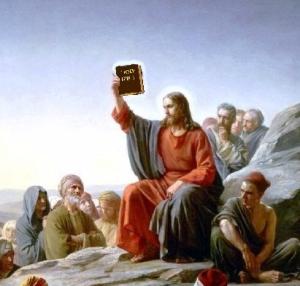
I stopped believing that the Bible is the inerrant, literal word of God while still in my teens (I’m not sure I ever really believed it), and have occasionally wondered since then exactly what the Bible is for me now. It is part of my tradition, my heritage, and my history. I am forever grateful that I had the opportunity, although often a forced one, to make its stories, its poetry, its history, part of my intellectual foundation at a very early age—foundations laid at such an age remain largely intact. I rely on that foundation every day in the classroom and during outside-of-class conversations with students and colleagues. It is a shared touchstone in Jeanne’s and my life. And I still am thoroughly comfortable with calling it the word of God—but what exactly does that mean?
I recall a memorable Sunday evening in my early twenties when a venerable Bible scholar, an elder at the large church my family was attending and the godfather of my then six-month-old firstborn son, stood behind the pulpit, raised his Bible above eye level for all to see (almost like a sword drill) and said with great courage to a largely evangelical congregation: “This is not the word of God! This is a bunch of pages between leather covers written by human beings. It becomes the word of God when the Holy Spirit writes its message in your heart. Remember, the letter kills, but the Spirit gives life.” Other than a gasp or two, you could have heard a pin drop.
But he was right. As I’ve returned to the texts of my youth over the past years in both communal and private reading, new life has risen in me. Noon prayer in the Benedictine liturgy of the hours always begins with several verses from Psalm 119, which is the longest chapter in the Bible and is all about the glories of God’s word. The Psalmist never says a thing about the written word—God’s word always is hidden in our hearts, written in our minds, lived out in our actions. And as my son’s godfather implied, the Spirit can transform anything, any text, written or otherwise, into the word of God. The Bible in my experience is special because it is at the heart of what I believe and its words have become God’s word for me more often than any other source. But it could be Shakespeare. Or Nietzsche. Or Jeanne. Or my dachshunds. Or the sun rising this morning—in a sacramental world, anything can be the word of God. Even Tobit, I suppose.
Previous Post

May 2, 2024
Big News, and a Blast from the Past!
Next Post

May 6, 2024 When Life Feels Like an Afterthought . . .
Recent Comments
"Mary did have a choice. And she was able to make it before the Holy ..."
"i cannot read beyond your recommendations for the books since i like to have a ..."
"AI will never be able to utter with honesty, feeling, or humility, the greeting: "Namaste".It ..."
"They do. I'm sure you could find discussions of the same topic from any of ..."
Browse Our Archives
Select a Category abortion Advent AI Angels Artificial intelligence atheism attention baptism Baptists beauty belief Benedictines Bible bicycling Big Bird books Bovina Camaldoli hermitage Canada Catholicism cats certainty change Christianity Christmas Collegeville Covid-19 creativity Development of Western Civilization dogs doubt Easter Enneagram Epiphany Episcopal ethics Eucharist evil extroverts Facebook faith family fear flowers forgiveness freedom friends God goodness grace happiness heaven hell history Holy Spirit Holy Week hope human nature humility humor idolatry incarnation introverts irreverence Islam Jeanne Jesus Joe Biden joy Judaism justice Kamala Harris knowledge Lent listen literature liturgy love Marsue Memorial Day miracles movies music mystery mythology NPR Old Testament optimism paradox peace Penguins philosophy piano podcast politics power prayer Protestantism Providence College Religion Rhode Island sabbatical sacrament science seeing silence Simone Weil Socrates soul sports St. John's College stories suffering tattoo teaching technology television theology thinking time tolerance transcendence travel trees trust truth Uncategorized Vermont wisdom wonder writing
Select a Month May 2026 April 2026 March 2026 February 2026 January 2026 December 2025 November 2025 October 2025 September 2025 August 2025 July 2025 June 2025 May 2025 April 2025 March 2025 February 2025 January 2025 December 2024 November 2024 October 2024 September 2024 August 2024 July 2024 June 2024 May 2024 April 2024 March 2024 February 2024 January 2024 December 2023 November 2023 October 2023 September 2023 August 2023 July 2023 June 2023 May 2023 April 2023 March 2023 February 2023 January 2023 December 2022 November 2022 October 2022 September 2022 August 2022 July 2022 June 2022 May 2022 April 2022 March 2022 February 2022 January 2022 December 2021 November 2021 October 2021 September 2021 August 2021 July 2021 June 2021 May 2021 April 2021 March 2021 February 2021 January 2021 December 2020 November 2020 October 2020 September 2020 August 2020 July 2020 June 2020 May 2020 April 2020 March 2020 February 2020 January 2020 December 2019 November 2019 October 2019 September 2019 August 2019 July 2019 June 2019 May 2019 April 2019 March 2019 February 2019 January 2019 December 2018 November 2018 October 2018 September 2018 August 2018 July 2018 June 2018 May 2018 April 2018 March 2018 February 2018 January 2018 December 2017 November 2017 October 2017 September 2017 August 2017 July 2017 June 2017 May 2017 April 2017 March 2017 February 2017 January 2017 December 2016 November 2016 October 2016 September 2016 August 2016 July 2016 June 2016 May 2016 April 2016 March 2016 February 2016 January 2016 December 2015 November 2015 October 2015 September 2015 August 2015 July 2015 June 2015 May 2015 April 2015 March 2015 February 2015 January 2015 December 2014 November 2014 October 2014 September 2014 August 2014 July 2014 June 2014 May 2014 April 2014 March 2014 February 2014 January 2014 December 2013 November 2013 October 2013 September 2013 August 2013 July 2013 June 2013 May 2013 April 2013 March 2013 February 2013 January 2013 December 2012 November 2012 October 2012 September 2012
Follow Us!
TAKE THE
Religious Wisdom Quiz
What famous basilica is in Vatican City?
Select your answer to see how you score.
Notre Dame St. Peter's Basilica St. Paul's St. Basil's
Books by This Author Books by Vance G. Morgan
Related posts from Freelance Christianity

The Lonely Pawn: On Faith, Doubt, and Meaning


AI and Love: When a Chatbot Becomes a...

TRENDING AT PATHEOS Progressive Christian

Why Christians Have a Sacred Duty to Vote:...
The Bible offers strong support for the sacred duty to vote. Here...

What Being a Modern-Day Apostle Means to Me
In my last column, I discussed the ins and outs of modern-day...

Did Ancient China Once Worship the God of...
Across human history, a common thread weaves through the origins of the...

Love Your Neighbor – Including Earth-Kin: Lev. 19,...
God’s command to love your neighbor means acting in an ethical and...

Lead a Church Study of “Jesus and Lao...
Guest writer Jack Thomas (The Irreverent Reverend) reflects on leading his church...

Principles for Understanding the Apostolic Ministry Today
Whenever people discover that my formal ministry title is "apostle," as in...
view all Progressive Christian blogs
What Are Your Thoughts?leave a comment
Ad-Free & Subscriber Log-In Subscription Support
- About Us
- 2026 Calendar
- Videos
- Podcasts
- Library of World Religions
- Faith In Media Tracker
- Advertise With Us
- Write for Us
- Privacy Policy
- Terms of Service
- Do Not Sell My Data
- Contact Us
- Radiant Digital
- Manage Newsletter Subscriptions
- Unsubscribe From Notifications
- Sitemap
Copyright 2008-2026, Patheos. All rights reserved.
Subscription Support Ad-Free & Subscriber Log-In
Follow Patheos