
BuddhistCatholicContemplativeEvangelicalGeneral ChristianHinduJewishLatter-day SaintMuslimNew VisionsProgressive Christian
Beliefs
- Buddhist
- Catholic
- Contemplative
- Evangelical
- General Christian
- Hindu
- Jewish
- Latter-day Saint
- More Voices
- Muslim
- New Visions
- Pagan
- Progressive Christian
Topics
- Religion News
- Food and Religion
- Sports and Religion
- Religious Art
- Religious Music and Entertainment
- Religious Events
- History and Religion
- Style and Religion
- Politics and Religion
- Women in Religion
- Recreation Outdoors and Religion
- Business Finance and Religion
- Careers Workplace and Religion
- Education and Religion
- Family Parenting and Religion
- Health Fitness and Religion
- Home and Religion
- Relationships and Religion
- Technology and Religion
- Travel and Religion
Columnists
- Buddhist Columnists
- Business Finance and Religion Columnists
- Careers Workplace and Religion Columnists
- Catholic Columnists
- Contemplative Columnists
- Education and Religion Columnists
- Evangelists Columnists
- Family Parenting and Religion Columnists
- General Christian Columnists
- Health Fitness and Religion Columnists
- Hindu Columnists
- History and Religion Columnists
- Home and Religion Columnists
- Jewish Columnists
- More Voices Columnists
- Latter Day Columnists
- Muslim Columnists
- New Visions Columnists
- Nonreligious Columnists
- Pagan Columnists
- Politics and Religion Columnists
- Progressive Columnists
- Recreation Outdoors and Religion Columnists
- Relationships and Religion Columnists
- Religion News Columnists
- Religious Art Columnists
- Religious Events Columnists
- Religious Music and Entertainment Columnists
- Sports and Religion Columnists
- Style and Religion Columnists
- Technology and Religion Columnists
- Travel and Religion Columnists
- Women in Religion Columnists
Resource Library
- 2026 Calendar
- Library of World Religions
- The 100 Most Holy Places on Earth
- Patheos Answers
- Podcasts
- Videos
- Faith Leaders Database
- Anglican Episcopalian
- Bahai
- Baptist
- Buddhism
- Christianity
- Confucianism
- Eastern Orthodoxy
- Hinduism
- Holiness and Pentecostal
- ISKCON
- Islam
- Judaism
- Lutheran
- Methodist
- The Church of Jesus Christ of Latter-day Saints
- New Age
- Paganism
- Presbytarian and Reformed
- Protestantism
- Religion Behind the Scenes
- Roman Catholic
- Scientology
- Shia Islam
- Sikhism
- Sufism
- Sunni Islam
- Taoism
- Zen
- See all religions
Research Tools
 Ad-Free & Subscriber Log-In Subscription Support
Ad-Free & Subscriber Log-In Subscription Support
Follow Patheos 

- Trending:
- Forgiveness
- |
- Marriage
- |
- Consciousness
- |
- Death Penalty
- |
- Election
- |
- Halloween

- Home
- Progressive Christian
- We are Fearfully and Wonderfully Made
We are Fearfully and Wonderfully Made
Last updated on: June 2, 2024 at 6:00 am by Vance Morgan
We are Fearfully and Wonderfully Made 2024-06-01T13:52:47-04:00 Vance Morgan
Patheos Explore the world's faith through different perspectives on religion and spirituality! Patheos has the views of the prevalent religions and spiritualities of the world.
We are all patchwork, and so shapeless and diverse in composition that each bit, each moment, plays its own game. And there is as much difference between us and ourselves as between us and others. Michel de Montaigne, Essais
I regularly tell my students that after more than thirty years of studying and teaching philosophy, I am convinced that the most interesting philosophical subject is a close to home as possible. The most fascinating philosophical topic is us. As Psalm 139 tells us in today’s psalm, human beings are “fearfully and wonderfully made.” Sophocles describes us similarly in Antigone, describing humans as deinos, which means both “terrible” and “wondrous.” Think of “awful” and “awesome” and you’ll get the idea. Human beings are capable of both the best and the worst—often at the same time.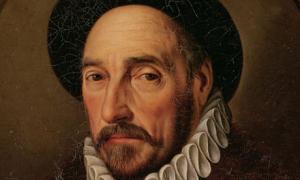
Montaigne continues his observation in the passage above about the patchwork nature of human beings by suggesting that “in view of the natural instability of our conduct and opinions, it has often seemed to me that even good authors are wrong to insist on fashioning a consistent and solid fabric out of us.” That hasn’t, however, stopped the best thinkers from trying over the centuries to do so. It also hasn’t stopped various attempts to reduce our fearful and wondrous complexity to rationally comprehensible and manageable features. What if human beings learned to always choose and act in their best interests? What if human beings knew what was profitable and best for them individually and collectively—and then acted on that knowledge? Every time?
Soren Kierkegaard and Fyodor Dostoevsky, authors who are the primary focus during the first few weeks of the “Faith and Doubt” colloquium I frequently team-teach with a colleague from the PoliSci department, explored these and related questions during the 19th century, at a time when advances in science and technology raised the possibility of human perfectibility as a legitimate vision for the future. In Notes from Underground, Dostoevsky’s unnamed Underground Man considers such hopes to be both naïve and misdirected.
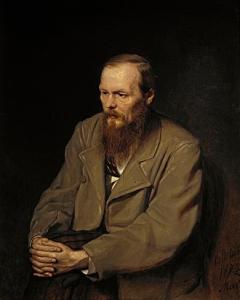 But these are all golden dreams. Who first announced, who was the first to proclaim that man does badly only because he doesn’t know his real interests; and that were he to be enlightened, were his eyes to be opened to his real, normal interests, man would immediately become good and noble, because . . . he would see his real profit precisely in the good? . . . Oh, the babe! Oh, the pure, innocent child!
Everyone knows that it is possible to know what is in their best interest and still do something else—simply because each of us has done this.
What is to be done with the millions of facts testifying to how people knowingly, that is, fully understanding their real profit, would put it in second place and throw themselves onto another path . . . What if it so happens that on occasion man’s profit not only may but precisely must consist in sometimes wishing what is bad for himself, and not what is profitable?
What the Underground Man is describing is both definitive of being human and the source of great trouble.
In The Sickness unto Death, Søren Kierkegaard considers the same human dynamic as Dostoevsky, but through a different lens. Kierkegaard begins his discussion with Plato’s famous claim that “sin (evil) is ignorance” and that “to know the good is to do the good.” In other words, Plato proposed, the source of human moral failings and capacity to do evil is lack of knowledge. More than two millennia before the 19th century, Plato is agreeing with those who imagine the perfectibility of human nature—as we become more knowledgeable, we will naturally become morally better. Kierkegaard, an astute observer of human nature, isn’t buying it. There is a difference between lack of knowledge (mere ignorance) and willful ignorance, acting as if one does not have knowledge that one actually has.
After providing several examples—familiar to all—of people who demonstrate their knowledge and support of A publicly then immediately do not-A, Kierkegaard notes that Plato’s definition fails to take into consideration that human beings are more than rational beings. “What determinant is it then that Plato lacks?” Kierkegaard asks. “It is will, defiant will.” What is it that causes people to act against their interests, to behave badly, to act immorally? It has nothing to do with lack of knowledge and everything to do with the power of the will. I act contrary to what I know is best and right because I can. Not because I mistake error for truth, but simply because I want to. What is to be done with such a creature?
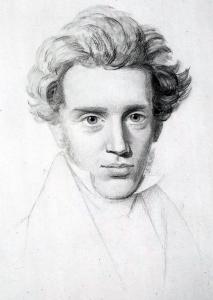 In Kierkegaard’s estimation, this tension between reason and will cannot be eliminated—it is part of what we are. Any attempt to improve humanity simply through increased knowledge will spectacularly fail—history itself has over and over shown this to be true. The genius of Christianity, Kierkegaard believes, is that embedded in its seminal story is both a truthful description of and a supernatural cure for what ails human beings.
There must be a revelation from God in order to instruct man as to what sin is, that sin does not consist in the fact that man has not understood what is right, but in the fact that he will not understand it, and in the fact that he will not do it . . . Sin lies in the will, not in the intellect; and this corruption of the will goes well beyond the consciousness of the individual.
Call it “original sin,” if you want, or as John Henry Newman called it, “some aboriginal calamity.” The Christian insight is that human nature is fundamentally flawed and cannot be perfected without divine help. And that help, of course, is the whole point of the Incarnation, Crucifixion, and Resurrection.
The Pandora’s box opened by the simple observation that human beings regularly choose and act in ways contrary to what they know is in their interest and/or what they know is right simply because they can is a source of endless debate in psychological, philosophical, and theological circles. Many of us have been told from our youth that this is a defect to be addressed, an illness to be cured, a problem to be solved. Seldom do we ever stop and ask whether “original sin” or “weakness of the will” is something that we should seek to cure at all. Kierkegaard believes that his analysis directs us toward the only possible solution, but Dostoevsky’s Underground Man isn’t so sure that this is something we should seek to cure or eliminate at all.
What if, Dostoevsky asks, seeking to perfect human beings is actually an attempt to eliminate something that is definitive of being human?
You want to make man unlearn his old habits, and to correct his will in conformity with the demands of science and common sense . . . What makes you conclude that man’s wanting so necessarily needs to be corrected?
Imagine a person who always chooses what is best and has eliminated even the possibility of doing otherwise? The Underground Man suggests that such a person has become a “piano key,” fine-tuned to do only one thing (even if it is the profitable or right thing), and is no longer fully human.
Why are you so certainly convinced that not to go against real, normal profits, guaranteed by the arguments of reason and arithmetic, is indeed always profitable for man and is a law for the whole of mankind? So far, it’s still just your supposition. Suppose it is a law of logic, but perhaps not of mankind at all.
Consider the classic “original sin” parable—Adam and Even in the Garden of Eden. Their choice to act against their interests as God defined them and to eat of the forbidden fruit was an act of will, not of knowledge. Their choice illustrates the human ability to choose “otherwise,” to choose against our best knowledge—an ability that we call “free will” and honor as perhaps what makes us most different from and better than every other created thing. Perhaps this is what the Psalmist means by “fearfully and wonderfully made.”
The tension between intellect and will, just as the tension between us and what is greater than us, is foundationally definitive of what it means to be human. We should think carefully about any attempts, from scientific to theological, to either remove, correct, or cure what we are. After all, as the Underground Man reminds us, “the whole human enterprise seems indeed to consist in man’s proving to himself every moment that he is a man and not a piano key.”
Previous Post
May 31, 2024
You Always Have the Poor
Next Post

June 4, 2024 Some Thoughts on Self-Repair
Recent Comments
"Mary did have a choice. And she was able to make it before the Holy ..."
"i cannot read beyond your recommendations for the books since i like to have a ..."
"AI will never be able to utter with honesty, feeling, or humility, the greeting: "Namaste".It ..."
"They do. I'm sure you could find discussions of the same topic from any of ..."
Browse Our Archives
Select a Category abortion Advent AI Angels Artificial intelligence atheism attention baptism Baptists beauty belief Benedictines Bible bicycling Big Bird books Bovina Camaldoli hermitage Canada Catholicism cats certainty change Christianity Christmas Collegeville Covid-19 creativity Development of Western Civilization dogs doubt Easter Enneagram Epiphany Episcopal ethics Eucharist evil extroverts Facebook faith family fear flowers forgiveness freedom friends God goodness grace happiness heaven hell history Holy Spirit Holy Week hope human nature humility humor idolatry incarnation introverts irreverence Islam Jeanne Jesus Joe Biden joy Judaism justice Kamala Harris knowledge Lent listen literature liturgy love Marsue Memorial Day miracles movies music mystery mythology NPR Old Testament optimism paradox peace Penguins philosophy piano podcast politics power prayer Protestantism Providence College Religion Rhode Island sabbatical sacrament science seeing silence Simone Weil Socrates soul sports St. John's College stories suffering tattoo teaching technology television theology thinking time tolerance transcendence travel trees trust truth Uncategorized Vermont wisdom wonder writing
Select a Month May 2026 April 2026 March 2026 February 2026 January 2026 December 2025 November 2025 October 2025 September 2025 August 2025 July 2025 June 2025 May 2025 April 2025 March 2025 February 2025 January 2025 December 2024 November 2024 October 2024 September 2024 August 2024 July 2024 June 2024 May 2024 April 2024 March 2024 February 2024 January 2024 December 2023 November 2023 October 2023 September 2023 August 2023 July 2023 June 2023 May 2023 April 2023 March 2023 February 2023 January 2023 December 2022 November 2022 October 2022 September 2022 August 2022 July 2022 June 2022 May 2022 April 2022 March 2022 February 2022 January 2022 December 2021 November 2021 October 2021 September 2021 August 2021 July 2021 June 2021 May 2021 April 2021 March 2021 February 2021 January 2021 December 2020 November 2020 October 2020 September 2020 August 2020 July 2020 June 2020 May 2020 April 2020 March 2020 February 2020 January 2020 December 2019 November 2019 October 2019 September 2019 August 2019 July 2019 June 2019 May 2019 April 2019 March 2019 February 2019 January 2019 December 2018 November 2018 October 2018 September 2018 August 2018 July 2018 June 2018 May 2018 April 2018 March 2018 February 2018 January 2018 December 2017 November 2017 October 2017 September 2017 August 2017 July 2017 June 2017 May 2017 April 2017 March 2017 February 2017 January 2017 December 2016 November 2016 October 2016 September 2016 August 2016 July 2016 June 2016 May 2016 April 2016 March 2016 February 2016 January 2016 December 2015 November 2015 October 2015 September 2015 August 2015 July 2015 June 2015 May 2015 April 2015 March 2015 February 2015 January 2015 December 2014 November 2014 October 2014 September 2014 August 2014 July 2014 June 2014 May 2014 April 2014 March 2014 February 2014 January 2014 December 2013 November 2013 October 2013 September 2013 August 2013 July 2013 June 2013 May 2013 April 2013 March 2013 February 2013 January 2013 December 2012 November 2012 October 2012 September 2012
Follow Us!
TAKE THE
Religious Wisdom Quiz
What was the name of the Roman governor who sentenced Jesus to death?
Select your answer to see how you score.
Tiberius Pontius Pilate Herod Antipas Caesar Augustus
Books by This Author Books by Vance G. Morgan
Related posts from Freelance Christianity

The Lonely Pawn: On Faith, Doubt, and Meaning


AI and Love: When a Chatbot Becomes a...

TRENDING AT PATHEOS Progressive Christian

What Being a Modern-Day Apostle Means to Me
In my last column, I discussed the ins and outs of modern-day...

Did Ancient China Once Worship the God of...
Across human history, a common thread weaves through the origins of the...

Love Your Neighbor – Including Earth-Kin: Lev. 19,...
God’s command to love your neighbor means acting in an ethical and...

Lead a Church Study of “Jesus and Lao...
Guest writer Jack Thomas (The Irreverent Reverend) reflects on leading his church...

Pastoral Wisdom for Responding to Sermon Pushback
Getting sermon pushback on your social justice sermon? Learn practical, Proverbs-based strategies...

Principles for Understanding the Apostolic Ministry Today
Whenever people discover that my formal ministry title is "apostle," as in...
view all Progressive Christian blogs
What Are Your Thoughts?leave a comment
Ad-Free & Subscriber Log-In Subscription Support
- About Us
- 2026 Calendar
- Videos
- Podcasts
- Library of World Religions
- Faith In Media Tracker
- Advertise With Us
- Write for Us
- Privacy Policy
- Terms of Service
- Do Not Sell My Data
- Contact Us
- Radiant Digital
- Manage Newsletter Subscriptions
- Unsubscribe From Notifications
- Sitemap
Copyright 2008-2026, Patheos. All rights reserved.
Subscription Support Ad-Free & Subscriber Log-In
Follow Patheos