
BuddhistCatholicContemplativeEvangelicalGeneral ChristianHinduJewishLatter-day SaintMuslimNew VisionsProgressive Christian
Beliefs
- Buddhist
- Catholic
- Contemplative
- Evangelical
- General Christian
- Hindu
- Jewish
- Latter-day Saint
- More Voices
- Muslim
- New Visions
- Pagan
- Progressive Christian
Topics
- Religion News
- Food and Religion
- Sports and Religion
- Religious Art
- Religious Music and Entertainment
- Religious Events
- History and Religion
- Style and Religion
- Politics and Religion
- Women in Religion
- Recreation Outdoors and Religion
- Business Finance and Religion
- Careers Workplace and Religion
- Education and Religion
- Family Parenting and Religion
- Health Fitness and Religion
- Home and Religion
- Relationships and Religion
- Technology and Religion
- Travel and Religion
Columnists
- Buddhist Columnists
- Business Finance and Religion Columnists
- Careers Workplace and Religion Columnists
- Catholic Columnists
- Contemplative Columnists
- Education and Religion Columnists
- Evangelists Columnists
- Family Parenting and Religion Columnists
- General Christian Columnists
- Health Fitness and Religion Columnists
- Hindu Columnists
- History and Religion Columnists
- Home and Religion Columnists
- Jewish Columnists
- More Voices Columnists
- Latter Day Columnists
- Muslim Columnists
- New Visions Columnists
- Nonreligious Columnists
- Pagan Columnists
- Politics and Religion Columnists
- Progressive Columnists
- Recreation Outdoors and Religion Columnists
- Relationships and Religion Columnists
- Religion News Columnists
- Religious Art Columnists
- Religious Events Columnists
- Religious Music and Entertainment Columnists
- Sports and Religion Columnists
- Style and Religion Columnists
- Technology and Religion Columnists
- Travel and Religion Columnists
- Women in Religion Columnists
Resource Library
- 2026 Calendar
- Library of World Religions
- The 100 Most Holy Places on Earth
- Patheos Answers
- Podcasts
- Videos
- Faith Leaders Database
- Anglican Episcopalian
- Bahai
- Baptist
- Buddhism
- Christianity
- Confucianism
- Eastern Orthodoxy
- Hinduism
- Holiness and Pentecostal
- ISKCON
- Islam
- Judaism
- Lutheran
- Methodist
- The Church of Jesus Christ of Latter-day Saints
- New Age
- Paganism
- Presbytarian and Reformed
- Protestantism
- Religion Behind the Scenes
- Roman Catholic
- Scientology
- Shia Islam
- Sikhism
- Sufism
- Sunni Islam
- Taoism
- Zen
- See all religions
Research Tools
 Ad-Free & Subscriber Log-In Subscription Support
Ad-Free & Subscriber Log-In Subscription Support
Follow Patheos 

- Trending:
- Forgiveness
- |
- Marriage
- |
- Consciousness
- |
- Death Penalty
- |
- Election
- |
- Halloween

- Home
- Progressive Christian
- Socratic Faith
Socratic Faith
Last updated on: February 17, 2017 at 7:00 am by Vance Morgan
Socratic Faith 2017-02-17T07:00:28-04:00 Vance Morgan
Patheos Explore the world's faith through different perspectives on religion and spirituality! Patheos has the views of the prevalent religions and spiritualities of the world.
He lived over two millennia ago, and as far as we know he never wrote anything. We learn everything we know about him from others, often in reports and descriptions written decades after his death. The reliability and accuracy of these reports are often called into question, since their authors clearly have agendas and interests that undoubtedly undermine objectivity and an accurate accounting of the facts. He had a lot to say and attracted many followers who hung on his every word, while also annoying and angering others. He was an inscrutable enigma, even to his closest friends and family. Eventually he ran afoul of the authorities in his community, was brought to trial on serious charges, and was summarily executed. Yet through the mist and fog of obscurity, the passage of time, and the unreliability of second-, third-, and fourth-hand accounts, his life reaches toward us with a compelling attraction that is as powerful today as it was for his contemporaries. Countless people have adopted his life as a model for their own; others have rejected him as either a charlatan or a complete failure. And his name was not Jesus.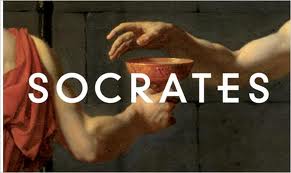
One of my favorite annual teaching activities is immersing freshmen in one of the most interesting and dramatic stories imaginable—the trial and death of Socrates.  It is a gripping narrative in which an apparently innocent and harmless man who only wants to be left alone to pursue what he believes he has been called to do runs headlong into trouble so serious that his life is at risk. Young people generally are fascinated by Socrates, just as the youth of Athens in his day were. They know that he’s important and that they need to take him seriously (I told them that he is the godfather of Western philosophy), but many find him to be arrogant and annoying. As we discussed the texts for the day, it became clear that Socrates’ insistence on challenging pretensions to certainty, his dedication to asking disturbing questions of himself and others, and his general refusal to conform to the accepted attitudes and expectations of the day make people just as uncomfortable today as they did 2500 years ago. Socrates undoubtedly spoke truth to power, but he did it in a unique way. He spoke questions to certainty.
The charges against Socrates at his trial sound odd to the contemporary ear:
• Investigating things in the heavens and under the earth.
• Making the weaker argument the stronger and teaching others to do so.
• Corrupting the youth of Athens.
• Believing in gods other than those authorized by the state.
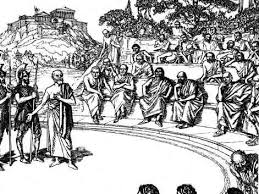 Some of the charges sound ominous in their vagueness (“corrupting the youth”), while others are simply peculiar. But against the backdrop of what we know about Socrates’ life and within the context of the world in which he lived, a consistent thread can be found. By pursuing what he considered to be a divinely inspired vocation, Socrates threatened and angered the wrong people.
Over time, his very existence was a continuing reminder that the stable foundations of a society are only as good as the willingness of the members of that society to agree that some things cannot be questioned, that some basic assumptions are sacrosanct. And nothing was sacrosanct to Socrates. His regular and very public questioning of everyone who would engage with him in conversation imperceptibly but inexorably had a corrosive effect. Young people were attracted to him not primarily because of his commitment to a life of pursuing truth through questioning,  but rather because he continually exposed important persons as pompous frauds. Socrates’ Athens is remembered fondly by many as one of the first experiments in democracy, but when freedom threatens power and stability, something has to give. For this he was brought to trial and lost his life.
Despite his occasional claims that he had been set on a life’s path that brought him to an untimely end by something that he cryptically referred to as “the god,” Socrates was thoroughly secular in his interests and activities. His primary concern was this world, the specific human beings with whom he lived and worked, and seeking to discover through dialogue and conversation what the various elements of a well-lived life might be, as well as how (or if) those elements can work effectively together. 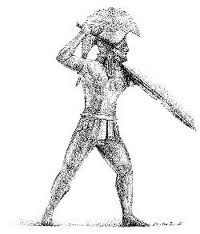 He had a family, a job, was a good friend to many, an honored citizen-soldier, and in many ways was not that different from either his fellow Athenians or from any of us. Had he not paid with his life for his strange and quirky resolve to question and prod everyone and everything, we might have never heard of him. But this homely, awkward man reaches out to us across the centuries because he committed his life to the proposition that there is nothing more dangerous than premature and poorly supported pretensions to certainty. There is nothing more likely to smother growth than the belief that we are “all set.”
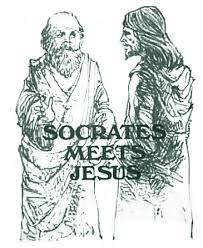 There is much that a person of faith can learn from Socrates. Even though his concerns were secular, what he taught and what he lived is directly transferable to those who are committed to journeying in the territory of the sacred. There is no area of human enquiry where the pressure is stronger to simply believe without questioning than issues concerning the relationship between human and divine. There are innumerable systems of belief that one could adopt that will provide definitive answers to all of the pertinent questions—Does God exist? What is God like? What does God require of me? The fact that the purportedly certain and absolute answers provided by these myriad systems of belief are incompatible raises a big problem, of course—which system has it right?
The life of Socrates is a reminder that such systems raise an even larger problem, the problem of certainty. Certainty offers the promise of closure, of stability, of security, all valuable and attractive commodities. But a Socratic faith recognizes that when bought at the price of openness, change and growth, these are commodities not worth having. Socrates challenges me as a person of faith to recognize that rather than questions being a means to an end of definitive answers, the best questions are an end in themselves. The best questions always allow for the possibility that what I currently believe might be wrong, is always revisable, and that I have a lot to learn. Continuous questioning does not imply that there are no absolute answers, but it does imply that I have no reason to believe at any point that I have found them.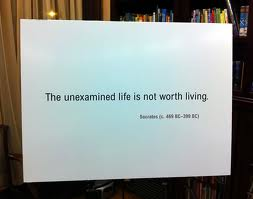
In Plato’s Crito, a short dialogue containing a conversation between Socrates and his friend Crito that occurs in Socrates’ prison cell in the early hours of the day of Socrates’ execution, Socrates tells Crito that there is a difference between living and living well. In the life of faith, there is a similar difference between believing and believing well, between believing in order to put important questions to rest and believing in order to energize the asking of better and better questions. The most famous one-liner ever attributed to Socrates comes from his defense of his life when on trial: “The unexamined life is not worth living.” I would add that for a person of Socratic faith, the unexamined faith is not worth having.
Previous Post

February 15, 2017
A Hard Saying
Next Post
February 20, 2017 Who Would Jesus Bomb?
Browse Our Archives
Select a Category abortion Advent AI Angels Artificial intelligence atheism attention baptism Baptists beauty belief Benedictines Bible bicycling Big Bird books Bovina Camaldoli hermitage Canada Catholicism cats certainty change Christianity Christmas Collegeville Covid-19 creativity Development of Western Civilization dogs doubt Easter Enneagram Epiphany Episcopal ethics Eucharist evil extroverts Facebook faith family fear flowers forgiveness freedom friends God goodness grace happiness heaven hell history Holy Spirit Holy Week hope human nature humility humor idolatry incarnation introverts irreverence Islam Jeanne Jesus Joe Biden joy Judaism justice Kamala Harris knowledge Lent listen literature liturgy love Marsue Memorial Day miracles movies music mystery mythology NPR Old Testament optimism paradox peace Penguins philosophy piano podcast politics power prayer Protestantism Providence College Religion Rhode Island sabbatical sacrament science seeing silence Simone Weil Socrates soul sports St. John's College stories suffering tattoo teaching technology television theology thinking time tolerance transcendence travel trees trust truth Uncategorized Vermont wisdom wonder writing
Select a Month May 2026 April 2026 March 2026 February 2026 January 2026 December 2025 November 2025 October 2025 September 2025 August 2025 July 2025 June 2025 May 2025 April 2025 March 2025 February 2025 January 2025 December 2024 November 2024 October 2024 September 2024 August 2024 July 2024 June 2024 May 2024 April 2024 March 2024 February 2024 January 2024 December 2023 November 2023 October 2023 September 2023 August 2023 July 2023 June 2023 May 2023 April 2023 March 2023 February 2023 January 2023 December 2022 November 2022 October 2022 September 2022 August 2022 July 2022 June 2022 May 2022 April 2022 March 2022 February 2022 January 2022 December 2021 November 2021 October 2021 September 2021 August 2021 July 2021 June 2021 May 2021 April 2021 March 2021 February 2021 January 2021 December 2020 November 2020 October 2020 September 2020 August 2020 July 2020 June 2020 May 2020 April 2020 March 2020 February 2020 January 2020 December 2019 November 2019 October 2019 September 2019 August 2019 July 2019 June 2019 May 2019 April 2019 March 2019 February 2019 January 2019 December 2018 November 2018 October 2018 September 2018 August 2018 July 2018 June 2018 May 2018 April 2018 March 2018 February 2018 January 2018 December 2017 November 2017 October 2017 September 2017 August 2017 July 2017 June 2017 May 2017 April 2017 March 2017 February 2017 January 2017 December 2016 November 2016 October 2016 September 2016 August 2016 July 2016 June 2016 May 2016 April 2016 March 2016 February 2016 January 2016 December 2015 November 2015 October 2015 September 2015 August 2015 July 2015 June 2015 May 2015 April 2015 March 2015 February 2015 January 2015 December 2014 November 2014 October 2014 September 2014 August 2014 July 2014 June 2014 May 2014 April 2014 March 2014 February 2014 January 2014 December 2013 November 2013 October 2013 September 2013 August 2013 July 2013 June 2013 May 2013 April 2013 March 2013 February 2013 January 2013 December 2012 November 2012 October 2012 September 2012
Follow Us!
TAKE THE
Religious Wisdom Quiz
What city was Jesus born in?
Select your answer to see how you score.
Capernaum Bethlehem Jerusalem Nazareth
Books by This Author Books by Vance G. Morgan
Related posts from Freelance Christianity

The Lonely Pawn: On Faith, Doubt, and Meaning


AI and Love: When a Chatbot Becomes a...

TRENDING AT PATHEOS Progressive Christian

What Being a Modern-Day Apostle Means to Me
In my last column, I discussed the ins and outs of modern-day...

Did Ancient China Once Worship the God of...
Across human history, a common thread weaves through the origins of the...

Love Your Neighbor – Including Earth-Kin: Lev. 19,...
God’s command to love your neighbor means acting in an ethical and...

Lead a Church Study of “Jesus and Lao...
Guest writer Jack Thomas (The Irreverent Reverend) reflects on leading his church...

Pastoral Wisdom for Responding to Sermon Pushback
Getting sermon pushback on your social justice sermon? Learn practical, Proverbs-based strategies...

Principles for Understanding the Apostolic Ministry Today
Whenever people discover that my formal ministry title is "apostle," as in...
view all Progressive Christian blogs
Ad-Free & Subscriber Log-In Subscription Support
- About Us
- 2026 Calendar
- Videos
- Podcasts
- Library of World Religions
- Faith In Media Tracker
- Advertise With Us
- Write for Us
- Privacy Policy
- Terms of Service
- Do Not Sell My Data
- Contact Us
- Radiant Digital
- Manage Newsletter Subscriptions
- Unsubscribe From Notifications
- Sitemap
Copyright 2008-2026, Patheos. All rights reserved.
Subscription Support Ad-Free & Subscriber Log-In
Follow Patheos