
BuddhistCatholicContemplativeEvangelicalGeneral ChristianHinduJewishLatter-day SaintMuslimNew VisionsProgressive Christian
Beliefs
- Buddhist
- Catholic
- Contemplative
- Evangelical
- General Christian
- Hindu
- Jewish
- Latter-day Saint
- More Voices
- Muslim
- New Visions
- Pagan
- Progressive Christian
Topics
- Religion News
- Food and Religion
- Sports and Religion
- Religious Art
- Religious Music and Entertainment
- Religious Events
- History and Religion
- Style and Religion
- Politics and Religion
- Women in Religion
- Recreation Outdoors and Religion
- Business Finance and Religion
- Careers Workplace and Religion
- Education and Religion
- Family Parenting and Religion
- Health Fitness and Religion
- Home and Religion
- Relationships and Religion
- Technology and Religion
- Travel and Religion
Columnists
- Buddhist Columnists
- Business Finance and Religion Columnists
- Careers Workplace and Religion Columnists
- Catholic Columnists
- Contemplative Columnists
- Education and Religion Columnists
- Evangelists Columnists
- Family Parenting and Religion Columnists
- General Christian Columnists
- Health Fitness and Religion Columnists
- Hindu Columnists
- History and Religion Columnists
- Home and Religion Columnists
- Jewish Columnists
- More Voices Columnists
- Latter Day Columnists
- Muslim Columnists
- New Visions Columnists
- Nonreligious Columnists
- Pagan Columnists
- Politics and Religion Columnists
- Progressive Columnists
- Recreation Outdoors and Religion Columnists
- Relationships and Religion Columnists
- Religion News Columnists
- Religious Art Columnists
- Religious Events Columnists
- Religious Music and Entertainment Columnists
- Sports and Religion Columnists
- Style and Religion Columnists
- Technology and Religion Columnists
- Travel and Religion Columnists
- Women in Religion Columnists
Resource Library
- 2026 Calendar
- Library of World Religions
- The 100 Most Holy Places on Earth
- Patheos Answers
- Podcasts
- Videos
- Faith Leaders Database
- Anglican Episcopalian
- Bahai
- Baptist
- Buddhism
- Christianity
- Confucianism
- Eastern Orthodoxy
- Hinduism
- Holiness and Pentecostal
- ISKCON
- Islam
- Judaism
- Lutheran
- Methodist
- The Church of Jesus Christ of Latter-day Saints
- New Age
- Paganism
- Presbytarian and Reformed
- Protestantism
- Religion Behind the Scenes
- Roman Catholic
- Scientology
- Shia Islam
- Sikhism
- Sufism
- Sunni Islam
- Taoism
- Zen
- See all religions
Research Tools
 Ad-Free & Subscriber Log-In Subscription Support
Ad-Free & Subscriber Log-In Subscription Support
Follow Patheos 

- Trending:
- Forgiveness
- |
- Marriage
- |
- Consciousness
- |
- Death Penalty
- |
- Election
- |
- Halloween

- Home
- Progressive Christian
- Two Plus Two Makes Four
Two Plus Two Makes Four
Last updated on: February 6, 2018 at 7:00 am by Vance Morgan
Two Plus Two Makes Four 2018-02-05T23:11:09-04:00 Vance Morgan
Patheos Explore the world's faith through different perspectives on religion and spirituality! Patheos has the views of the prevalent religions and spiritualities of the world.
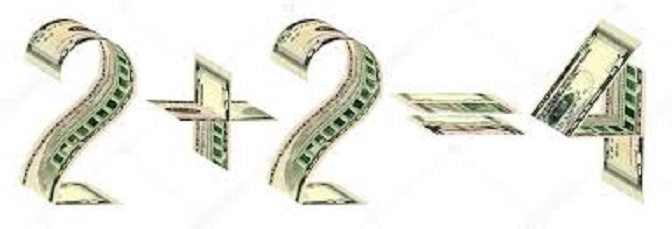
In J. M. Coetzee’s strange and fascinating novel The Childhood of Jesus, the precocious child David has a difficult time understanding numbers. Oh, he knows their names but is not inclined to put them in the order that the rules of mathematics specify. Nor is he inclined to accept the rules guiding any accepted human behavior—he wants to live in a world in which things are valuable and right to the extent that he likes them, and he is not willing to arrange numbers in the proper sequence that everyone agrees upon. After one too many patient attempts to steer David toward conformity, his guardian Símon sputters “The answer to all your Why? questions, past, present and future is: Because that is the way the world is. The world was not made for our convenience, my young friend. It is up to us to fit in.”
This business of knowing when to fit in and when to creatively resist expectations is a lifelong challenge that all of us grapple with on a daily basis. At the heart of that challenge lie questions so fundamental that they literally shape our reality. Is the search for truth more like a treasure hunt or a creative, artistic process? Is meaning something to be found or to be made? Tentative answers to these questions frame one’s encounter with both oneself and the outside world.
As Plato famously suggested, it is difficult to imagine meaning as the target of an open search, since I won’t know if I’ve discovered the goal of the search unless I already have a sense of what I’m looking for. But if meaning is something that each of us creates throughout the process of our lives, what hope is there for shared meaning, for truths that are not just mine but everyone’s in common?
Although both by nature and philosophical preference I am more of a “creative process” than “treasure hunt” sort of person when it comes to engagement with meaning and truth, I spent a recent semester exploring a seminal text in philosophy written by one of the most eloquent advocates of the “treasure hunt” model in the Western tradition. Plato’s Republic is, among many other things, an extended development of the idea that Truth is objective, that meaning is something to be found, not created, and that enlightenment is a life-long process of being freed from the clutches of our ego-driven subjective “truths” in order to slowly discover what “Truth” really is.
Plato’s paradigm for Truth is mathematics, a discipline that with its objective principles and rules exposes the truth-seeker to a world in which what is true is not up to me but is available to those who are willing to commit themselves to “the sight of the Truth.” Plato makes an extended argument that moral values and virtues properly understood exhibit the precision, certainty and objectivity of mathematics. Indeed, mathematics is Plato’s exemplar of the nature of truth; he insisted that only those who love geometry could enter his Academy, because it is through study of mathematics that one becomes accustomed to the nature of all truth.
If my students over the past twenty-five years are an accurate sampling, Plato’s commitment to the objectivity of truth is strongly opposed to our contemporary intuitions. As I often do, I introduced the problem early in the semester with a simple question about a couple of basic truth claims. I wrote two sentences on the board,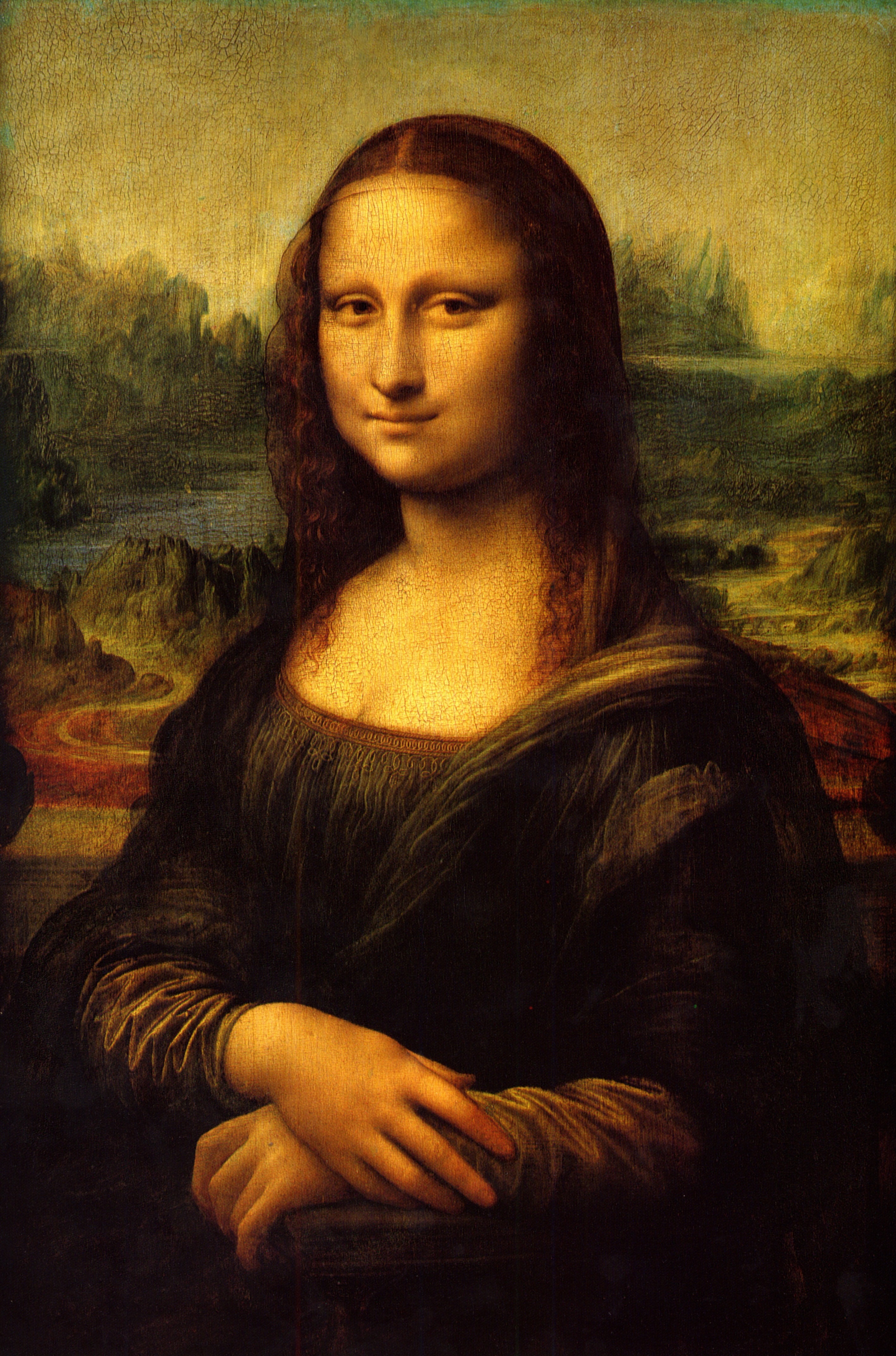
A. Two plus two equals four.
B. The Mona Lisa is a beautiful painting.
then asked for observations about what makes these truth claims different. Within short order the students point out that A is objectively true (as are all mathematical truths), while B is subjectively true (as are all aesthetic claims). If someone denies the truth of A, we assume that either that person doesn’t know the basic rules of arithmetic, is deliberately being a contrarian, or simply is nuts. If someone denies the truth of B, however, no problem—there’s a reason why we say “beauty is in the eye of the beholder,” after all.
Then I move to the point of the exercise by writing a third truth claim on the board.
C. X is right (good) and Y is wrong (bad).
X and Y can be anything that people are inclined to make value judgments about. I simply ask “Is C more like A or like B?’ When we venture into the realm of moral truth claims, in other words, have we entered a realm more like mathematics or art? Objective or subjective? Finding or creating? In twenty-five years of teaching, students have overwhelmingly given the same answer—moral truth claims and judgments are more like B than A. Morality is subjective rather than objective, in other words. In my Plato’s Republic class, only two students out of twenty-five present claimed that moral claims are objectively true—and they were both Catholic seminarians.
When I asked the other twenty-three students—many of whom were the products of Catholic primary and secondary education—why they bundled moral and value truth claims together with aesthetic claims as subjective, most zeroed in on the problem of moral disagreement. Essentially their argument was that since people disagree significantly across the board about every moral issue imaginable, and given the apparent absence of any authoritative perspective from which it could be judged who is right and who is wrong, moral disagreement looks a lot more like the Mona Lisa squabble than whether two plus two equals four or five.
The real problem is that, unlike mathematics, there is no working and accepted objective standard to which one can appeal when trying to figure out who is right and who is wrong in a moral disagreement. Rather than do the difficult and challenging work of seeking objective standards, it is much easier to assume there are no such standards in morality (except perhaps extreme tolerance) and place moral truth claims in the subjective category. We get to create them ourselves without being answerable to an objective standard—because there isn’t any such standard. Let the discussion begin.
In The Plague, a central and early text in another one of my recent classes, Albert Camus raises the possibility that despite the apparent subjectivity of moral claims, there comes a time when one must hang on to moral commitments with the tenacity of two plus two equals four.
Again and again there comes a time in history when the man who dares to say that two and two make four is punished with death. And the question is not one of knowing what punishment or reward attends the making of this calculation. The question is that of knowing whether two and two do make four.
Here the narrator of The Plague is commenting on the “sanitation squads” in the novel who, rather than hiding from an apparently random and incurable plague that is sweeping across their city, taking the lives of hundreds of their fellow citizens per day, choose to embrace the basic moral task of facing the danger head on, putting their own lives at risk in the service of making the suffering of others slightly less intense and their environment slightly less dangerous.
When asked why they have taken on such a thankless task, the members of the sanitation squad always answer with mathematical simplicity. Some things just need to be done. And sometimes what needs to be done is as obvious as the truth of two plus two equals four. “But what you are doing may very well lead to your death,” someone might object. “So be it.”
Camus’ point is strengthened significantly when considering that The Plague is not just a powerful work of fiction but is also a multi-layered allegory. Published in 1947, the bulk of the novel was written during the Nazi occupation of France during World War II, with the various characters in the novel representing the different reactions of French citizens to totalitarianism, the loss of their freedoms, and the extermination of undesirables. Those who, as did the sanitation squads, chose to address the Nazi plague in the face of overwhelming odds of failure are those who recognized that even in a moral world turned upside down, sometimes the truth and what is right are as obvious as a simple sum in arithmetic. Even in the world of morals and values, some things are as clear as mathematical truths. Sometimes it really is that simple.
Development of Western Civilization
Development of Western Civilization
Previous Post

February 4, 2018
Keeping Hope Alive
Next Post
February 8, 2018 Tolerance on Steroids
Browse Our Archives
Select a Category abortion Advent AI Angels Artificial intelligence atheism attention baptism Baptists beauty belief Benedictines Bible bicycling Big Bird books Bovina Camaldoli hermitage Canada Catholicism cats certainty change Christianity Christmas Collegeville Covid-19 creativity Development of Western Civilization dogs doubt Easter Enneagram Epiphany Episcopal ethics Eucharist evil extroverts Facebook faith family fear flowers forgiveness freedom friends God goodness grace happiness heaven hell history Holy Spirit Holy Week hope human nature humility humor idolatry incarnation introverts irreverence Islam Jeanne Jesus Joe Biden joy Judaism justice Kamala Harris knowledge Lent listen literature liturgy love Marsue Memorial Day miracles movies music mystery mythology NPR Old Testament optimism paradox peace Penguins philosophy piano podcast politics power prayer Protestantism Providence College Religion Rhode Island sabbatical sacrament science seeing silence Simone Weil Socrates soul sports St. John's College stories suffering tattoo teaching technology television theology thinking time tolerance transcendence travel trees trust truth Uncategorized Vermont wisdom wonder writing
Select a Month May 2026 April 2026 March 2026 February 2026 January 2026 December 2025 November 2025 October 2025 September 2025 August 2025 July 2025 June 2025 May 2025 April 2025 March 2025 February 2025 January 2025 December 2024 November 2024 October 2024 September 2024 August 2024 July 2024 June 2024 May 2024 April 2024 March 2024 February 2024 January 2024 December 2023 November 2023 October 2023 September 2023 August 2023 July 2023 June 2023 May 2023 April 2023 March 2023 February 2023 January 2023 December 2022 November 2022 October 2022 September 2022 August 2022 July 2022 June 2022 May 2022 April 2022 March 2022 February 2022 January 2022 December 2021 November 2021 October 2021 September 2021 August 2021 July 2021 June 2021 May 2021 April 2021 March 2021 February 2021 January 2021 December 2020 November 2020 October 2020 September 2020 August 2020 July 2020 June 2020 May 2020 April 2020 March 2020 February 2020 January 2020 December 2019 November 2019 October 2019 September 2019 August 2019 July 2019 June 2019 May 2019 April 2019 March 2019 February 2019 January 2019 December 2018 November 2018 October 2018 September 2018 August 2018 July 2018 June 2018 May 2018 April 2018 March 2018 February 2018 January 2018 December 2017 November 2017 October 2017 September 2017 August 2017 July 2017 June 2017 May 2017 April 2017 March 2017 February 2017 January 2017 December 2016 November 2016 October 2016 September 2016 August 2016 July 2016 June 2016 May 2016 April 2016 March 2016 February 2016 January 2016 December 2015 November 2015 October 2015 September 2015 August 2015 July 2015 June 2015 May 2015 April 2015 March 2015 February 2015 January 2015 December 2014 November 2014 October 2014 September 2014 August 2014 July 2014 June 2014 May 2014 April 2014 March 2014 February 2014 January 2014 December 2013 November 2013 October 2013 September 2013 August 2013 July 2013 June 2013 May 2013 April 2013 March 2013 February 2013 January 2013 December 2012 November 2012 October 2012 September 2012
Follow Us!
TAKE THE
Religious Wisdom Quiz
Who said, "Could not he who opened the eyes of the blind man have kept this man from dying?"
Select your answer to see how you score.
Peter Mourners at Lazarus' tomb The centurion Mary Magdalene
Books by This Author Books by Vance G. Morgan
Related posts from Freelance Christianity

The Lonely Pawn: On Faith, Doubt, and Meaning


AI and Love: When a Chatbot Becomes a...

TRENDING AT PATHEOS Progressive Christian

What Being a Modern-Day Apostle Means to Me
In my last column, I discussed the ins and outs of modern-day...

Did Ancient China Once Worship the God of...
Across human history, a common thread weaves through the origins of the...

Love Your Neighbor – Including Earth-Kin: Lev. 19,...
God’s command to love your neighbor means acting in an ethical and...

Lead a Church Study of “Jesus and Lao...
Guest writer Jack Thomas (The Irreverent Reverend) reflects on leading his church...

Pastoral Wisdom for Responding to Sermon Pushback
Getting sermon pushback on your social justice sermon? Learn practical, Proverbs-based strategies...

Principles for Understanding the Apostolic Ministry Today
Whenever people discover that my formal ministry title is "apostle," as in...
view all Progressive Christian blogs
Ad-Free & Subscriber Log-In Subscription Support
- About Us
- 2026 Calendar
- Videos
- Podcasts
- Library of World Religions
- Faith In Media Tracker
- Advertise With Us
- Write for Us
- Privacy Policy
- Terms of Service
- Do Not Sell My Data
- Contact Us
- Radiant Digital
- Manage Newsletter Subscriptions
- Unsubscribe From Notifications
- Sitemap
Copyright 2008-2026, Patheos. All rights reserved.
Subscription Support Ad-Free & Subscriber Log-In
Follow Patheos