
BuddhistCatholicContemplativeEvangelicalGeneral ChristianHinduJewishLatter-day SaintMuslimNew VisionsProgressive Christian
Beliefs
- Buddhist
- Catholic
- Contemplative
- Evangelical
- General Christian
- Hindu
- Jewish
- Latter-day Saint
- More Voices
- Muslim
- New Visions
- Pagan
- Progressive Christian
Topics
- Religion News
- Food and Religion
- Sports and Religion
- Religious Art
- Religious Music and Entertainment
- Religious Events
- History and Religion
- Style and Religion
- Politics and Religion
- Women in Religion
- Recreation Outdoors and Religion
- Business Finance and Religion
- Careers Workplace and Religion
- Education and Religion
- Family Parenting and Religion
- Health Fitness and Religion
- Home and Religion
- Relationships and Religion
- Technology and Religion
- Travel and Religion
Columnists
- Buddhist Columnists
- Business Finance and Religion Columnists
- Careers Workplace and Religion Columnists
- Catholic Columnists
- Contemplative Columnists
- Education and Religion Columnists
- Evangelists Columnists
- Family Parenting and Religion Columnists
- General Christian Columnists
- Health Fitness and Religion Columnists
- Hindu Columnists
- History and Religion Columnists
- Home and Religion Columnists
- Jewish Columnists
- More Voices Columnists
- Latter Day Columnists
- Muslim Columnists
- New Visions Columnists
- Nonreligious Columnists
- Pagan Columnists
- Politics and Religion Columnists
- Progressive Columnists
- Recreation Outdoors and Religion Columnists
- Relationships and Religion Columnists
- Religion News Columnists
- Religious Art Columnists
- Religious Events Columnists
- Religious Music and Entertainment Columnists
- Sports and Religion Columnists
- Style and Religion Columnists
- Technology and Religion Columnists
- Travel and Religion Columnists
- Women in Religion Columnists
Resource Library
- 2026 Calendar
- Library of World Religions
- The 100 Most Holy Places on Earth
- Patheos Answers
- Podcasts
- Videos
- Faith Leaders Database
- Anglican Episcopalian
- Bahai
- Baptist
- Buddhism
- Christianity
- Confucianism
- Eastern Orthodoxy
- Hinduism
- Holiness and Pentecostal
- ISKCON
- Islam
- Judaism
- Lutheran
- Methodist
- The Church of Jesus Christ of Latter-day Saints
- New Age
- Paganism
- Presbytarian and Reformed
- Protestantism
- Religion Behind the Scenes
- Roman Catholic
- Scientology
- Shia Islam
- Sikhism
- Sufism
- Sunni Islam
- Taoism
- Zen
- See all religions
Research Tools
 Ad-Free & Subscriber Log-In Subscription Support
Ad-Free & Subscriber Log-In Subscription Support
Follow Patheos 

- Trending:
- Forgiveness
- |
- Marriage
- |
- Consciousness
- |
- Death Penalty
- |
- Election
- |
- Halloween

- Home
- Progressive Christian
- Trouble With the Language Police
Trouble With the Language Police
Last updated on: March 28, 2023 at 6:00 am by Vance Morgan
Trouble With the Language Police 2023-03-27T12:55:17-04:00 Vance Morgan
Patheos Explore the world's faith through different perspectives on religion and spirituality! Patheos has the views of the prevalent religions and spiritualities of the world.
I was in church for the first time in a month or so recently and noticed a couple of seemingly minor but very important changes that have been made in very familiar liturgical texts by the new priest-in-charge who has been in place for just a few months. For instance, the Lord’s Prayer:
Praise God from whom all blessings flow, Praise Him God all creatures here below, Praise Him God above ye heavenly hosts, Praise Father, Son, and Holy Ghost.
And also a minor change in the Sanctus during the eucharistic celebration:
Holy, holy, holy Lord, God of power and might, heaven and earth are full of your glory. Heaven and earth are full of your glory. Hosanna in the highest. Blessed is He the One who comes in the name of the Lord. Hosanna in the highest.
I like it. Even the slightest movement toward inclusion and away from the notion that divinity and maleness go hand in hand is welcome. Yet I know just how challenging even the slightest language changes can be; I suspect that our priest has received more than one complaint.
Philosophers love words. We love to dissect them, analyze them, write insufferably boring and inscrutable articles and books about them, and talk among ourselves in a code that only the most inside of the insiders understand. But beneath their PhDs and pretension, philosophers are on to something. Words matter. A lot.  As Ludwig Wittgenstein—perhaps the greatest philosopher of the twentieth century—wrote, “the limits of my language are the limits of my world.” Our words shape our world. And if we want to change our world, we might want to consider paying close attention to our words—and changing them.
I first encountered both the difficult and liberating aspects of changing my words and language when writing my master’s thesis more than thirty-five years ago. I grew up in a world where language was entirely skewed in the direction of maleness—pronouns, examples, collective nouns for all human beings, God—everything I thought and talked about came packaged in gender-exclusive language, as if one half of the human race wasn’t worth mentioning. The Bible that I grew up reading and memorizing was soaked through and through with patriarchal language.
During the 60s many voices began pointing out both how pervasive and offensive sexist language was; I also noted that many people, including most of the people I knew, were not inclined to change their speech habits. Not because they didn’t think that feminists and others had a point, but because they were used to using sexist language and they perceived that it would be difficult to change their language default setting.
During my early adulthood I worked on changing my own speech patterns away from sexist toward inclusive; in the late eighties, as I tackled the task of writing a master’s thesis, I decided that I would make a conscious and concerted effort to write the 100+ page document using entirely gender-inclusive language. And it was very difficult to pull off. Not only did it require my becoming entirely conscious of my own sexist language habits, but the primary texts from ancient philosophy that were at the heart of my thesis were written by males who used exclusively male-oriented discourse.
My new writing vocabulary and style seemed forced and stilted at times, but I attributed that to the difficulty of breaking bad habits and establishing better new ones. Over the subsequent years, using gender-inclusive language has become so natural and habitual to me that hearing or reading sexist, male-oriented language screeches like nails on a chalkboard. One of my regular classroom missions is to make students aware of how important it is to use gender-inclusive language. When some students—both male and female—don’t see the moral reasons behind my mission and resist it, I sell it to them practically by assuring them that gender-inclusive language is a standard expectation in business communication. Try getting a good job without gender-inclusive language in your skill set.
But despite my commitment to language inclusion and, perhaps, to progressive “wokeness” in general, I still unexpectedly ran afoul of the language police a couple of weeks ago. It began innocently enough. A Facebook acquaintance (we’ve never actually met) whose posts I generally enjoy shared a meme that said something along the lines of “Listening to an audiobook and reading a hard copy book are the same thing. Those of you who think otherwise are just wrong.” My acquaintance commented favorably, saying “I will die on this hill!”
By the time I stumbled across the post, a relatively long comment thread had already developed which included, as far as I could tell, nothing but complete support for audiobooks and disdain for anyone who might disagree with the sentiment. Unfortunately my inner contrarian kicked in and I commented as follows:
Listening to an audiobook and reading a hard copy book are not the same activity. �
I inserted the smiley face because I had a suspicion that my comment might be taken too seriously.
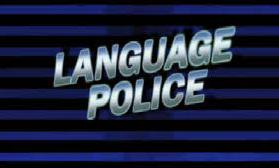 My suspicion was correct—within short order numerous commenters, including my acquaintance who posted originally, let me know that my comment was just about as welcome in this conversation as a fart in church. Quickly I was accused of being “ableist” because my implied preference for reading hard copy books lessens the value of those who, because of disability, must listen to books. Others pointed out that listening to audiobooks and reading hard copy books really are the same activity, since apparently the same area of the brain lights up regardless of through which sense portals the book enters the brain.
I don’t advise continuing such conversations. Once it has been decided that you are a dreaded “ist” of some sort, all subsequent attempts at defending oneself are merely further evidence that one is not only that kind of “ist” but probably also a violator of any number of other possible standards and boundaries. Eventually in response to the latest “ablesplaining” comment from a person with whom I have exchanged many positive posts and comments over the years, my frustrations finally surfaced. “___, I have no interest in conforming my language to the fear that someone, somewhere might possibly be offended by something. Life’s too short.” I then deleted my post and the entire subsequent conversation.
I t’s a minor example of an important issue. In the latest issue of The Atlantic, George Packer takes on what he calls “equity language” in a short article titled “The Moral Case Against Euphemism.” Arguing that “banning words won’t make the world more just,” Packer admits that “the rationale for equity language guides is hard to fault. The seek a world without oppression and injustice.”
The problem is that since such a world continually proves to either be extraordinarily difficult or (more probably) impossible to achieve, the language police (my phrase, not Packer’s) “want to make the ugliness of our society disappear by linguistic fiat.” Attempts to purify language reveal “a weakened belief in more material forms of progress.” If we can’t eliminate racism or achieve an equitable society in reality, perhaps we can at least enforce from the top down a language that sounds as if we have achieved it. But equity language does nothing to address the real inequities in society. “Equity language doesn’t fool anyone who lives with real affliction. It’s meant to spare only the feelings of those who use it.”
Although the demands of “equity language” are usually attributed to the progressive, left side of things, all sides have their language police, both in politics and religion. The only reason to pay attention to and seek to change one’s language is to align one’s words with the world one hopes for. If language does not lead to action, then it is just a bunch of words. And words are cheap.
Previous Post

March 26, 2023
To Truly Live, We Have to Die
Next Post

March 30, 2023 Lifting the Fog from Faith
Recent Comments
"Mary did have a choice. And she was able to make it before the Holy ..."
"i cannot read beyond your recommendations for the books since i like to have a ..."
"AI will never be able to utter with honesty, feeling, or humility, the greeting: "Namaste".It ..."
"They do. I'm sure you could find discussions of the same topic from any of ..."
Browse Our Archives
Select a Category abortion Advent AI Angels Artificial intelligence atheism attention baptism Baptists beauty belief Benedictines Bible bicycling Big Bird books Bovina Camaldoli hermitage Canada Catholicism cats certainty change Christianity Christmas Collegeville Covid-19 creativity Development of Western Civilization dogs doubt Easter Enneagram Epiphany Episcopal ethics Eucharist evil extroverts Facebook faith family fear flowers forgiveness freedom friends God goodness grace happiness heaven hell history Holy Spirit Holy Week hope human nature humility humor idolatry incarnation introverts irreverence Islam Jeanne Jesus Joe Biden joy Judaism justice Kamala Harris knowledge Lent listen literature liturgy love Marsue Memorial Day miracles movies music mystery mythology NPR Old Testament optimism paradox peace Penguins philosophy piano podcast politics power prayer Protestantism Providence College Religion Rhode Island sabbatical sacrament science seeing silence Simone Weil Socrates soul sports St. John's College stories suffering tattoo teaching technology television theology thinking time tolerance transcendence travel trees trust truth Uncategorized Vermont wisdom wonder writing
Select a Month May 2026 April 2026 March 2026 February 2026 January 2026 December 2025 November 2025 October 2025 September 2025 August 2025 July 2025 June 2025 May 2025 April 2025 March 2025 February 2025 January 2025 December 2024 November 2024 October 2024 September 2024 August 2024 July 2024 June 2024 May 2024 April 2024 March 2024 February 2024 January 2024 December 2023 November 2023 October 2023 September 2023 August 2023 July 2023 June 2023 May 2023 April 2023 March 2023 February 2023 January 2023 December 2022 November 2022 October 2022 September 2022 August 2022 July 2022 June 2022 May 2022 April 2022 March 2022 February 2022 January 2022 December 2021 November 2021 October 2021 September 2021 August 2021 July 2021 June 2021 May 2021 April 2021 March 2021 February 2021 January 2021 December 2020 November 2020 October 2020 September 2020 August 2020 July 2020 June 2020 May 2020 April 2020 March 2020 February 2020 January 2020 December 2019 November 2019 October 2019 September 2019 August 2019 July 2019 June 2019 May 2019 April 2019 March 2019 February 2019 January 2019 December 2018 November 2018 October 2018 September 2018 August 2018 July 2018 June 2018 May 2018 April 2018 March 2018 February 2018 January 2018 December 2017 November 2017 October 2017 September 2017 August 2017 July 2017 June 2017 May 2017 April 2017 March 2017 February 2017 January 2017 December 2016 November 2016 October 2016 September 2016 August 2016 July 2016 June 2016 May 2016 April 2016 March 2016 February 2016 January 2016 December 2015 November 2015 October 2015 September 2015 August 2015 July 2015 June 2015 May 2015 April 2015 March 2015 February 2015 January 2015 December 2014 November 2014 October 2014 September 2014 August 2014 July 2014 June 2014 May 2014 April 2014 March 2014 February 2014 January 2014 December 2013 November 2013 October 2013 September 2013 August 2013 July 2013 June 2013 May 2013 April 2013 March 2013 February 2013 January 2013 December 2012 November 2012 October 2012 September 2012
Follow Us!
TAKE THE
Religious Wisdom Quiz
Who gave birth to Isaac at a very old age?
Select your answer to see how you score.
Rebekah Sarah Rachel Leah
Books by This Author Books by Vance G. Morgan
Related posts from Freelance Christianity

The Lonely Pawn: On Faith, Doubt, and Meaning


AI and Love: When a Chatbot Becomes a...

TRENDING AT PATHEOS Progressive Christian

What Being a Modern-Day Apostle Means to Me
In my last column, I discussed the ins and outs of modern-day...

Did Ancient China Once Worship the God of...
Across human history, a common thread weaves through the origins of the...

Love Your Neighbor – Including Earth-Kin: Lev. 19,...
God’s command to love your neighbor means acting in an ethical and...

Lead a Church Study of “Jesus and Lao...
Guest writer Jack Thomas (The Irreverent Reverend) reflects on leading his church...

Pastoral Wisdom for Responding to Sermon Pushback
Getting sermon pushback on your social justice sermon? Learn practical, Proverbs-based strategies...

Principles for Understanding the Apostolic Ministry Today
Whenever people discover that my formal ministry title is "apostle," as in...
view all Progressive Christian blogs
What Are Your Thoughts?leave a comment
Ad-Free & Subscriber Log-In Subscription Support
- About Us
- 2026 Calendar
- Videos
- Podcasts
- Library of World Religions
- Faith In Media Tracker
- Advertise With Us
- Write for Us
- Privacy Policy
- Terms of Service
- Do Not Sell My Data
- Contact Us
- Radiant Digital
- Manage Newsletter Subscriptions
- Unsubscribe From Notifications
- Sitemap
Copyright 2008-2026, Patheos. All rights reserved.
Subscription Support Ad-Free & Subscriber Log-In
Follow Patheos