
BuddhistCatholicContemplativeEvangelicalGeneral ChristianHinduJewishLatter-day SaintMuslimNew VisionsProgressive Christian
Beliefs
- Buddhist
- Catholic
- Contemplative
- Evangelical
- General Christian
- Hindu
- Jewish
- Latter-day Saint
- More Voices
- Muslim
- New Visions
- Pagan
- Progressive Christian
Topics
- Religion News
- Food and Religion
- Sports and Religion
- Religious Art
- Religious Music and Entertainment
- Religious Events
- History and Religion
- Style and Religion
- Politics and Religion
- Women in Religion
- Recreation Outdoors and Religion
- Business Finance and Religion
- Careers Workplace and Religion
- Education and Religion
- Family Parenting and Religion
- Health Fitness and Religion
- Home and Religion
- Relationships and Religion
- Technology and Religion
- Travel and Religion
Columnists
- Buddhist Columnists
- Business Finance and Religion Columnists
- Careers Workplace and Religion Columnists
- Catholic Columnists
- Contemplative Columnists
- Education and Religion Columnists
- Evangelists Columnists
- Family Parenting and Religion Columnists
- General Christian Columnists
- Health Fitness and Religion Columnists
- Hindu Columnists
- History and Religion Columnists
- Home and Religion Columnists
- Jewish Columnists
- More Voices Columnists
- Latter Day Columnists
- Muslim Columnists
- New Visions Columnists
- Nonreligious Columnists
- Pagan Columnists
- Politics and Religion Columnists
- Progressive Columnists
- Recreation Outdoors and Religion Columnists
- Relationships and Religion Columnists
- Religion News Columnists
- Religious Art Columnists
- Religious Events Columnists
- Religious Music and Entertainment Columnists
- Sports and Religion Columnists
- Style and Religion Columnists
- Technology and Religion Columnists
- Travel and Religion Columnists
- Women in Religion Columnists
Resource Library
- 2026 Calendar
- Library of World Religions
- The 100 Most Holy Places on Earth
- Patheos Answers
- Podcasts
- Videos
- Faith Leaders Database
- Anglican Episcopalian
- Bahai
- Baptist
- Buddhism
- Christianity
- Confucianism
- Eastern Orthodoxy
- Hinduism
- Holiness and Pentecostal
- ISKCON
- Islam
- Judaism
- Lutheran
- Methodist
- The Church of Jesus Christ of Latter-day Saints
- New Age
- Paganism
- Presbytarian and Reformed
- Protestantism
- Religion Behind the Scenes
- Roman Catholic
- Scientology
- Shia Islam
- Sikhism
- Sufism
- Sunni Islam
- Taoism
- Zen
- See all religions
Research Tools
 Ad-Free & Subscriber Log-In Subscription Support
Ad-Free & Subscriber Log-In Subscription Support
Follow Patheos 

- Trending:
- Forgiveness
- |
- Marriage
- |
- Consciousness
- |
- Death Penalty
- |
- Election
- |
- Halloween

- Home
- Progressive Christian
- A Trip to Middle Earth
A Trip to Middle Earth
Last updated on: February 20, 2015 at 7:30 am by Vance Morgan
A Trip to Middle Earth 2015-02-20T07:30:07-04:00 Vance Morgan
Patheos Explore the world's faith through different perspectives on religion and spirituality! Patheos has the views of the prevalent religions and spiritualities of the world.
Everyone has an unforgettable teacher or two in his or her history; I aspire to be that teacher for a person or two in every class I teach. When thinking about those teachers in my own history, I usually go no farther back than my mentors in graduate school, about whom I have written occasionally on this blog.
But as I stood in line for a movie ticket for  “The Hobbit: The Battle of the Five Armies” a few weeks ago, I remembered Mrs. Lord, the wonderfully monikered teacher of my college-prep English class as a freshman in high school. We spent a lot of time with grammar (something that I think fell by the wayside in high school English classes long ago), but I remember the literature. Great Expectations, A Separate Peace, Portrait of the Artist as a Young Man, Edgar Allen Poe short stories, “Romeo and Juliet,” just to name a few. I was well read for a ninth-grader, but had heard of neither the title nor the author of the book from that year that had the greatest influence on me. The Hobbit? I thought? What the hell is a hobbit? And why does
  J. R. R. Tolkien find it necessary to have three initials rather than one first name? I don’t exactly remember the details of my original reaction to this book, but it was strong enough that after finishing it in two days, I went to Mrs. Lord after class and said “I really like this book. Has this guy written anything else?” “As a matter of fact, yes he has,” she replied. And I was hooked for good.
This was decades pre-Amazon, and there were not a whole lot of bookstores in northeastern Vermont, so I don’t exactly recall how I got my hands on paperback copies of the three-volume The Lord of the Rings. But I did (probably my mother pulled it off—it’s the sort of thing she did behind the scenes all the time), and I feel headlong into Middle Earth. In many ways I have never fully returned.  Starting that year (1970), for the next three decades I read the trilogy through from cover to cover on the average of every three years. When I heard over a decade ago that a Peter Jackson was planning a trilogy film treatment of The Lord of the Rings, I was fully prepared to be a critic with the same intensity that the fundamentalists of my youth were critical of Biblical epics (“That’s not scriptural!” “That’s not in the Bible!”). But I loved the trilogy on the big screen (more than I enjoyed the unnecessary trilogy of The Hobbit), and plan to watch the fifteen-hour extended version of the trilogy I have at home straight through at least once before I die (when Jeanne’s out of town—she’s not into this hobbit/elf/dwarf/wizard/orc/ent/ringwraith stuff).
There has always been a great deal of speculation about where Tolkien got his ideas and inspiration from, beginning with the Ring of Power itself, the possession or destruction of which is the driving energy of the thousand plus pages of the epic.
 One Ring to rule them all
One Ring to find them
One Ring to bring them all
and in the Darkness bind them
I can’t say for sure (although I’m sure that dozens of websites would be happy to school me on this), but I know where I hope Tolkien got the idea for the Ring of Power from. As a classically trained scholar, Tolkien knew his Plato—and so he also knew that at the beginning of Book Two of his masterpiece The Republic, Plato tucked a memorable story of another insignificant nobody who found a ring with remarkable powers and corrosive effects—the Ring of Gyges.
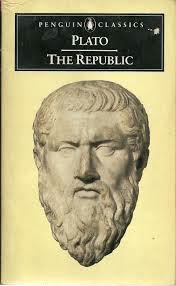 The topic of conversation in The Republic is justice broadly conceived—something more like what we would call “morality” or “right living” rather than the narrower sense of justice as equality or fairness that we contemporary folks are familiar with. The overarching question in the early pages of The Republic is “Why be moral at all?” Socrates intends to argue that being moral is natural to human beings, but before he can get started one of his conversants, Plato’s older brother Glaucon, begs to differ. Normal people, Glaucon claims, believe that human beings are not moral by nature—we are self-interested, aggressive and competitive creatures who want what we want when we want it and are willing to pursue it at any expense, including the welfare of someone else, as long as we think we can get away with it. We impose morality and law on ourselves and each other because we are afraid of each other, but being moral is an artificial state for a human being, something contrary to our basic nature.
To illustrate his point, Glaucon tells the story of a lowly shepherd in the kingdom of Lydia named Gyges. One day while he is bored out of his mind tending the sheep and goats,  Gyges does a bit of exploring and finds a pretty gold ring. He has never owned anything so sparkly and shiny, so he keeps it. A few days later, as he is sitting in the middle of the weekly shepherds committee meeting with several of his colleagues, he is fiddling with his new toy and discovers that when he turns it a certain way on his finger, he turns invisible! Gyges uses his ring of invisibility as an instrument of empowerment—in short order his seduces the queen, kills the king, and becomes the ruler of Lydia. Furthermore, Glaucon argues, any person, from moral giants to lowly degenerates, would do the same thing with the ring of invisibility that Gyges did—whatever they wanted to do. And they would be fools if they did not.
The purpose of Glaucon’s story is to emphasize his point that being moral is artificial, not natural. We restrict our pursuit of self-interest because we fear what will happen if we are discovered breaking the rules of society, rules intended to keep aggressive and self-centered creatures from killing each other. We bind ourselves with the restrictions of the social contract while secretly wishing for a world in which we could do whatever we desire.  The ring of invisibility opens for its wearer that very world, a world of power and opportunity—a world in which everything can be accomplished without fear of retribution or responsibility. That Tolkien’s Ring of Power turns its wearer invisible, just as Gyges’ ring does, is a telling connection to Plato’s ancient tale. But Tolkien introduces a new element—empowerment comes at a cost. Every character sucked into the vortex of the ring’s influence—wizard, elf, dwarf, hobbit or human—experiences the corrosive effect of power without responsibility. Sméagol the lowly hobbit devolves into the tortured Gollum;
 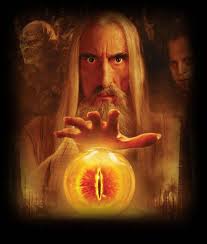 Saruman the White turns from a powerful force for good into an even more powerful force of destruction; kings become bodiless wraiths; once used, unlimited power is both seductive and deadly.
On the surface, the cosmic conflict that dominates The Lord of the Rings seems reducible simplistically to Good vs. Evil, a simplistic reading that makes Tolkien’s fantasy an endless source of ideas for violent video games. But lying just below the surface are the timeless questions that should obsess all of us. What are we? What is morality? Are good and evil mutually exclusive? How should we live our lives in the middle of a reality largely outside our control? Next Friday, I’ll return to the ring of power tales with the story of how I learned something twenty-five years ago from my seven-year-old son that I’ll never forget, something that forever influenced how I think about what is good and what is not.
Previous Post

February 11, 2015
Haunted by Humans
Next Post
February 27, 2015 Someone Would Know
Browse Our Archives
Select a Category abortion Advent AI Angels Artificial intelligence atheism attention baptism Baptists beauty belief Benedictines Bible bicycling Big Bird books Bovina Camaldoli hermitage Canada Catholicism cats certainty change Christianity Christmas Collegeville Covid-19 creativity Development of Western Civilization dogs doubt Easter Enneagram Epiphany Episcopal ethics Eucharist evil extroverts Facebook faith family fear flowers forgiveness freedom friends God goodness grace happiness heaven hell history Holy Spirit Holy Week hope human nature humility humor idolatry incarnation introverts irreverence Islam Jeanne Jesus Joe Biden joy Judaism justice Kamala Harris knowledge Lent listen literature liturgy love Marsue Memorial Day miracles movies music mystery mythology NPR Old Testament optimism paradox peace Penguins philosophy piano podcast politics power prayer Protestantism Providence College Religion Rhode Island sabbatical sacrament science seeing silence Simone Weil Socrates soul sports St. John's College stories suffering tattoo teaching technology television theology thinking time tolerance transcendence travel trees trust truth Uncategorized Vermont wisdom wonder writing
Select a Month May 2026 April 2026 March 2026 February 2026 January 2026 December 2025 November 2025 October 2025 September 2025 August 2025 July 2025 June 2025 May 2025 April 2025 March 2025 February 2025 January 2025 December 2024 November 2024 October 2024 September 2024 August 2024 July 2024 June 2024 May 2024 April 2024 March 2024 February 2024 January 2024 December 2023 November 2023 October 2023 September 2023 August 2023 July 2023 June 2023 May 2023 April 2023 March 2023 February 2023 January 2023 December 2022 November 2022 October 2022 September 2022 August 2022 July 2022 June 2022 May 2022 April 2022 March 2022 February 2022 January 2022 December 2021 November 2021 October 2021 September 2021 August 2021 July 2021 June 2021 May 2021 April 2021 March 2021 February 2021 January 2021 December 2020 November 2020 October 2020 September 2020 August 2020 July 2020 June 2020 May 2020 April 2020 March 2020 February 2020 January 2020 December 2019 November 2019 October 2019 September 2019 August 2019 July 2019 June 2019 May 2019 April 2019 March 2019 February 2019 January 2019 December 2018 November 2018 October 2018 September 2018 August 2018 July 2018 June 2018 May 2018 April 2018 March 2018 February 2018 January 2018 December 2017 November 2017 October 2017 September 2017 August 2017 July 2017 June 2017 May 2017 April 2017 March 2017 February 2017 January 2017 December 2016 November 2016 October 2016 September 2016 August 2016 July 2016 June 2016 May 2016 April 2016 March 2016 February 2016 January 2016 December 2015 November 2015 October 2015 September 2015 August 2015 July 2015 June 2015 May 2015 April 2015 March 2015 February 2015 January 2015 December 2014 November 2014 October 2014 September 2014 August 2014 July 2014 June 2014 May 2014 April 2014 March 2014 February 2014 January 2014 December 2013 November 2013 October 2013 September 2013 August 2013 July 2013 June 2013 May 2013 April 2013 March 2013 February 2013 January 2013 December 2012 November 2012 October 2012 September 2012
Follow Us!
TAKE THE
Religious Wisdom Quiz
According to Hebrews, Jesus is the same yesterday, today, and when?
Select your answer to see how you score.
In all eternity past Forever Until the end of the age Throughout all generations
Books by This Author Books by Vance G. Morgan
Related posts from Freelance Christianity

The Lonely Pawn: On Faith, Doubt, and Meaning


AI and Love: When a Chatbot Becomes a...

TRENDING AT PATHEOS Progressive Christian

What Being a Modern-Day Apostle Means to Me
In my last column, I discussed the ins and outs of modern-day...

Did Ancient China Once Worship the God of...
Across human history, a common thread weaves through the origins of the...

Love Your Neighbor – Including Earth-Kin: Lev. 19,...
God’s command to love your neighbor means acting in an ethical and...

Lead a Church Study of “Jesus and Lao...
Guest writer Jack Thomas (The Irreverent Reverend) reflects on leading his church...

Pastoral Wisdom for Responding to Sermon Pushback
Getting sermon pushback on your social justice sermon? Learn practical, Proverbs-based strategies...

Principles for Understanding the Apostolic Ministry Today
Whenever people discover that my formal ministry title is "apostle," as in...
view all Progressive Christian blogs
Ad-Free & Subscriber Log-In Subscription Support
- About Us
- 2026 Calendar
- Videos
- Podcasts
- Library of World Religions
- Faith In Media Tracker
- Advertise With Us
- Write for Us
- Privacy Policy
- Terms of Service
- Do Not Sell My Data
- Contact Us
- Radiant Digital
- Manage Newsletter Subscriptions
- Unsubscribe From Notifications
- Sitemap
Copyright 2008-2026, Patheos. All rights reserved.
Subscription Support Ad-Free & Subscriber Log-In
Follow Patheos