
BuddhistCatholicContemplativeEvangelicalGeneral ChristianHinduJewishLatter-day SaintMuslimNew VisionsProgressive Christian
Beliefs
- Buddhist
- Catholic
- Contemplative
- Evangelical
- General Christian
- Hindu
- Jewish
- Latter-day Saint
- More Voices
- Muslim
- New Visions
- Pagan
- Progressive Christian
Topics
- Religion News
- Food and Religion
- Sports and Religion
- Religious Art
- Religious Music and Entertainment
- Religious Events
- History and Religion
- Style and Religion
- Politics and Religion
- Women in Religion
- Recreation Outdoors and Religion
- Business Finance and Religion
- Careers Workplace and Religion
- Education and Religion
- Family Parenting and Religion
- Health Fitness and Religion
- Home and Religion
- Relationships and Religion
- Technology and Religion
- Travel and Religion
Columnists
- Buddhist Columnists
- Business Finance and Religion Columnists
- Careers Workplace and Religion Columnists
- Catholic Columnists
- Contemplative Columnists
- Education and Religion Columnists
- Evangelists Columnists
- Family Parenting and Religion Columnists
- General Christian Columnists
- Health Fitness and Religion Columnists
- Hindu Columnists
- History and Religion Columnists
- Home and Religion Columnists
- Jewish Columnists
- More Voices Columnists
- Latter Day Columnists
- Muslim Columnists
- New Visions Columnists
- Nonreligious Columnists
- Pagan Columnists
- Politics and Religion Columnists
- Progressive Columnists
- Recreation Outdoors and Religion Columnists
- Relationships and Religion Columnists
- Religion News Columnists
- Religious Art Columnists
- Religious Events Columnists
- Religious Music and Entertainment Columnists
- Sports and Religion Columnists
- Style and Religion Columnists
- Technology and Religion Columnists
- Travel and Religion Columnists
- Women in Religion Columnists
Resource Library
- 2026 Calendar
- Library of World Religions
- The 100 Most Holy Places on Earth
- Patheos Answers
- Podcasts
- Videos
- Faith Leaders Database
- Anglican Episcopalian
- Bahai
- Baptist
- Buddhism
- Christianity
- Confucianism
- Eastern Orthodoxy
- Hinduism
- Holiness and Pentecostal
- ISKCON
- Islam
- Judaism
- Lutheran
- Methodist
- The Church of Jesus Christ of Latter-day Saints
- New Age
- Paganism
- Presbytarian and Reformed
- Protestantism
- Religion Behind the Scenes
- Roman Catholic
- Scientology
- Shia Islam
- Sikhism
- Sufism
- Sunni Islam
- Taoism
- Zen
- See all religions
Research Tools
 Ad-Free & Subscriber Log-In Subscription Support
Ad-Free & Subscriber Log-In Subscription Support
Follow Patheos 

- Trending:
- Forgiveness
- |
- Marriage
- |
- Consciousness
- |
- Death Penalty
- |
- Election
- |
- Halloween

- Home
- Progressive Christian
- Trailing Clouds of Glory, We Come From God
Trailing Clouds of Glory, We Come From God
Last updated on: November 29, 2018 at 7:00 am by Vance Morgan
Trailing Clouds of Glory, We Come From God 2018-11-25T13:05:59-04:00 Vance Morgan
Patheos Explore the world's faith through different perspectives on religion and spirituality! Patheos has the views of the prevalent religions and spiritualities of the world.
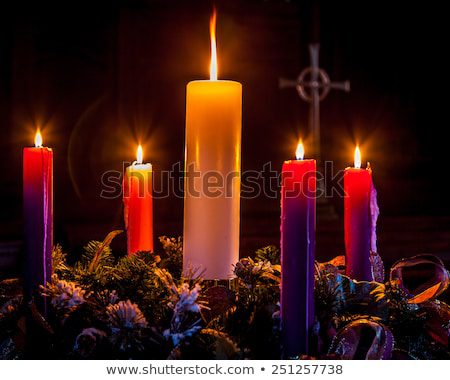
As we approach the Advent and Christmas seasons, I am in a forward-looking and hopeful mood. But that also involves looking back to a point in my life, not that many years ago, when hope took on a new meaning for me.
The great but incredibly difficult German philosopher Immanuel Kant, in a rare moment of clarity, wrote that all important human questions can be boiled down to these three: WHAT CAN I KNOW? WHAT OUGHT I TO DO? and WHAT MAY I HOPE FOR? The Advent and Christmas seasons focus on the last of these three questions. A major figure in the seasons’ stories is John the Baptist, Jesus’ relative who once sent his disciples to ask his cousin a “What may I hope for?” question. “Are you the one who is to come, or are we to wait for another?” This is one of the many poignant and excruciatingly human scenes in the gospels—John has been imprisoned by Herod Antipas and his head will be on a plate soon. He is by no means the only prophet in the land—they came a dime a dozen in those days. Nor is Jesus the only Messiah candidate around—Israel is full of them. So John’s question is not an academic one. What he really wants to know is “has my whole life been a waste?”
Jesus’ answer to John’s question relies on John’s knowledge of the prophet Isaiah. “Go and tell John what you hear and see: the blind receive their sight, the lame walk, the lepers are cleansed, the deaf hear, the dead are raised, and the poor have good news brought to them.” Hopefully the message got back to John before he was executed by Herod. The man whom you baptized is the real deal–the Messiah has truly come. That’s what John foretold and waited for.
And that’s what we wait for every Advent and Christmas season. As Christians we anticipate and celebrate what we believe to be the single most important event in human history—the Incarnation. But there has always been a secret, perhaps perverse part of me that asks, “so what?” What exactly are we celebrating at Christmas? What difference do the circumstances of Jesus’ birth make, a story told differently by Matthew and Luke and considered to be so insignificant by Mark and John that they don’t even include it? As the 13th century Dominican monk Meister Eckhart provocatively asked, “What good is it for me that Christ was born a thousand years ago in Bethlehem?”
During the first five months of 2009, I spent a sabbatical semester as a resident scholar at an ecumenical institute on the campus of St. John’s University, run by the Benedictine Catholic order, in Collegeville, Minnesota. My academic plans were set; a well-defined book project was ready to be written. But upon arrival, it gradually became clear to me that something else was going on.
For most of my then fifty-plus years, I had struggled with the conservative, fundamentalist Protestant Christianity in which I was raised. What became clear to me in Minnesota was that what I thought was a long-term, low-grade spiritual dissatisfaction had become, without my being aware of it, a full-blown spiritual crisis. Beneath my introverted, overly cerebral surface my soul was asking John’s question—“Are you the one, or is it time to look for another?”
The answer developed quietly, subtly, unheralded, over the weeks and months. As I tested the waters of daily prayer with the monks at St. John’s Abbey, I noticed a space of silence and peace slowly opening inside of me that I had never known. No voices, no visions, no miracles—but I was writing differently. The low-grade anger that had accompanied me for most of my life began to dissipate. I felt more and more like a whole person instead of a cardboard cutout of one. The world looked different. I felt different. Eventually a few of my colleagues said “you’re not the same person you were when you first got here.” And they were right–I wasn’t. I began spending more time with the monks at prayer, often three times daily. Essays began to flow from a place I didn’t recognize, but really liked. Little had changed outwardly, but everything was changing.
As the day of returning home after four months drew near, I was worried. Would these changes be transferable to my real life? Would this space of centeredness and peace be available during a typical 80-90 hour work week in the middle of a semester? Or would these changes soon be a fond memory, to be stored in an already overfull internal regret file?
Two days before leaving, one of the Benedictines preached at daily mass (which I did not normally attend). In the middle of an otherwise forgettable homily, he quoted the obscure St. Catherine of Genoa, who said “My deepest me is God.” This was the answer. The space of quietness, silence and peace inside of me, the one I’d never known and had just discovered—is God. I was stunned. Tears filled my eyes. I tingled all over. I’m tingling all over right now as I write this. Because what I had been looking for is here. And it is transferable. Trust me.
I used to think that the evidence Jesus sent to John in prison—the blind see, the lame walk, and all of that—was all well and good, but I’ve never seen a blind person healed, I’ve never seen a cripple stand and walk. But I was looking in the wrong place. Because although I don’t see perfectly, I’m a little less blind than I was. My frequent tone-deafness to the needs of others is getting a little better. My inner cripple is now walking with a limp. Some days I even think I know what Lazarus must have felt like as his sisters started to unwrap his grave-clothes. A few paragraphs ago I quoted Meister Eckhart—but only half of the quote. The full quote is “What good is it for me that Christ was born a thousand years ago in Bethlehem, if he is not born today in our own time?” The answer to that pressing question? He is born today. In us.
Let’s make this Advent and Christmas season a coming home, an embracing of the true, continuing mystery of the Incarnation. Yes, God became flesh. And God continues to be incarnated in you, in me. This is our heritage and the promise to us. Our deepest me is God. William Wordsworth expressed this truth beautifully: “But trailing clouds of glory do we come from God, who is our home.”
I’m hoping that in the darkness of his dungeon cell, John remembered his father Zechariah’s words spoken at John’s naming ceremony, words that I’m sure were part of the family stories in John’s childhood. The Song of Zechariah, the “Benedictus,” is the canticle that closes every morning prayer service in the Benedictine daily liturgy of the hours. You may remember that Zechariah had not spoken for months, struck dumb because he found it difficult to believe the angel’s announcement that his wife Elizabeth, well past child-bearing years, would bear a son.
When Zechariah and Elizabeth’s son is circumcised at eight days old, a family squabble breaks out over what the baby’s name will be. Most of the group votes for “Zechariah Junior.” But Zechariah motions for a tablet and writes “His name is John,” as the angel directed. His power of speech returns—the Benedictus follows. After a beautiful meditation on his new son’s role in the divine economy, Zechariah closes with a stunning promise.
In the tender compassion of our God
the dawn from on high shall break upon us,
To shine on those who dwell in darkness and the shadow of death,
and to guide our feet into the way of peace.
Let’s walk in that dawn together.
Previous Post
November 27, 2018
This is Why I am Not an Atheist
Next Post

December 2, 2018 Advent and the Blessing of Being Human
Browse Our Archives
Select a Category abortion Advent AI Angels Artificial intelligence atheism attention baptism Baptists beauty belief Benedictines Bible bicycling Big Bird books Bovina Camaldoli hermitage Canada Catholicism cats certainty change Christianity Christmas Collegeville Covid-19 creativity Development of Western Civilization dogs doubt Easter Enneagram Epiphany Episcopal ethics Eucharist evil extroverts Facebook faith family fear flowers forgiveness freedom friends God goodness grace happiness heaven hell history Holy Spirit Holy Week hope human nature humility humor idolatry incarnation introverts irreverence Islam Jeanne Jesus Joe Biden joy Judaism justice Kamala Harris knowledge Lent listen literature liturgy love Marsue Memorial Day miracles movies music mystery mythology NPR Old Testament optimism paradox peace Penguins philosophy piano podcast politics power prayer Protestantism Providence College Religion Rhode Island sabbatical sacrament science seeing silence Simone Weil Socrates soul sports St. John's College stories suffering tattoo teaching technology television theology thinking time tolerance transcendence travel trees trust truth Uncategorized Vermont wisdom wonder writing
Select a Month May 2026 April 2026 March 2026 February 2026 January 2026 December 2025 November 2025 October 2025 September 2025 August 2025 July 2025 June 2025 May 2025 April 2025 March 2025 February 2025 January 2025 December 2024 November 2024 October 2024 September 2024 August 2024 July 2024 June 2024 May 2024 April 2024 March 2024 February 2024 January 2024 December 2023 November 2023 October 2023 September 2023 August 2023 July 2023 June 2023 May 2023 April 2023 March 2023 February 2023 January 2023 December 2022 November 2022 October 2022 September 2022 August 2022 July 2022 June 2022 May 2022 April 2022 March 2022 February 2022 January 2022 December 2021 November 2021 October 2021 September 2021 August 2021 July 2021 June 2021 May 2021 April 2021 March 2021 February 2021 January 2021 December 2020 November 2020 October 2020 September 2020 August 2020 July 2020 June 2020 May 2020 April 2020 March 2020 February 2020 January 2020 December 2019 November 2019 October 2019 September 2019 August 2019 July 2019 June 2019 May 2019 April 2019 March 2019 February 2019 January 2019 December 2018 November 2018 October 2018 September 2018 August 2018 July 2018 June 2018 May 2018 April 2018 March 2018 February 2018 January 2018 December 2017 November 2017 October 2017 September 2017 August 2017 July 2017 June 2017 May 2017 April 2017 March 2017 February 2017 January 2017 December 2016 November 2016 October 2016 September 2016 August 2016 July 2016 June 2016 May 2016 April 2016 March 2016 February 2016 January 2016 December 2015 November 2015 October 2015 September 2015 August 2015 July 2015 June 2015 May 2015 April 2015 March 2015 February 2015 January 2015 December 2014 November 2014 October 2014 September 2014 August 2014 July 2014 June 2014 May 2014 April 2014 March 2014 February 2014 January 2014 December 2013 November 2013 October 2013 September 2013 August 2013 July 2013 June 2013 May 2013 April 2013 March 2013 February 2013 January 2013 December 2012 November 2012 October 2012 September 2012
Follow Us!
TAKE THE
Religious Wisdom Quiz
Like a sheep led to slaughter, silent before shearers, this servant was pierced for our transgressions. What chapter foretells this suffering?
Select your answer to see how you score.
Isaiah 7 Isaiah 9 Isaiah 61 Isaiah 53
Books by This Author Books by Vance G. Morgan
Related posts from Freelance Christianity

The Lonely Pawn: On Faith, Doubt, and Meaning


AI and Love: When a Chatbot Becomes a...

TRENDING AT PATHEOS Progressive Christian

What Being a Modern-Day Apostle Means to Me
In my last column, I discussed the ins and outs of modern-day...

Did Ancient China Once Worship the God of...
Across human history, a common thread weaves through the origins of the...

Love Your Neighbor – Including Earth-Kin: Lev. 19,...
God’s command to love your neighbor means acting in an ethical and...

Lead a Church Study of “Jesus and Lao...
Guest writer Jack Thomas (The Irreverent Reverend) reflects on leading his church...

Pastoral Wisdom for Responding to Sermon Pushback
Getting sermon pushback on your social justice sermon? Learn practical, Proverbs-based strategies...

Principles for Understanding the Apostolic Ministry Today
Whenever people discover that my formal ministry title is "apostle," as in...
view all Progressive Christian blogs
Ad-Free & Subscriber Log-In Subscription Support
- About Us
- 2026 Calendar
- Videos
- Podcasts
- Library of World Religions
- Faith In Media Tracker
- Advertise With Us
- Write for Us
- Privacy Policy
- Terms of Service
- Do Not Sell My Data
- Contact Us
- Radiant Digital
- Manage Newsletter Subscriptions
- Unsubscribe From Notifications
- Sitemap
Copyright 2008-2026, Patheos. All rights reserved.
Subscription Support Ad-Free & Subscriber Log-In
Follow Patheos