
BuddhistCatholicContemplativeEvangelicalGeneral ChristianHinduJewishLatter-day SaintMuslimNew VisionsProgressive Christian
Beliefs
- Buddhist
- Catholic
- Contemplative
- Evangelical
- General Christian
- Hindu
- Jewish
- Latter-day Saint
- More Voices
- Muslim
- New Visions
- Pagan
- Progressive Christian
Topics
- Religion News
- Food and Religion
- Sports and Religion
- Religious Art
- Religious Music and Entertainment
- Religious Events
- History and Religion
- Style and Religion
- Politics and Religion
- Women in Religion
- Recreation Outdoors and Religion
- Business Finance and Religion
- Careers Workplace and Religion
- Education and Religion
- Family Parenting and Religion
- Health Fitness and Religion
- Home and Religion
- Relationships and Religion
- Technology and Religion
- Travel and Religion
Columnists
- Buddhist Columnists
- Business Finance and Religion Columnists
- Careers Workplace and Religion Columnists
- Catholic Columnists
- Contemplative Columnists
- Education and Religion Columnists
- Evangelists Columnists
- Family Parenting and Religion Columnists
- General Christian Columnists
- Health Fitness and Religion Columnists
- Hindu Columnists
- History and Religion Columnists
- Home and Religion Columnists
- Jewish Columnists
- More Voices Columnists
- Latter Day Columnists
- Muslim Columnists
- New Visions Columnists
- Nonreligious Columnists
- Pagan Columnists
- Politics and Religion Columnists
- Progressive Columnists
- Recreation Outdoors and Religion Columnists
- Relationships and Religion Columnists
- Religion News Columnists
- Religious Art Columnists
- Religious Events Columnists
- Religious Music and Entertainment Columnists
- Sports and Religion Columnists
- Style and Religion Columnists
- Technology and Religion Columnists
- Travel and Religion Columnists
- Women in Religion Columnists
Resource Library
- 2026 Calendar
- Library of World Religions
- The 100 Most Holy Places on Earth
- Patheos Answers
- Podcasts
- Videos
- Faith Leaders Database
- Anglican Episcopalian
- Bahai
- Baptist
- Buddhism
- Christianity
- Confucianism
- Eastern Orthodoxy
- Hinduism
- Holiness and Pentecostal
- ISKCON
- Islam
- Judaism
- Lutheran
- Methodist
- The Church of Jesus Christ of Latter-day Saints
- New Age
- Paganism
- Presbytarian and Reformed
- Protestantism
- Religion Behind the Scenes
- Roman Catholic
- Scientology
- Shia Islam
- Sikhism
- Sufism
- Sunni Islam
- Taoism
- Zen
- See all religions
Research Tools
 Ad-Free & Subscriber Log-In Subscription Support
Ad-Free & Subscriber Log-In Subscription Support
Follow Patheos 

- Trending:
- Forgiveness
- |
- Marriage
- |
- Consciousness
- |
- Death Penalty
- |
- Election
- |
- Halloween

- Home
- Progressive Christian
- This or That?
This or That?
Last updated on: September 15, 2017 at 12:24 pm by Vance Morgan
This or That? 2017-09-15T12:24:34-04:00 Vance Morgan
Patheos Explore the world's faith through different perspectives on religion and spirituality! Patheos has the views of the prevalent religions and spiritualities of the world.
I got into an interesting conversation the other day with someone who insisted that on the particular issue we were discussing, “all or nothing” was the rule—either one took one position or the other, with no room for nuance. The issue was an important one, but this “all or nothing,” “either/or” attitude is not unusual. Human beings are hard-wired to categorize things, including each other. This is a survival skill honed over the millennia through the evolutionary process. Faced with an extraordinarily complicated and threatening environment, creatures with the capacity to quickly simplify things by sorting them out into a manageable number of categories have a leg up in terms of survival on creatures who lack this capacity.
But this useful ability that developed in our evolutionary past does not serve us well when applied to many of the complicated and complex matters that contemporary human beings face every day. One of my most important tasks in the classroom is to convince my students that reality is not neatly and cleanly divided up into familiar or comfortable categories; as William James wrote,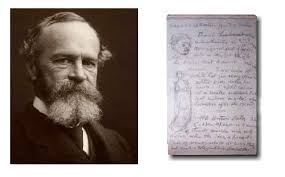 “In the great boarding-house of nature, the cakes and the butter and the syrup seldom come out so even and leave the plates so clean.” Our current political dysfunction is at least partially due to our insistence on reducing every issue, from abortion to climate change, from immigration to health care, to sharply opposed and incompatible options. Compromise, which has historically been the lifeblood of social policy and politics, has become a dirty word. All or nothing. This or that. Make a choice.
And yet . . . I must admit that quick and rough division into recognizable categories is one of the most useful tools available for trying to understand ourselves and the world around us. I have written about my favorite categories for understanding human nature on occasion—here are a few of them.
Hedgehog/Fox: Archilochus’s observation that “the hedgehog knows one big thing,  but the fox knows many little things” is so indispensable to understanding authors, colleagues, friends and family that I have written about it twice, once in the form of a primer
and another time discussing how I use the hedgehog/fox distinction both in teaching and in administration.
How to Herd a Hedgehog (or a Fox)
Another useful way to talk about this difference is to ask whether a person is a “bottom-up” individual (details first, then big picture) or “top-down” (big picture first, applied then to the details). 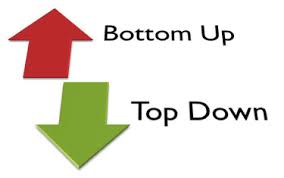 I am both by nature and philosophical orientation far more fox-like than hedgehoggy, preferring the messiness of details to the pristine purity of the big picture, but I try to remember that none of these distinctions are value-laden. One is not better than the other—they are just very different. Each of us runs into trouble when we assume that our way is not only ours but also is universally best, then act on that assumption.
Cromwell/More: This distinction is about change and certainty—with which are you more comfortable? In my estimation, this is the most useful teaching tool in my arsenal when introducing students to the pantheon of philosophers in the Western tradition for the first time. Two great streams of philosophical thought flow from deciding which is more important to focus on as we try to decipher ourselves and our world. In the certainty camp can be found Protagoras, Plato, Descartes, Hegel, and most of the great metaphysical system builders of the past two millennia and more, while Heraclitus, Aristotle, Hume and the great empiricists focus their attention on the importance of change. I have named this distinction Cromwell/More because of the following passage from  Hilary Mantel’s Wolf Hall, around which I built a discussion of this distinction a few months ago.
He [Cromwell] never sees More . . . without wanting to ask him, what’s wrong with you? Or what’s wrong with me? Why does everything you know, and everything you’ve learned, confirm you in what you believed before? Whereas in my case, what I grew up with, and what I thought I believed, is chipped away a little and a little, a fragment then a piece and then a piece more. With every month that passes, the corners are knocked off the certainties of this world: and the next world too. Show me where it says, in the Bible, “purgatory.” Show me where it says “relics, monks, nuns.” Show me where it says “Pope.”
Although I am thoroughly Cromwellian in all facets of my life, I try to remember—although it is often difficult—that for many people certainty is both a refuge and a requirement (even though I often say that it is vastly overrated).
 High maintenance/Low Maintenance: For those blessed J with administrative and leadership duties, the most important matter to become clear about as soon as possible is who the high maintenance people are. The low maintenance people are those you will never hear from—they just do their jobs. Toward the end of my time as director of a large interdisciplinary program with 80 professors under my guidance, I wrote about how this distinction effected my scheduling of classes for the next academic year.
In review I realize that I probably was as too critical of high maintenance people. And from the perspective of an administrator, it is difficult not to start resenting the five percent of people you are responsible for who take up ninety percent of your time and are responsible for ninety percent of your headaches. Over time I have frequently been surprised by how often high maintenance people take pride in being high maintenance.  Any time you hear a person say that “the squeaky wheel gets the grease,” that person is almost certainly a high maintenance person giving you a soundbite explaining why they are the way they are. It’s their way of getting things done. If someone doesn’t stir the pot, nothing will happen. And (I can’t believe I’m saying this) thank God for high maintenance people—just as long as they are using their abilities for the good of everyone instead of just themselves. And thank God that a significant minority of people are high maintenance. My prescription for what ails our current dysfunctional Congress? Stop electing so many high maintenance people.
Introvert/Extrovert: You knew this one was coming. I ruminate about the joys of introversion and the frightening aspects of extroverts frequently; today, I’ll simply take note of two very helpful checklists that have been making the rounds on social media and elsewhere for a while now.
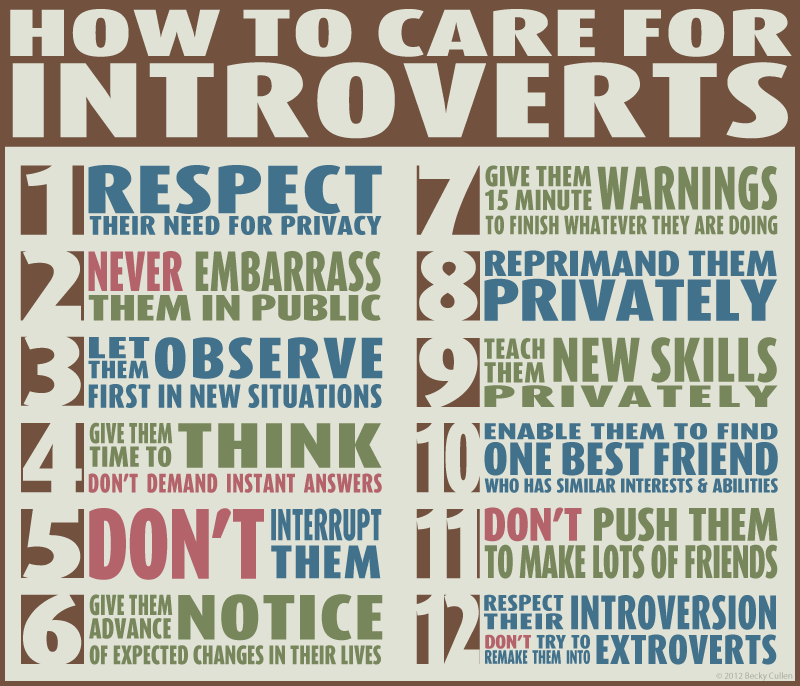
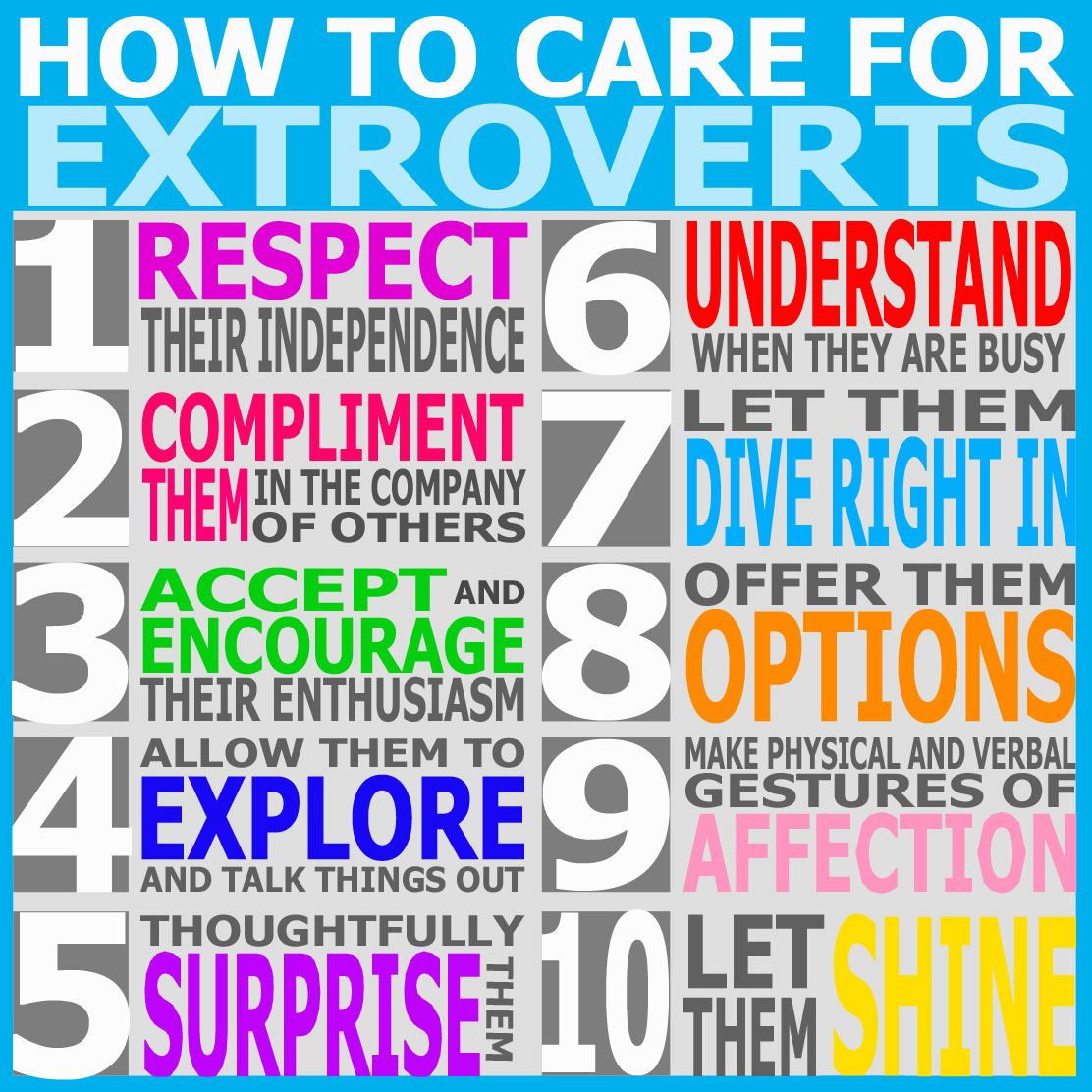
As I look these over, I am astounded by how well my extraordinarily extroverted wife abides by the rules of taking care of people like me, particularly because when we first got together she not only didn’t know anything about these rules but didn’t seem to even be aware that introverts exist.  Spending a bit of time with her extended Italian/Irish family will explain why—there are no introverts in sight. I only hope that I am continuing to learn to let her shine and talk things out as well as she has learned to respect my need for privacy and silence as well as my lack of need for dozens of friends. For those strongly on one side of this divide in relationship with someone strongly on the other side, I suggest that you find a couple of things that you both love where you can focus your shared energies. Dogs, great television shows and God do quite well.
Everyone uses these quick and effective tools to sort out a complicated world—there’s nothing wrong with that. The trick is not to impose moral values on traits that are, for the most part, hard-wired in each of us as default settings. Vive la difference!
Development of Western Civilization
Development of Western Civilization
Previous Post

November 30, 2015
Too Soon
Next Post
December 7, 2015 Righteous Peace, Godly Glory
Browse Our Archives
Select a Category abortion Advent AI Angels Artificial intelligence atheism attention baptism Baptists beauty belief Benedictines Bible bicycling Big Bird books Bovina Camaldoli hermitage Canada Catholicism cats certainty change Christianity Christmas Collegeville Covid-19 creativity Development of Western Civilization dogs doubt Easter Enneagram Epiphany Episcopal ethics Eucharist evil extroverts Facebook faith family fear flowers forgiveness freedom friends God goodness grace happiness heaven hell history Holy Spirit Holy Week hope human nature humility humor idolatry incarnation introverts irreverence Islam Jeanne Jesus Joe Biden joy Judaism justice Kamala Harris knowledge Lent listen literature liturgy love Marsue Memorial Day miracles movies music mystery mythology NPR Old Testament optimism paradox peace Penguins philosophy piano podcast politics power prayer Protestantism Providence College Religion Rhode Island sabbatical sacrament science seeing silence Simone Weil Socrates soul sports St. John's College stories suffering tattoo teaching technology television theology thinking time tolerance transcendence travel trees trust truth Uncategorized Vermont wisdom wonder writing
Select a Month May 2026 April 2026 March 2026 February 2026 January 2026 December 2025 November 2025 October 2025 September 2025 August 2025 July 2025 June 2025 May 2025 April 2025 March 2025 February 2025 January 2025 December 2024 November 2024 October 2024 September 2024 August 2024 July 2024 June 2024 May 2024 April 2024 March 2024 February 2024 January 2024 December 2023 November 2023 October 2023 September 2023 August 2023 July 2023 June 2023 May 2023 April 2023 March 2023 February 2023 January 2023 December 2022 November 2022 October 2022 September 2022 August 2022 July 2022 June 2022 May 2022 April 2022 March 2022 February 2022 January 2022 December 2021 November 2021 October 2021 September 2021 August 2021 July 2021 June 2021 May 2021 April 2021 March 2021 February 2021 January 2021 December 2020 November 2020 October 2020 September 2020 August 2020 July 2020 June 2020 May 2020 April 2020 March 2020 February 2020 January 2020 December 2019 November 2019 October 2019 September 2019 August 2019 July 2019 June 2019 May 2019 April 2019 March 2019 February 2019 January 2019 December 2018 November 2018 October 2018 September 2018 August 2018 July 2018 June 2018 May 2018 April 2018 March 2018 February 2018 January 2018 December 2017 November 2017 October 2017 September 2017 August 2017 July 2017 June 2017 May 2017 April 2017 March 2017 February 2017 January 2017 December 2016 November 2016 October 2016 September 2016 August 2016 July 2016 June 2016 May 2016 April 2016 March 2016 February 2016 January 2016 December 2015 November 2015 October 2015 September 2015 August 2015 July 2015 June 2015 May 2015 April 2015 March 2015 February 2015 January 2015 December 2014 November 2014 October 2014 September 2014 August 2014 July 2014 June 2014 May 2014 April 2014 March 2014 February 2014 January 2014 December 2013 November 2013 October 2013 September 2013 August 2013 July 2013 June 2013 May 2013 April 2013 March 2013 February 2013 January 2013 December 2012 November 2012 October 2012 September 2012
Follow Us!
TAKE THE
Religious Wisdom Quiz
Which parable illustrates God's joy over one sinner who repents?
Select your answer to see how you score.
The Lost Sheep The Two Sons The Sower The Ten Virgins
Books by This Author Books by Vance G. Morgan
Related posts from Freelance Christianity

The Lonely Pawn: On Faith, Doubt, and Meaning


AI and Love: When a Chatbot Becomes a...

TRENDING AT PATHEOS Progressive Christian

What Being a Modern-Day Apostle Means to Me
In my last column, I discussed the ins and outs of modern-day...

Did Ancient China Once Worship the God of...
Across human history, a common thread weaves through the origins of the...

Love Your Neighbor – Including Earth-Kin: Lev. 19,...
God’s command to love your neighbor means acting in an ethical and...

Lead a Church Study of “Jesus and Lao...
Guest writer Jack Thomas (The Irreverent Reverend) reflects on leading his church...

Pastoral Wisdom for Responding to Sermon Pushback
Getting sermon pushback on your social justice sermon? Learn practical, Proverbs-based strategies...

Principles for Understanding the Apostolic Ministry Today
Whenever people discover that my formal ministry title is "apostle," as in...
view all Progressive Christian blogs
Ad-Free & Subscriber Log-In Subscription Support
- About Us
- 2026 Calendar
- Videos
- Podcasts
- Library of World Religions
- Faith In Media Tracker
- Advertise With Us
- Write for Us
- Privacy Policy
- Terms of Service
- Do Not Sell My Data
- Contact Us
- Radiant Digital
- Manage Newsletter Subscriptions
- Unsubscribe From Notifications
- Sitemap
Copyright 2008-2026, Patheos. All rights reserved.
Subscription Support Ad-Free & Subscriber Log-In
Follow Patheos