
BuddhistCatholicContemplativeEvangelicalGeneral ChristianHinduJewishLatter-day SaintMuslimNew VisionsProgressive Christian
Beliefs
- Buddhist
- Catholic
- Contemplative
- Evangelical
- General Christian
- Hindu
- Jewish
- Latter-day Saint
- More Voices
- Muslim
- New Visions
- Pagan
- Progressive Christian
Topics
- Religion News
- Food and Religion
- Sports and Religion
- Religious Art
- Religious Music and Entertainment
- Religious Events
- History and Religion
- Style and Religion
- Politics and Religion
- Women in Religion
- Recreation Outdoors and Religion
- Business Finance and Religion
- Careers Workplace and Religion
- Education and Religion
- Family Parenting and Religion
- Health Fitness and Religion
- Home and Religion
- Relationships and Religion
- Technology and Religion
- Travel and Religion
Columnists
- Buddhist Columnists
- Business Finance and Religion Columnists
- Careers Workplace and Religion Columnists
- Catholic Columnists
- Contemplative Columnists
- Education and Religion Columnists
- Evangelists Columnists
- Family Parenting and Religion Columnists
- General Christian Columnists
- Health Fitness and Religion Columnists
- Hindu Columnists
- History and Religion Columnists
- Home and Religion Columnists
- Jewish Columnists
- More Voices Columnists
- Latter Day Columnists
- Muslim Columnists
- New Visions Columnists
- Nonreligious Columnists
- Pagan Columnists
- Politics and Religion Columnists
- Progressive Columnists
- Recreation Outdoors and Religion Columnists
- Relationships and Religion Columnists
- Religion News Columnists
- Religious Art Columnists
- Religious Events Columnists
- Religious Music and Entertainment Columnists
- Sports and Religion Columnists
- Style and Religion Columnists
- Technology and Religion Columnists
- Travel and Religion Columnists
- Women in Religion Columnists
Resource Library
- 2026 Calendar
- Library of World Religions
- The 100 Most Holy Places on Earth
- Patheos Answers
- Podcasts
- Videos
- Faith Leaders Database
- Anglican Episcopalian
- Bahai
- Baptist
- Buddhism
- Christianity
- Confucianism
- Eastern Orthodoxy
- Hinduism
- Holiness and Pentecostal
- ISKCON
- Islam
- Judaism
- Lutheran
- Methodist
- The Church of Jesus Christ of Latter-day Saints
- New Age
- Paganism
- Presbytarian and Reformed
- Protestantism
- Religion Behind the Scenes
- Roman Catholic
- Scientology
- Shia Islam
- Sikhism
- Sufism
- Sunni Islam
- Taoism
- Zen
- See all religions
Research Tools
 Ad-Free & Subscriber Log-In Subscription Support
Ad-Free & Subscriber Log-In Subscription Support
Follow Patheos 

- Trending:
- Forgiveness
- |
- Marriage
- |
- Consciousness
- |
- Death Penalty
- |
- Election
- |
- Halloween

- Home
- Progressive Christian
- Women in Religion
- This Book Changed My Life: Marilynne Robinson’s “Gilead”
This Book Changed My Life: Marilynne Robinson’s “Gilead”
Last updated on: August 7, 2022 at 6:00 am by Vance Morgan
This Book Changed My Life: Marilynne Robinson’s “Gilead” 2022-08-04T10:09:49-04:00 Vance Morgan
Patheos Explore the world's faith through different perspectives on religion and spirituality! Patheos has the views of the prevalent religions and spiritualities of the world.
I asked my Facebook friends a while ago to list three or four books that changed their lives. Not necessarily books that belong in the Great Books curriculum, but books that came just at the right time and spoke to them in a particular and memorable way. I wrote about one of mine a couple of weeks ago–here’s another one.
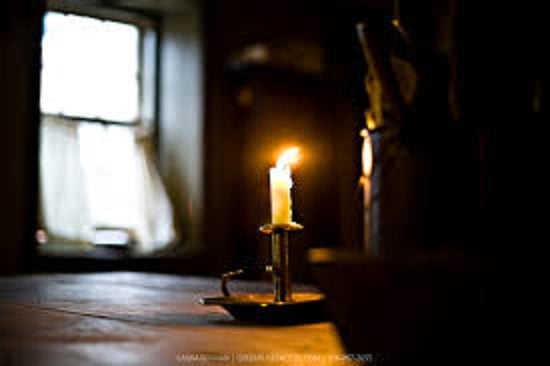
A candle flame looks beautiful in the light of morning . . . It seems to me to be a metaphor for the human soul, the singular light within the great general light of existence. Marilynne Robinson, Gilead
Marilynne Robinson has been one of my favorite authors for years, but I’ve only included her on a course syllabus once, when she joined Simone Weil and Iris Murdoch for my “Contemporary Women in Philosophy” course a coupleof years ago. Robinson’s essays and fiction are brilliant; she also happens to be the author of the book that is closest to perfect of any I have read.
The front and back covers, as well as the opening pages, of best-selling and award-winning books are often filled with excerpted and edited reviews from various publications, reviews so similar from book to book and so over the top that I often wonder if there is a central-clearing house where authors and editors can order canned reviews to their liking. But sometimes the reviewers capture a book’s essence perfectly—such is the case with Marilynne Robinson’s Pulitzer Prize winning Gilead. Described as “so serenely beautiful and written in a prose so gravely measured and thoughtful, that one feels touched with grace just to read it,” and as
A book that deserves to be read slowly, thoughtfully, and repeatedly . . . I would like to see copies of it dropped onto pews across our country, where it could sit among the Bibles and hymnals and collection envelopes. It would be a good reminder of what it means to lead a noble and moral life—and, for that matter, what it means to write a truly great novel,
Amen.
In Gilead, a rural Congregational minister in his late seventies is writing a memoir for his young son, an only child unexpectedly born to Reverend Ames and his much-younger wife when Ames is seventy. Ames expects to die long before the child is grown, and Gilead is his love letter to his son containing as much guidance and wisdom as Ames can muster. The prose is measured and profound. Ames writes that for him “writing has always felt like praying, even when I wasn’t writing prayers, as I was often enough. You feel that you are with someone.” On my best writing days I have this in mind as a standard.
I have often thought that if my maternal grandfather, a potato farmer with an eighth-grade education who was the wisest and best man I ever met, had been a character in a novel, he would have been Reverend Ames. One of Ames’ greatest continuing insights concerns the sacredness of all things. As he nears the end of his life, he pays close attention to the mystery and miracle of things most of us dismiss as “ordinary.”
It has seemed to me sometimes as though the Lord breathes on this poor gray ember of Creation and it turns to radiance—for a moment or a year or the span of a life. And then it sinks back into itself again, and to look at it no one would know it had anything to do with fire, or light. . . . Wherever you turn your eyes the world can shine like transfiguration. You don’t have to bring a thing to it except a little willingness to see. Only, who has the courage to see it?
For Reverend Ames, everything is a sacrament with intimations of holiness. And for this Calvinist preacher, the Divine Being he has served and conversed with for decades is still a mystery.
I don’t remember how Gilead came to me, or even when I read it for the first time (at least a half-dozen reads ago), but the Reverend’s struggles with the austere doctrines of his Calvinist faith are familiar. His is the religious world of my youth, a world that I have struggled mightily at different times to understand, to incorporate, or to leave. One passage in particular shook me to my core:
Calvin says somewhere that each of us is an actor on a stage and God is the audience. That metaphor has always interested me, because it makes us artists of our behavior, and the reaction of God to us might be thought of as aesthetic rather than morally judgmental in the ordinary sense. How well do we understand our role? With how much assurance do we perform it? . . . We all bring such light to bear on these great matters as we can. I do like Calvin’s image, though, because it suggests how God might actually enjoy us. I believe we think about that far too little.
The simple image of God as the audience for the artistic performance of the human drama and comedy, rather than the authoritative judge who is taking note of every single one of our failures, was transformative for me. I recall a similar moment early during my 2009 sabbatical when, during a noonday reading of daily psalms with a couple dozen Benedictine monks, we read in Psalm 149 that “the LORD takes delight in his people.” Who knew? Reverend Ames is right—we do think about this far too little.
Reverend Ames also provided me with a new angle on rational proofs for the existence of God, something I have grappled with both as a philosophy professor and as a human being for as long as I can remember. His advice is that belief in God isn’t about proofs at all. As a matter of fact, making rational proofs the basis for either defending or challenging one’s faith will eventually erode whatever faith one has.
In the matter of belief, I have always found that defenses have the same irrelevance about them as the criticisms they are meant to answer. I think the attempt to defend belief can unsettle it, in fact, because there is always an inadequacy in argument about ultimate things. . . . Creating proofs from experience of any sort is like building a ladder to the moon. It seems that it should be possible, until you stop to consider the nature of the problem. So my advice is this—don’t look for proofs. Don’t bother with them at all. They are never sufficient to the question, and they’re always a little impertinent, I think, because they claim for God a place within our conceptual grasp.
If someone asked me to identify and summarize the attitudes underlying my ruminations about the interplay of philosophy and faith in this blog, I would point to this passage. Thanks, Rev.
In the final pages of Gilead, Reverend Ames bumps into Jack, the prodigal son of Ames’ best friend who is leaving town on the bus. Jack asks Ames to say goodbye to his father for him. Ames agrees to do so, but then says “The thing I would like, actually, is to bless you.” He uses his favorite text from the Jewish Scriptures, Aaron’s blessing from the Book of Numbers:
The Lord bless you and keep you. The Lord make His face to shine upon you and be gracious unto you. The Lord lift up His countenance upon you and give you peace.
Gilead has been that sort of blessing to me, more than any book I have ever read. I am most grateful.
Progressive Christian
General Christian
Catholic
Women in Religion
Education and Religion
Previous Post
August 4, 2022
When are F-bombs Appropriate in the Classroom?
Next Post
August 9, 2022 Remembering David McCullough and Why the Liberal Arts Matter More than Ever
Browse Our Archives
Select a Category abortion Advent AI Angels Artificial intelligence atheism attention baptism Baptists beauty belief Benedictines Bible bicycling Big Bird books Bovina Camaldoli hermitage Canada Catholicism cats certainty change Christianity Christmas Collegeville Covid-19 creativity Development of Western Civilization dogs doubt Easter Enneagram Epiphany Episcopal ethics Eucharist evil extroverts Facebook faith family fear flowers forgiveness freedom friends God goodness grace happiness heaven hell history Holy Spirit Holy Week hope human nature humility humor idolatry incarnation introverts irreverence Islam Jeanne Jesus Joe Biden joy Judaism justice Kamala Harris knowledge Lent listen literature liturgy love Marsue Memorial Day miracles movies music mystery mythology NPR Old Testament optimism paradox peace Penguins philosophy piano podcast politics power prayer Protestantism Providence College Religion Rhode Island sabbatical sacrament science seeing silence Simone Weil Socrates soul sports St. John's College stories suffering tattoo teaching technology television theology thinking time tolerance transcendence travel trees trust truth Uncategorized Vermont wisdom wonder writing
Select a Month May 2026 April 2026 March 2026 February 2026 January 2026 December 2025 November 2025 October 2025 September 2025 August 2025 July 2025 June 2025 May 2025 April 2025 March 2025 February 2025 January 2025 December 2024 November 2024 October 2024 September 2024 August 2024 July 2024 June 2024 May 2024 April 2024 March 2024 February 2024 January 2024 December 2023 November 2023 October 2023 September 2023 August 2023 July 2023 June 2023 May 2023 April 2023 March 2023 February 2023 January 2023 December 2022 November 2022 October 2022 September 2022 August 2022 July 2022 June 2022 May 2022 April 2022 March 2022 February 2022 January 2022 December 2021 November 2021 October 2021 September 2021 August 2021 July 2021 June 2021 May 2021 April 2021 March 2021 February 2021 January 2021 December 2020 November 2020 October 2020 September 2020 August 2020 July 2020 June 2020 May 2020 April 2020 March 2020 February 2020 January 2020 December 2019 November 2019 October 2019 September 2019 August 2019 July 2019 June 2019 May 2019 April 2019 March 2019 February 2019 January 2019 December 2018 November 2018 October 2018 September 2018 August 2018 July 2018 June 2018 May 2018 April 2018 March 2018 February 2018 January 2018 December 2017 November 2017 October 2017 September 2017 August 2017 July 2017 June 2017 May 2017 April 2017 March 2017 February 2017 January 2017 December 2016 November 2016 October 2016 September 2016 August 2016 July 2016 June 2016 May 2016 April 2016 March 2016 February 2016 January 2016 December 2015 November 2015 October 2015 September 2015 August 2015 July 2015 June 2015 May 2015 April 2015 March 2015 February 2015 January 2015 December 2014 November 2014 October 2014 September 2014 August 2014 July 2014 June 2014 May 2014 April 2014 March 2014 February 2014 January 2014 December 2013 November 2013 October 2013 September 2013 August 2013 July 2013 June 2013 May 2013 April 2013 March 2013 February 2013 January 2013 December 2012 November 2012 October 2012 September 2012
Follow Us!
TAKE THE
Religious Wisdom Quiz
Which parable features a man building on rock versus sand?
Select your answer to see how you score.
The Workers in the Vineyard The Talents The Wise and Foolish Builders The Sower
Books by This Author Books by Vance G. Morgan
Related posts from Freelance Christianity

The Lonely Pawn: On Faith, Doubt, and Meaning


AI and Love: When a Chatbot Becomes a...

TRENDING AT PATHEOS Progressive Christian

What Being a Modern-Day Apostle Means to Me
In my last column, I discussed the ins and outs of modern-day...

Did Ancient China Once Worship the God of...
Across human history, a common thread weaves through the origins of the...

Love Your Neighbor – Including Earth-Kin: Lev. 19,...
God’s command to love your neighbor means acting in an ethical and...

Lead a Church Study of “Jesus and Lao...
Guest writer Jack Thomas (The Irreverent Reverend) reflects on leading his church...

Pastoral Wisdom for Responding to Sermon Pushback
Getting sermon pushback on your social justice sermon? Learn practical, Proverbs-based strategies...

Principles for Understanding the Apostolic Ministry Today
Whenever people discover that my formal ministry title is "apostle," as in...
view all Progressive Christian blogs
Ad-Free & Subscriber Log-In Subscription Support
- About Us
- 2026 Calendar
- Videos
- Podcasts
- Library of World Religions
- Faith In Media Tracker
- Advertise With Us
- Write for Us
- Privacy Policy
- Terms of Service
- Do Not Sell My Data
- Contact Us
- Radiant Digital
- Manage Newsletter Subscriptions
- Unsubscribe From Notifications
- Sitemap
Copyright 2008-2026, Patheos. All rights reserved.
Subscription Support Ad-Free & Subscriber Log-In
Follow Patheos