
BuddhistCatholicContemplativeEvangelicalGeneral ChristianHinduJewishLatter-day SaintMuslimNew VisionsProgressive Christian
Beliefs
- Buddhist
- Catholic
- Contemplative
- Evangelical
- General Christian
- Hindu
- Jewish
- Latter-day Saint
- More Voices
- Muslim
- New Visions
- Pagan
- Progressive Christian
Topics
- Religion News
- Food and Religion
- Sports and Religion
- Religious Art
- Religious Music and Entertainment
- Religious Events
- History and Religion
- Style and Religion
- Politics and Religion
- Women in Religion
- Recreation Outdoors and Religion
- Business Finance and Religion
- Careers Workplace and Religion
- Education and Religion
- Family Parenting and Religion
- Health Fitness and Religion
- Home and Religion
- Relationships and Religion
- Technology and Religion
- Travel and Religion
Columnists
- Buddhist Columnists
- Business Finance and Religion Columnists
- Careers Workplace and Religion Columnists
- Catholic Columnists
- Contemplative Columnists
- Education and Religion Columnists
- Evangelists Columnists
- Family Parenting and Religion Columnists
- General Christian Columnists
- Health Fitness and Religion Columnists
- Hindu Columnists
- History and Religion Columnists
- Home and Religion Columnists
- Jewish Columnists
- More Voices Columnists
- Latter Day Columnists
- Muslim Columnists
- New Visions Columnists
- Nonreligious Columnists
- Pagan Columnists
- Politics and Religion Columnists
- Progressive Columnists
- Recreation Outdoors and Religion Columnists
- Relationships and Religion Columnists
- Religion News Columnists
- Religious Art Columnists
- Religious Events Columnists
- Religious Music and Entertainment Columnists
- Sports and Religion Columnists
- Style and Religion Columnists
- Technology and Religion Columnists
- Travel and Religion Columnists
- Women in Religion Columnists
Resource Library
- 2026 Calendar
- Library of World Religions
- The 100 Most Holy Places on Earth
- Patheos Answers
- Podcasts
- Videos
- Faith Leaders Database
- Anglican Episcopalian
- Bahai
- Baptist
- Buddhism
- Christianity
- Confucianism
- Eastern Orthodoxy
- Hinduism
- Holiness and Pentecostal
- ISKCON
- Islam
- Judaism
- Lutheran
- Methodist
- The Church of Jesus Christ of Latter-day Saints
- New Age
- Paganism
- Presbytarian and Reformed
- Protestantism
- Religion Behind the Scenes
- Roman Catholic
- Scientology
- Shia Islam
- Sikhism
- Sufism
- Sunni Islam
- Taoism
- Zen
- See all religions
Research Tools
 Ad-Free & Subscriber Log-In Subscription Support
Ad-Free & Subscriber Log-In Subscription Support
Follow Patheos 

- Trending:
- Forgiveness
- |
- Marriage
- |
- Consciousness
- |
- Death Penalty
- |
- Election
- |
- Halloween

- Home
- Progressive Christian
- This Blog Will Be A-Changin . . .
This Blog Will Be A-Changin . . .
Last updated on: April 22, 2026 at 4:08 pm by Vance Morgan
This Blog Will Be A-Changin . . . 2026-04-22T16:08:36-04:00 Vance Morgan
Patheos Explore the world's faith through different perspectives on religion and spirituality! Patheos has the views of the prevalent religions and spiritualities of the world.
Thirteen-and-a-half years after starting this blog, I find myself thinking and praying about its future path. Here are some of the things I’ve been thinking about–at the end of this reflection, I’ll describe briefly a few important changes that will be coming in the next few weeks.
During a sabbatical seventeen (!) years ago, I began writing in a personal, non-academic essay style that was a sharp break from the academic writing that I had been doing (because I had to) for twenty years. I liked writing in this new way, found it both therapeutic (in a spiritual practice sort of way) and stimulating, but had no idea what do to with the essays that began to accumulate. I shared them with friends, who invariably said “you’ve got to get these in print,” but I knew that no self-respecting academic journal or publisher would consider such material from a person whose “best sellers” (not) to date had included books like Foundations of Cartesian Ethics and Weaving the World: Simone Weil on Science, Mathematics, and Love, along with articles such as “Cognitive Science, Naturalism, and Divine Prototypes” and “Ockham and Skepticism: The Intuitive Cognition of Non-Existents.” What to do?
Fortunately, one of the friends with whom I had been sharing my essays occasionally was the former editor of Christianity Today; as such, he had his finger on the pulse of non-academic publishing. He told me that no publisher would bite on a collection of essays such as I was writing without first being convinced that there was an audience for them. The best way to establish evidence of such an audience, he said, was to start a blog—although he quickly added that he would never do such a thing himself. Neither would I. “Fuck,” I thought. I never read blogs at the time (still don’t read many of them–I prefer podcasts), which struck me as the most narcissistic of all forms of writing. “Shit,” I thought, knowing that the last thing I needed to introduce into an already overwhelming schedule of teaching and administration was blog writing.
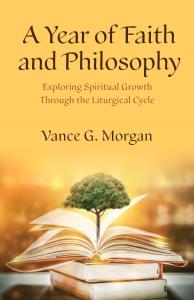
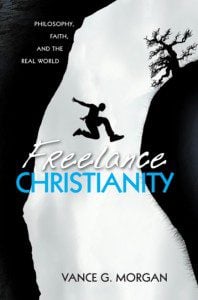 Still, I felt that these essays might be for more than my family, friends, and me. So reluctantly, a few months after my conversation with my friend, I decided to give it a shot. I told Jeanne that I would blog until it became just another damn thing I had to do, which I figured would happen within a few weeks or months. More than thirteen years later, with over fifteen hundred posts, well over a million-and-a-half words under my belt, and thousands of visitors to my blog every month, I’m still going. And by the way, my friend was right—my blog has been the jumping off point for three books, published in 2017, 2019, and 2025.
In no particular order, here are a few things I’ve learned—mostly by trial and error—along the way about blogging.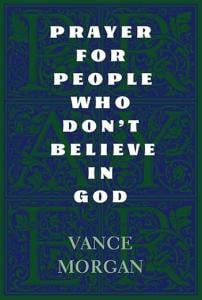
Make it a habit. The first piece of advice that every successful writer offers is that the key to becoming a better writer is to write. Regularly. Habitually. Anyone who waits for a moment of inspiration to start writing is unlikely to ever start writing. Set a schedule for how often you want to post on your blog—once a week? Twice? More or less than that? Then stick to that schedule. I post three times per week. That means I cannot go more than a day or two without paying attention to my blog—which means writing. Make it a priority, not something to do in “down time.”
Have something to say. Be clear about why you are doing this. Although I am now an experienced blogger, I seldom read blogs—primarily because many blogs are simply stream of consciousness meanderings. I am very clear about the overall theme of my blog; when I wander too far from it, my regular readers let me know. For example, one of my Facebook friends is a gatekeeper for two large progressive Christian Facebook pages.
I send her my newest blog essay three times a week for her consideration right after posting it on my site. She almost always shares it on her sites within a few hours; if she doesn’t, this tells me that in this particular essay I have wandered a bit from my blogging mission.
Experiment. For the blogger, everything is possible material for an essay. Once you have established what your blog is about and who it is for (see above), you’ll find that everything is relevant. My essay writing hero (and the inventor of the essay literary genre), Michel de Montaigne, put it this way: “I take the first subject that chance offers. They are all equally good to me. And I never plan to develop them completely.” I have tried to take all of this to heart. Once I learned that a blog essay is not a philosophical argument, I was free to explore and experiment. I want my blog to invite people to think, not to tell them what to think.
Be patient. I suspect that my blog was read by only my family and a handful of no more than a few dozen friends for the first few years of its existence. This is why you need to be writing for yourself, not for others. Don’t get me wrong—I am as obsessed with my blog numbers as any writer is. I rejoice when a post catches fire, and I am bummed when it doesn’t. But if you have something to say, people will find you. What I used to think of as an extraordinary day or week in terms of traffic is now a slow day or week. Blogging is like the parable of the sower from the Gospels—you throw it out there, and occasionally it lands in the right place.
Give them what you want, not what they want. Take control. The best piece of writing advice I ever read was from Anne Lamott: “Write what you would love to find.” Write for yourself, in other words. You’ll be surprised to find out how many other people love to find the same things as you do. To commenters on my blog who suggest that I should have written about (fill in the blank) instead of what I wrote about, I always suggest that they should start their own blog. Someone once asked me in my early blogging years who my target audience is. I surprised myself by saying “I’m writing for people like myself.” But it’s true. Don’t write for someone else—write for yourself. If it is meaningful to you, it is likely to be meaningful to others as well. And remember, you get to set the tone for your blog. Will you tolerate rudeness from your commenters? Self-righteousness? Misogyny? Racism? Remember that this is not a democracy—you are in charge. Feel free to throw people out of the discussion.
Temper expectations. Blogging is a humbling experience. Posts about your dog or the tree in your front yard, accompanied by the right picture, will always attract more traffic than a post filled with your most profound insights. Don’t take it personally. Remember the parable of the sower—you’re throwing seed out there and hoping that it will occasionally land in the right place. A helpful thing for an academic who blogs—a person like me, in other words—is that a blog gets your writing out into the world much more effectively than anything in hard copy is ever likely to do. I estimate that more people read my blog in one month than have read all of my published books and articles combined.
So now for some news about some changes coming over the next few weeks. Since the new year, and even before, I have wondered with increasing frequency whether this blog has run its course. The majority of my recent posts have been updated reruns of older entries. After the publication of my latest book last October, I was feeling that, like Forrest Gump, it might be that “That’s all I have to say about that.” I don’t get a lot of comment traffic and my numbers have be slowly going down.
So, I reached out to my email list and Facebook friends asking them to share their thoughts and experiences (if they had any) related to the blog. I received a significant number of positive testimonials from readers old and new, so many that it became clear this is not the time to end the blog. But . . . some changes are coming that I hope will inject new life into what I write and your reading experience. These include:
- Posting just once per week, most likely on Sundays
- Each post going forward will be brand new–no more retreads or updates
- Moving to a new platform. My plan is to move to Substack, a format that I think will both streamline the blogging process from my end and will improve the reading experience on your end.
- Stepping back from social media. This means that if you are accustomed to getting my blog through Facebook, my current plan is to use Substack as my only vehicle for the blog within a few weeks.
The above changes are still in the thinking, praying, and planning process. Nothing will change at all until after the end of the semester toward the end of May. I am most grateful to everyone who has been a regular, intermittent, or infrequent reader–I appreciate it more than you know. I’ll provide more information when the time for changes arrives. Until then, peace.
Previous Post

April 19, 2026
Teachers with Guns
Next Post

April 26, 2026 The Mulch of the Spirit
Recent Comments
"Mary did have a choice. And she was able to make it before the Holy ..."
"i cannot read beyond your recommendations for the books since i like to have a ..."
"AI will never be able to utter with honesty, feeling, or humility, the greeting: "Namaste".It ..."
"They do. I'm sure you could find discussions of the same topic from any of ..."
Browse Our Archives
Select a Category abortion Advent AI Angels Artificial intelligence atheism attention baptism Baptists beauty belief Benedictines Bible bicycling Big Bird books Bovina Camaldoli hermitage Canada Catholicism cats certainty change Christianity Christmas Collegeville Covid-19 creativity Development of Western Civilization dogs doubt Easter Enneagram Epiphany Episcopal ethics Eucharist evil extroverts Facebook faith family fear flowers forgiveness freedom friends God goodness grace happiness heaven hell history Holy Spirit Holy Week hope human nature humility humor idolatry incarnation introverts irreverence Islam Jeanne Jesus Joe Biden joy Judaism justice Kamala Harris knowledge Lent listen literature liturgy love Marsue Memorial Day miracles movies music mystery mythology NPR Old Testament optimism paradox peace Penguins philosophy piano podcast politics power prayer Protestantism Providence College Religion Rhode Island sabbatical sacrament science seeing silence Simone Weil Socrates soul sports St. John's College stories suffering tattoo teaching technology television theology thinking time tolerance transcendence travel trees trust truth Uncategorized Vermont wisdom wonder writing
Select a Month May 2026 April 2026 March 2026 February 2026 January 2026 December 2025 November 2025 October 2025 September 2025 August 2025 July 2025 June 2025 May 2025 April 2025 March 2025 February 2025 January 2025 December 2024 November 2024 October 2024 September 2024 August 2024 July 2024 June 2024 May 2024 April 2024 March 2024 February 2024 January 2024 December 2023 November 2023 October 2023 September 2023 August 2023 July 2023 June 2023 May 2023 April 2023 March 2023 February 2023 January 2023 December 2022 November 2022 October 2022 September 2022 August 2022 July 2022 June 2022 May 2022 April 2022 March 2022 February 2022 January 2022 December 2021 November 2021 October 2021 September 2021 August 2021 July 2021 June 2021 May 2021 April 2021 March 2021 February 2021 January 2021 December 2020 November 2020 October 2020 September 2020 August 2020 July 2020 June 2020 May 2020 April 2020 March 2020 February 2020 January 2020 December 2019 November 2019 October 2019 September 2019 August 2019 July 2019 June 2019 May 2019 April 2019 March 2019 February 2019 January 2019 December 2018 November 2018 October 2018 September 2018 August 2018 July 2018 June 2018 May 2018 April 2018 March 2018 February 2018 January 2018 December 2017 November 2017 October 2017 September 2017 August 2017 July 2017 June 2017 May 2017 April 2017 March 2017 February 2017 January 2017 December 2016 November 2016 October 2016 September 2016 August 2016 July 2016 June 2016 May 2016 April 2016 March 2016 February 2016 January 2016 December 2015 November 2015 October 2015 September 2015 August 2015 July 2015 June 2015 May 2015 April 2015 March 2015 February 2015 January 2015 December 2014 November 2014 October 2014 September 2014 August 2014 July 2014 June 2014 May 2014 April 2014 March 2014 February 2014 January 2014 December 2013 November 2013 October 2013 September 2013 August 2013 July 2013 June 2013 May 2013 April 2013 March 2013 February 2013 January 2013 December 2012 November 2012 October 2012 September 2012
Follow Us!
TAKE THE
Religious Wisdom Quiz
Who said, "I have fought the good fight, I have finished the race"?
Select your answer to see how you score.
Peter James Paul John
Books by This Author Books by Vance G. Morgan
Related posts from Freelance Christianity



Remembering Frieda--a dog who was a person
TRENDING AT PATHEOS Progressive Christian

What Being a Modern-Day Apostle Means to Me
In my last column, I discussed the ins and outs of modern-day...

Did Ancient China Once Worship the God of...
Across human history, a common thread weaves through the origins of the...

Love Your Neighbor – Including Earth-Kin: Lev. 19,...
God’s command to love your neighbor means acting in an ethical and...

Lead a Church Study of “Jesus and Lao...
Guest writer Jack Thomas (The Irreverent Reverend) reflects on leading his church...

Pastoral Wisdom for Responding to Sermon Pushback
Getting sermon pushback on your social justice sermon? Learn practical, Proverbs-based strategies...

Principles for Understanding the Apostolic Ministry Today
Whenever people discover that my formal ministry title is "apostle," as in...
view all Progressive Christian blogs
What Are Your Thoughts?leave a comment
Ad-Free & Subscriber Log-In Subscription Support
- About Us
- 2026 Calendar
- Videos
- Podcasts
- Library of World Religions
- Faith In Media Tracker
- Advertise With Us
- Write for Us
- Privacy Policy
- Terms of Service
- Do Not Sell My Data
- Contact Us
- Radiant Digital
- Manage Newsletter Subscriptions
- Unsubscribe From Notifications
- Sitemap
Copyright 2008-2026, Patheos. All rights reserved.
Subscription Support Ad-Free & Subscriber Log-In
Follow Patheos